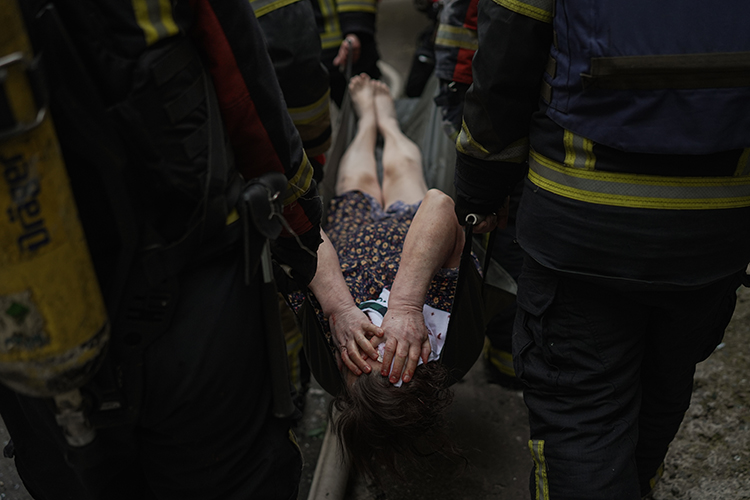
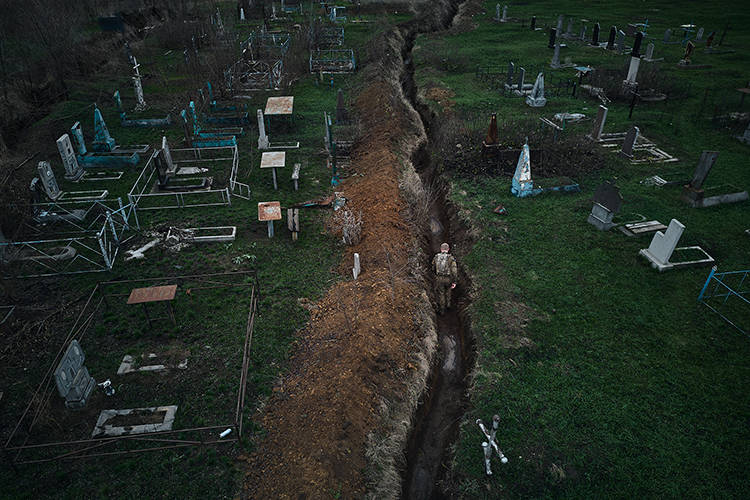
Kurakhove,a city in Pokrovsk Raion in eastern Ukraine, has been engulfed by fighting andis now surrounded on three sides by Russian forces. The enemy is just threekilometers away, and around a thousand residents remain. With no water,electricity, or heating, people are sheltering in apartment-building basements,holding on in the hope that this nightmare will finally end.
Anenergy hub that became an epicenter of war
Kurakhove,on the left bank of the Kurakhove Reservoir, has long been one of Donbas’s keyenergy hubs. Its thermal power plant supplied electricity across much of theregion, making it one of the largest facilities of its kind in eastern Ukraine.Before the war began in 2014, the city was growing, with infrastructure and aneconomy that helped sustain the wider area. But once hostilities erupted,Kurakhove found itself on an active front line, battered by artillery strikesand relentless shelling.
Thefirst years of the war: a test for the city
During theAnti-Terrorist Operation (ATO) in 2014–2015, Kurakhove became a key stronghold,holding back militants and helping protect eastern Ukraine’s energy stability.The thermal power plant—strategic by any measure—was a prime target. Shellingdamaged homes, schools, and roads; the infrastructure that had defined dailylife for decades began to collapse. Many residents fled, while those who stayedlearned to live within reach of the line of fire.
Thefull-scale invasion: a trap for civilians
SinceFebruary 2022, Kurakhove’s situation has worsened dramatically. Constantairstrikes and artillery fire have reduced what was once an industrial centerto ruins. On November 11, 2024, Russian forces blew up the dam at the KurakhoveReservoir, raising water levels in the Vovcha River. The explosion was meant toslow Ukrainian movement and create additional hardship for civilians whoremained. Nearby riverside villages were affected, and already severewater-supply problems deepened—making day-to-day survival even harder.

Today’sreality and the humanitarian crisis
As ofNovember 2024, Kurakhove is surrounded on three sides—another Ukrainian cityRussia is trying to erase. Without the war that began in 2014 and escalatedinto a full-scale invasion in 2022, it might have continued to grow andprosper. Instead, Kurakhove has become a landscape of emptiness and rubble.Daily shelling from positions just a few kilometers from the center destroyswhat remains. The hospital, technical college, schools, kindergartens, thewater-treatment plant, the displaced persons center, the post office, and thecultural center have been destroyed—virtually the entire civilianinfrastructure.

Journalistsrarely make it to Kurakhove now. Documentarian and Ukrainian Association ofProfessional Photographers member Anton Shtuka managed to enter the city,witness the situation firsthand, and document daily life in frontline Kurakhovefor the Associated Press. Today, the UAPP publishes his photo report from acity that is slowly disappearing.

Kurakhovethrough the eyes of Anton Shtuka
“Kurakhove,without exaggeration, is the new Bakhmut,” says Anton Shtuka, describing the diresituation in the city. “It is hit every day by Russian forces: guided aerialbombs, tube artillery, multiple rocket launchers, and FPV drones have become adaily threat to residents. The threat of encirclement of the Kurakhove garrisonand civilians is likely the greatest throughout the war,” Anton notes.


Only onestore remains in the city, and supplies reach it only in an armored evacuationvan equipped with electronic warfare protection. The sole route into Kurakhoveis the so‑called “road of death,” under constant watch by enemy FPV drones.

“Alongthe roadside are burned-out cars with the bodies of locals who tried to escapethe city,” Antonadds. “Electronic warfare systems help the evacuation crews, but they offeronly partial protection—and you can’t always rely on them.”


“Burninghouses, explosions, and smoke are an everyday sight in Kurakhove now. Even inthese conditions, rescuers have not left the city. Vasyl and Yevhen, members ofthe ‘White Angel’ evacuation unit, spend another day pulling people out—dangerat every turn. They stay in Kurakhove even when the situation is critical,sleeping in the basement of the local police station,” Anton says.
A few dayslater, the police station building was destroyed by a Russian aerial bomb.Fortunately, the “White Angels” were not injured.

Even so,the “White Angels” evacuate six to twelve residents every day—an extremelydangerous task. “The worst part is that children are still in the city,” Anton says.
Someparents try to hide their children not only from shelling, but also from thepolice, to prevent them from being evacuated. At times, rescuers manage topersuade the parents—and then entire families leave the dangerous city.
Antondescribes the scale of the destruction:
“Thehospital, technical college, all schools, kindergartens, the water treatmentplant, the displaced persons center, the post office building, and the culturalcenter were destroyed by aerial bombs.”
He saysRussian troops are positioned just three kilometers from the city center, whilean estimated 700 to 1,000 civilians remain in Kurakhove.

“Thethreat of the main logistics route being cut off is growing every day,” the photographer concludes. Headds: “Pray for this place… remember that nine hours away from you is March2022. And Bucha wasn’t two years ago—it’s happening right now in towns acrossour country that were peaceful until recently.”
AntonShtuka is a Ukrainian director, documentarian, video journalist, and photojournalist. Sincethe start of the full-scale invasion, he has been telling internationalaudiences stories of people connected to the war and Ukrainian culture.
Anton Shtuka’s Instagram.
Workedon the piece:
Topic researcher, text author: Vira Labych
Photo editor: Viacheslav Ratynskyi
Literary editor: Yuliia Futei