On 30 January 2017, the Armed Forces of Ukraine took control of the Avdiivka industrial zone, driving Russian forces out. The Ukrainian Association of Professional Photographers publishes photographs by photojournalist Oleksandr Klymenko, who documented the presence of Ukrainian troops in the Avdiivka industrial zone.
The first victory in a long time
On the anniversary of the Battle of Kruty, at 5 a.m. on 29 January, in the area of the Avdiivka industrial zone, the enemy began an intense shelling of Ukrainian positions. The Russians fired small arms and mortars. A group of fighters from the 1st Battalion of the 72nd Brigade took the fight and went on the counteroffensive. Their actions were covered by a battery of 120 mm mortars from the brigade artillery group, and on the left flank a diversionary maneuver was carried out at the same time. The assault group of eight soldiers was led by Lieutenant Andrii Verkhohliad, callsign “Livsha” (“Lefty”). At 7 a.m., two groups of militants—up to 30 people—moved to assault. The Defense Forces managed to repel the attack. In those battles, three Ukrainians were killed and one more was wounded. Enemy losses included about 40 personnel and the commander of a “DPR” battalion with the callsign “Hrek” (“Greek”), who also attempted to storm the positions of the ATO forces in the Avdiivka industrial zone.

Donetsk is within arm’s reach
Avdiivka is an industrial city 13 kilometers from Donetsk; there was even a direct trolleybus route. Before Russia’s aggression in 2014, it was home to about 40,000 people. From Avdiivka it was possible to control the northern outskirts of Donetsk and Yasynuvata, the southern outskirts of Horlivka, as well as the strategic M04 highway “Donetsk—Horlivka.”

IIn April 2014, militants proclaimed the “Donetsk People’s Republic” in Avdiivka, but on 28 July the Ukrainian Defense Forces liberated the city during the general offensive on Donetsk. However, the situation with the industrial zone was somewhat more complicated. There were no Ukrainian strongpoints there, even though the industrial zone lies within Avdiivka. This effectively gave militants free rein: they crossed the line of separation and hammered Ukrainian positions, including shelling civilians. The Ukrainian military decided to de-occupy the industrial zone for the safety of peaceful residents.

In early 2016, the 16th Battalion of the 58th Brigade took the Avdiivka industrial zone, opening up the space to strike enemy equipment on the Donetsk–Horlivka highway. However, starting in March of that year, militants began shelling Avdiivka more actively.
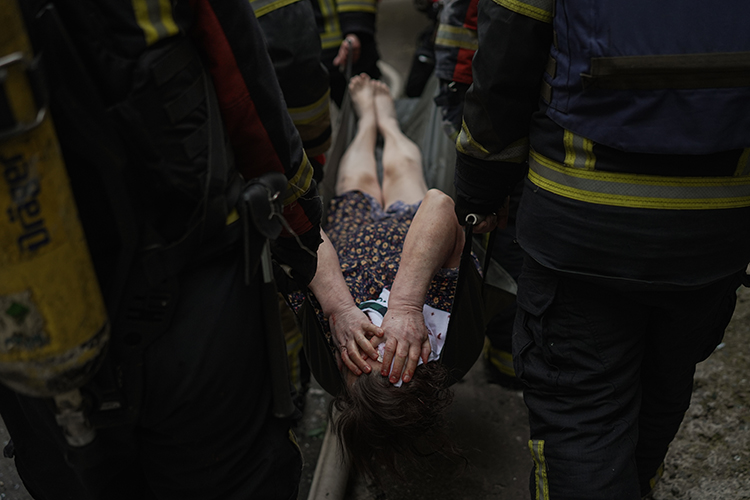
The situation in the Avdiivka area reached its greatest escalation on the anniversary of the Battle of Kruty, 29 January 2017. As a result of intense Russian shelling, local residents were left without electricity, water, and heating, for whom the Ukrainian side set up warming points.


A hot spot on the map
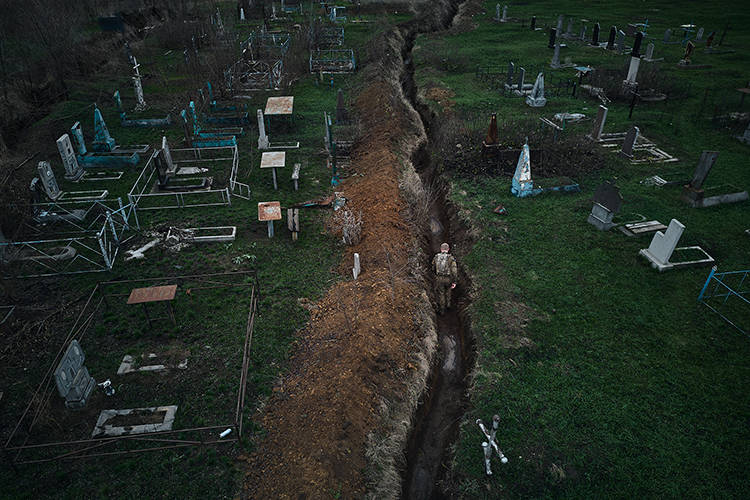
After its liberation and up until Russia’s full-scale invasion in 2022, the Avdiivka industrial zone remained one of the hottest spots on the map of the Russian-Ukrainian war. Fighting here hardly ever subsided for several years, at any time of day. In some places, the positions of the Russian-separatist forces were only a few meters away.
Photojournalist Oleksandr Klymenko repeatedly documented the newly taken positions of Ukrainian troops from 2016 and up until the invasion. At times he stayed overnight with the guys, sleeping in a basement.


“I went there many times—in 2016, 2017, 2018, and 2019. The last time I was there was in February 2022, on the eve of the invasion. The 25th Brigade was positioned there then. Air assault troops. They said: ‘We’re ready!’ Every one of them said it!” — recalls Oleksandr Klymenko, — “Foreign journalists always went there, because the Avdiivka industrial zone was always a place where some fighting was going on—shelling, or a ceasefire would be announced, and then shelling again, etc. In a sense, back then it was the closest place to the enemy.”


For almost 10 years, Russians tried to occupy Avdiivka, and after more than 3,100 days of defense, the city ultimately fell. On 17 February 2023, the Armed Forces of Ukraine withdrew from Avdiivka to avoid encirclement. The Defense Forces moved to more advantageous lines.

This material was produced with the support of The Fritt Ord Foundation.
Oleksandr Klymenko was born in the Chernihiv region. He is a graduate of the Faculty of Journalism at Taras Shevchenko National University of Kyiv. From 1991 to 2024, he was a staff photojournalist for the newspaper “Holos Ukrainy.” In 1992, he documented events in Transnistria, later in the countries of the former Yugoslavia, as well as in Lebanon, Kuwait, Sierra Leone, Liberia, Côte d’Ivoire, South Sudan, and the Democratic Republic of the Congo. During the Revolution of Dignity, while in the very epicenter of events, Oleksandr was wounded. Since the start of Russia’s military aggression in 2014 in the East, he has been photographing events at the front. Oleksandr is the author of several photo albums, including: “Ukraine. 10 Years of Progress” (2001), “Peacekeeping Activity of the Ukrainian Army. The First Decade” (2004), “Through Fire and Tears” (2009), and “Frontline Album” (2016). He also co-authored “Modern History of Ukrainian Journalism. From Maidan to Maidan” with Yurii Nesteriak and Yuliia Nesteriak (2022). He has held solo photo exhibitions at the UN Headquarters in New York (2012), at NATO Headquarters in Brussels (2012, 2013, 2014), in Lithuania (2015), Poland (2015, 2016, 2023), Luxembourg (2015), Norway (2023), and Latvia (2022), and participated in collective exhibitions about the war in Ukraine in the parliaments of the United Kingdom (2015) and Denmark (2014).
Contributors:
Researcher, text author: Vira Labych
Literary editor: Yuliia Futei
Photo editor: Viacheslav Ratynskyi