Ilovaisk is a city in the east of the country whose name is forever associated with tragic events in Ukraine’s history. The operation by Ukrainian forces in Ilovaisk from 18 to 29 August—known as the Battle of Ilovaisk—aimed to cut off a direction that was strategically important for the terrorists, but it ended fatally. Ukrainian soldiers were surrounded. During the withdrawal via the proposed “green corridor,” the columns of Ukrainian troops were fired upon. The Ukrainian advance stopped. The Minsk agreements were signed in Belarus. According to the Office of the Prosecutor General, 366 Ukrainian service members were killed in the fighting for Ilovaisk, 429 were wounded to varying degrees of severity, more than 300 were taken prisoner, and more than 500 people went missing.

Identifying and countering Russian fakes at the very start of the war was quite difficult. Among the narratives propaganda promoted to justify the invasion and occupation of Ukrainian territories, a common one was that Ukraine was in a “civil war” against the “Nazi” Ukrainian authorities.

“The Russian side категорично denies any involvement in the conflict in Donbas. In the view of the Russian leadership, the deaths of hundreds of Ukrainian security personnel were caused by Kyiv’s refusal to follow the route of the provided humanitarian corridor on the proposed terms. There is information that they were leaving the ‘cauldron’ with weapons,” — the Russian outlet “Ukraina.ru”.
The British media outlet The Guardian, in a 2014 article, “Russian soldier: ‘You’re better off not knowing, because the truth is horrible’”, presents evidence of the presence of the Russian army in Ilovaisk against the backdrop of the “inevitable defeat of the rebels.”

Journalists from the British outlet met soldiers who had broken out of the encirclement in the city of Komsomolske (Kalmiuske). They were “bloodied” and “dirty,” “with broken or crushed legs, with shrapnel in their arms, legs, bodies, with knocked-out teeth and broken noses.”
Twenty-eight-year-old Taras Samchuk, a serviceman of the 51st Brigade that was trapped in the ring, said in an interview with journalists that the Russian army was the reason for the encirclement.


The article also mentions an investigation by a Pskov politician, Lev Shlosberg, who obtained recordings of conversations of Russian soldiers from the 76th Pskov Air Assault Division who had returned from Ukraine. The transcript contains the soldiers’ account that almost the entire company was destroyed by Ukrainians. He told The Guardian that Russia’s military leadership is putting pressure on relatives of servicemen who are in Ukraine, so he cannot disclose the source of the information. The human rights organization “Committee of Soldiers’ Mothers” of Russia claims that in the last few weeks up to 15,000 soldiers have been sent across the border.
In addition, The Guardian shared its own online investigation, finding on the social network VKontakte a page belonging to a soldier who is likely fighting in Ukraine. In a post, he said he remains to fight out of a sense of duty to fallen comrades, whose number grows every day. “He appears disillusioned by the secrecy surrounding his mission, and even his close friends have no idea what is happening.”


“The Ukrainian side is finding out who is to blame for the deaths of hundreds of soldiers. At the same time, it seems that no one at a high level cares who should bear responsibility for the deaths and suffering of Ilovaisk’s civilian residents. Almost all the ‘heroes’ of these crimes (committed by Ukrainian security forces) are either at large, or convicted in other cases unrelated to the atrocities against Donbas civilians that took place in August 2014 in the Ilovaisk area,” Oleksandr Asafov stated.”

Photo by Maksym Dondiuk
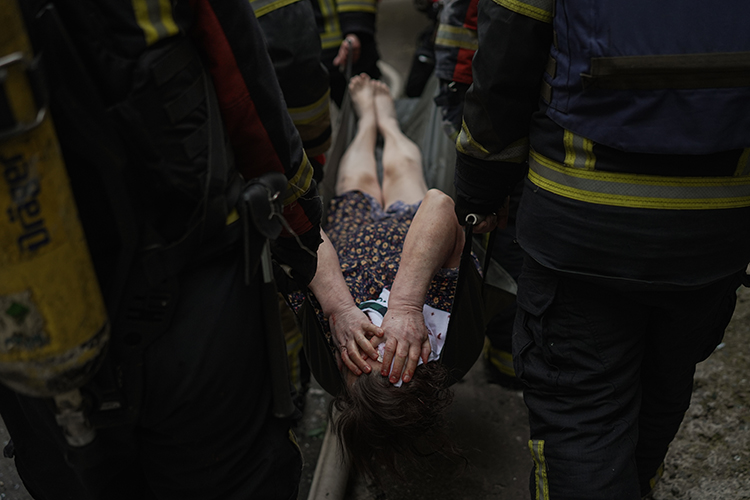
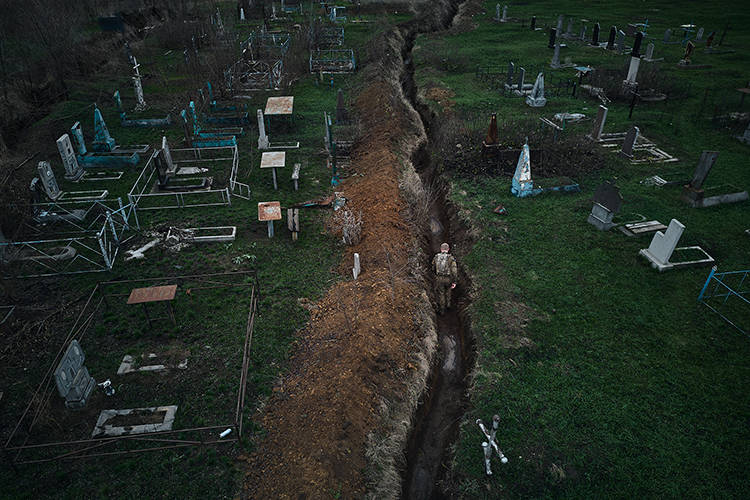
Events of the Russian-Ukrainian war are made up of puzzle pieces of victories and tragedies, personal stories, and photographic materials. The work of Ukrainian documentary photographers is hard to overestimate amid the constant threat to life. By capturing the war on film, they help us rethink the meaning of certain events. Oleksandr Hliadelov, Maksym Dondiuk, Maksym Levin, and Markiian Lyseiko are Ukrainian photographers whose images have forever preserved those who went through the hell of Ilovaisk.
In an interview with the Ukrainian reportage outlet Reporters on 17 August 2021, Oleksandr Hliadelov described how he entered Ilovaisk together with fighters from the Donbas Battalion; how, on the fourth day in Ilovaisk, he was wounded in the leg by shrapnel and evacuated along with the filmed rolls. One roll was lost forever on the road.
“I still can’t stop thinking about that lost roll of film—I know it contains images I miss terribly, because it captured people who were killed while breaking out of Ilovaisk,” — Oleksandr said in an interview with Reporters. “Last year Captain Apis, who threatened to destroy my film, said a phrase to us photographers on Mykhailivska Square that really struck me: ‘Thank you, guys. If it weren’t for you, it would be as if we were never there. And now we are there forever.’”

Maksym Dondiuk’s work trip to Ilovaisk turned into two weeks in encirclement:
“On the outskirts we met locals who had just come out of their basements. Their situation was critical—they were left without medicine, food, or water. The fighters immediately set out to help them, and later also the civilians who were hiding in the basement of School No. 14, where ‘Donbas’ had stopped. Those people didn’t go outside at all. They either stayed in the school basement or, at most, could come upstairs and walk around inside the building. I remember there were children among them: when it got quiet, they ran through the corridors and played with wooden pistols found at the school. And there was an interesting couple—a fighter about 18 and a girl maybe 16. Nearly the same age, they quickly became friends and, when they could, tried to be together. He came here to defend the country; she lived in Ilovaisk and was sitting in the basement,” — the photographer recalls in the interview.
In January 2023, a photo book titled “Ilovaisk” was released for free access, featuring photographs by Oleksandr Hliadelov, Maksym Dondiuk, Maksym Levin, and Markiian Lyseiko. The latter two left Ilovaisk together with the military on 29 August. Their car was the only one to survive when the column was shot up by the Russian army. Everything they saw, endured, and captured on film was turned into the documentary multimedia project “Afterilovaisk.”
Thanks to the courage and professionalism of Ukrainian documentary photographers, Ilovaisk—a bloody stain on the map of Ukraine—becomes a set of first-hand stories and images filled with patriotism and a heroic struggle for the homeland.
This material was produced with the support of The Fritt Ord Foundation.
Worked on the material:
Topic researcher, text author: Yana Yevmenova
Photo editor: Viacheslav Ratynskyi
Literary editor: Yuliia Futei