The Mykolaiv School of Conceptual and Art Photography MYPH, which has existed since 2018, this year launched the MYPH Photography Prize 2024 for young photographers. The school’s founder, Serhiy Melnychenko, in a conversation with UAPF, spoke about the organization of the prize, shared why he decided to support young photographers in particular, how the jury was selected, and how it was possible to create a free competition. He also talked about the impressions of the winners from participating in the first MYPH Photography Prize and the plans for the prize’s development.
— Serhiy, tell us about the MYPH Prize. How did the idea of creating the competition come about? Why did you decide to focus specifically on supporting young photographers?
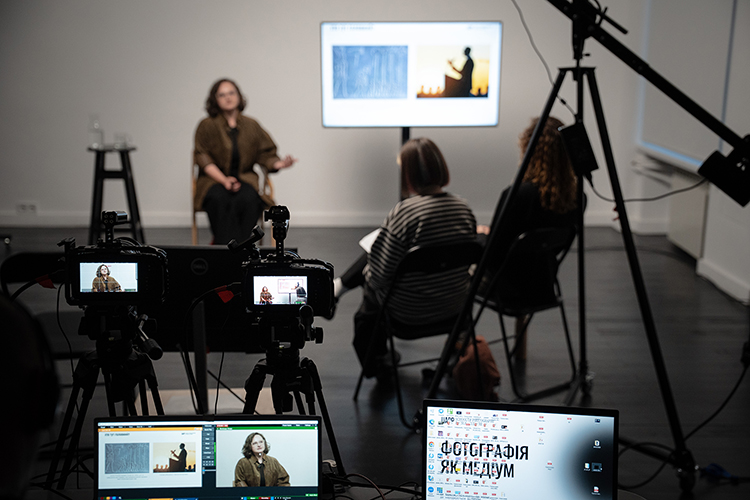
— The idea came primarily from what we have been doing at the Mykolaiv School of Photography MYPH for six years. At first, it was educational activity, but gradually we began to initiate various exhibitions, promotions, sales of young authors’ works to collections, promotion in publications, and so on. This became my initiative back in 2018, when we had just founded the school.

One could say that creating the competition was only a matter of time. I had wanted to do it for a long while, but at first the school lacked the resources or communication. We needed to establish ourselves as a platform capable of attracting partners and sponsors. This year I decided it was time to stop postponing, since no one knows what tomorrow will bring. That is why we created this competition, and we made it free of charge to truly support young authors.

Support begins with small but important steps. For example, we decided that participants would not pay fees to take part. In this way, the competition became a continuation of MYPH’s activities, which already include working with students, graduates, author projects, exhibitions, micro‑grants, scholarships, and more.
The prize allowed us to expand the range: to support not only our students but also other young authors. We wanted to give them the opportunity to express themselves, to show themselves and their projects, and to help promote them through our platform.


— You received more than 500 applications for the competition. Did you expect such a result? How did the selection process of the candidates go?
— Honestly, we expected fewer applications. I thought that the main part of the participants would be our students or MYPH graduates, since we have a certain percentage of active authors. I assumed that in total there would be about 100 participants not connected with the school. But the competition was open to everyone, and the only condition was having no more than five years of active practice in photography.

We were pleasantly surprised by such a large number of applications, and this became possible thanks to the significant support of our partners, sponsors, and the photographic community. A special role was played by reposts made by friends, colleagues, and institutions, even those not directly connected with the competition. Many galleries, organizations, and photographers supported us simply as friends of the school. This helped create wide visibility for the competition.

The first stage of the competition selection was the formation of the longlist. The jury reviewed all applications and selected 63 authors. In the second stage, using a points system, they determined the eight best participants who reached the final. It was a thorough process, as the level of work was very high. The eight winners of the competition were: Oleksii Chystotin, Iryna Kabysh, Aynur Sakisheva, Olya Koval, Heorhii Ivanchenko, Regina Bukvych, Nurlana Udovenko, and Veronika Mol.
— Who were the members of the jury of the MYPH Prize competition? How did you select the jury members to avoid a conflict of interest?
— We had nine jury members, including representatives from Ukraine and other countries. We carefully approached the formation of the jury to avoid conflicts of interest. For example, I myself did not take part in the evaluation, since we expected that a significant part of the applications would come from our students. Also, one of the jury members was my former student, Artem Humilevskyi, but he deliberately did not submit his work in order to maintain objectivity.
— The jury of the competition included:
- Rasmus Vasli (Norway) — gallerist.
- Maksym Kovalchuk (Ukraine) — Director of Dymchuk Gallery.
- Oleksandra Osadcha (Ukraine).
- Darius Vajchekauskas (Lithuania).
- Tatiana Filevska (Ukraine) — representative of the Ukrainian Institute.
- Roger Ballin (South Africa) is a famous photographer.
- Lucia Bondar (Ukraine) — Creative Publishing.
- Lou Proud (UK) is the director of the gallery in London.
- Artem Gumilevsky (Ukraine).
— I organized the competition together with Ivanna Bertrand and the MYPH school team. We engaged a diverse jury to avoid bias or any form of favoritism. Among them were representatives from different fields: conceptual photography, artistic photography, publishing, gallerists, and others. This allowed us to create an objective evaluation system.
— After the jury formed the longlist of 63 authors, each jury member evaluated the works according to their own criteria, taking into account different approaches — from conceptuality to visual implementation. Thanks to this, it was possible to obtain a multifaceted view of the projects, which allowed for the selection of a balanced and strong group of eight finalists.
— Serhiy, please tell us about the finalists of the competition. Which works made it to the list, and what impressed you about them?
— I am very pleased with the results of the competition. When I received the jury’s voting outcomes and then began the stage of preparing the exhibition and printing the works, I realized that everything turned out wonderfully. It was especially gratifying to see MYPH students among the finalists, as this proves that they are working productively, experimenting, and creating something new.


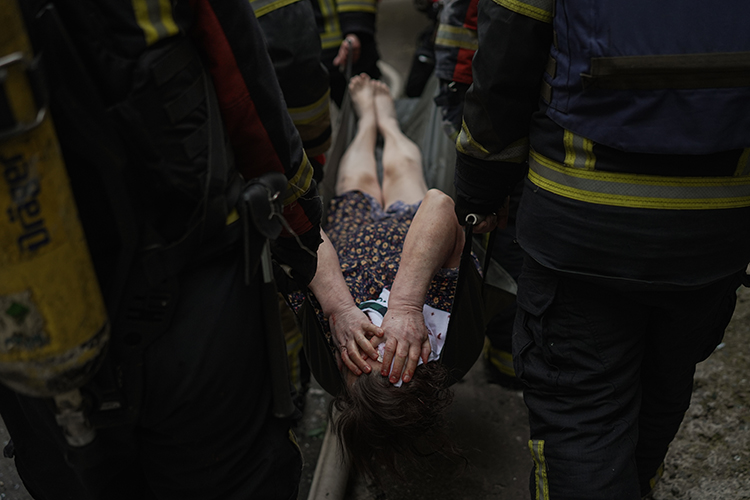
All the finalists deserve their place on the list, as these are people who are truly “in their element” and constantly evolving. I would like to especially highlight the winner of the competition, Heorhii Ivanchenko. His project about the war in Ukraine impressed me not only with its theme but also with its approach. It is not just documentary photography — it is an artistic statement created through conceptual techniques. For a competition of art and conceptual photography, such an approach was ideal.

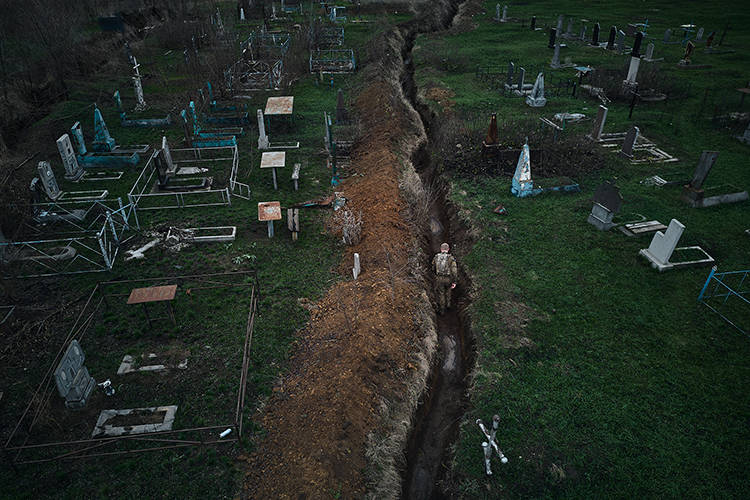
I would also like to highlight the works of Oleksii Chystotin, which continue the traditions of the Kharkiv School of Photography. This is also documentary photography about the war, but created using a wide-angle lens, hand printing, and rich monochrome tones. It is an example of documentary photography balancing on the edge with art photography, which is one of our main niches.

Among the finalists is also Olia Koval with her project, which I had seen earlier. She fully deserved to be in the top eight, just like the other participants.

In general, all the finalists and winners are an example of how persistent work bears fruit. Their success, in my opinion, will serve as motivation for other participants to continue working and to submit their projects next year.
The evaluation was as transparent as possible, since the jury assessed the works by concept and visual implementation, and I know for certain that there was no biased attitude or lack of objectivity. Everything was fair, and I am very proud of the result.
— Were there separate categories in the competition? How were the awards distributed among the eight winners?
— The competition had one general category — "artistic and conceptual photography". We did not divide participants into separate themes or genres, but selected eight winners whose works were included in the final exhibition.
We deliberately did not use the word "finalists", because we believe that being chosen from more than 500 applications is already a victory. Therefore, all eight authors are winners of the competition.
As for the awards, we did not emphasize specific "prize places" in the usual sense. For us, it is important that the winners receive not only certificates or prizes, but also the opportunity to participate in an exhibition that will travel across Ukraine and abroad. Participation in the exhibition is already a huge success and a chance for young authors to make themselves known.

We also offered special prizes thanks to our partners and patrons. Here are a few examples: Heorhii Ivanchenko received a Canon camera, a certificate for training at MYPH, as well as the publication of his project in an art book by Creative Publishing. Olia Koval received a residency in Lithuania. One of the projects, chosen by patron Ivanna Bertgard, received a special prize for the best women’s project. And all the winners of the competition received certificates of various amounts for training at MYPH.
In addition, we agreed with partners to organize exhibitions in Europe. According to the terms of the competition, certain projects will be presented in Norway, in Oslo. We are currently negotiating with other institutions to continue promoting the exhibition abroad. This will allow the works to be shown to a wide audience and support Ukrainian art at the international level.


— How did the winners react to their achievements? Were there any interesting comments or feedback?
— For Heorhii Ivanchenko, this was his first competition, and he admitted himself that he was pleasantly surprised by his victory. He took the risk to apply — and immediately won. This is extremely motivating, and I hope that at least part of his success after the competition is connected precisely with the resonance of this victory. His works are actively published by both Ukrainian and international media.
We created this competition specifically to help authors find their audience, collector, or gallerist. The feedback from participants and winners only confirmed that we are moving in the right direction, supporting young photographers.
— Is the exhibition currently available for viewing in Kyiv? What are your plans for its future?
— Until November 24, the exhibition could be seen in Kyiv, but now it has already been dismantled. We are negotiating for it to travel to Lviv. The plans are to show the works in other cities of Ukraine, in particular in Mykolaiv and Odesa. We are communicating with various galleries and institutions to organize further exhibitions. And also to supplement the exhibition with other projects, but the main goal is to show all the works, because they deserve it.
This is the first prize organized by the MURH school. We perceive it as a kind of birthday of a new project. We plan to make this competition annual, to develop it, to find new partners and sponsors. Next year we will also hold the MURH Prize, because such initiatives are very important for supporting young authors, especially considering the lack of similar competitions in Ukraine.

Taking this opportunity, I want to sincerely thank everyone who supported us in making this event happen and believed in the idea. Special thanks to patron Ivanna Bertrand, who made a significant contribution to the competition. We did not receive any external funding, so everything was organized through our own efforts and with Ivanna’s help.
Special thanks to our partners, sponsors, and jury. I’m grateful to everyone who helped spread the word through reposts and prize organization. Thanks to your support, we were able to attract serious partners to the competition, and as a result, we gathered over 12 logos on our banners and posters.
This support is inspiring. We also plan to create a printed catalog featuring the winners’ works, to preserve this event not only online but also in physical form. This will help keep the memory of the competition alive and motivate even more young authors in the future.
Serhii Melnychenko — photographer, teacher, founder of the MYPH school of conceptual and art photography. He began working in photography in 2009. Since then, he has participated in around 200 solo and group exhibitions, fairs, and festivals worldwide. Organizer and curator of over 40 projects and exhibitions featuring works by MYPH students across the globe over the past 5 years. Winner of national and international competitions and awards, including the “Leica Oskar Barnack Award Newcomer” in 2017 (Berlin), “Photographer of the Year” in 2012, 2013, and 2016 (Kyiv, Ukraine), and “Golden Camera” in 2013. Finalist of “Krakow Photomonth,” “PinchukArtCentre Prize,” “Off_Festival Bratislava 2014,” “DEBUTS 2018,” “Kolga Tbilisi Photo Award,” “Batumi Photodays,” and others. Participant in “Paris Photo,” “Volta Art Fair,” “Photo L.A.,” “Photo Basel,” “Unseen Fair.” Nominee for the “Foam Paul Huf Award” in 2020 and 2023. Selected for the European photography platform “FUTURES” in 2022. Serhii’s photographs are held in private and public collections in the USA, Hong Kong, Ukraine, Poland, France, Germany, China, Japan, the Netherlands, Italy, Switzerland, Norway, and more. In 2022 and 2023, two series — a total of 25 works — were added to the permanent collection of the Alexander Tutsek-Stiftung. In 2023, he received a one-year grant from the Alexander Tutsek-Stiftung to create his own photo project.
Contributors to this material:
Topic researcher, author: Vira Labin
Image editor: Olga Kovalova
Literary editor: Yuliia Futei