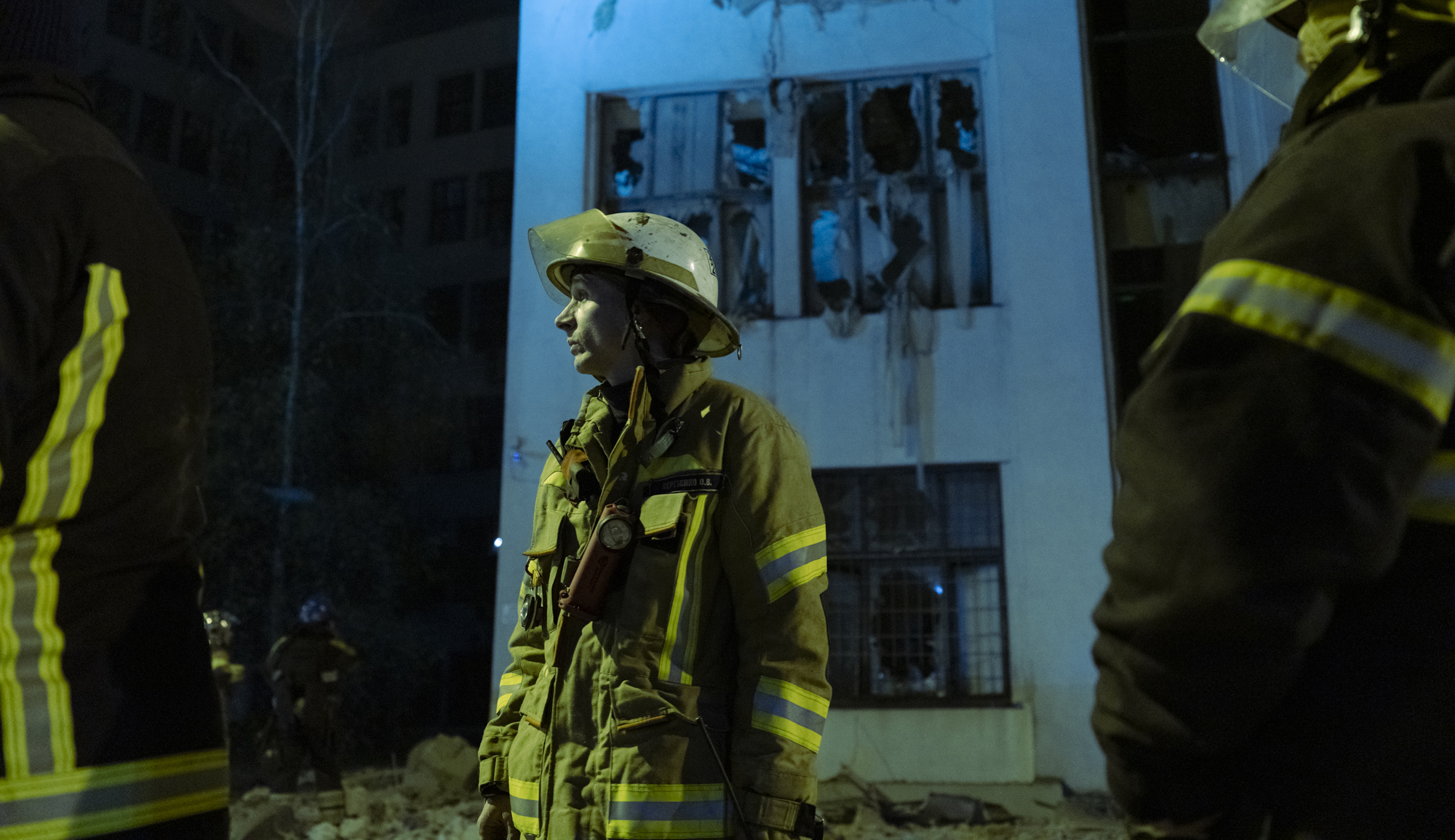
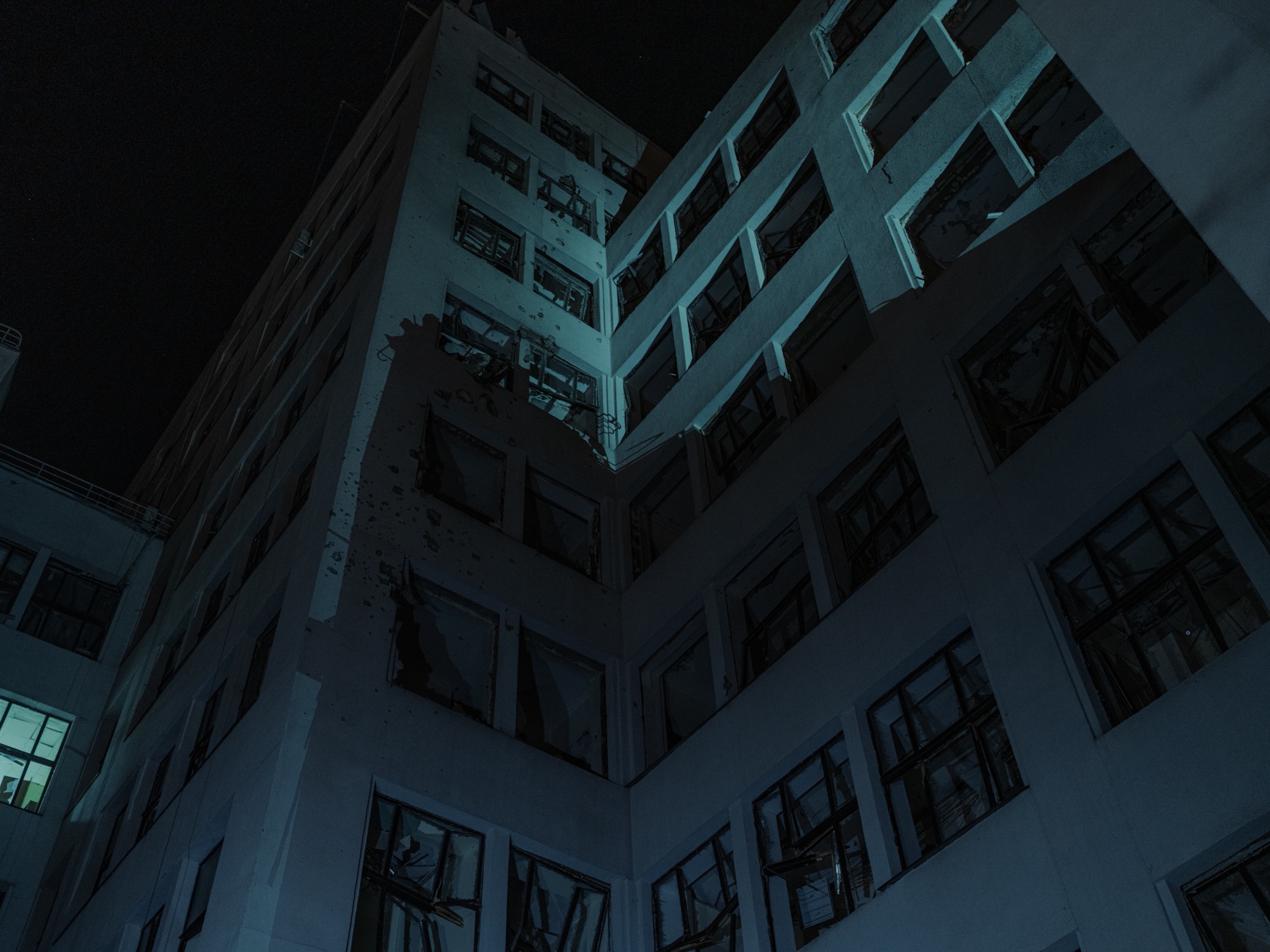
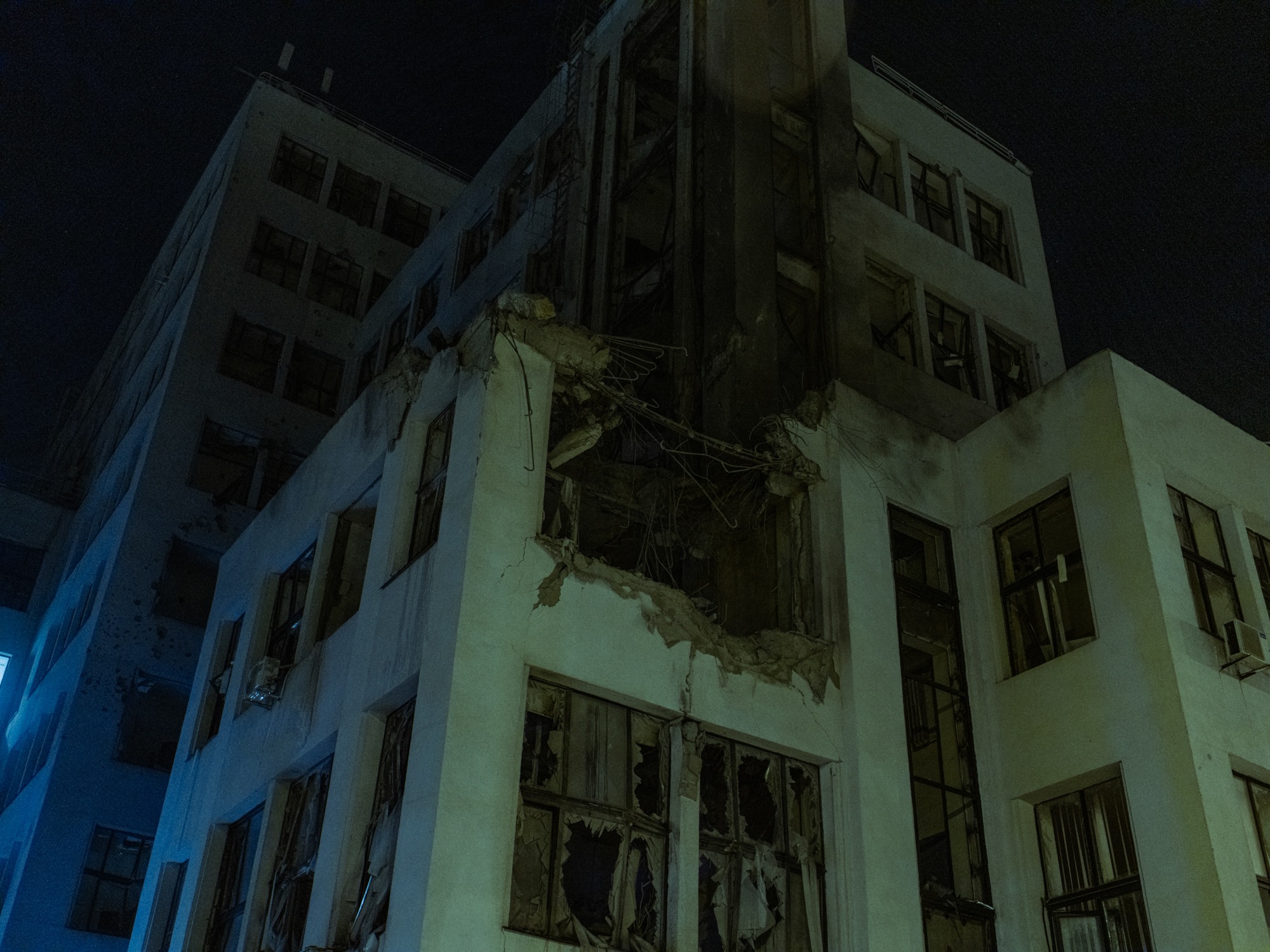
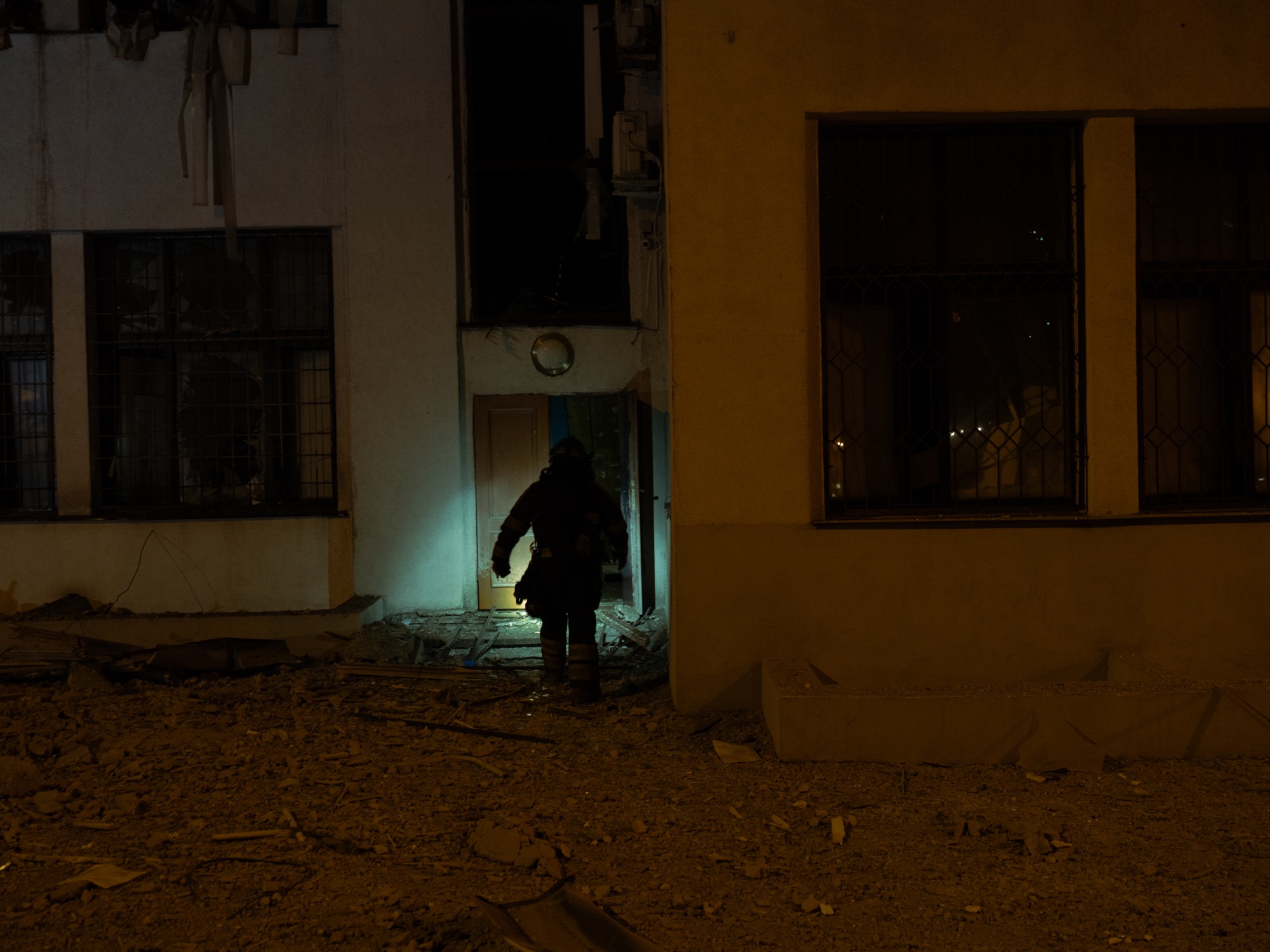
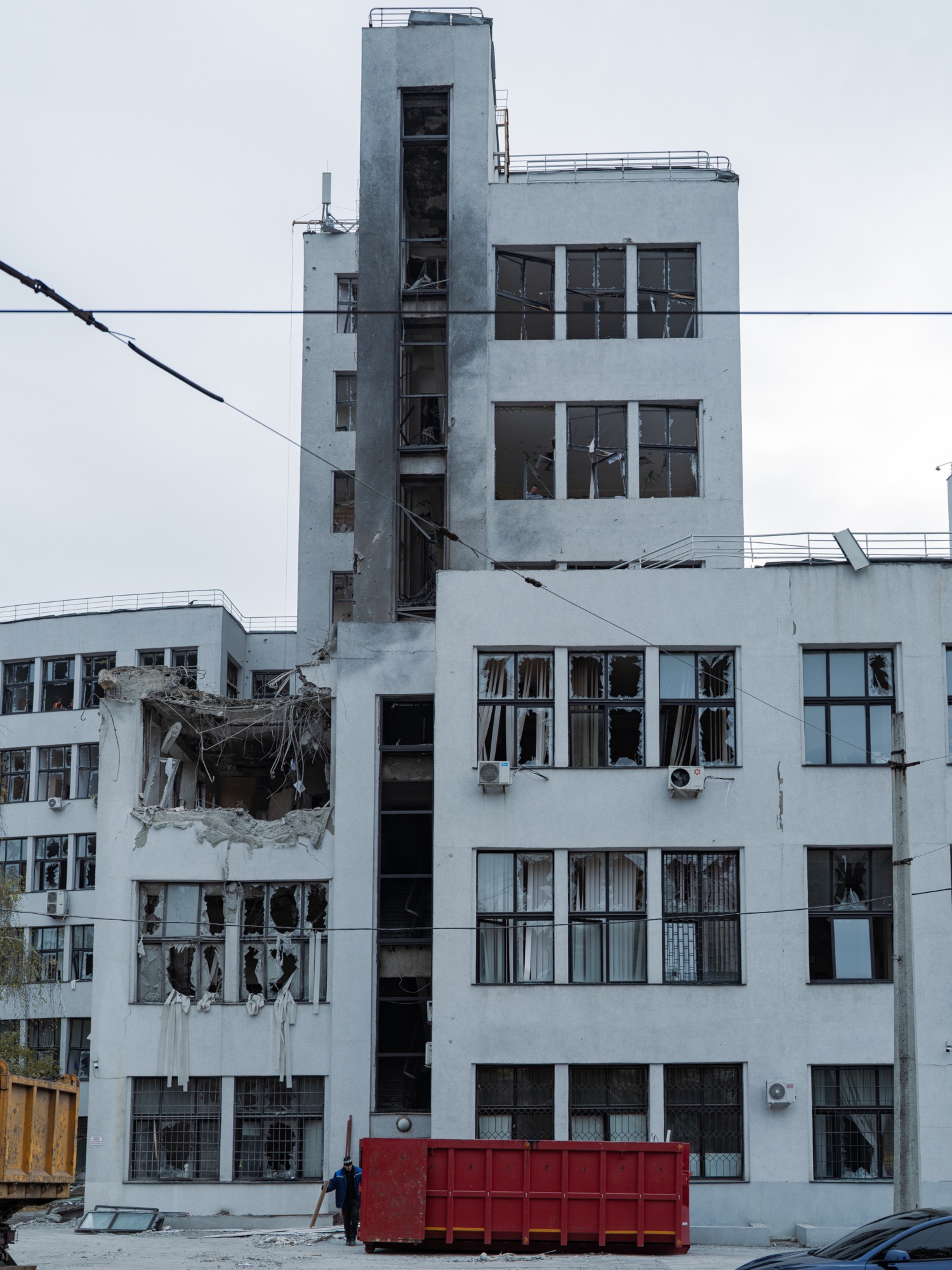
Two years ago, on October 28, 2024, Russia attacked the central part of Kharkiv, damaging the historical Derzhprom building — an outstanding example of Constructivism and a candidate for the UNESCO World Heritage list. The aftermath of the Russian strike on the architectural landmark was captured by photo-documentarian Sasha Maslov.
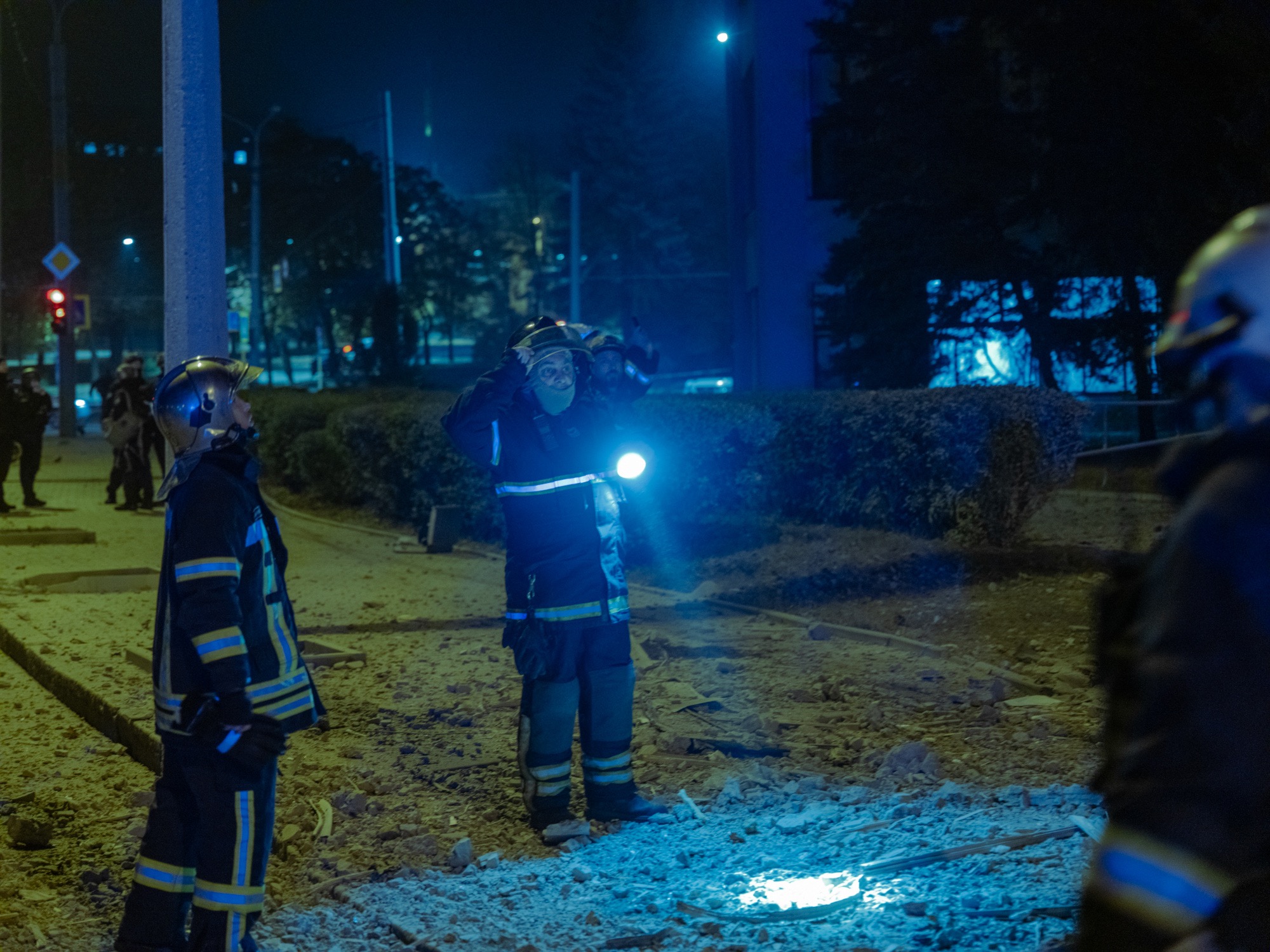
Around 9:00 PM, a Russian KAB-500 guided bomb struck the Derzhprom premises, partially destroying several floors. At the time, according to Kharkiv Mayor Ihor Terekhov, seven people were injured. Oleg Synegubov, head of the Kharkiv Regional Military Administration, clarified that the wounded included various categories of people: from a police officer on duty to passersby in the area around 9 PM.
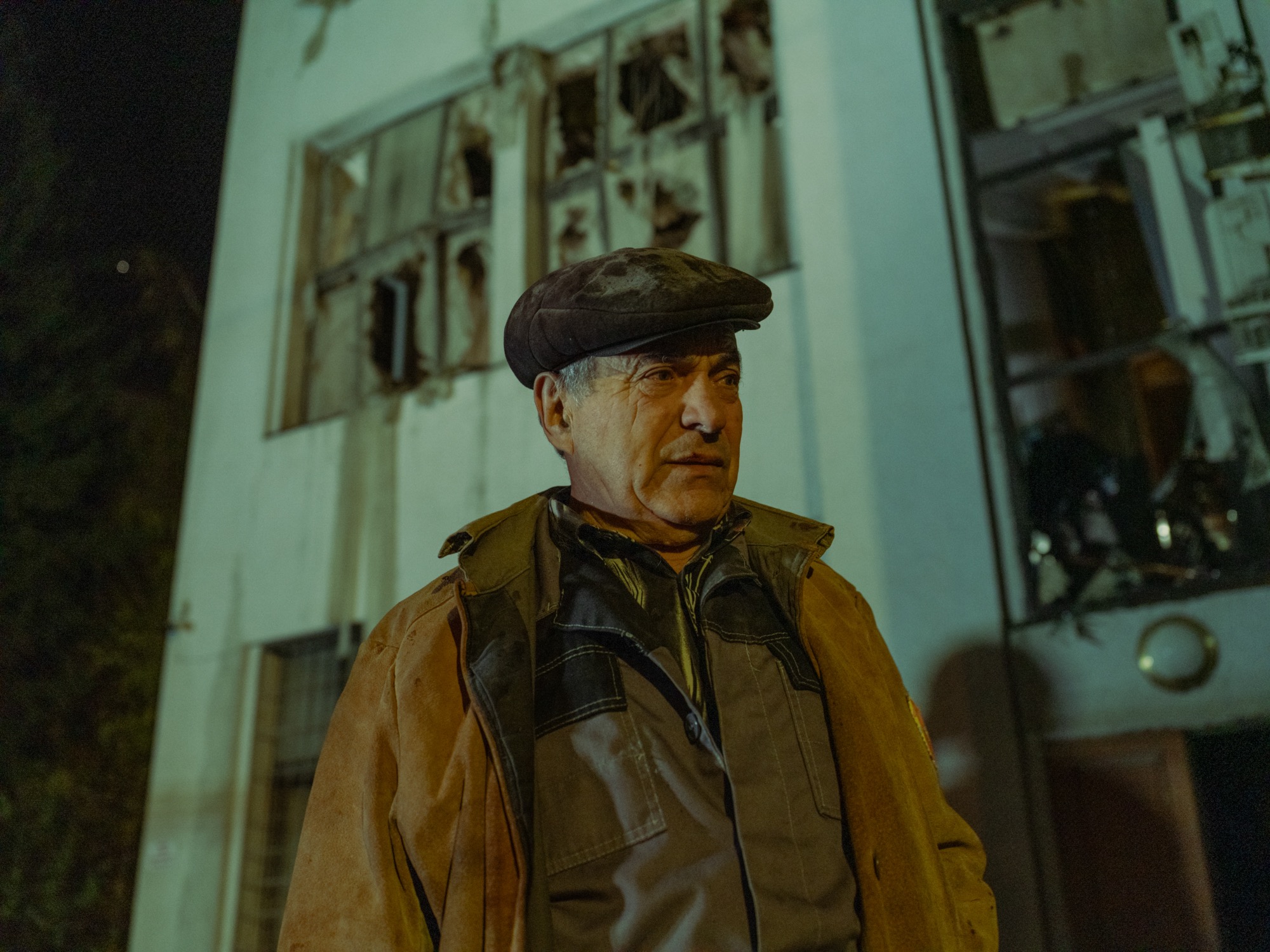
"It is a miracle that more people were not hurt, because usually this place is quite crowded," noted Synegubov.
Volodymyr Tymoshko, head of the Kharkiv Regional Police, reported that the bomb flew into the office of a Commercial Court judge located in Derzhprom.
"The Nazis could not destroy this building during World War II, and now the Russians are trying to destroy it," stated Tymoshko. He added: "This is a civilian site; it has no military significance."
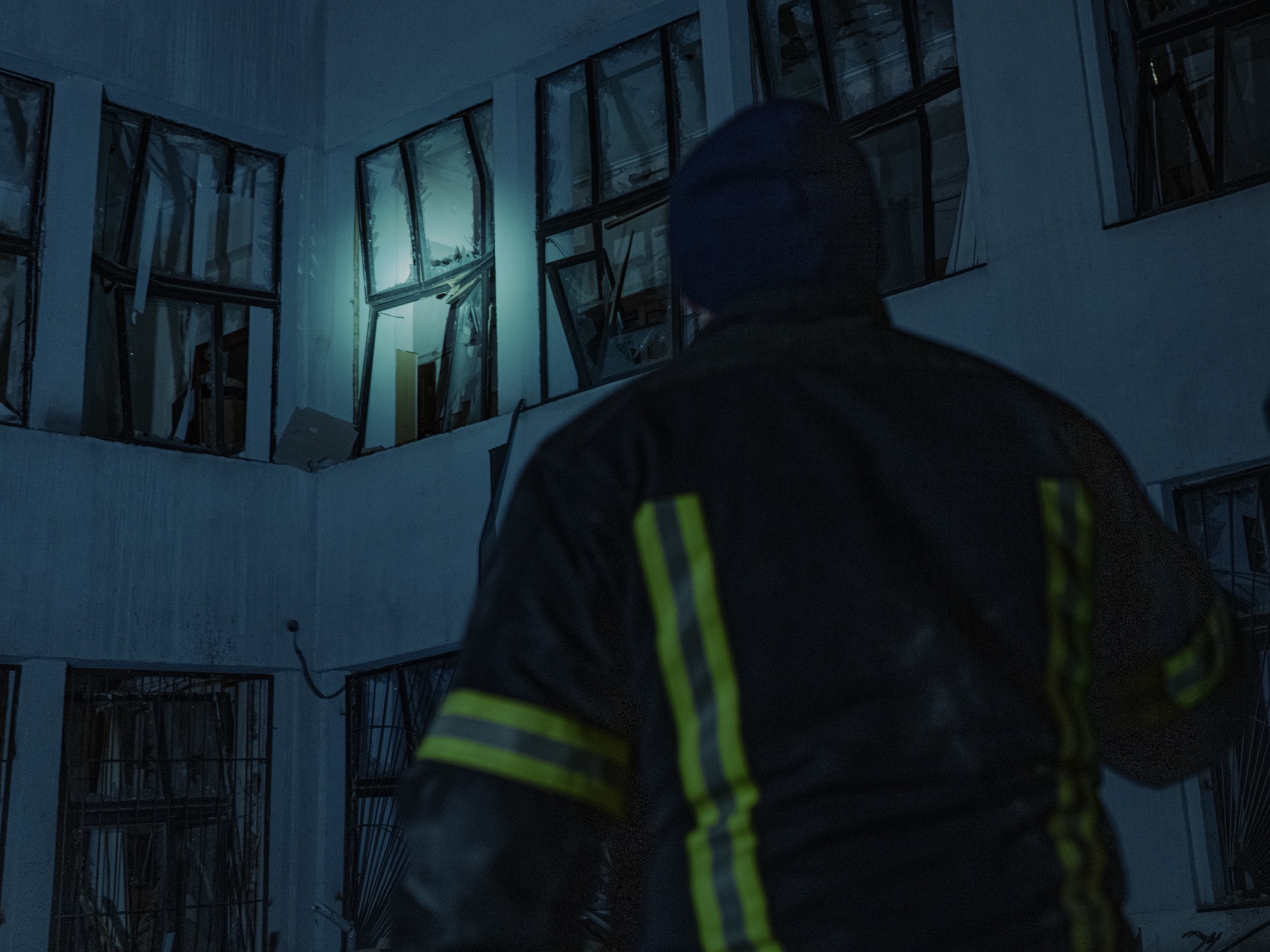
Wartime Context
Derzhprom indeed faced destruction back during World War II. In August 1943, while retreating from occupied Kharkiv, Nazi troops mined Derzhprom. Explosions and fires caused severe internal damage to the building and destroyed equipment. However, reconstruction began that same year, and a major renovation started in the early 2000s.
Russian forces act with similar intent, seeking to destroy not only cultural landmarks but also the civilian infrastructure of Ukrainian cities. As a result of the attack on October 28, 2024, not only was Derzhprom damaged, but also administrative buildings, the regional hospital, and residential buildings — blowing out hundreds of windows across many of them.
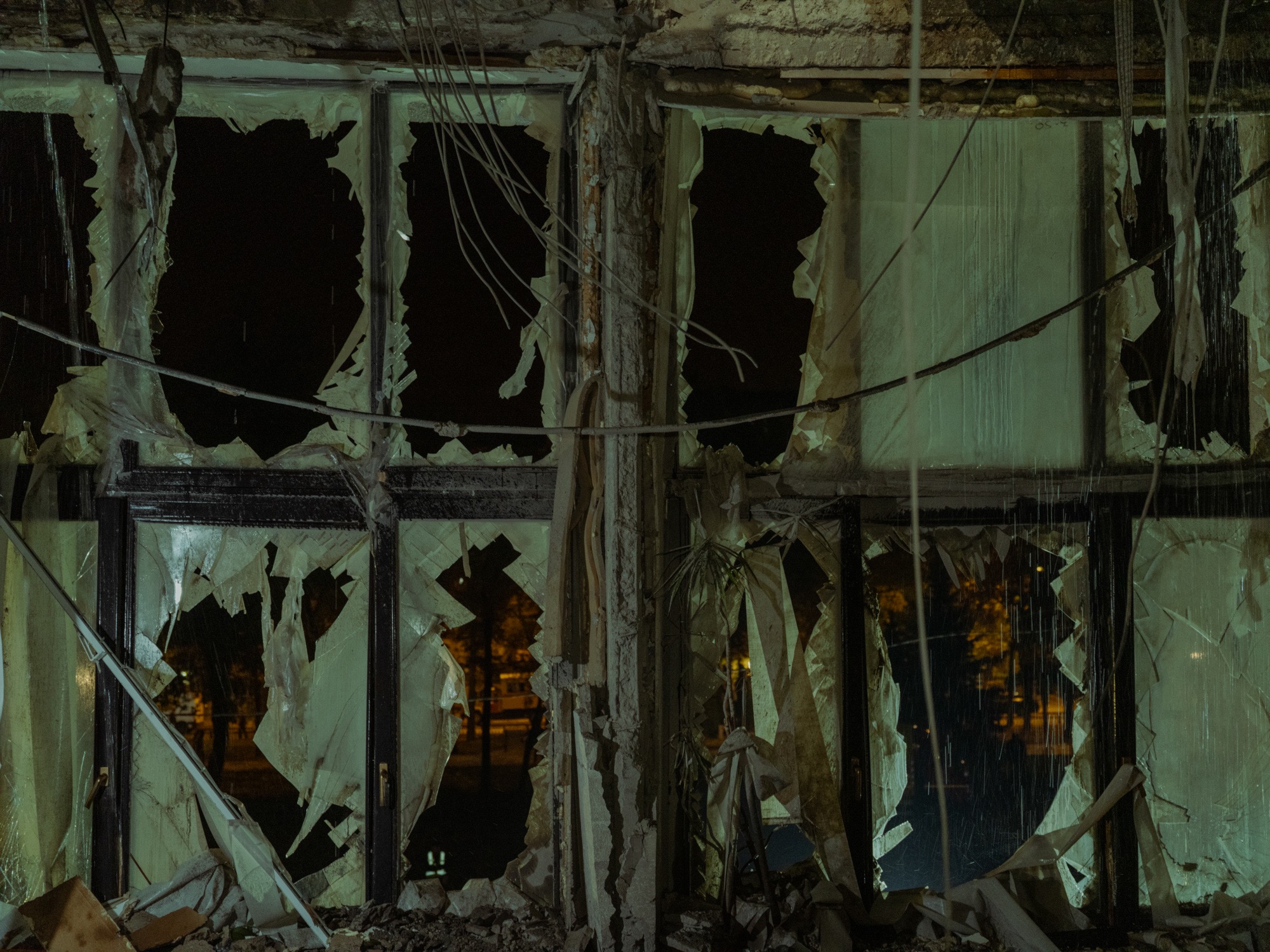
This was not the first strike on Derzhprom during the Russo-Ukrainian War — back in March 2022, the shockwave from a strike on the regional administration building shattered windows in the Constructivist giant. In January 2024, the building’s stained glass and window panes were damaged again during shelling nearby. Less than two weeks after the devastating attack, on the night of November 8, 2024, the Derzhprom building suffered damage once more as Russian guided bombs hit central Kharkiv, also damaging the surrounding infrastructure of Freedom Square, including the dry fountain and park.
President Volodymyr Zelenskyy responded strongly to the attack: "Every handshake with war criminal Putin gives him confidence. Instead of trying to appease him, we must force him into peace through collective resolve."
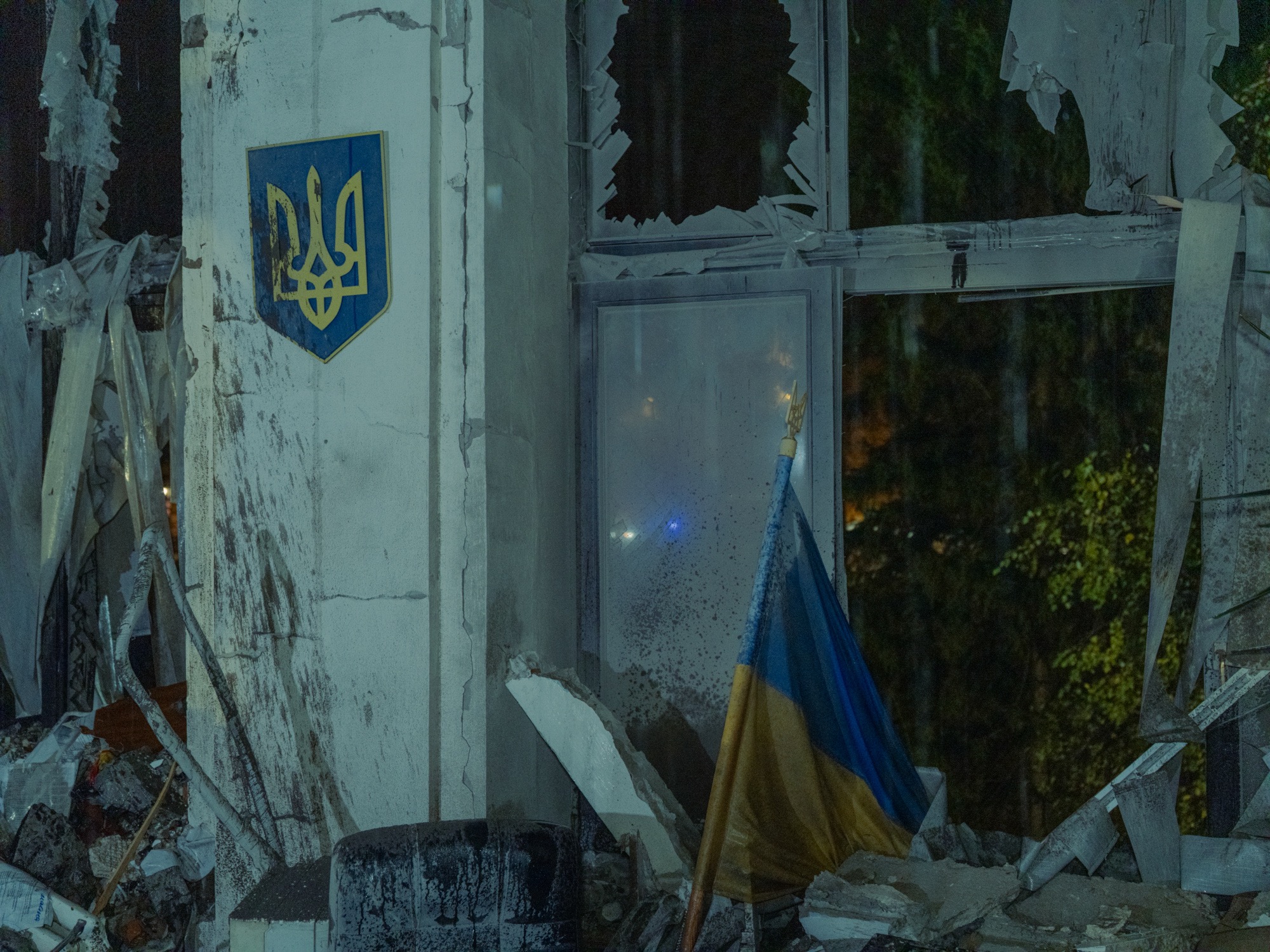
A Landmark of Global Avant-Garde
The State Industry Building (Derzhprom) is the largest Constructivist building in the world and an essential element of Kharkiv’s architectural identity. Built in 1928, it stands as one of the city's most recognizable symbols and holds architectural monument status.
This 13-story skyscraper, featuring an H-shaped silhouette, represented a major engineering breakthrough and became an international model of avant-garde architecture. The complex consists of three main blocks connected by elevated skybridges. Its chief structural innovation was the exclusive use of reinforced concrete without a steel framework — a global first at the time. Upon opening, Derzhprom possessed state-of-the-art infrastructure, ranging from central heating to its own telephone exchange. After the installation of a TV tower in 1955, the structure reached a height of 108 meters, exceeding the Statue of Liberty in the US by 15 meters.
Kharkiv’s Derzhprom stands as the most prominent embodiment of Constructivist principles. Constructivism was an avant-garde artistic movement of the 1920s and 30s that expressed itself in architecture through the rejection of ornament in favor of geometric clarity, functionalism, and industrial materials: reinforced concrete, glass, and steel. However, the Constructivist era proved short-lived: by the 1930s, the Soviet regime banned the style as "bourgeois" and "nationalist," subjecting its practitioners to repression.
Until 1934, while Kharkiv served as the capital of the Ukrainian SSR, Derzhprom functioned as the nation's main governmental hub, housing top state institutions and dozens of industrial trusts. After the capital relocated to Kyiv, government offices moved out, and the space was occupied by local authorities. In 1933, Mykola Skrypnyk — head of the Ukrainian SSR government in 1918, People's Commissar of Education, and a key figure behind Soviet "Ukrainization" policies — committed suicide inside Derzhprom, an event that presaged the end of Ukrainization and the onset of mass repressions.
Derzhprom and Photography
In the late 1980s, Kharkiv's Derzhprom gave a new name and urban identity to a collective of young photographers from the Kharkiv School of Photography. Founded in 1984–1986 under the name "Kontakt," the group gathered in a tiny attic laboratory inside the Palace of Culture. There, photographers experimented with black-and-white documentary photography, striving for heightened clarity and depth in their shots.
Led by Misha Pedan, Leonid Pesin, and Sergiy Bratkov, the group adopted the name "Gosprom" ("Derzhprom"). This followed a high-profile 1987 exhibition at the Palace of Students that attracted thousands of visitors daily despite KGB attempts to shut it down. The name underscored the authors' deep roots in the Kharkiv environment, while their style captured Conceptualist aesthetics: seriality, everyday themes, and a deliberate departure from academic conventions.
"Derzhprom was always a symbol of the city, and as such, it pointed to the group's roots in the Soviet past while linking it to the present and future of Kharkiv photography — or at least, that is how the group's photographers perceived their name and role in the Kharkiv School at the time," — note scholars at the Kharkiv School of Photography.
In the early 1990s, following the collapse of the USSR and subsequent economic hardships, the Gosprom group disbanded. Some photographers changed careers, while others moved abroad. Nevertheless, the group earned a lasting place in Ukrainian art history, and years later, Sergiy Bratkov dedicated a standalone photo project titled "Derzhprom" to the city’s legendary symbol.
Derzhprom has consistently served as a hub of cultural and technological progress. In the late 1940s, the country's first television broadcast originated from Derzhprom, and the first Ukrainian TV studio opened here shortly after. In 2019, directors Tetiana Kononenko and Matilda Mester dedicated their documentary film "The Building" to the landmark, portraying Derzhprom as a "time machine" through a blend of contemporary footage and 1920s archives.
More Than an Architectural Symbol
Derzhprom is the world's largest Constructivist building and the first state office complex constructed in modernist forms, exerting a significant influence on global architecture. In September 2023, UNESCO added Kharkiv's Derzhprom to its list of sites under enhanced protection. The building is also nominated for inclusion in the UNESCO World Heritage List.
Located in the heart of Kharkiv on Freedom Square, the Derzhprom complex and its surrounding architecture form a invaluable cultural heritage site: neighboring structures include the Karazin Kharkiv National University buildings and the Slovo Building, home to Ukrainian artists of the Executed Renaissance era. Derzhprom remains a major tourist destination — for the 30th anniversary of Ukraine's Independence, an observation deck offering panoramic views of Freedom Square was installed atop the building.
Meanwhile, ongoing Russian aggression daily threatens not only human lives, but also Ukraine's cultural heritage.
Sasha Maslov is a Ukrainian-American portrait and documentary photographer, born in 1984 in Kharkiv. He has been working in New York since 2008 and currently lives between New York and Kyiv. His photographic practice encompasses portraiture, documentary stories, and long-term personal projects focused on human lives, historical memory, and identity.
He collaborates with leading international publications, including The New York Times, The New Yorker, The Guardian, The Wall Street Journal, Esquire, Forbes, TIME, and the Financial Times. His work has been exhibited in galleries and cultural institutions across Europe, Asia, and North America.
Among his most prominent long-term projects are Veterans: Faces of World War II (2017), dedicated to WWII veterans from various countries, and Ukrainian Railroad Ladies (2020), documenting the lives of women working on Ukrainian railways. He is also the co-author of the photobook Saints (2024).
Since the start of the full-scale Russian invasion, Maslov has actively documented the war in Ukraine, its impact on society, and the lives of its people. His work has been recognized with international photography awards, including the Sony World Photography Awards, and featured among the finalists of the Magnum Photography Awards and LensCulture.
Credits:
Researcher, Text Author: Yana Yevmenova
Photo Editor: Olha Kovalova
Copy Editor: Yulia Futey