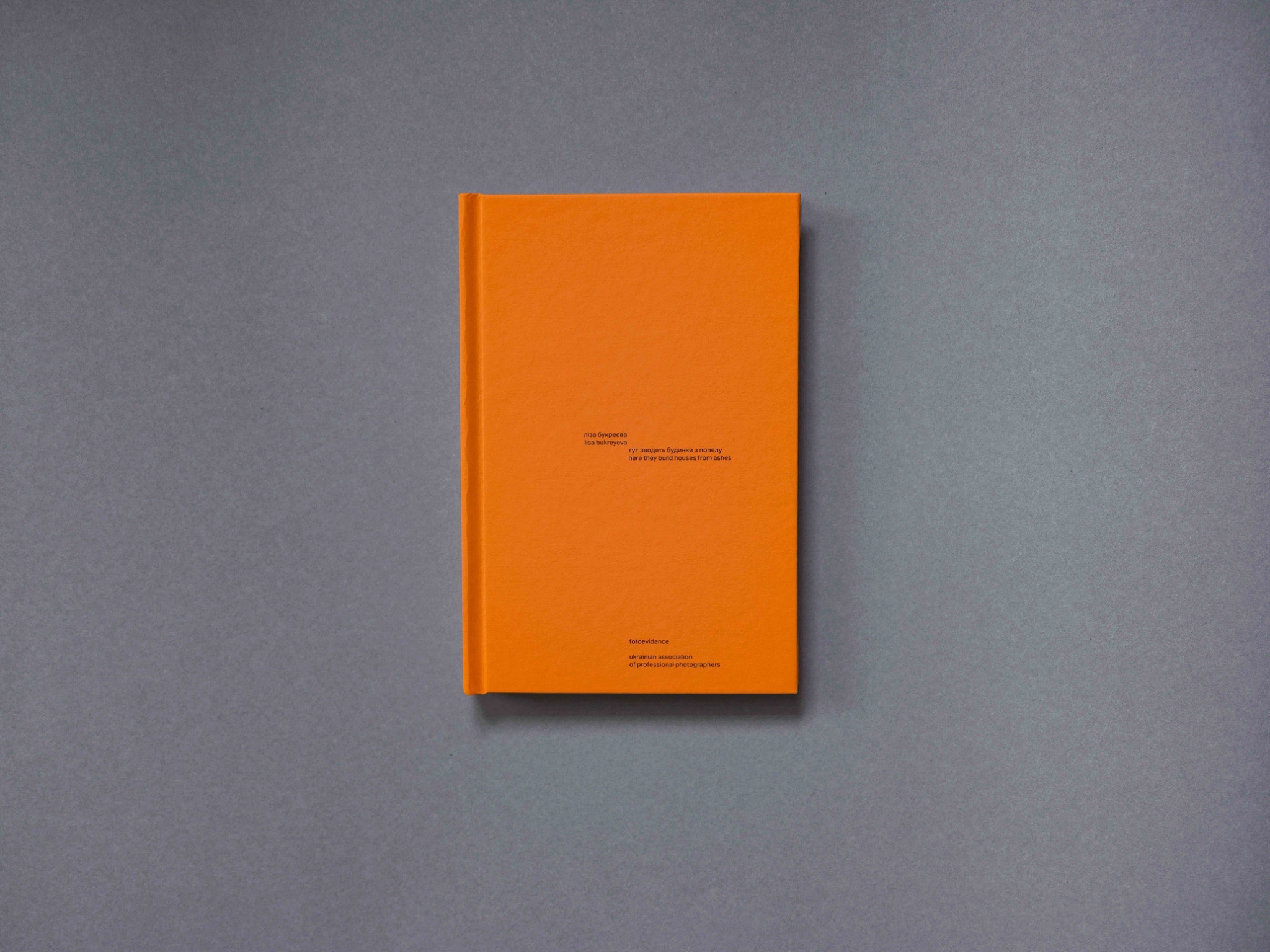
Liza Bukreieva’s photobook “Here, Houses Are Built from Ashes” is a story about the everyday lives of civilians in de‑occupied and frontline territories, where everything can appear ordinary if one does not look closely. It is not a story about traumatic experience, but about attempts to keep living with it and to make plans — if not for the distant future, then at least for the coming spring. It is a story about arranging daily life among ruins and about transforming objects that kill into things for living.
Liza Bukreieva speaks about how people make plans amid minefields and create a sense of home out of ammunition crates, about life inside an administrative building and a grave in a family courtyard, and about very tasty pastries made by a local priest. Below is the author’s direct speech.
Spring and a moped
At the end of 2023, I traveled to photograph territories in Kherson region that had been liberated from Russian forces. I wanted to document stories about people’s experiences of life under occupation. Instead, when I arrived in Kherson region and began speaking with people, they talked far more about the future and about their plans — for example, painting the roof of a house in winter. There was no point in pulling these people back into their experience of occupation if they wanted to move forward. Unlike Kyiv and Chernihiv regions in 2022, when residents wanted to talk about what they had lived through during occupation, in Kherson region in 2023 there was no such desire at all. I realized it was worth photographing a different project — about everyday life during the war, which appears almost normal and ordinary if one does not look closely.

The photobook “Here, Houses Are Built from Ashes” includes photographs I took at the end of 2023 and throughout 2024 in Kherson, Kharkiv, Donetsk, and Mykolaiv regions, as well as in the Nikopol district of Dnipropetrovsk region. The idea for the title came to me while I was photographing in southern Ukraine, where visually everything looked horrific — ruins everywhere and mined land — while people were making plans for spring, such as buying a moped or helping a neighbor repair a car. When I traveled to Kharkiv region and Donetsk region, I saw people creating homes out of whatever materials they had at hand — rebuilding summer kitchens, using ammunition and spent shell crates as construction material. One person even made a ventilation hood in their house out of a propellant tube. People truly are building houses from ashes.
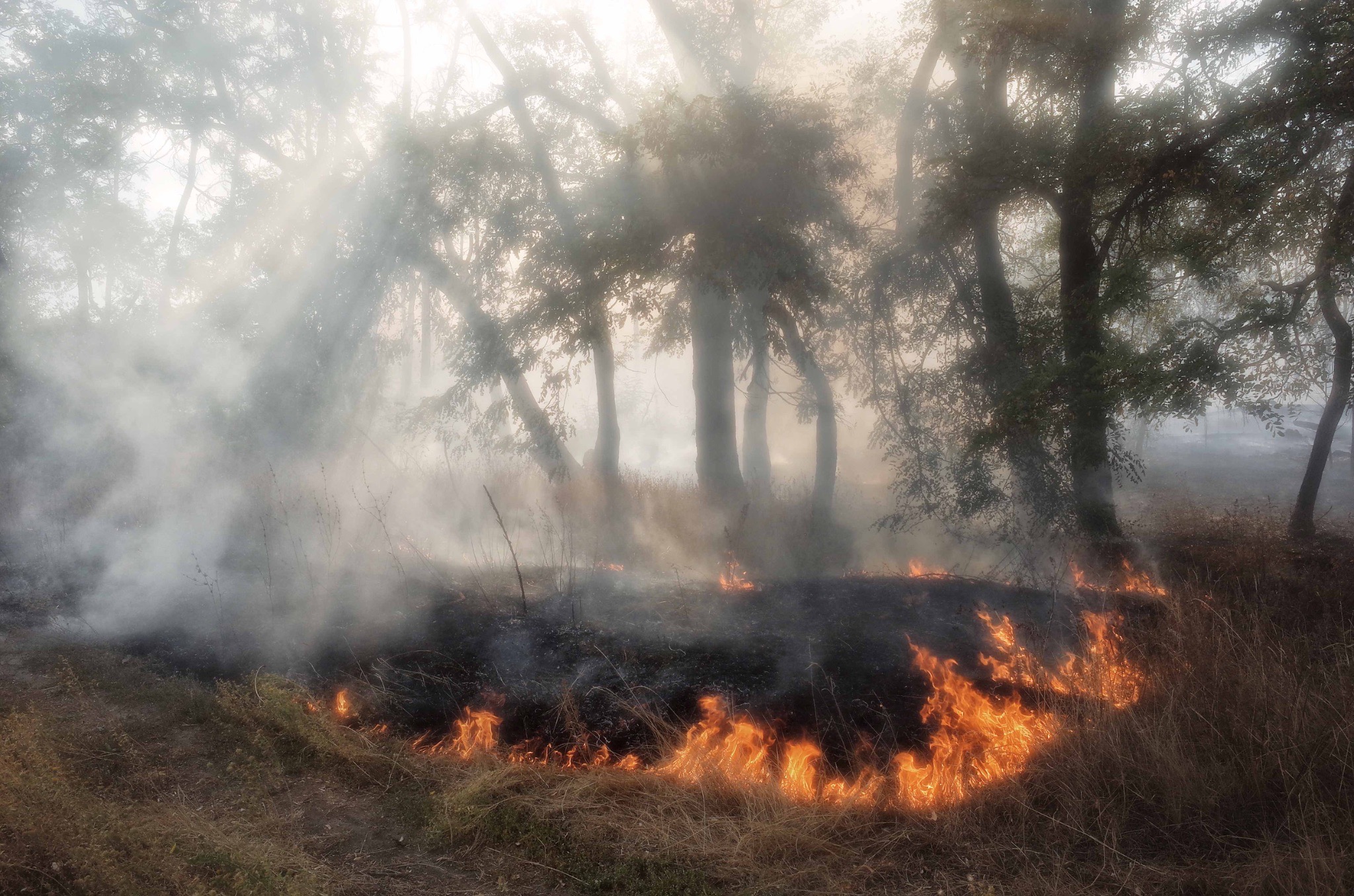
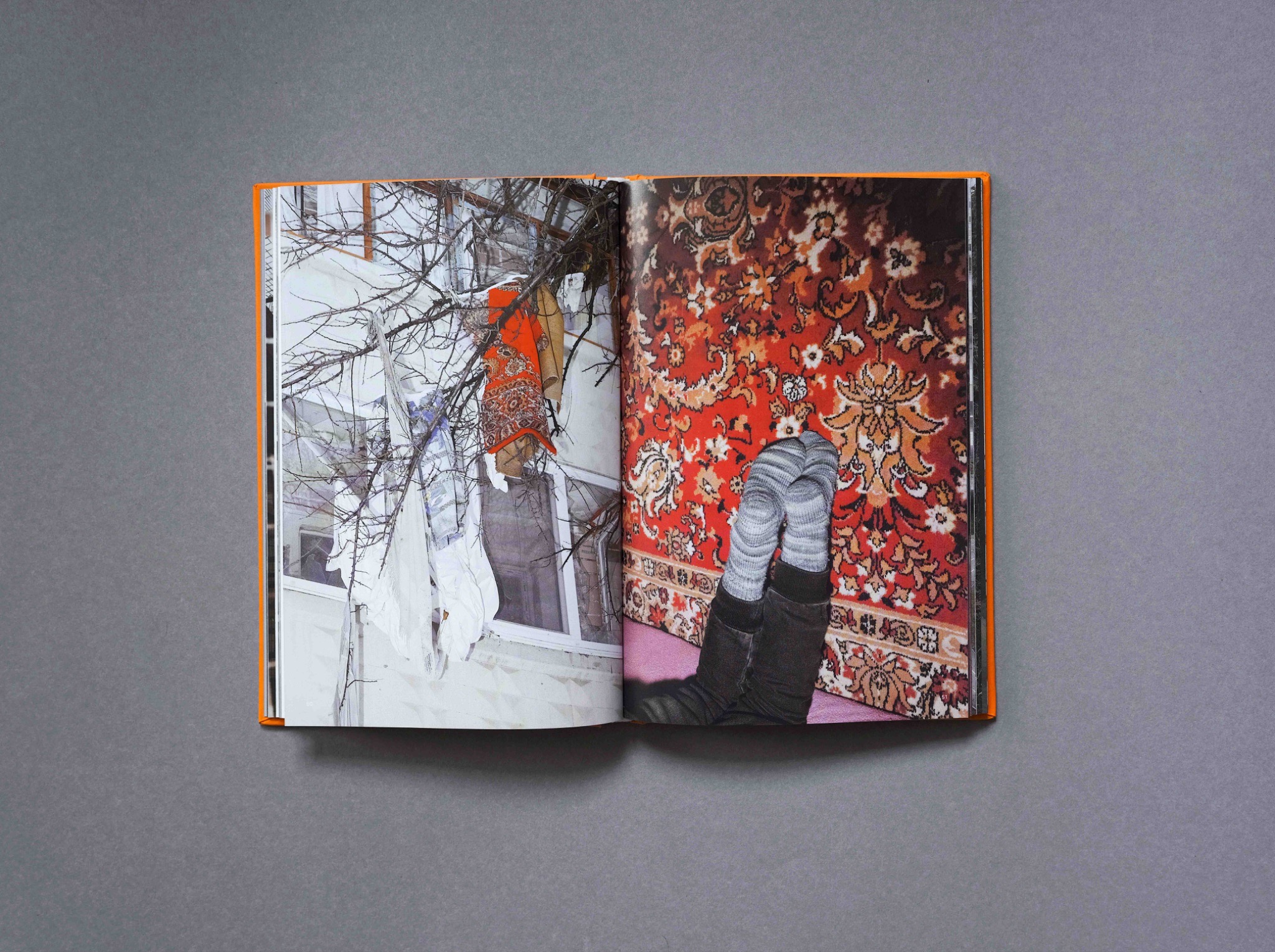
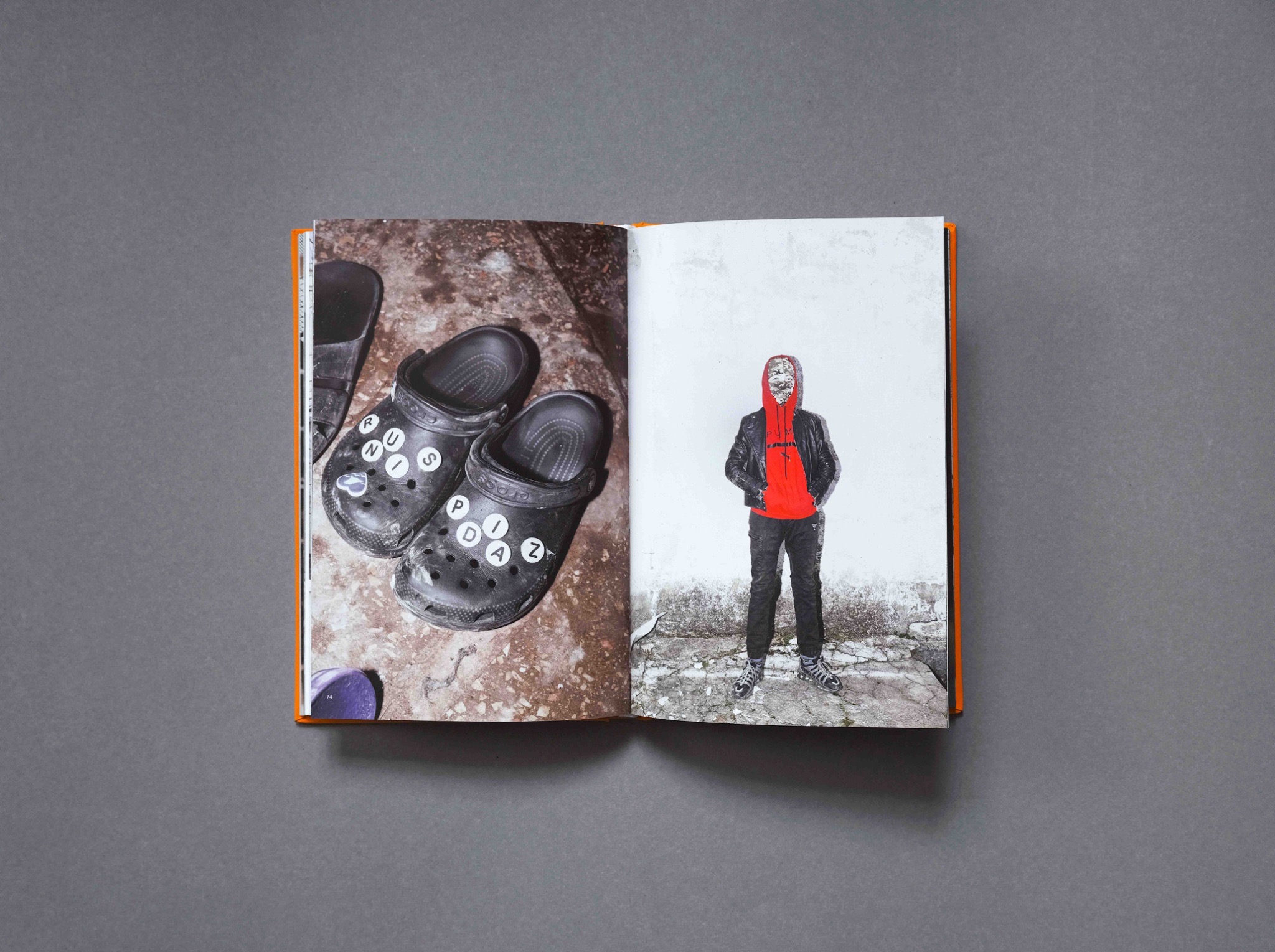
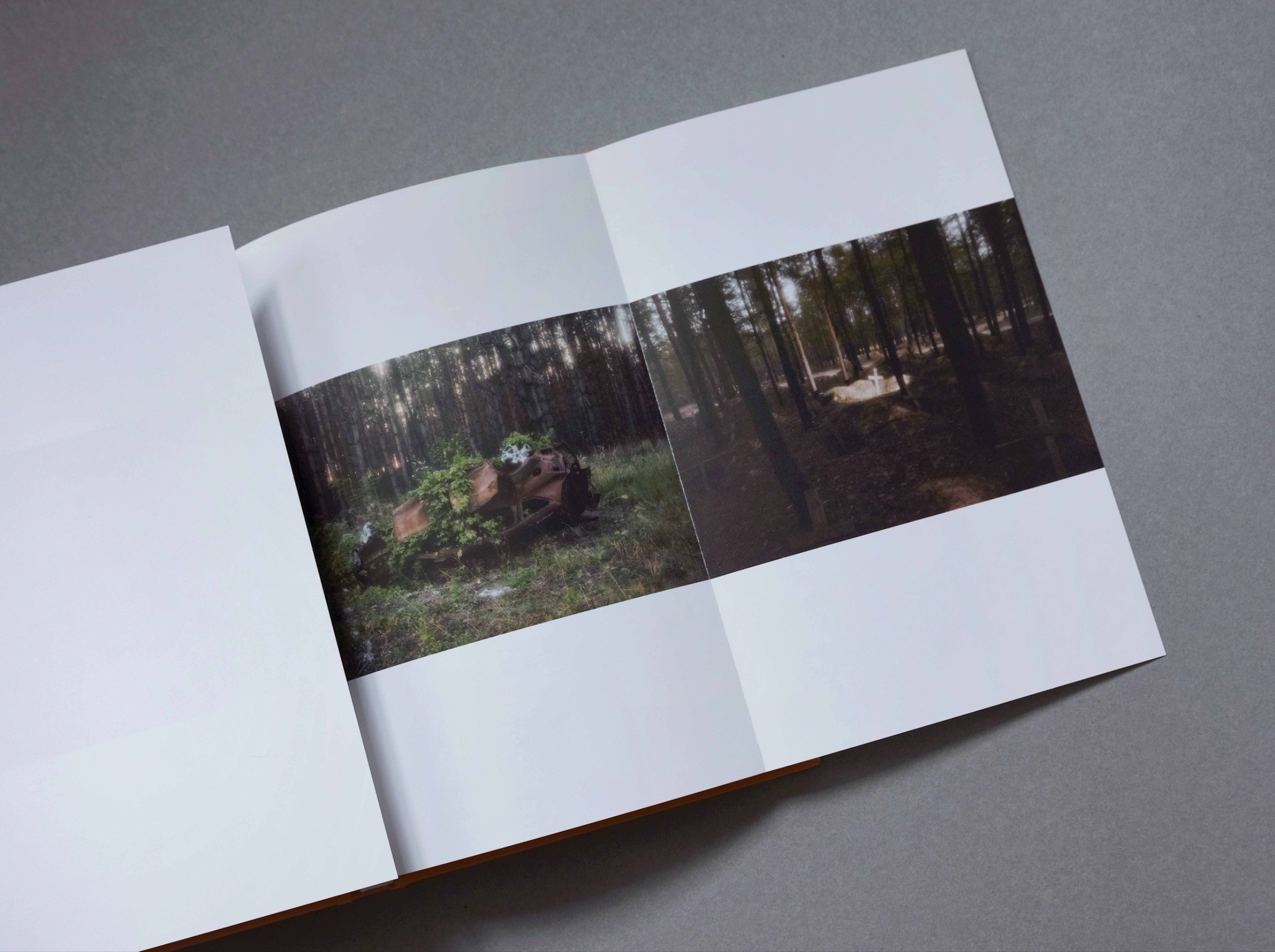
The photobook is documentary in nature and at the same time filled with symbols. The cover is a bright orange, like fire, while the endpaper stock is gray, like ash. The photographs of people and the details of their everyday lives are vivid, shot with flash. For landscape photographs, I used filters that softened the image to create a sense of a blurred, uncertain future. As a result, the portraits and landscapes strongly contrast with one another in mood and aesthetic.
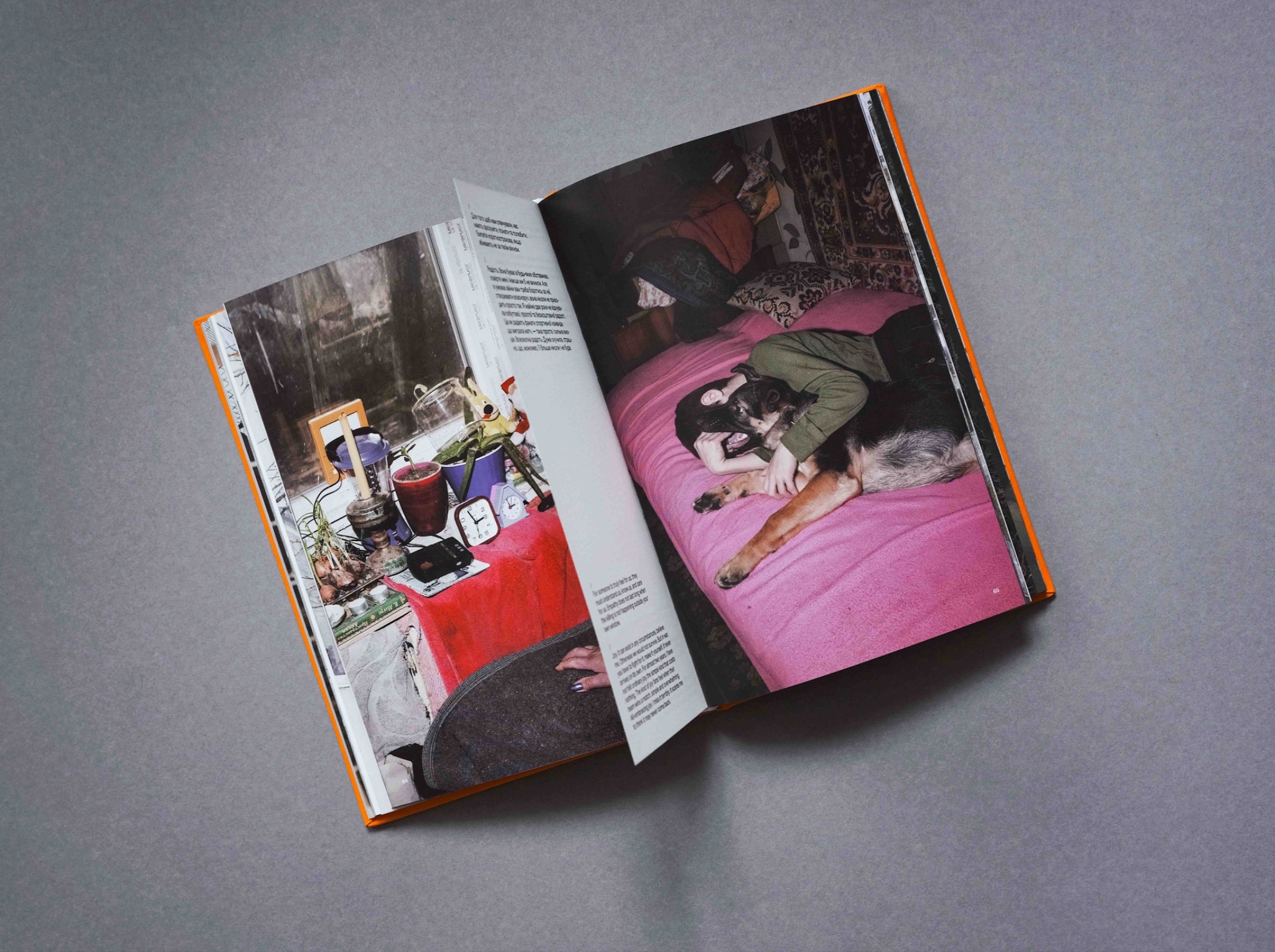
The photobook includes a textual component — my travel notes and captions to the photographs, though not placed directly beneath the images. All information about the photographs appears at the end of the book, where expanded captions can be found by page number. When working on the selection of images for the book, I wanted to create space for viewers to explore on their own. Most of my photographs depict ordinary life at first glance. Yet when you look more closely, you notice that a house wall is not made of bricks but of ammunition crates, and that behind a new children’s trampoline there are traces of shelling and destruction.
Pastries and cherries
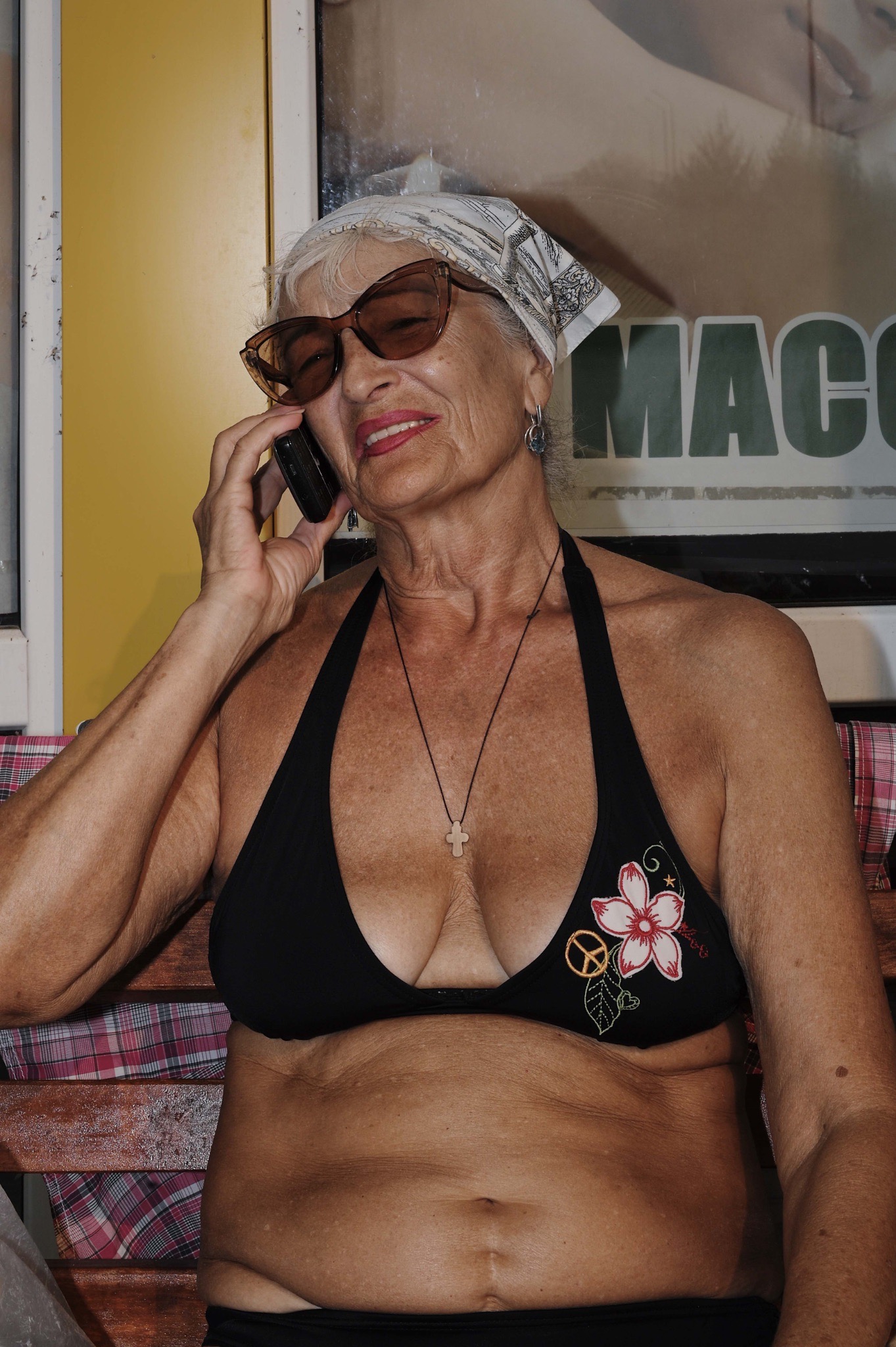
While working on the project, I made many portrait photographs. I photographed civilians with flash and a wide‑angle lens, which always makes the images appear slightly more aggressive. Of course, I warned people about the flash, as it could be triggering for them. Later, when I posted some of the photographs on social media, friends and acquaintances began asking me to photograph them in the same way. I became convinced that people from frontline areas look good and dignified in my photographs. I even have frames where people are smiling. I did not set out to add great drama to the images; on the contrary, I wanted to show very different kinds of life. I should add that none of my photographs are staged — we did not spend a long time choosing light or locations. I usually photographed people where I met them.
I was deeply affected by the Nikopol district. It was my first time there, and the photographs from Nikopol and Marhanets are, for me personally, both the warmest and the most painful. There are many teenagers and children there, even though they should be evacuated. I witnessed police issuing a mother her third fine because her children were still staying in immediate proximity to the combat zone. In 2024, FPV drones were flying there literally around the clock, not to mention artillery.
The photobook includes a portrait of Larysa from Marhanets, who has been living in a shelter in an administrative building for more than a year and hardly goes outside. At the beginning of Russia’s full‑scale invasion, she underwent cancer treatment and now has a panic fear of shelling, which is constant there. Her home was hit, and she and her husband simply have no opportunity to leave. Her husband comes to the administrative building to see Larysa, brings food, stays overnight, and then goes back to restore their house.
At the time of de‑occupation, very few people might still be living in villages, which is why the project’s protagonists are often the sole residents of their settlements. This is how I met Volodymyr, for example — only a few people lived in the village besides him. The man built a house out of crates. The book also includes a portrait of a man and a woman whose son is buried in their courtyard. They told me their story themselves and showed me where their son is buried.
In one of the de‑occupied villages, I met a priest who, during the occupation, prepared pastries and delivered them to people. He was convinced that a priest would not be killed and stubbornly rode his bicycle through all the checkpoints, handing out food to people. Villagers told me this story when they saw me holding a pastry the priest had given me. There is no photograph of the priest in the book, as he categorically refused to be photographed and literally ran out of the frame. However, there is a photograph of the pastry — an object that became symbolic for many.

People of different ages appear in my photographs, yet there are almost no people aged 25–35. I remember a teenage girl from Nikopol — the book includes her photograph where she is sitting on a fence beneath a cherry tree. She asked me many questions about the camera and about the work of a photographer in general.
I met and got to know most of the book’s protagonists by chance. I would drive to a settlement, park for a long time, and then walk around looking for people. I always explained who I was and why I was photographing, showed my images, and people usually agreed to talk and to be photographed. Personally, I do not know how I would react to someone stopping near my home and running into my yard. But conversation resolves many things.
Life and survival
“Here, Houses Are Built from Ashes” is another book about the war — but about the everyday lives of people in difficult circumstances. About civilian life in de‑occupied and frontline territories that, at first glance, looks normal. Almost normal. Yet this impression is deeply misleading, because people are adaptive beings who know how to survive and arrange their lives under any conditions.
The book does not include photographs, for example, of elderly women walking along broken roads pulling their belongings in carts, or of families with small children living in makeshift tents. Life that may look entirely ordinary in photographs is not ordinary at all. This is what my book is about. Residents of de‑occupied and frontline territories lack access to water and communication; there are constant power outages, which is why Starlinks and generators appear in the photographs. In fact, almost every image in the book carries a mark of war.
The visual language of the book is not so complex or conceptual that it would be difficult for someone to understand. It seems to me that good art does not require complicated explanations and is accessible to everyone. I hope that “Here, Houses Are Built from Ashes” will have many attentive viewers who may even see more in it than I do.
Yelyzaveta Bukreieva — a Ukrainian street and documentary photographer. She participated in the ICP Concerned 2020 exhibition in New York and was a finalist of the Italian Street Photography Festival 2021. Her photographs have been published in Eyeshot Magazine, The Village Ukraine, Untitled, The Reporters, and The Ukraïner.
Photographer’s social media: Instagram and Facebook.
The material was worked on:
Researcher of the topic, author of the text: Katya Moskalyuk
Picture editor: Olga Kovalyova
Literary Editor: Julia Futei