Dmytro Kupriyan is a Ukrainian photographer, artist, and serviceman. He documents not only moments of war, but also its consequences for places and people. Today, Dmytro Kupriyan speaks about his series of photographs taken twenty years ago in the city of Donetsk — about how photography helps preserve memory of territories that others are trying to take away from us, about the atmosphere in Donetsk after the Orange Revolution, and about the questions that can be asked of people who still live there, and whether answers to those questions can be found today.
— Dmytro, you describe yourself as an “information maniac” who keeps everything. What is it like — accidentally opening a folder with photographs from Donetsk after 20 years?
— I wasn’t deliberately looking for photographs from Donetsk — I came across them by chance, as I didn’t expect to find a series of images in that particular folder. At first, it was nostalgia, because so many years have passed since then — an entire lifetime. I remembered trips to the still-peaceful Donbas and my work at the newspaper Pensijnyi Kurier. Despite its strange name, it was interesting to work there — we traveled a lot on assignments all over Ukraine. Twenty years ago, newspapers were still printed and people bought them. The editorial office was located in an old building in the city center near the “Arsenal,” and I even remember the bus number — 527 — that I took to work. Recently, I looked up what happened to Pensijnyi Kurier — it turns out the newspaper still exists, but now in an online format.
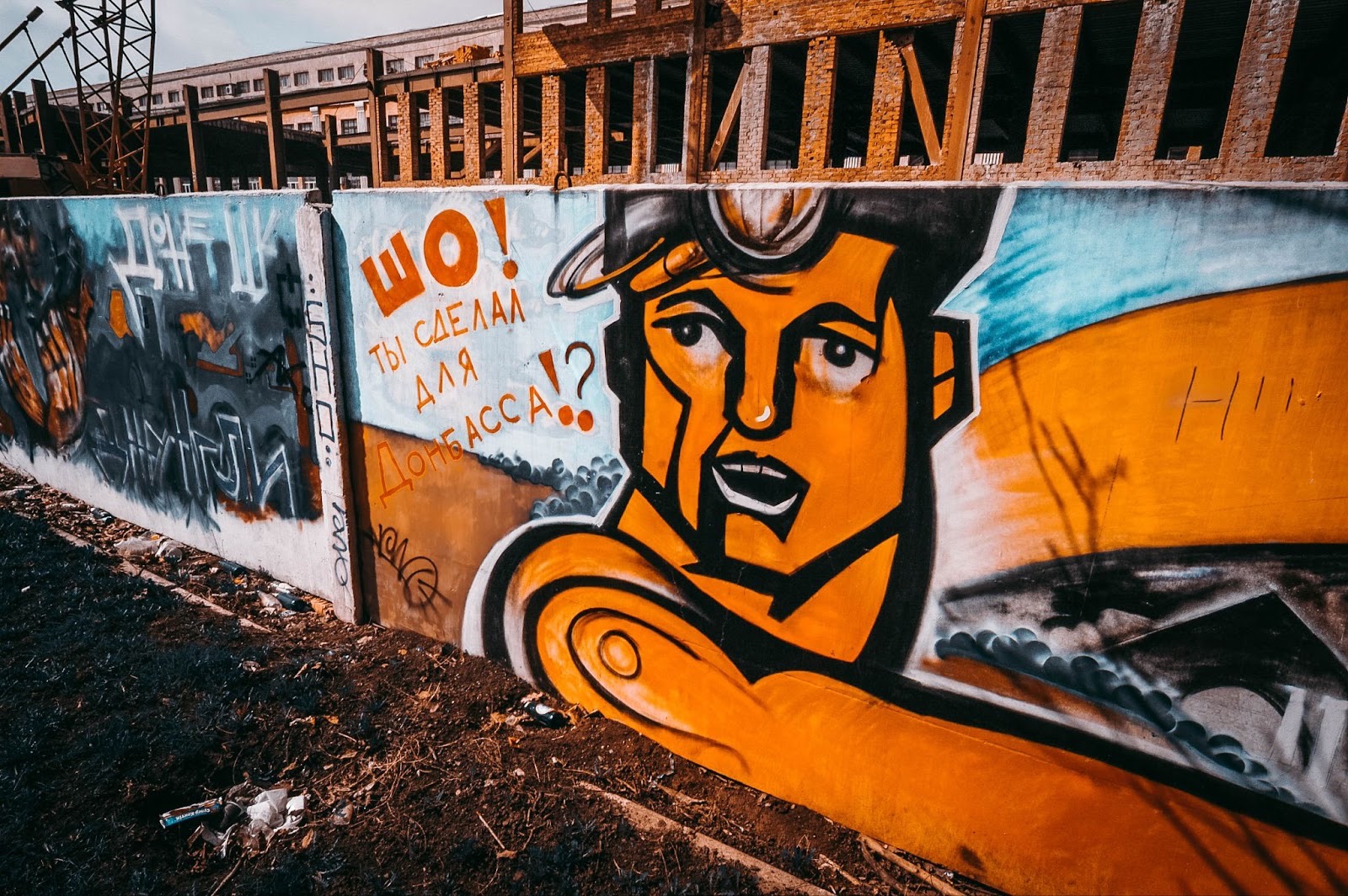
— 2006 in Ukraine was a period of relative economic stability, a successful performance by the national football team at the World Cup, and hopes for a bright future. How did that period feel in Donetsk?
— It’s difficult for me to recall that time clearly now. But I distinctly remember that Donetsk had a very strange attitude toward the rest of Ukraine. To me, similar sentiments can also be found in Zakarpattia, where locals sometimes ask: “So what’s going on over there, in Ukraine?” In Donetsk, everything became especially intense after the Orange Revolution, when “their” Yanukovych lost the election. In 2006, I often came across slogans on walls and fences in Donetsk: “Kyiv has no authority over Donetsk,” “Donetsk Republic,” and others.
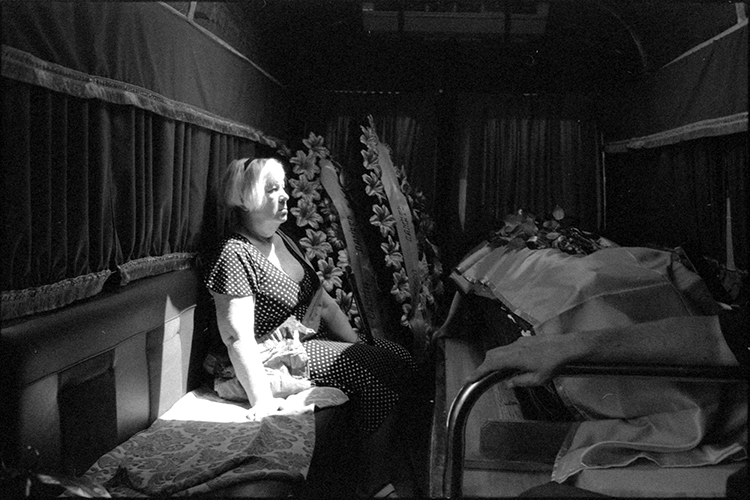
For me personally, it was a time of formation and development in photography. Of course, when you look back from the perspective of years lived and experience gained, it becomes immediately clear what was done right and what wasn’t. I tried myself in reportage photography — I traveled a lot, photographed a lot, shot for magazines and newspapers, including Pensijnyi Kurier. I even recall working for the glossy magazine Golden City, which was sold in airports and hotels. Later came work with the Ukrinform and UNIAN agencies — a kind of conveyor belt, with up to three shoots a day, practically without days off. I began working on my own projects in 2009, so the photographs from Donetsk are rather a series about a past that others are trying to take away from us.
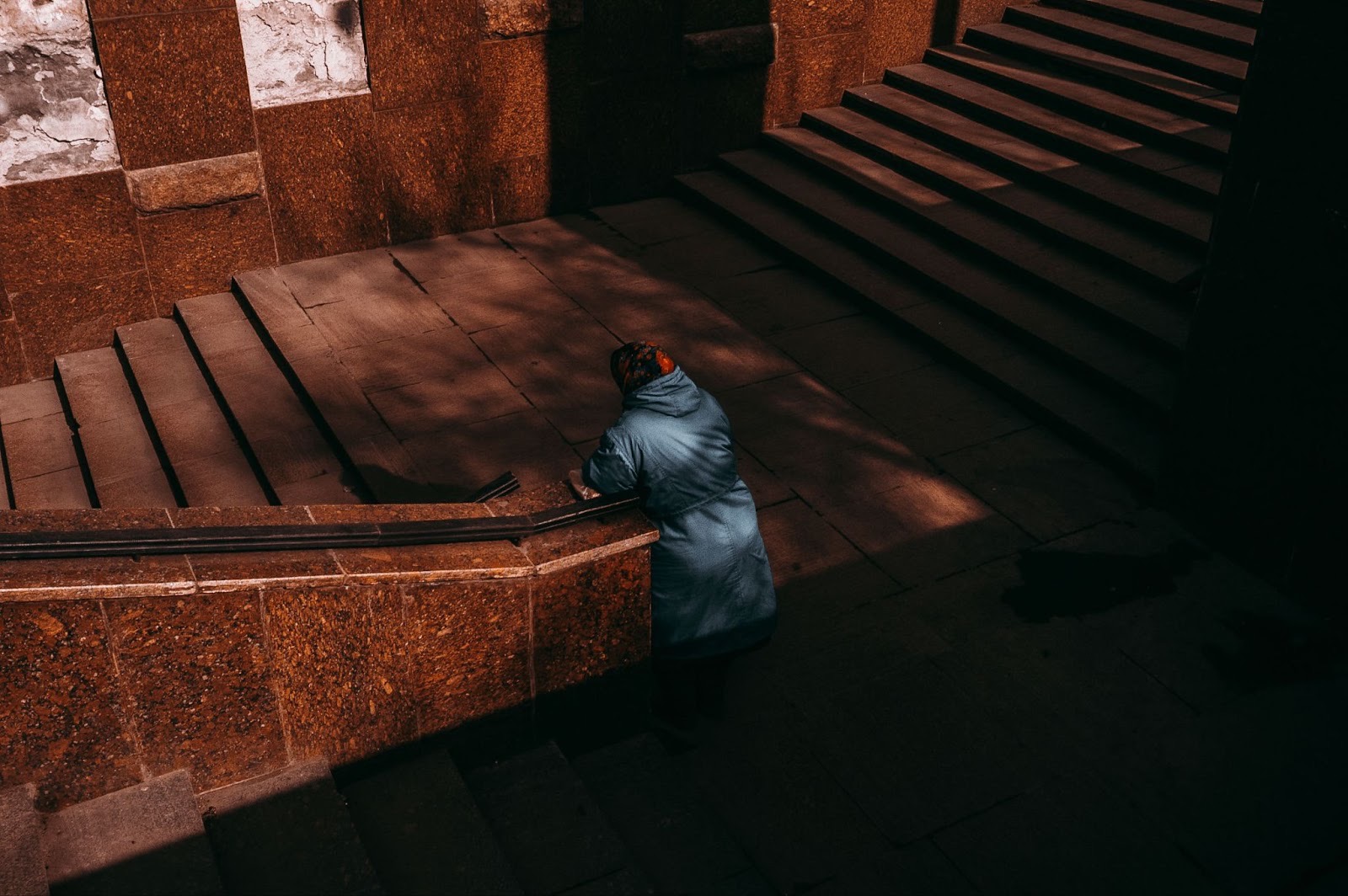
— You shoot a lot on film, and your photographs are mostly black and white. What camera did you use in Donetsk in 2006? How did this affect the visual language of the series, given that your Donetsk images are in cold tones, almost monochrome?
— I had a film camera, but in 2006 I was shooting with a digital Nikon D100. It was painted in green camouflage, and colleagues recognized me specifically because of that camera. Of course, at that time I had no connection to the army whatsoever — I simply liked that camera.
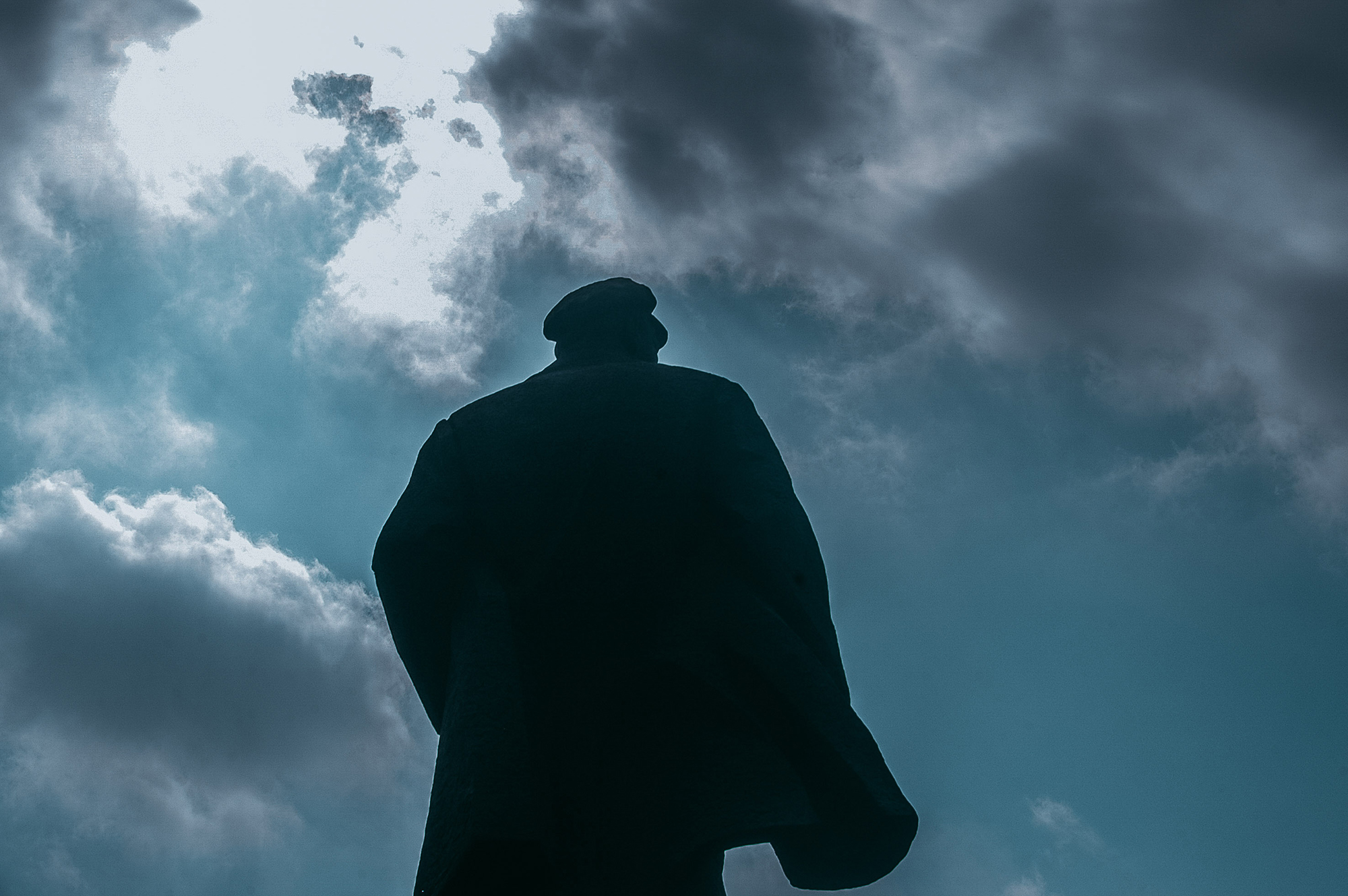
The Donetsk images were originally shot in a traditional reportage manner — in color and without filters. I added the cold, almost monochrome tone to them only now — that is how I perceive this city today. It so happened that I wasn’t interested in Donetsk’s cultural dimension, and therefore I didn’t see it and didn’t photograph it. For example, now I live in Sumy and know all the theaters, exhibition galleries, and the schedule of cultural events there. It was the same in Kyiv and Chernihiv — cities where I lived for long periods. Donetsk remained a gray spot for me, as did Luhansk — the only regional center of Ukraine that I never had a chance to visit.
In fact, I wanted to assemble a series of images from eastern Ukraine, as I photographed a lot in Mariupol, Berdiansk, and other cities. But for now, I have put together a series specifically from Donetsk.
— What attracted your attention the most in Donetsk as a photographer? How open were people on the streets of Donetsk to a stranger with a camera?
— For the newspaper Pensijnyi Kurier, a journalist and I deliberately went to people — we recorded and photographed representatives of the Pension Fund and elderly people, visited various factories and enterprises. I wouldn’t say we did anything special — we were simply filling the newspaper with appropriate material.
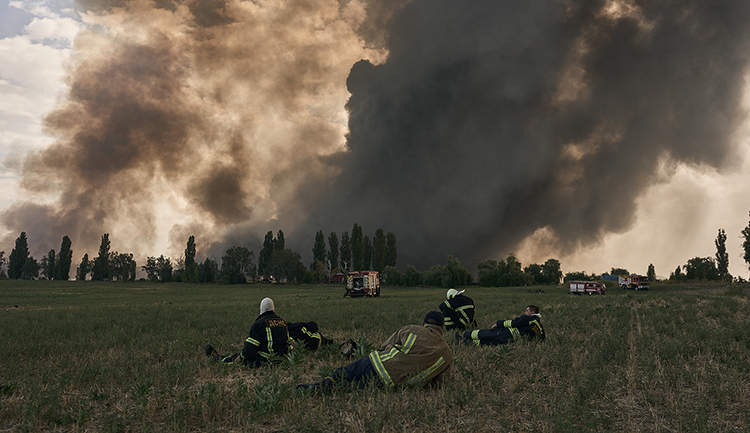
After finishing assignments for the newspaper, I would go out to photograph the streets of Donetsk. Nothing in particular stood out to me. I photographed a freight train with cars from a bridge, and when I reached the end of the bridge, guards detained me. They asked who I was photographing the train for and why. I spent about fifteen minutes in their guard booth until their supervisor ordered them to let me go. Of course, today bridges and railways are strategically important objects; in 2006, it was probably not taken so seriously.
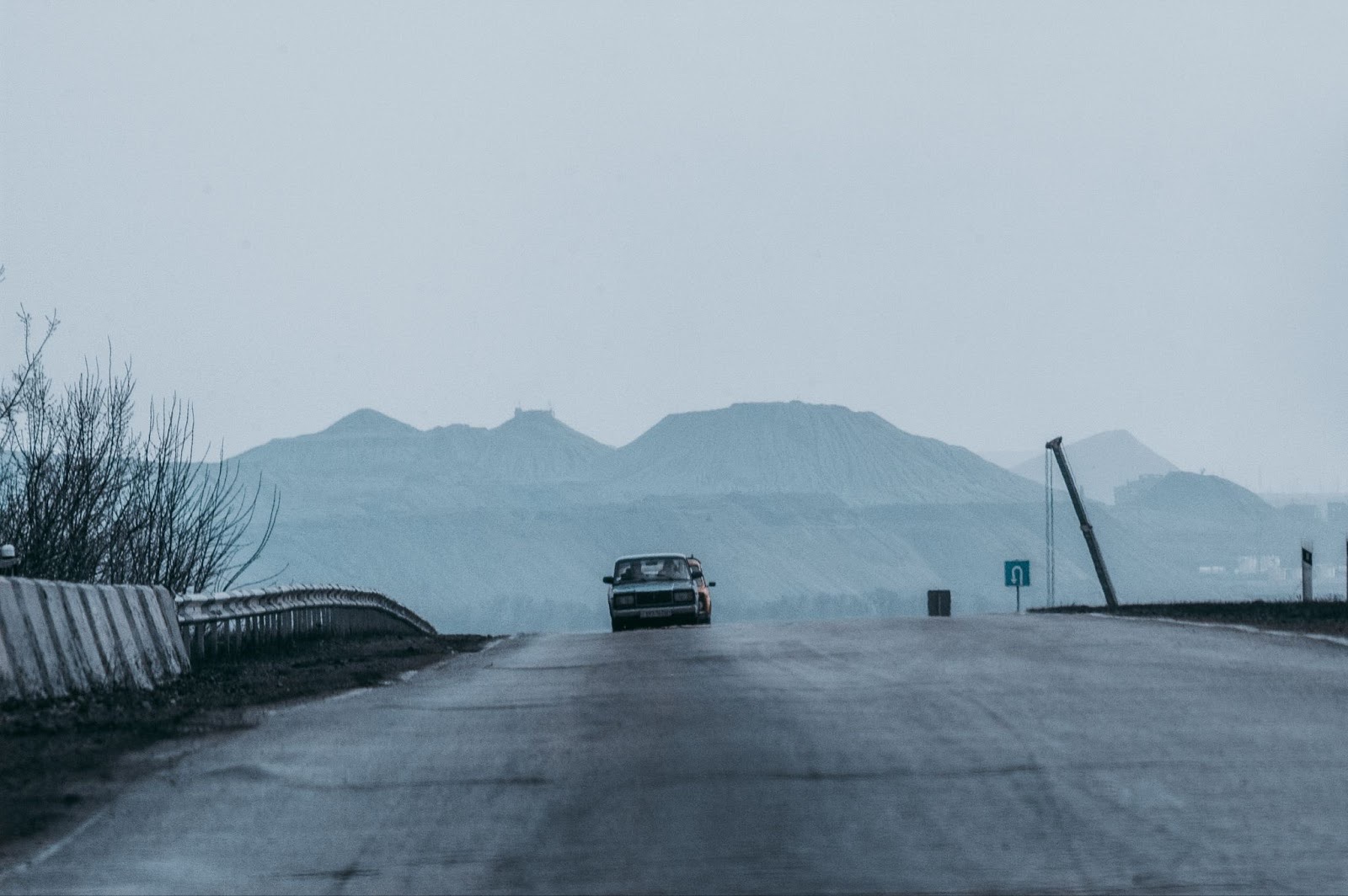
I photographed spoil tips — I was struck by the fact that they were visible right from within Donetsk. For example, Kyiv also has hills, but they have a different origin, and at one time I photographed many panoramas of the capital. The spoil tips seemed genuinely beautiful, interesting, and strange structures to me. Donetsk is a very large city, and it’s not easy to walk from one district to another. The city is divided by waterways, rail lines, and various highways. When we traveled for newspaper assignments, I photographed the part of the city where we were staying — I remember a lake and a beautiful bridge with lanterns. During the seizure of the prosecutor’s office, “ordinary workers of Donbas” tried to throw me out of a window. At that time, I was working in the city center, and I didn’t want to leave the epicenter of events.
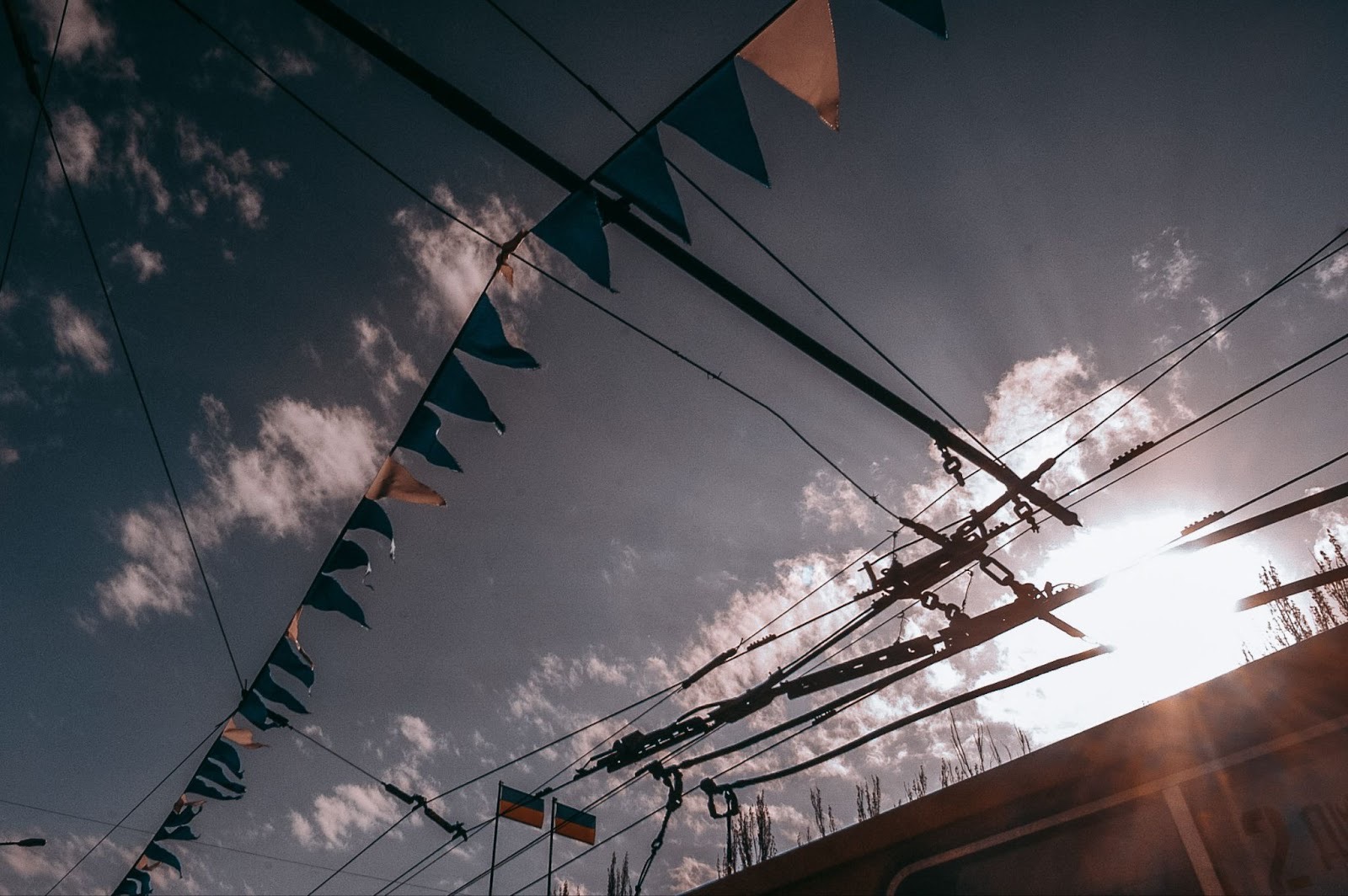
— You mention that the photographs from 2006 do not contain a premonition of war. Looking at those images now, do you see details that then seemed random, but now look like harbingers of war?
— Yes, at that time there were no alarming signs in the city. Except perhaps the slogans on the walls about “Kyiv having no authority over Donetsk” and “Donetsk Republic.” I photographed them. I remember a long wall, about a hundred meters, completely covered in graffiti. There were many other inscriptions as well, but they were definitely not harbingers of war. In such an environment, we could have lived for a very long time — Ukrainians are very different, even now.
I had many work trips — practically every month I spent several weeks in eastern Ukraine. I recall that when we came to record people’s stories, the conversation always turned to the Orange Revolution, and locals expected us to justify the Maidan.
— You said that you would advise your 2006 self to study and photograph Donetsk’s cultural environment more. Which unshot themes or images in Donetsk do you regret the most?
— In 2014, when the seizure of administrative buildings was already underway in the city, I was waiting to capture one shot. A trident was hanging on the massive building of the regional administration in Donetsk. I understood that sooner or later they would start knocking it down, and I stayed nearby so as not to miss that moment. Next to the administration building there was a Celentano pizzeria, and I went there for both lunch and dinner. I got tired of waiting and went for coffee. At that moment, I read in the news that the trident had been taken down. It was truly painful.
I also didn’t capture the shot of a Ukrainian flag that had been thrown to the ground in front of the administration building. I approached the flag, picked it up, and placed it on a windowsill. I planned to come back for it later, but it didn’t work out. By then, there was already unhealthy attention toward me — my passport was taken away, and they tried to throw me out of a window. I remember shouting to a law enforcement officer that I was a journalist and that my professional activity was being obstructed. But the police were clearly not concerned with me at that moment.
— Do you consider this series valuable because the place captured in it no longer exists and everything has changed radically? Why did you decide to share this shoot specifically now?
— I was reviewing my archives and came across the Donetsk series. Earlier, I probably wouldn’t have paid attention to these photographs — they would have seemed rather banal to me. Ordinary cityscapes and spoil tips. Now these images appear beautiful and interesting to me. Moreover, I’m not sure there were many photographs of Donetsk in 2006 at all. Yes, these images are valuable to me because the city of Donetsk as I knew it no longer exists, and it is simply impossible to access present-day Donetsk.
— You have an art project titled “36 Views of Hoverla,” an allusion to the famous cycle of woodblock prints by Japanese master Katsushika Hokusai, “Thirty-Six Views of Mount Fuji.” If you were to create a project titled “36 Views of Donetsk,” what would be the central metaphor of that series?
— In fact, such a photographic cycle has already been created by a Russian photographer who studied spoil tips in the Urals. He reinterpreted industrial landscapes through the prism of Katsushika Hokusai’s prints. Unfortunately, that theme has already been taken.
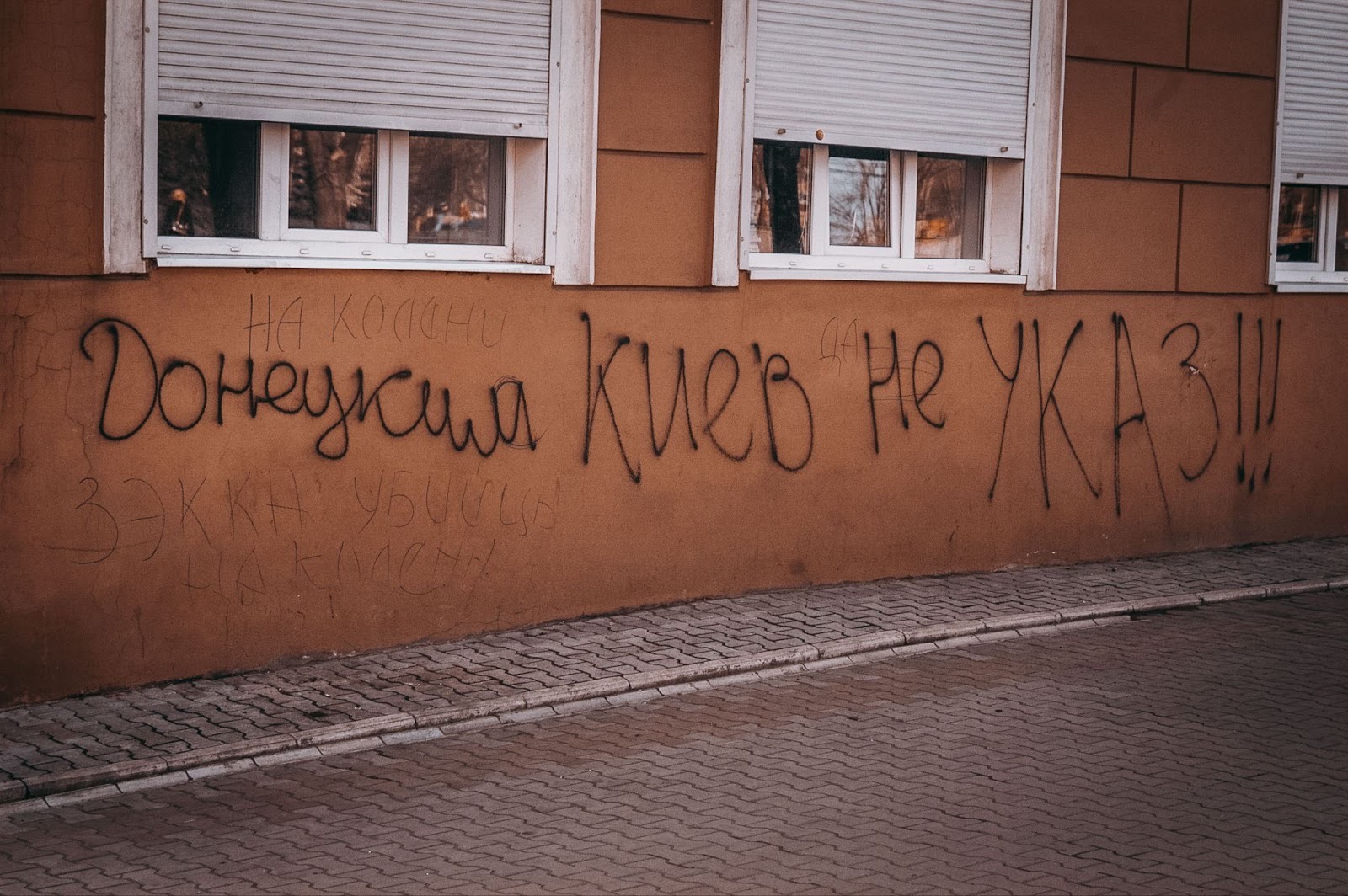
— In the description of the Donetsk photo series, you pose very painful questions: “I wonder how people live there now, do they remember us? Do they want to return things to how they were? Do they believe they did everything right? Do they want to correct their mistake? Do they still blame us?” If you could now make portraits of people in occupied Donetsk, what questions would you ask them before photographing them?
— If we approach this question from a distance, we can recall the words of the 14th Dalai Lama. He said that the path to mutual understanding lies through dialogue, which must be based on shared ideas and values, where each side accepts the strengths and weaknesses of the other. With people who, so to speak, now inhabit Donetsk region, dialogue is most likely impossible. Each of us today is moving along our own path, and our directions are very different. Our conversation would lead to even greater conflict rather than understanding. Today, for me, this question has no answer.
However, sooner or later we will have to arrive at dialogue. The conversation will initially be very traumatic, with a lot of shouting and disputes. This is normal — to quarrel and then reconcile. This is the path to communication.
Dmytro Kupriyan — was born in Kyiv in 1982. He worked on the topic of torture, creating a project about violence and its consequences in the Ukrainian police (“Tortured”). Expanding the theme of violence in a broader sense, he has produced projects about the war in Ukraine (“Fragments of War,” “The Banality of Aggression,” and “When Will the War End”). Later, he turned to the theme of dialogue as a means of reconciliation and created videos promoting its necessity. In these videos, the author seeks to show that the only way to resolve problems and misunderstandings in societies is dialogue in all its forms: verbal, sub-verbal, physical, and others. In 2015, due to Russia’s aggression against Ukraine, he was called up from the reserve for military service, during which he also photographed and worked on projects about the war. He later focused on themes of the human living environment and personal self-identification within society. He is the author of the photographic series “36 Views of Mount Hoverla,” dedicated to the prints of Katsushika Hokusai. Currently serving in the Armed Forces of Ukraine. Photographer’s social media: Instagram and Facebook.
Worked on the material:
Topic researcher, text author: Katia Moskaliuk
Photo editor: Vladyslav Krasnoshchok
Literary editor: Yuliia Futei
.png)