Photographer Iryna Kabysh spoke about how she depicts in her photographs the paradoxes of humanity, which is capable of turning global tragedies into digital content, and its own existential crisis into viral memes; as well as why a love for the nature of light inspires and gives strength to cultivate a new reality.
“I like to reflect on the flow of life”
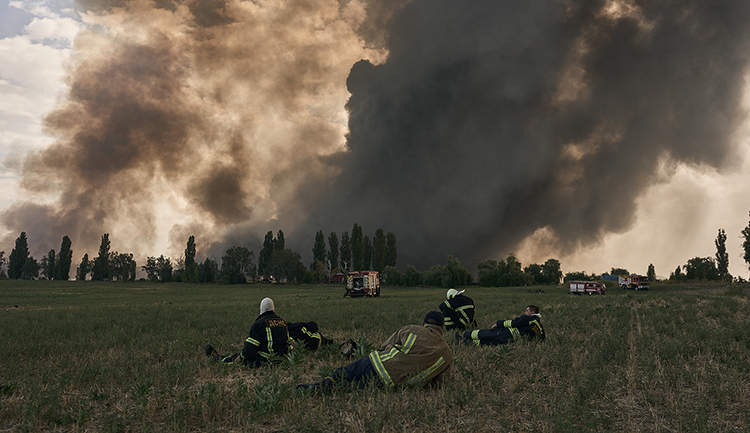
War shows us how great the value of photography truly is. With the help of artificial intelligence, any image can be generated, embodying audacious provocations and delusions in a picture. Documentary photography, by contrast, is for me today a testimony of fact. A documentary photographer seems to place their signature under an event — they were there and became its witness.
Personally, I work with conceptual rather than documentary photography. Yet my photography also touches on real themes, events, and processes. This is also part of documenting our present — its particular interpretation, often satirical. The boundaries are set by the photographer’s imagination and their tools.
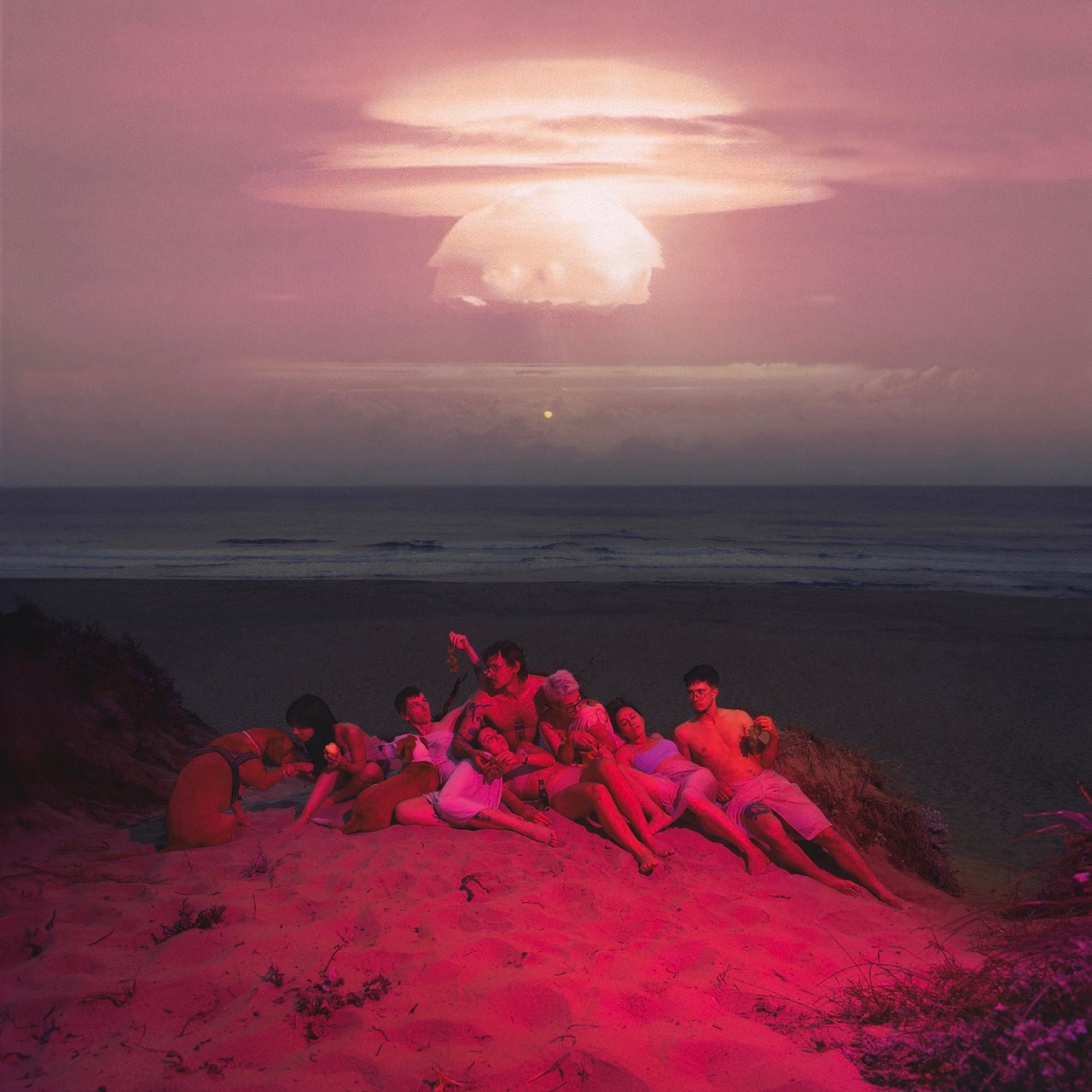
In conceptual photography, I am interested in the global picture of the world and what is happening to us today — all the irony and drama that we continuously produce as humanity. My works are about how we aestheticize our own disappearance and our inability to break out of a closed loop: catastrophes are scrolled, history is memefied.
I like to think about the flow of life, about global and local challenges, social and private ones, about human behavior and nature, because, obviously, we have always been driven by the same instincts. About power and those who hold it — and about the price of their decisions and their consequences.
Photography appeared in my life during the coronavirus pandemic. That period, by the way, was not entirely bad; it required inventiveness to manage difficulties, since no one knew how long the pandemic would last. I do not like to waste time; I wanted to approach such a trial creatively. My partner said that I photograph very well — I believed it. I bought a camera, studied the history of photography, strengthened my visual awareness, and searched for my own visual language.
A novice in a new field really has to be lucky. A significant push for me was the MYPH School of Conceptual and Art Photography — there I found ground and a base that concerned not only contemporary photography, but the ecosystem as a whole, and of course networking. Fractals of new knowledge kept emerging — all that remained was to choose what resonated with me most. I am fascinated by the intersection of logic and art, fashion and conceptual photography, because it gives ample space for creation. At the same time, I am drawn to documentary photography, grotesque, scale, and, despite everything, life‑affirmation. Among those who influenced the formation of my optics, I would note Joseph Niépce, Sofiia Yablonska, Martin Parr, Donna Trope, Oleksandr Hliadelov, and, of course, Serhii Melnychenko :)
Photography is not my main occupation. However, I can always pick up a camera and look at any situation through the lens. Then everything looks different. The main thing is to feel the desire to reach for the camera, and for the mind — to construct.
“As humanity, we must solve many problems — but how?”
I studied in Italy and returned to Ukraine before the start of the full‑scale Russian invasion. There was a feeling that no matter how much we denied it, we needed to prepare for war. But how do you prepare for war? Our nation, our land has immense value for me, and for the sake of Ukraine I am ready to do a great deal. When I returned, I thought it was the right decision — to be at home, despite the foreboding of something terrible and the expectation of promised chaos.
Already at home, I witnessed a conversation among entrepreneurs who were assessing preparedness for upcoming events. One of them, a helmet manufacturer, said that our state had not made any procurements, including helmets, for several years. Such information is shocking — I decided to create a project about it… about this premonition of war. That was the first time I held military helmets in my hands and felt their fatality: I would never want to even touch them, let alone try them on, yet at the same time this is a given that we would soon come to know fully. It felt like a point of transition: once you put on the helmet, reality closes like a mechanism, and the world changes its rules.

I invited my colleague and we created the project Disturbing Beauty, which spread around the world. One photograph from this project, where I am trying on a helmet, became the poster for the Hors Pistes festival at the Centre Georges Pompidou in Paris. This was not the beginning of my path as an artist, but it was an important moment. I am convinced that for an author with exceptional talent and an outstanding mind, it is not difficult to constantly renew the relevance of thought.
I shot the next project in Montenegro in 2023 — it was my first trip abroad since the beginning of the full‑scale invasion. I was finishing my studies at MYPH and needed to prepare material. Montenegro at that time was full of “good Russians”, and it was a serious challenge. I could hardly even go outside. Later, I decided to apply my knowledge of conceptual photography to this situation.
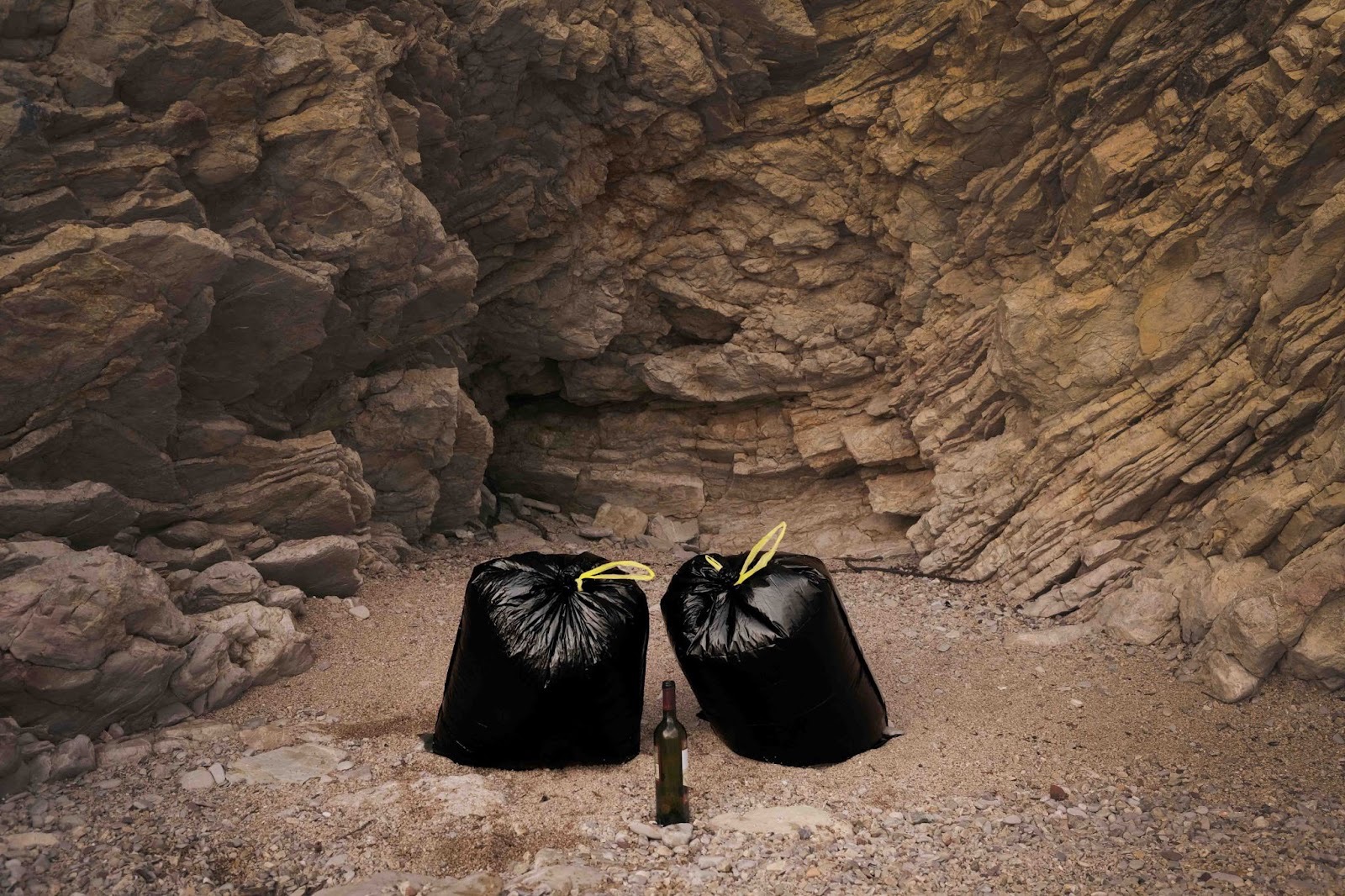
I tried to use a metaphor: I took black garbage bags and integrated them into the surrounding environment. I created a legend about the appearance of the first bag — and about how its stench, reproduction, and inaction grew into algorithms that led to catastrophic consequences. As humanity, we have to solve many problems — but how?
“Burning out in empathy is not effective”
I am currently working on a series about simulacra, populism, and tyranny — turning tyrants into sausages — of course, in images. For a long time, I could not find a visual language that would allow me to speak about simulacra through photography. Sausage — a processed, synthetic product — became for me an apt metaphor for the simulacrum. The world is full of simulacra. At first, this story was about hypocrisy, charlatanism, decorativeness, second‑rate manifestos, and obsession with serving one’s own ego. And then it shifted focus to the so‑called “elites” — and the picture changed scale.
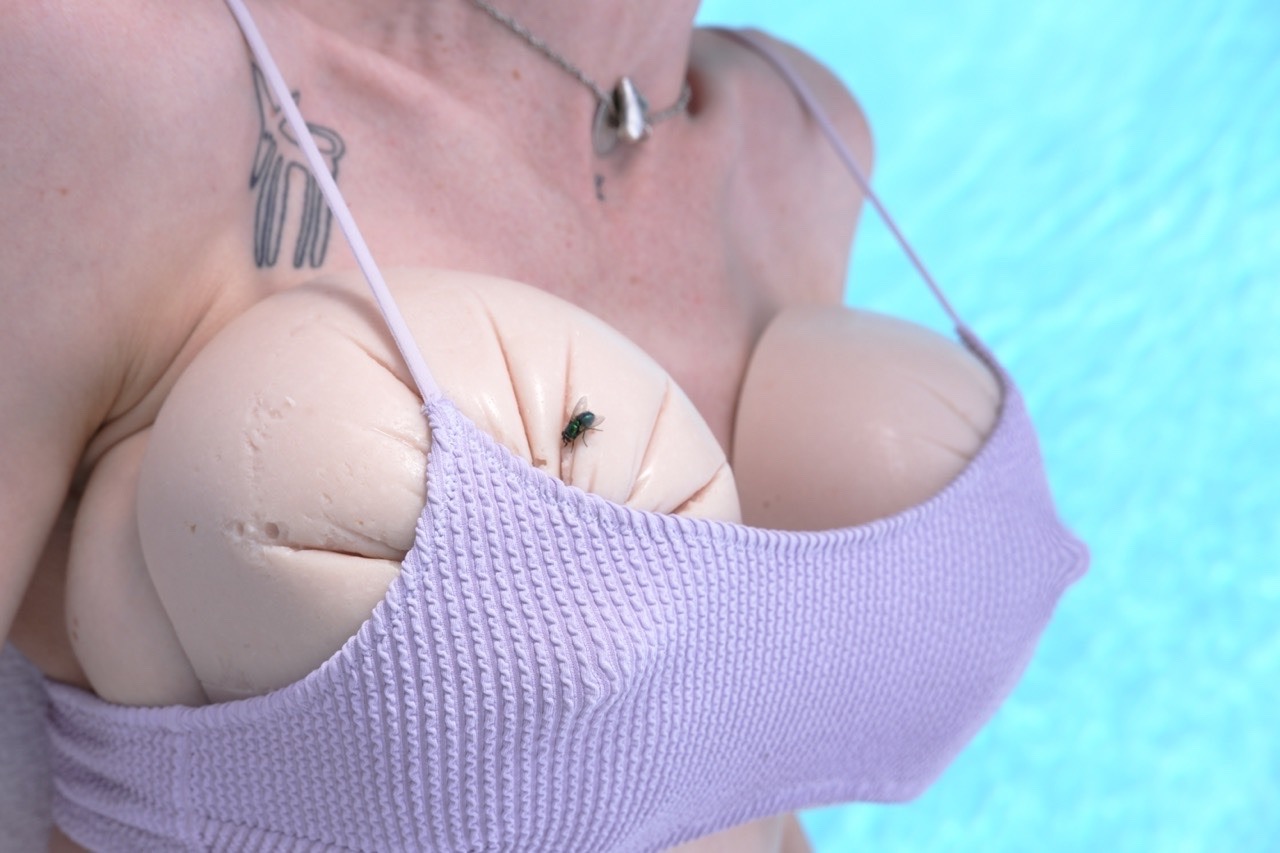
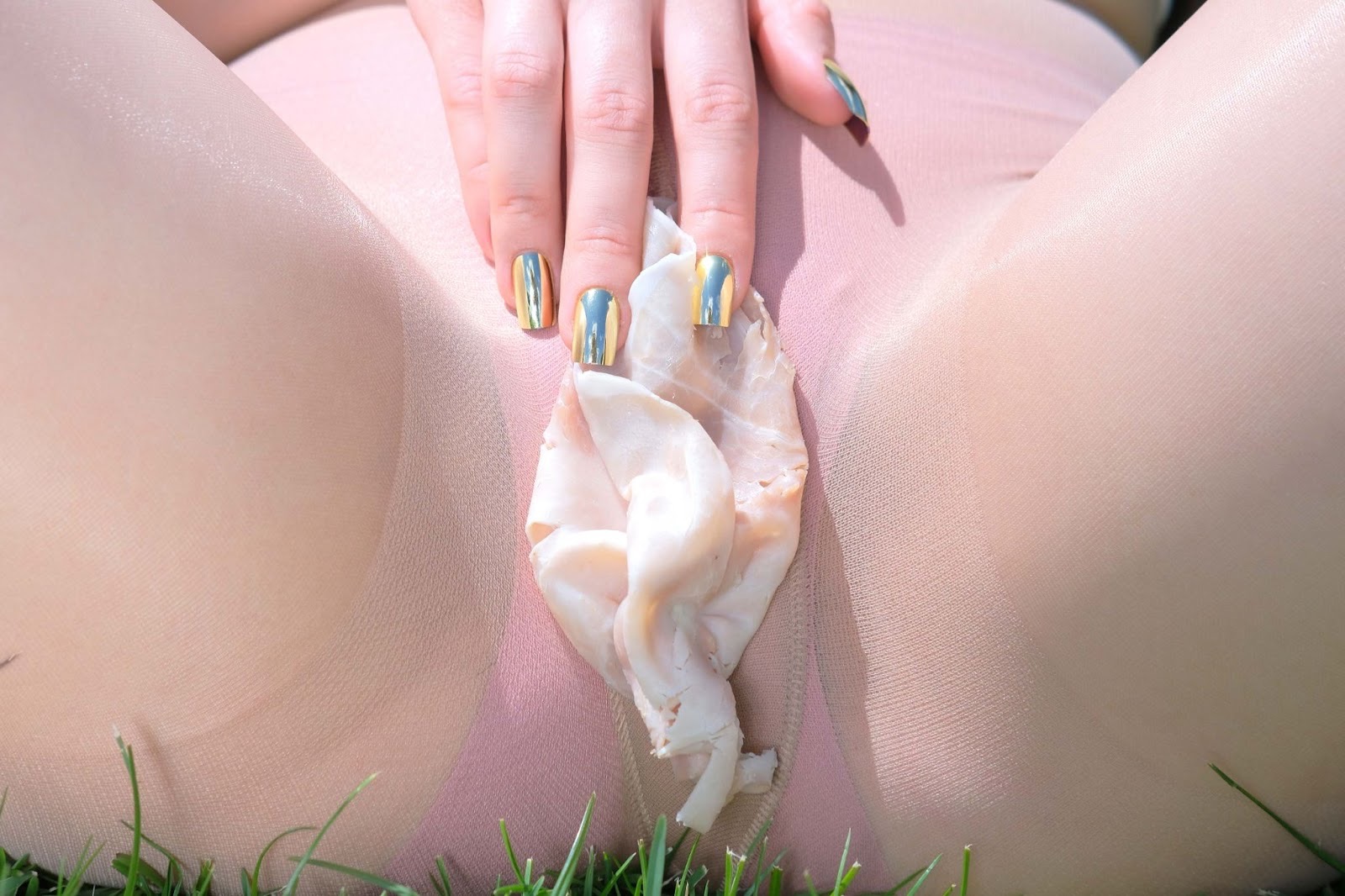
“Decapitation” in the photograph of yet another tyrant or populist is a kind of artistic performative act: as a result, they end up with, say, a sausage neck. A curious coincidence, but several tyrants died or were injured during the work on this project. Of course, I say this with a degree of irony, because the death of tyrants itself does not guarantee victory. Some are replaced by others — does anyone think that someone’s absence is capable of fully solving all problems? Tyrants do not arise out of nowhere — they are also the result of the actions and inactions of many people.
When I was working on the project Hypocrisy, the painting The Garden of Earthly Delights by Hieronymus Bosch resonated within me. This generous abundance of details and forms overlapped with a sharp sense of the fragility of peace, the premonition of the explosions of the Third World War, as well as personal trauma and the experience of pain. Images instantly flooded my imagination: bright explosions of simulacra, and a torn sausage resting in the grass — and only flies care about it.
We are deeply traumatized. In every sense, including visually. After all, before 2014, we had not seen images of war in such vast quantities.
For example, my friend Hennadii Afanasiev was a photographer and a soldier. He had been in captivity, and from him I first heard real testimonies about Russian torture. I am an empathetic person, and even listening to accounts of Russian perversions is difficult. Since then, I have concluded that empathy must be effective. Unfortunately, Hennadii was killed fighting against the Russian invasion. However, one must not allow oneself to burn out — including in empathy. It is necessary to make an effort to remain “fully equipped” and stay effective in one’s work.
Today, the full‑scale Russian war against Ukraine is broadcast almost live. It is the first war documented to such an extent, which has generated many new phenomena. Mstyslav Chernov has essentially re‑discovered directing as an act of witnessing.
“My projects about war concern civilian life, which is also full of trials”
I am still trying to comprehend the impact of war on myself. However, analyzing all its stages and depth now seems impossible — we are still inside this process. In my feelings, this is unfortunately far from the finish line. One question keeps returning to me: how could this even happen to us as humanity? We were convinced that in the 21st century such a large‑scale and brutal war was impossible. It seems that it was precisely in this audacious confidence that our mistake lay.
Under the influence of war, my new projects emerged, and I continue to move forward in order to support Ukraine in the international arena. Under these conditions, a collaboration formed with photographer Émeric Lhuisset, who sought to rethink and recreate in a contemporary form the famous painting by Ukrainian artist Illia Repin “The Zaporozhians…”. The passion of the French photographer seemed quite convincing to me. Émeric Lhuisset was among the first documentarians to come to film the Revolution of Dignity. We met at the Centre Pompidou in Paris. At that time, I was collaborating with the Territorial Defense Forces of the Armed Forces of Ukraine and told a TDF colonel about the photographer’s idea. Overall, the project received wide international media support and strengthened the presence of Ukrainians in the information space. But the greatest admiration was inspired by our defenders — people of strong will and spirit.
The roles of the Zaporozhians were played by fighters of the 112th Separate Territorial Defense Brigade of the Armed Forces of Ukraine. A marine infantryman, Roman Hrybov — defender of Snake Island and author of the legendary phrase addressed to the Russian warship — also appeared. Émeric Lhuisset’s interpretation titled “From Afar I Hear the Reply of the Cossacks” became an apt testimony to one of the episodes of this war.

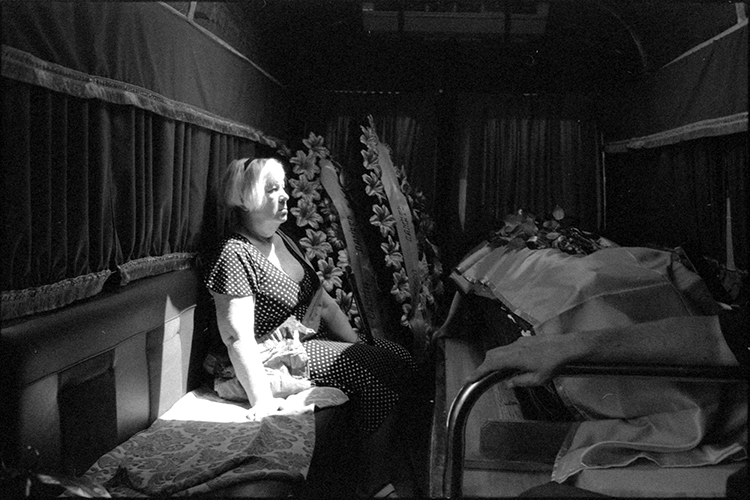
My projects about war concern civilian life, which is also full of trials. It seems dishonest to me to occasionally go to the front and shoot a project about the military. For example, I have the project Surreal Hygge, which tells how Kyiv residents try to maintain their sanity despite news from the front, reports of fallen friends, constant shelling, and power outages. During blackouts, I invited my friends for walks, but instead of pets we had heaters and generators. In this surreal time, such absurd actions can cheer one up. The process of creating the series encouraged us — despite darkness and cold, we even managed to have fun and create something beautiful. Show me who else can do this? I am inspired by our resilience and creativity.
I wish we did not have to become artists who witness war. My images with military helmets spread around the world. Yet I constantly think about how much I want to cancel all of this so that the war never began. However, nothing can be undone. Focusing on beautiful things helps me cope with the situation.
“Creating myths is a fascinating act that I perceive as constructing and branding the culture of a nation”
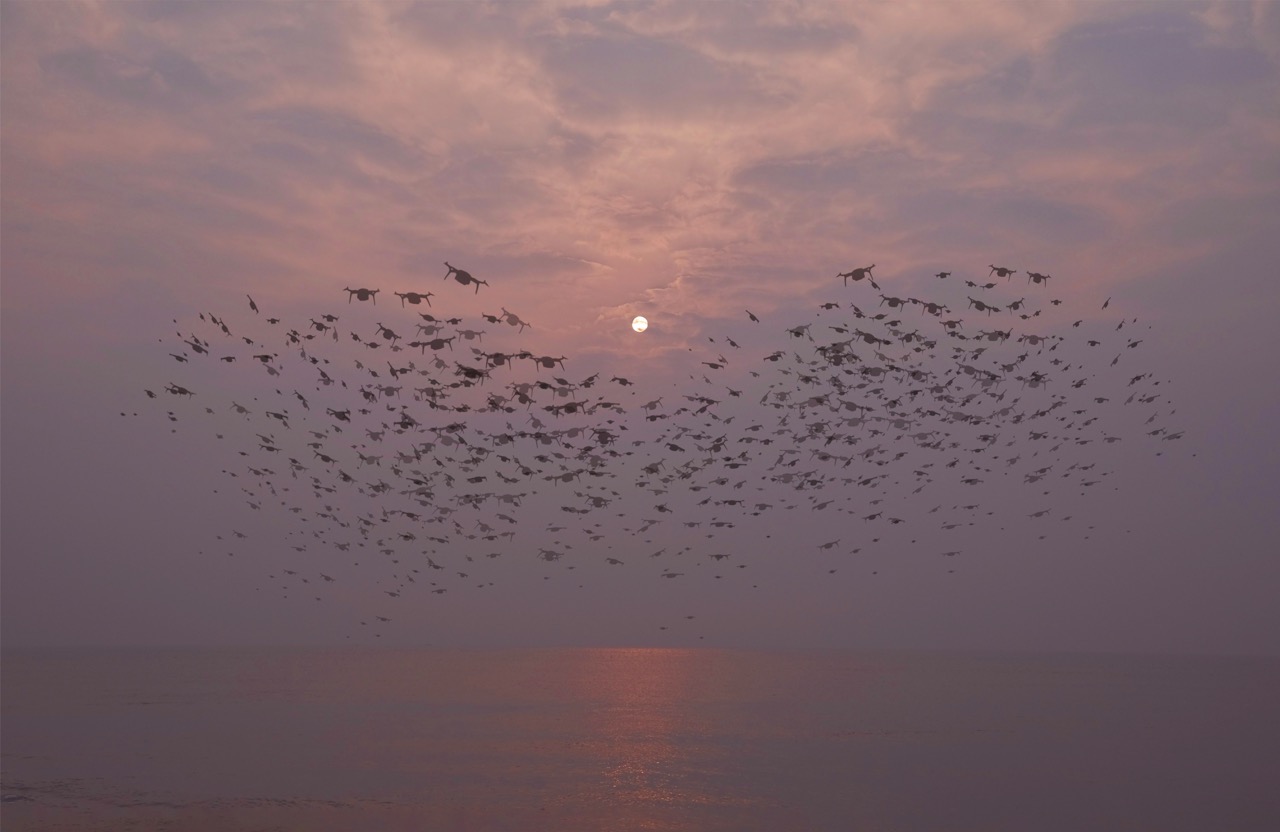
My project Mythology of the Apocalypse is still evolving. At first, I worked with the idea of a hypothetical orgy on Shchekavytsia in Kyiv and Renaissance aesthetics, as if during the contemplation of a nuclear mushroom cloud, but later I abandoned this reference. Reflections on the Doomsday Clock and contemporary changes, including the emergence of artificial intelligence, inspired me to a dialogue about radical transformations. The series includes an image with a grotesque corrupt man who is about to burst — a certain image of excess, greed, and a system collapsing under its own weight. Mythology of the Apocalypse can be developed for a long time — we have boundless fields of themes.
Moreover, creating myths is also a fascinating act that I perceive as constructing and branding the culture of a nation. Every nation has its own legends, tales, or stereotypes. Over time, however, something changes, and certain stereotypes should be reconsidered. Our great goal is to create new myths about ourselves, to fill the space with contemporary stories about Ukrainians. We now have a unique opportunity to communicate with the world and tell our own story, since for too long others did it for us. We are creating a new canvas of myth and transmitting it to the world. I believe that since 2014 we have already achieved great results in this.
“It is difficult to speak about meaning in the work of a photographer against the background of total injustice”
We definitely need to think carefully about what to do next. We have a serious and systemic enemy — but are we systemic in our actions, do we realistically assess our enemy, or do we minimize the danger? One wants to believe that all our efforts will eventually yield a good result. I do not believe that justice exists in the world if it is not cultivated by one’s own efforts, discipline, investments, time, intellect, logic, and motivation.
It is difficult to speak about meaning in the work of a photographer against the background of total injustice, while the war is still ongoing. Today, humanity is facing a challenge. Yet there is a cause‑and‑effect connection in everything — this should not be forgotten. There are laws of physics, there are rules of coexistence that we all agreed upon. Today, it turns out that the rules do not work, because there are individuals who can break and change them.
I do not know how to speak to people who want to ignore reality, who do not care about what is happening. This great war should not have happened — we received many guarantees when we gave up nuclear weapons. And? Such is the mythology of the apocalypse.
“The nature of light is my inspiration”
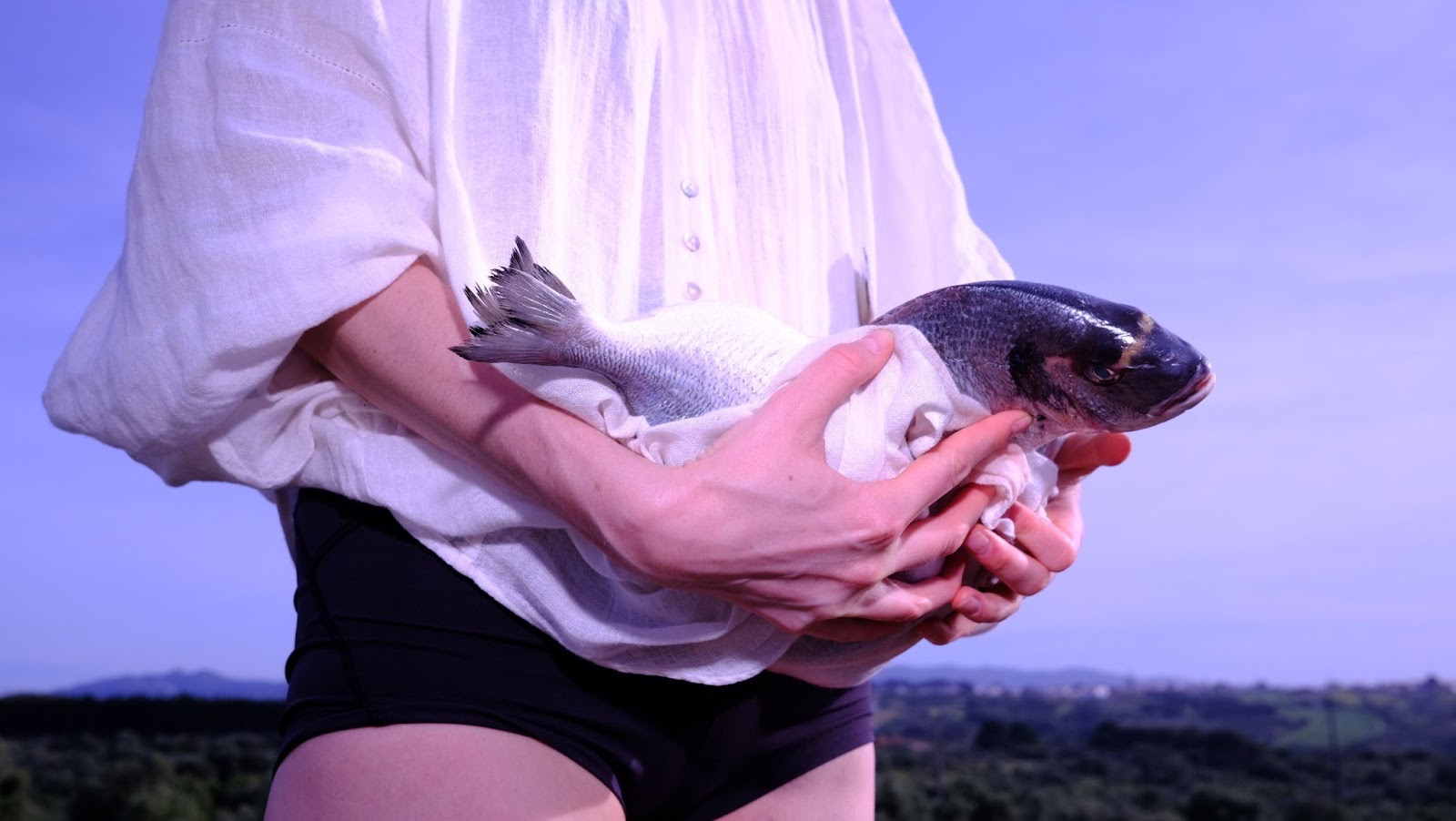
One of the projects dedicated to the theme of war is Fruitfulness 4.5.0. It is about the impact of war on women and fertility. Before 2022, no global studies on the impact of war on the perinatal period had ever been conducted. In 2025, medical observations clearly show that in areas of active armed conflict, women face a significantly higher risk of stillbirth and miscarriage, especially in zones of intense fighting. Stress, prolonged air‑raid alerts, lack of diagnostics and proper care. Destruction of medical infrastructure, maternity hospitals, and clinics. Horrific news, the pressure of uncertainty, forced displacement, malnutrition, psychological and physical exhaustion — all these factors multiply the risk of pregnancy loss. In Ukraine, these indicators have increased: the number of miscarriages has risen by 10–15%, and the overall situation is almost twice as severe compared to pre‑war and regional statistics.
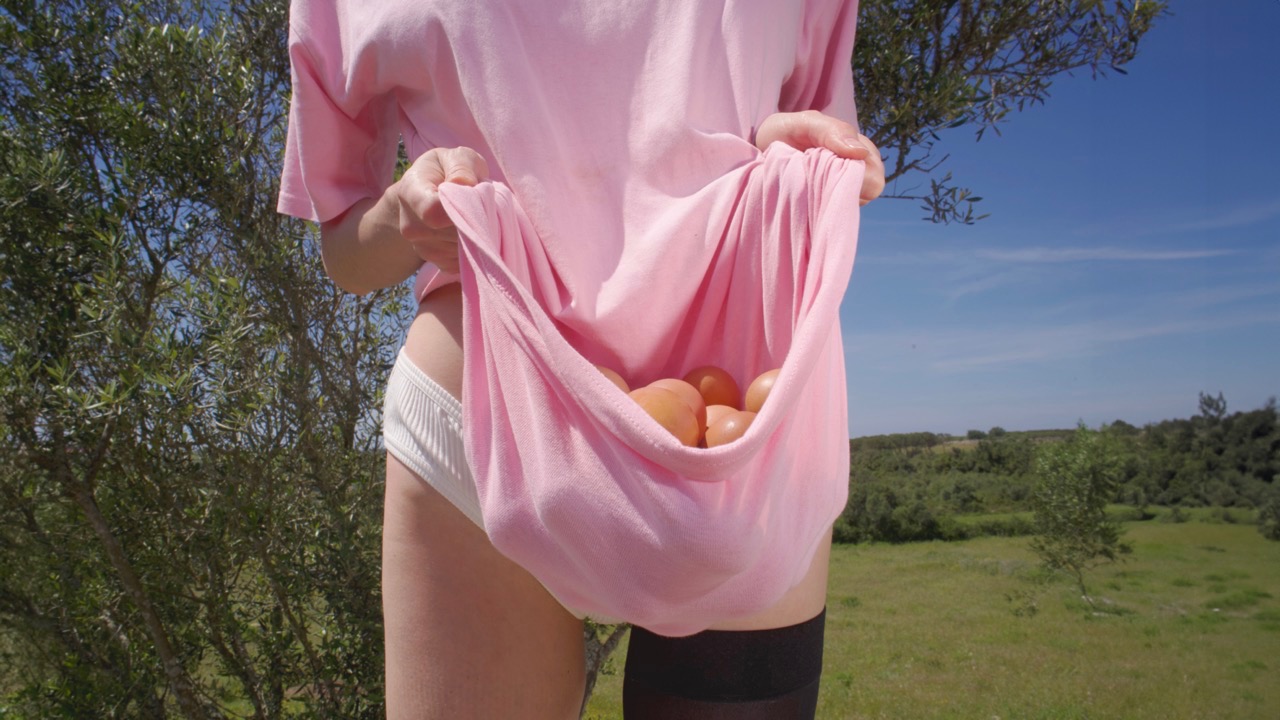
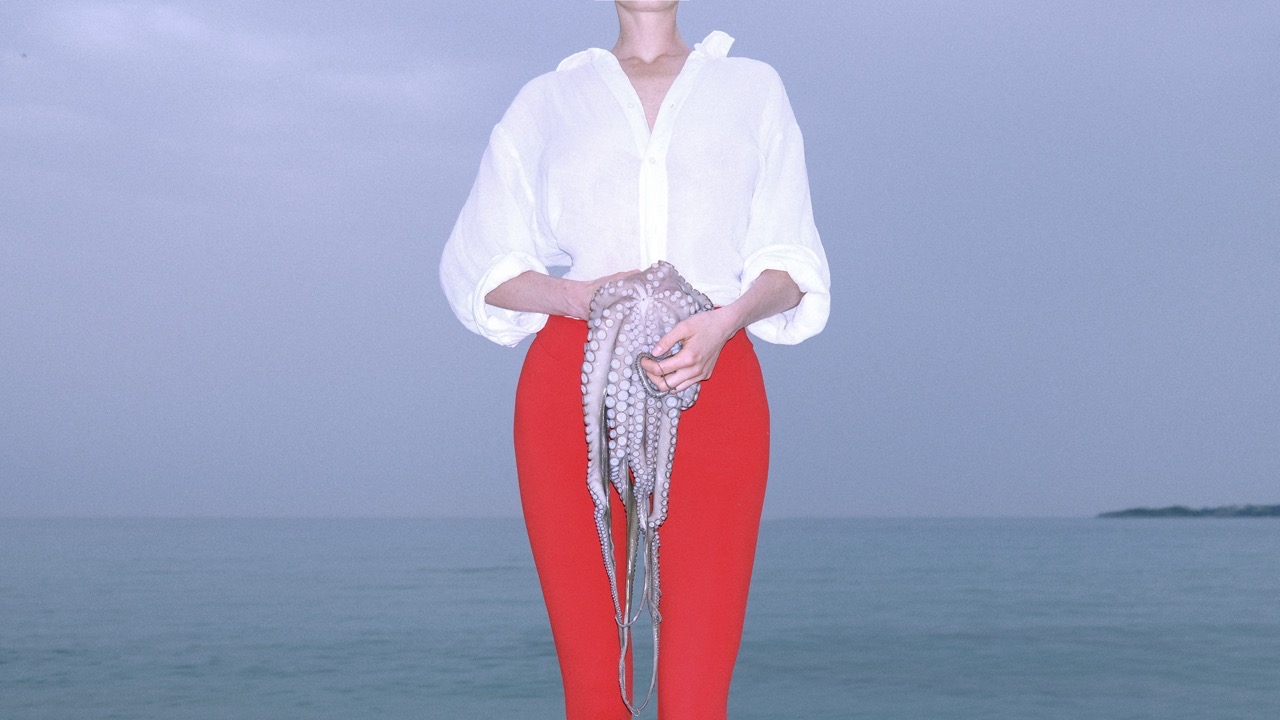
I am also working on the project Mother Land and very much hope that I will be able to realize it. The idea is to illuminate the sword of the Motherland Monument in Kyiv — to give it a Jedi light sword, like in Star Wars, with which one can defend oneself. Our team received permission from the city authorities, but for certain reasons that often arise during wartime, we are still in process. However, we are waiting for the day when this can be done.
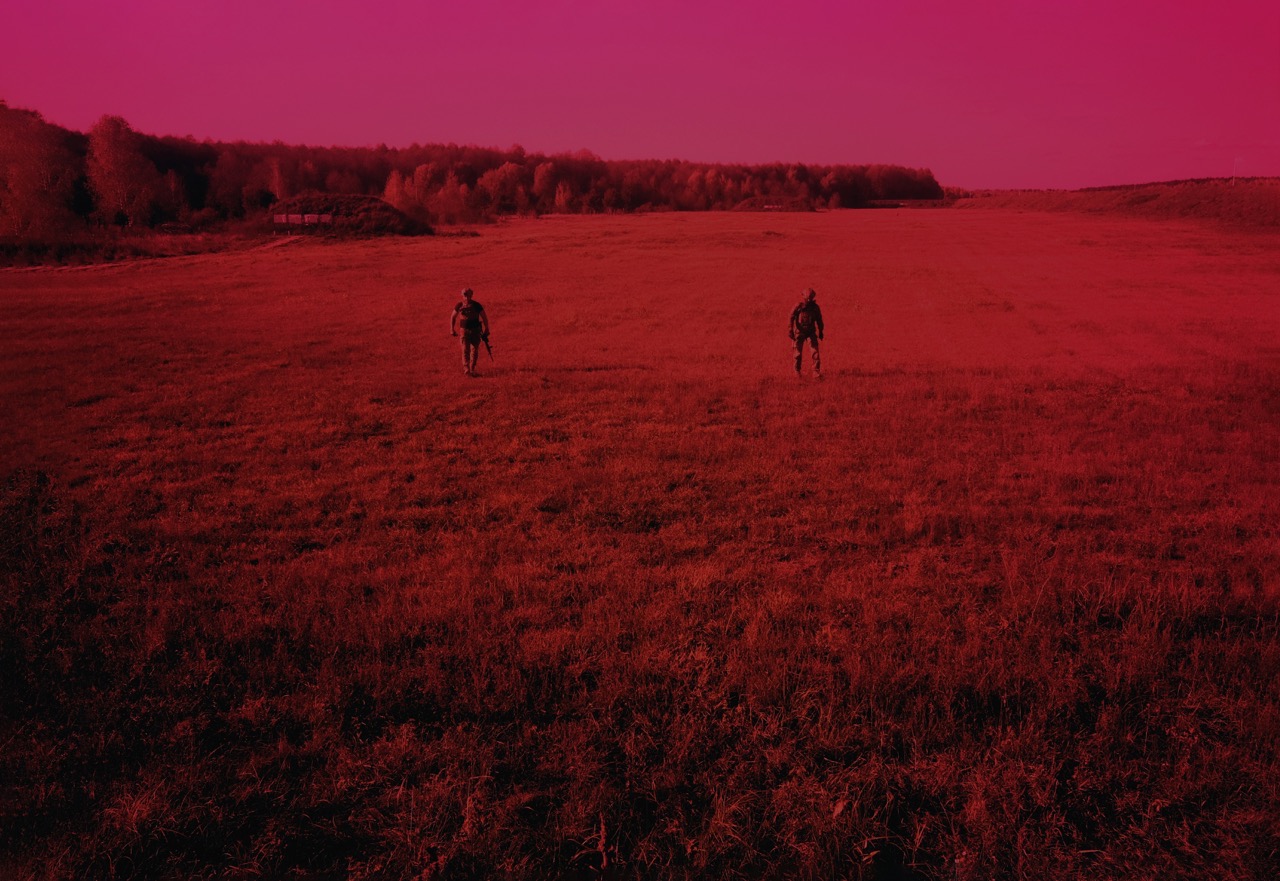
Together with the Mother Land performance, we plan to flood the space knee‑deep with red light — to create a kind of waterline. Every minute, a new drop falls there — someone performs feats, makes efforts so that the rest of people can continue to live.
My love for light helps me continue to work, because photons either move — or they simply do not exist.
Iryna Kabysh — a multidisciplinary artist. Born in Kyiv in 1992. The intersection of logic and art, global studies, and satire lies at the center of her interests. A special place in her practice is occupied by research into the nature of light as a material and a driving force of the creative process. With experience as an artist, a creator of light environments, and a background in the fashion industry, she shapes work at the boundary of visual art and engineering thinking. Photography has been the key tool of her practice since 2020 — after completing studies at Istituto Marangoni (Milan), Kyiv Photography School, and MYPH. Iryna’s works have been exhibited in Ukraine, the United States, France, Denmark, Georgia, the United Kingdom, Norway, Italy, Germany, Hungary, South Korea, and Austria.
Worked on the material:
Researcher, text author: Katya Moskaliuk
Photo editor: Vladyslav Krasnoshchok
Literary editor: Yuliia Futei
.png)