
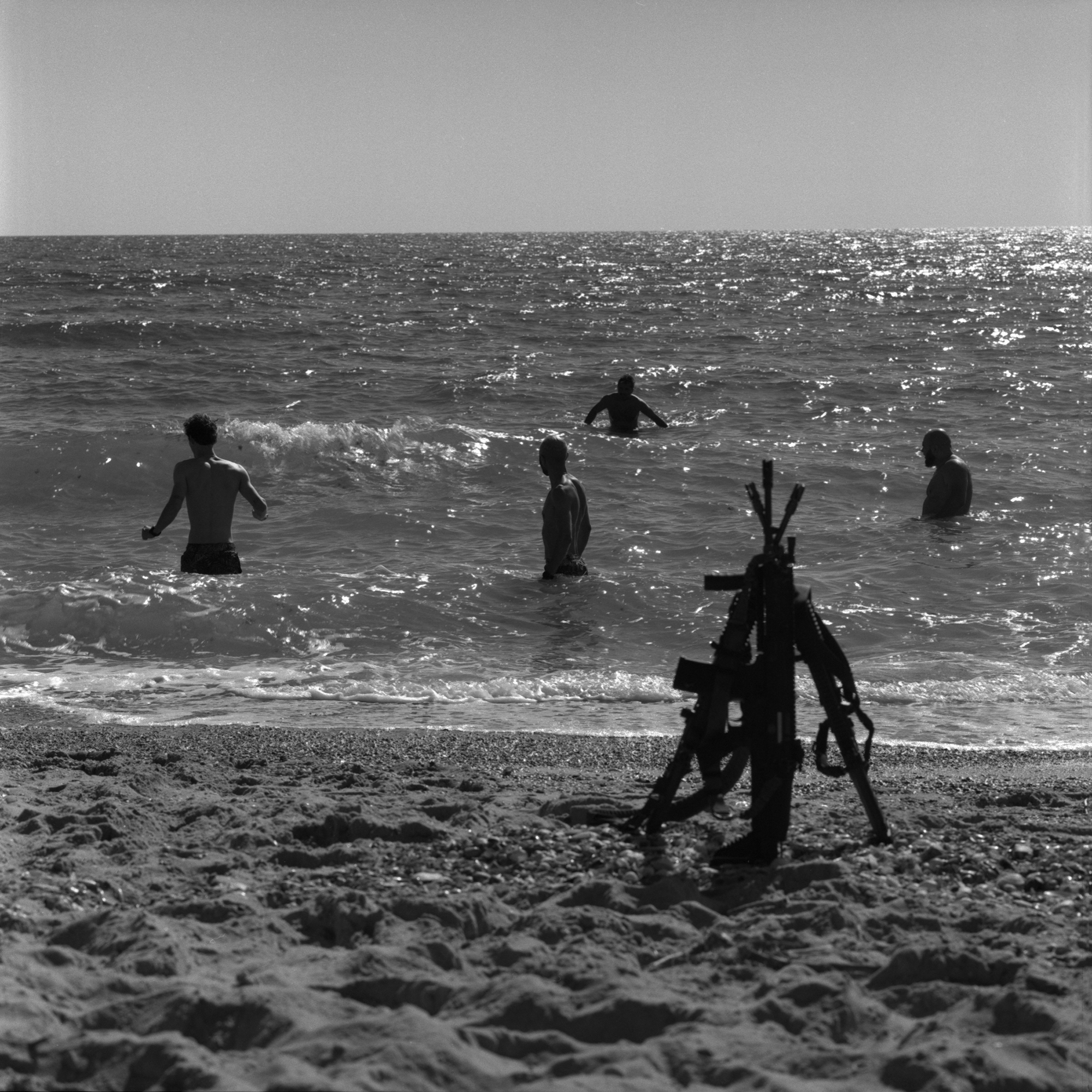
Andriy Kotiarchuk began his career in the Verkhovna Rada, photographing presidents and advertising for global brands, and working for glossy magazines for years. But in the 2000s, he abandoned commercial work to shoot only his own projects. Today, he is the author of frontline portraits, photo albums about volunteer soldiers at war, and Kyiv region after the occupation, and a new member of the UAPF (Ukrainian Association of Professional Photographers). His works combine documentation with an authorial philosophy, and war is portrayed not only as a tragedy but also as a space for the search for meaning and beauty.
On Creativity and the Path in Photography
— How did your story with photography begin? Do you remember the moment when you first picked up a camera and felt that it was meant for you?
— By the fifth grade, I had managed to earn and save 63 rubles. My parents added the same amount and bought me a "Viliya-auto" camera with a "Tavriya" enlarger and all the laboratory equipment. My mother warned me that they had spent a lot of money and that I shouldn't even think about quitting photography.
Then I went through all the stages of professional photography work. At the age of 20, I managed a photo studio with a lab at the Institute of Zoology of the National Academy of Sciences of Ukraine. I had two subordinates who were twice my age. I managed to buy the first autofocus camera in Ukraine, the "Minolta 7000 Maxxum." I worked at the Verkhovna Rada newspaper, "Holos Ukrainy." I photographed famous politicians and presidents, Sevastopol submarines, and the 1993 uprising in Moscow. At some point, everything became uninteresting. I shot many essays for foreign magazines. The shoots were already on 6x6 cm and 6x12 cm slides. My frame captured residents of the polar regions, Ukrainian caves, Crimean landscapes, the Ukrainian village, and the life of provincial monasteries. Thanks to these shoots, I felt quite independent. Later, I opened my own studio and plunged headfirst into the world of fashion and advertising. I was the only photographer in Ukraine who signed a five-year contract with "Coca-Cola." I reshot all the international brands represented in Ukraine. I shot for Cosmopolitan and XXL magazines for years. I was printed in probably every thick Ukrainian glossy magazine.
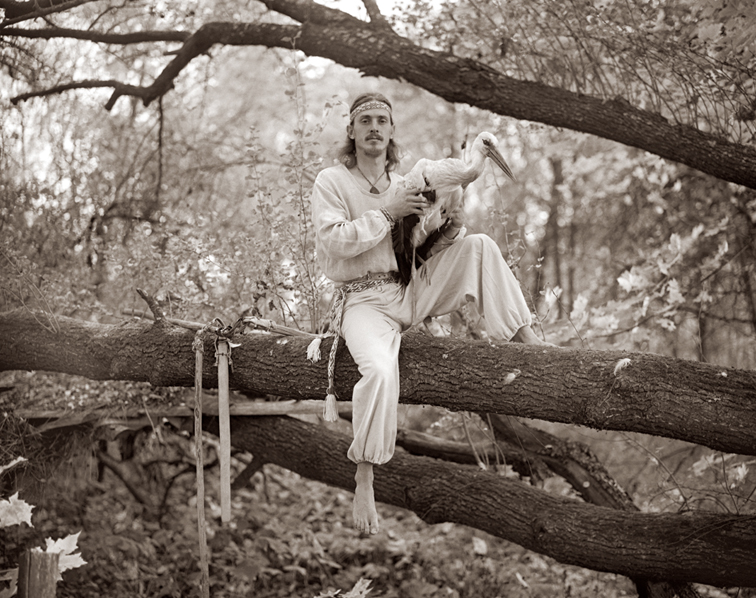
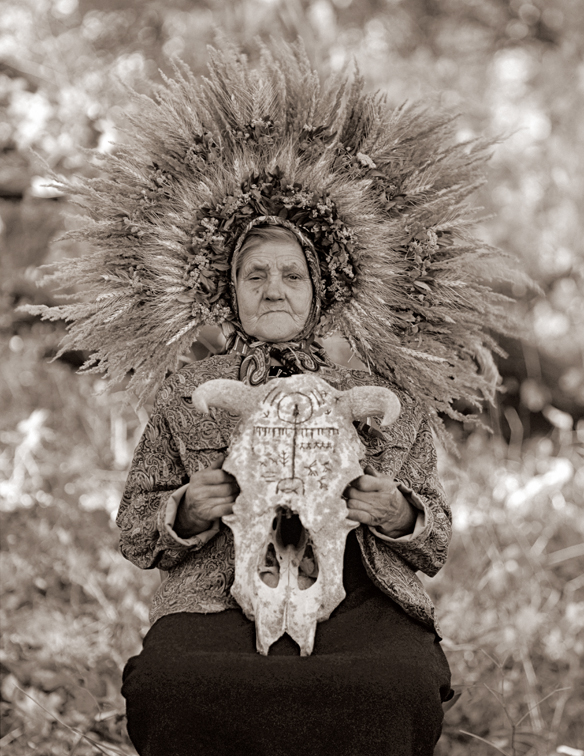
Somewhere around 2004, I realized I had reached a confident maximum, both in terms of fees and artistic level. I stopped loving clients and quickly transitioned to my own projects. Since about 2006, I have been engaged exclusively in authorial shooting. I have neither masters nor clients.
— You combine the work of an art photographer and a documentarian. How do you manage to balance these two approaches?
— Not at all. I don't balance in any way. I shoot the way I see it. I have such a beautiful vision of the world, like in a good Hollywood film. There are certain stories that are worth being heard and seen by people, and I tell them. I don't just shoot for the sake of it, and I don't walk the streets with a camera searching for a "lucky shot." The philosopher Mircea Eliade wrote that the materialistic paradigm of modern society is only a superficial layer, beneath which lies a deep dependence on archetypes and mythological structures.
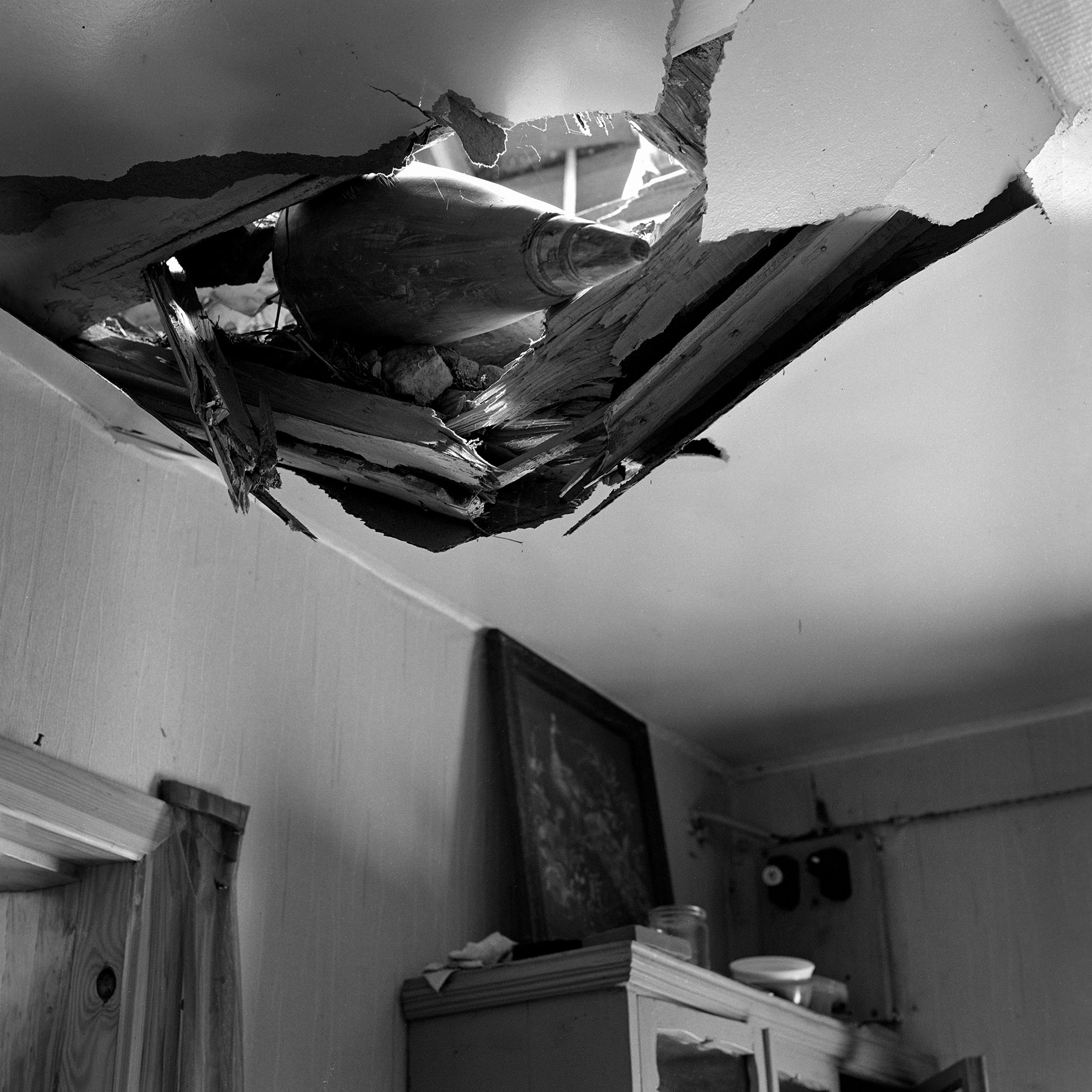
Just as Eros could not exist without Thanatos, documentary work cannot exist without the culture of contemplating photographs through archaic layers of consciousness. The photographer's task is to compress the maximum of meanings, ideas, and stories into a photograph. Sometimes I succeed in this.
— Do you feel that your work has an authorial style or even a philosophy that runs through all your projects?
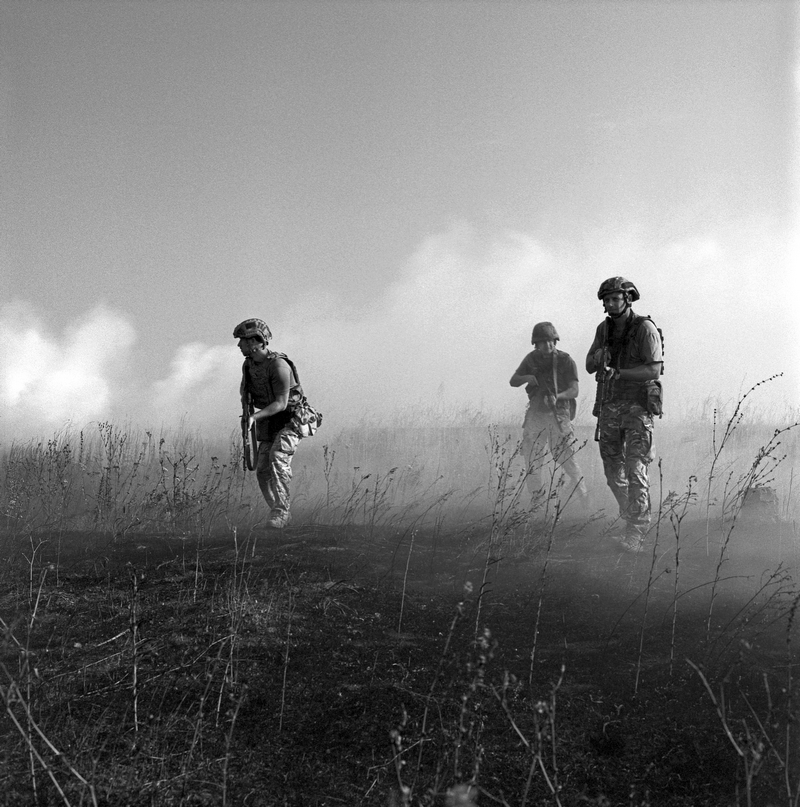
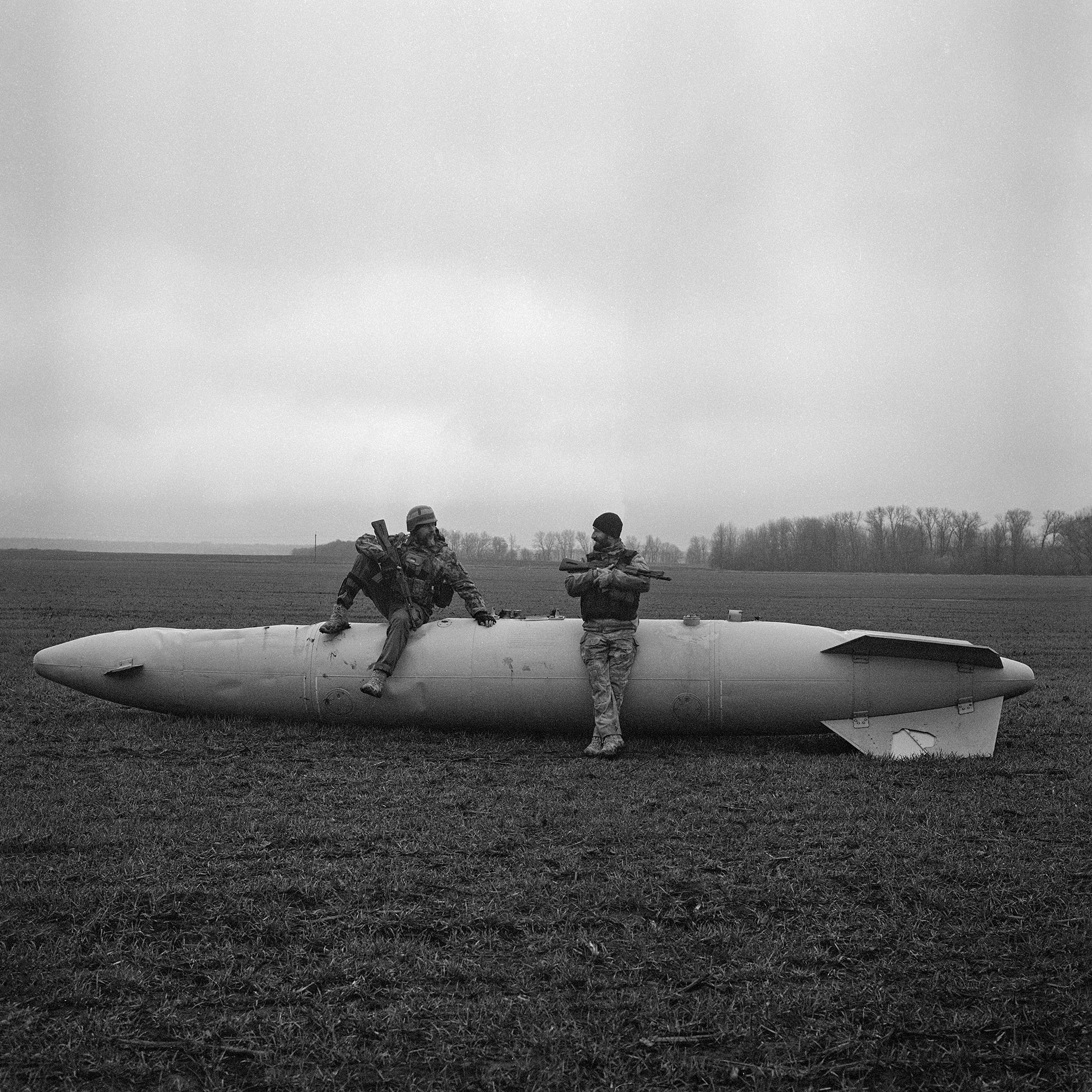
— From the very beginning, I shot mostly on wide film and large format. Suddenly, it turned out that I simply have no competitors. Today, I shoot about 600 sheets of classic 4x5 inch black-and-white film a year. In addition, a hundred sheets of 5x7 inches and many rolls with a 6x6 cm frame. I usually shoot on Ilford, sometimes on Kodak. Even during the battles for Bakhmut, I shot on 6x6 cm film from a tripod. Shooting from a tripod has many advantages and a certain style. Furthermore, I have a higher artistic education and extensive photographic practice. And a lot of visual exposure. I have spent many weeks in national museums of different countries and watched thousands of films. Perhaps that is why people tell me that my shoots resemble expensive cinema.
— What themes currently captivate you most in photography? Why are they important to you?
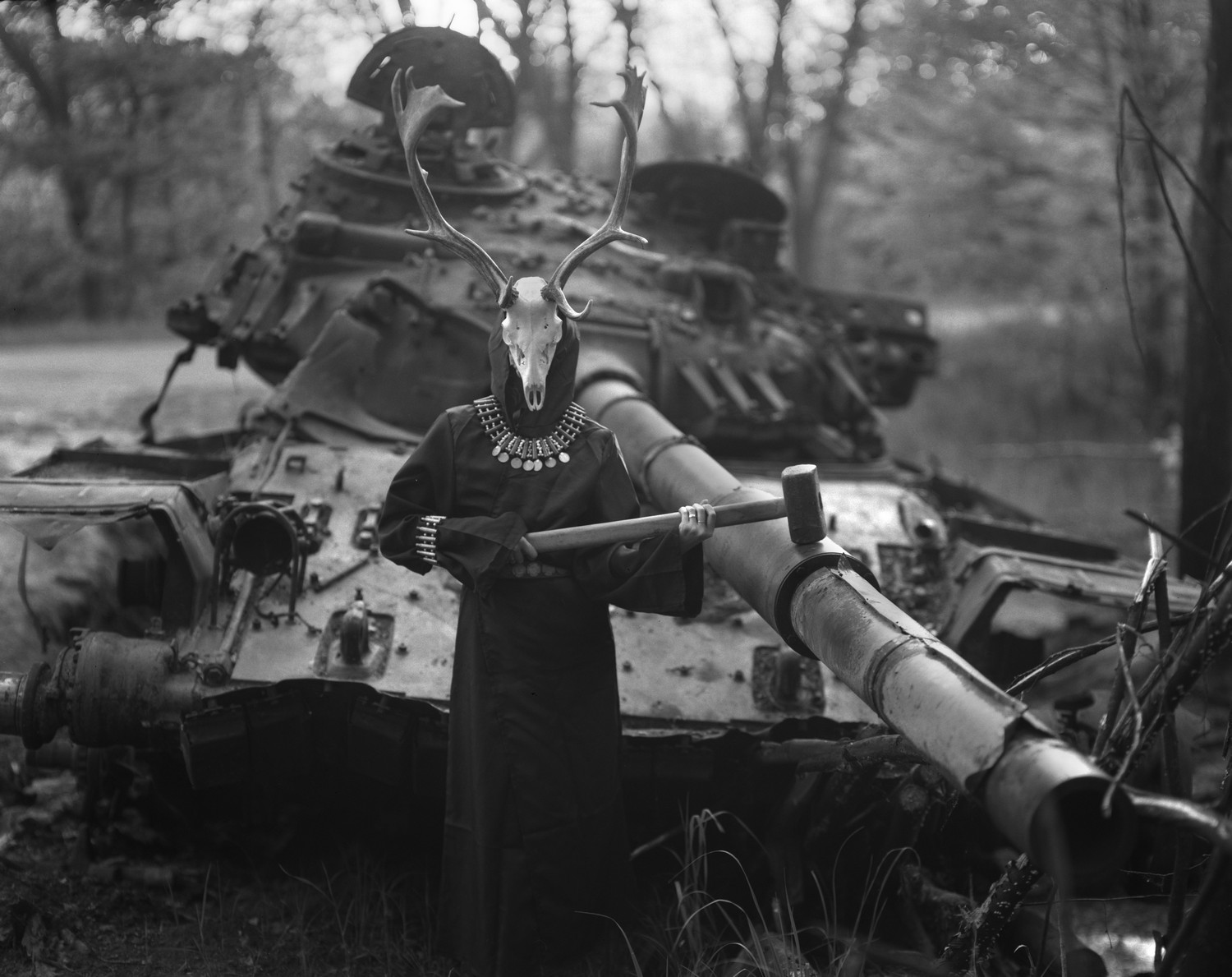
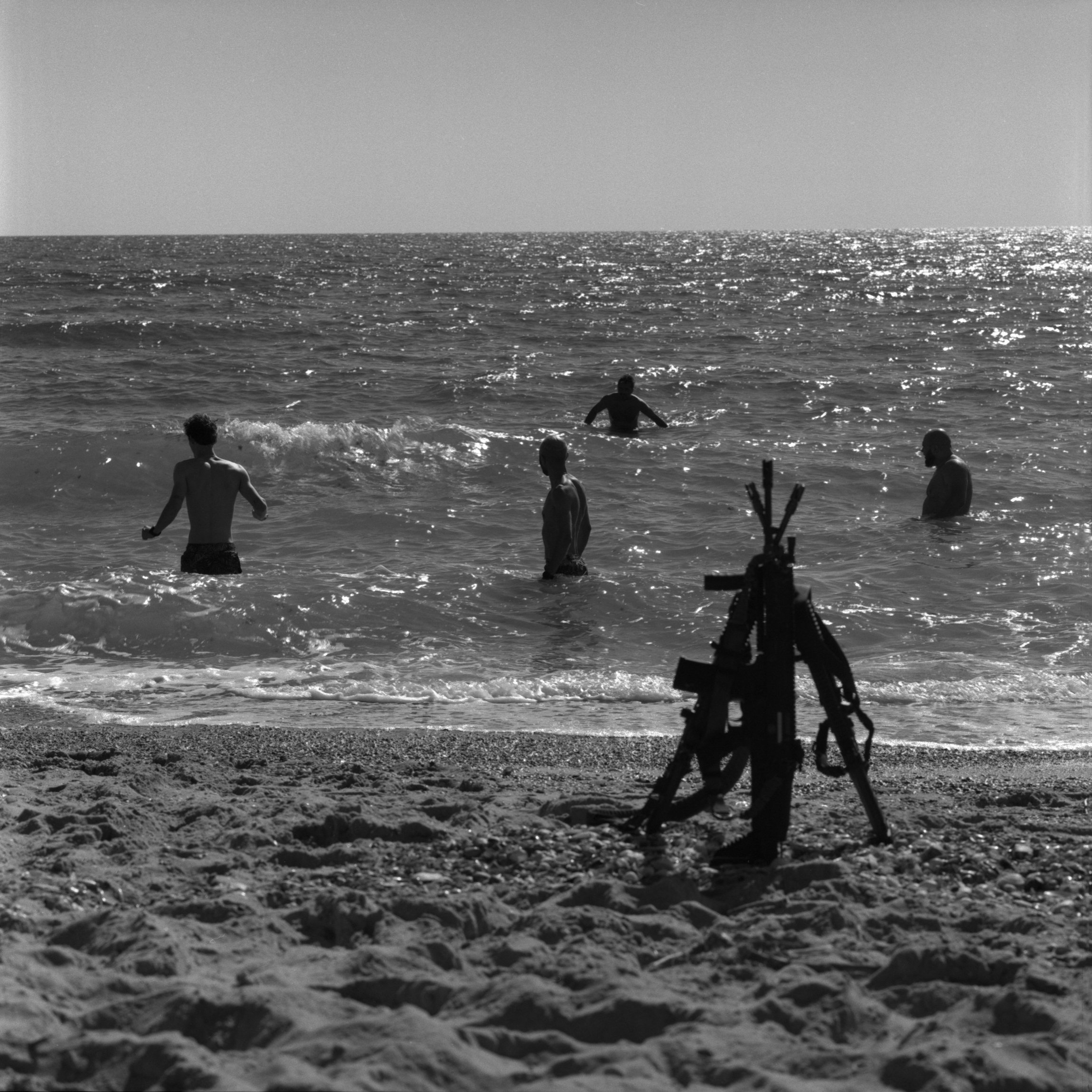
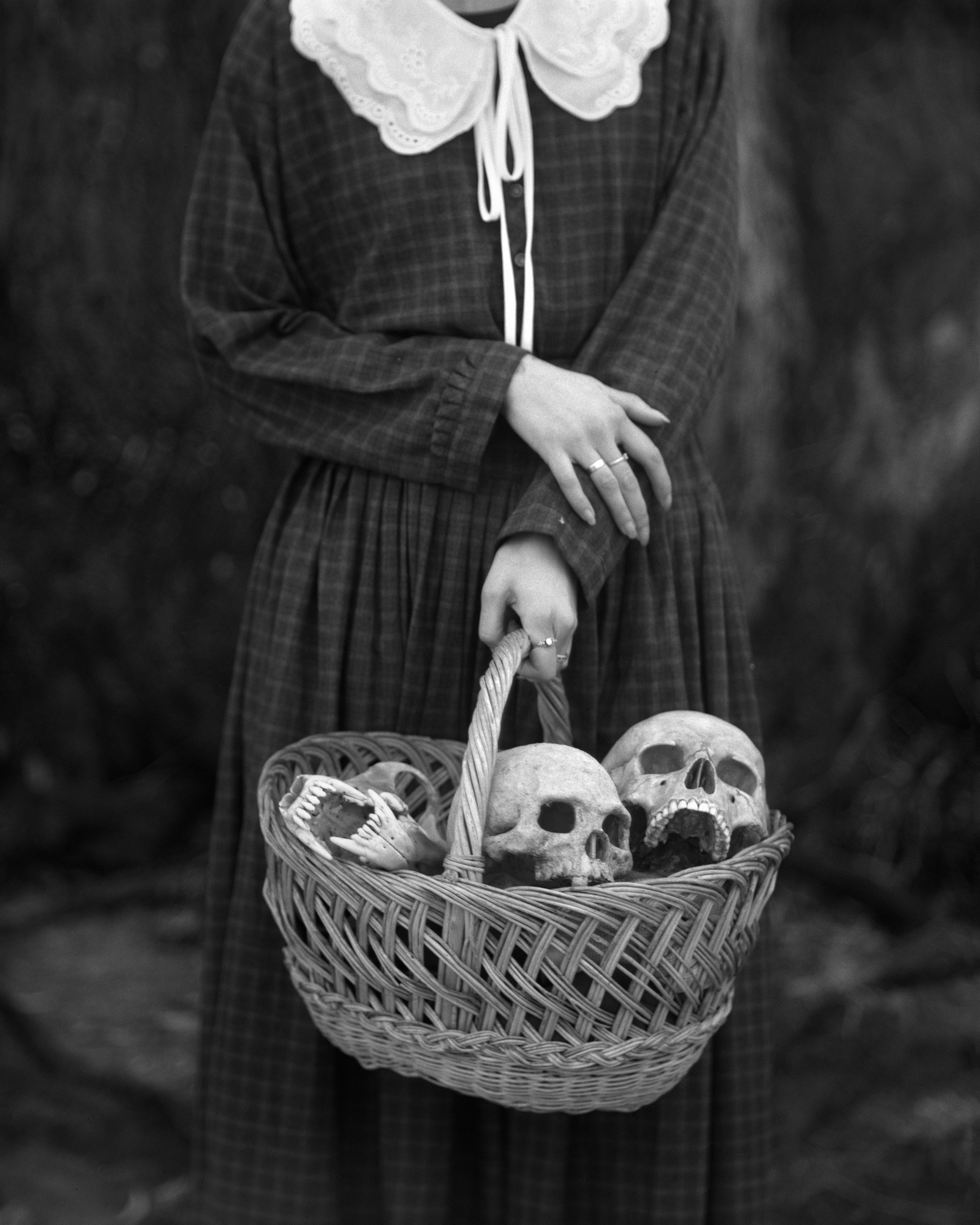
— I am currently studying the themes of the beauty of death, the aesthetics of war, wabi-sabi, vanitas, and death in Victorian British culture. We talk very little about beauty in war, but it exists. I am inspired by American photographs from the time of the Vietnam War.
On Documentary Photography and War
— How did the war—first the Anti-Terrorist Operation (ATO) and then the full-scale invasion—change you as a photographer and as an artist?
— Unexpectedly for myself, I experienced a severe depression due to the deaths of comrades and childhood friends. I was not ready for such a number of deaths. Perhaps I have become less empathetic, and it has become harder to manipulate me.

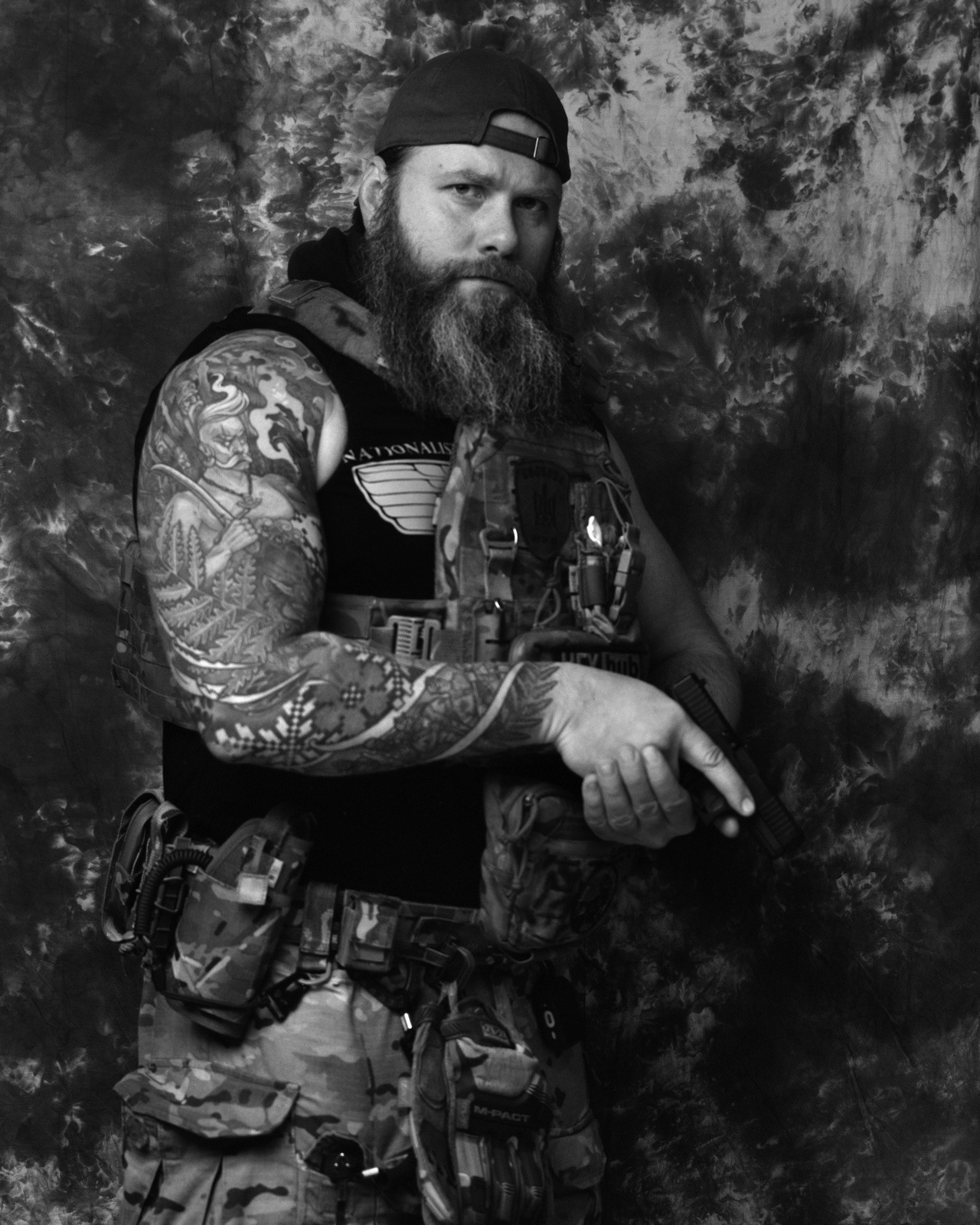
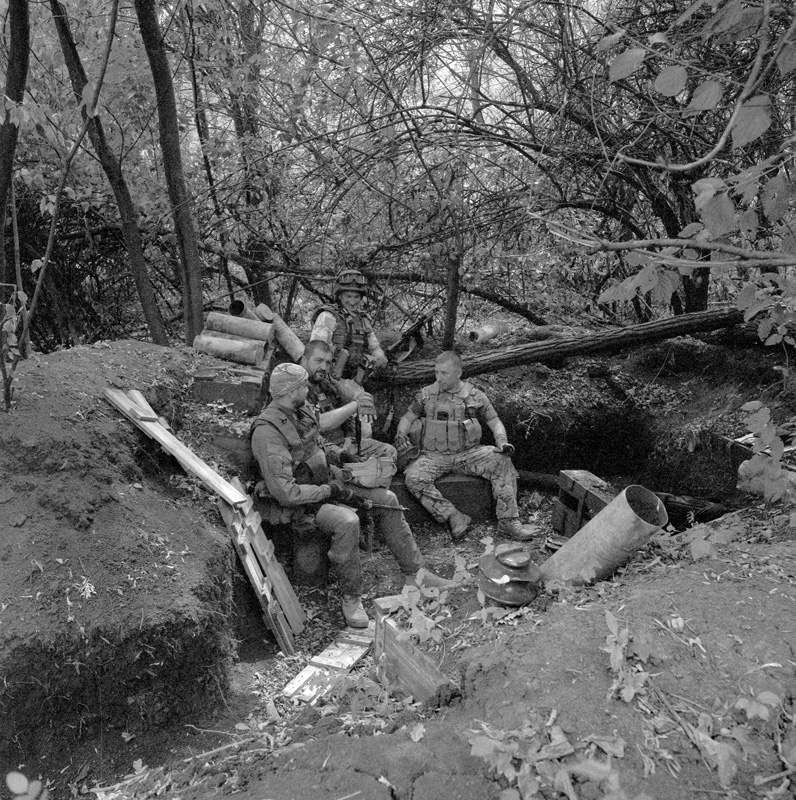
In my own collection of vintage photographs, there are about 400 original cards from German, American, and Soviet photojournalists from the time of World War II. Historians in my collection were primarily interested in portraits in uniform. They studied the pheno-types of faces, uniform, weapons, trophies, and awards based on them. That is why I began shooting portraits during the war. Moreover, I was the first in 2014 to start shooting portraits on 6x6 cm black-and-white film at the front.
Later, in 2019, I published the 320-page album Volunteers. The Age of Heroes with the Mystetstvo publishing house. It seems to me that this is the only publication dedicated to volunteers.
— Were there moments when shooting was extremely difficult emotionally? How did you find the strength to continue?
— I did not allow myself to be distracted from work even when soldiers were falling nearby. There was only astonishment that God had not grown tired of protecting me. Outwardly, I am always calm. This annoys many people. Of course, there were moments that slightly knocked me off my work stride, but still, the work doesn't do itself. Understanding the complexity of the situation comes later.
— Do you believe that photography during wartime is capable of changing people's perceptions and influencing history?
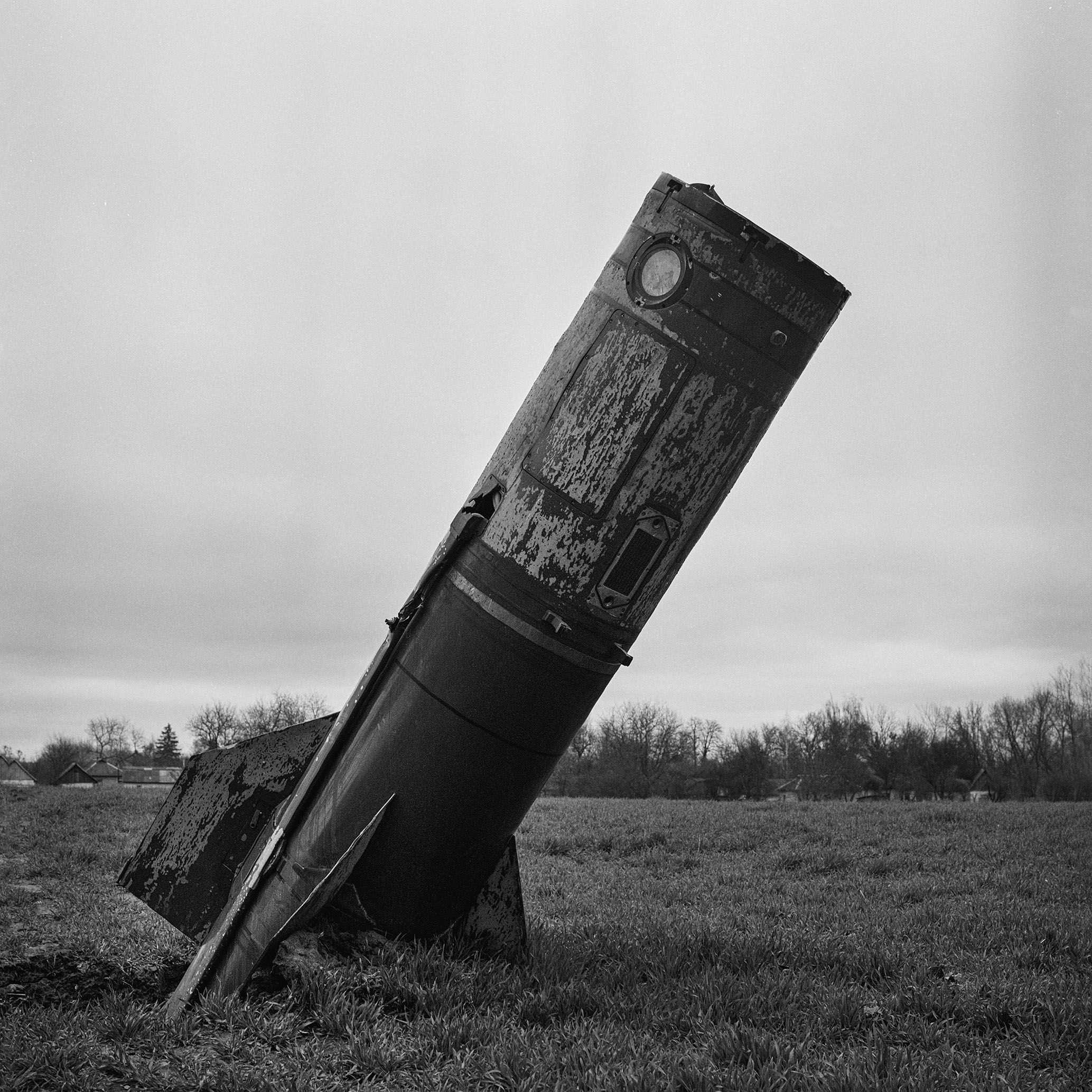
— Possibly. I don't have the task of influencing anyone. In my memory, there are many strange stories. Some are so incredible that they absolutely must be told to people, because these stories are worth it. If I don't tell these stories, they will disappear. And then it will be unclear why they happened at all? And it is precisely these stories that I try to tell. They are needed for eternity.
— Do you have a photograph about the war that is particularly special to you? What lies behind it?
— Yes, there are a few such shots. But they are special to me, not to the viewers. And behind them are personal turbulent and often unjust stories about life at war.
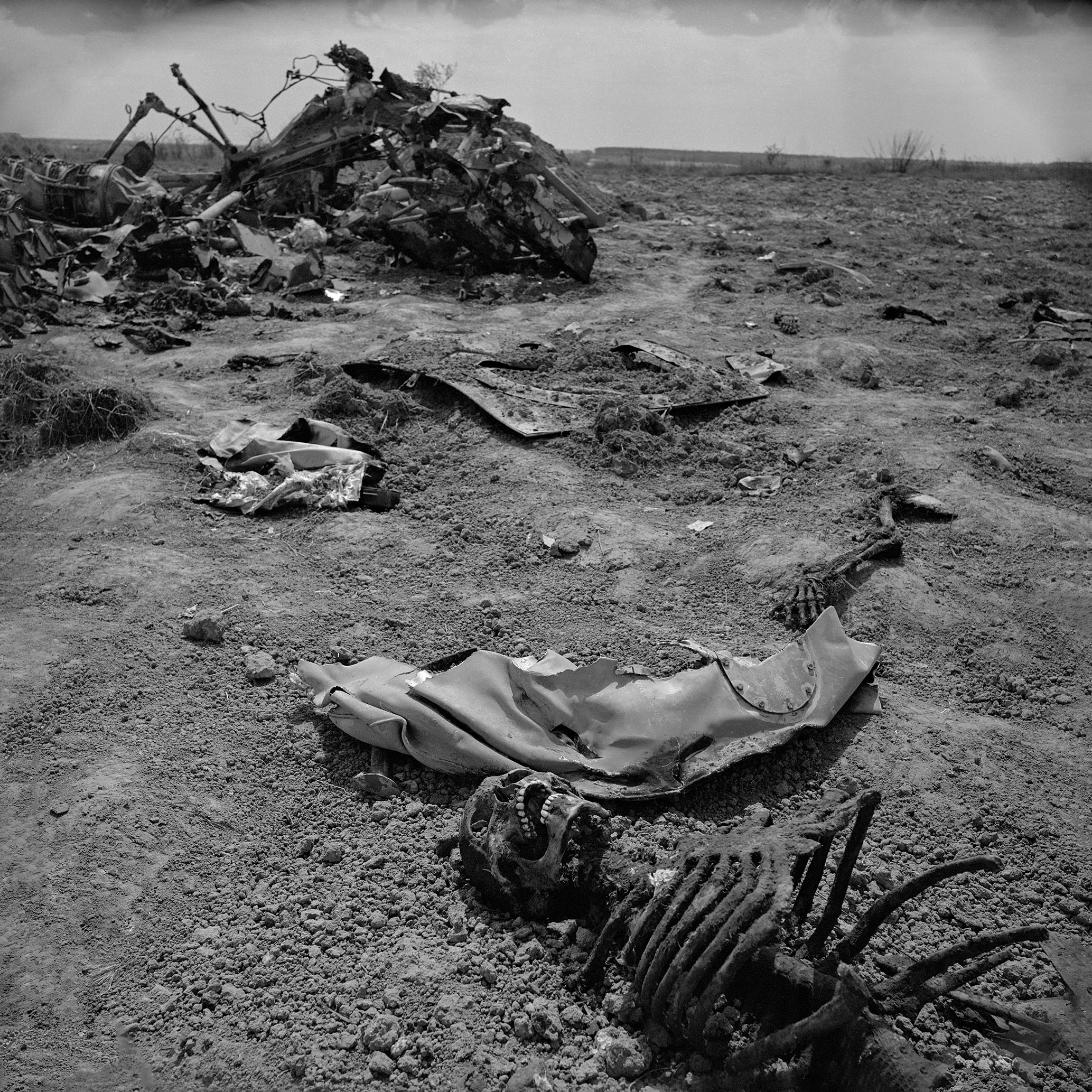
People are captivated by the photo of a burned Muscovite pilot against the backdrop of a "mangled" helicopter. They say the picture resembles films about Mars. But it is absolutely, one hundred percent documentary.
On Creative Projects and Experiments
— What is your boldest or most risky creative experiment? Why did you dare to do it?
— In the crisis year of 1999, I shot my own black-and-white art project The Connection of Times. At that time, black-and-white film was only shot in newspapers and at rural weddings, because color was already being used in the city. 12 black-and-white photographs in the style of socialist realism on the theme of the telephonization of Ukraine were shot with a "Rolleiflex SL-66" camera. The project brought me over $15,000. It was something incredible, because art photography did not exist in Ukraine in principle, and the fee was in the realm of fantasy. The Connection of Times project was not a commission, and it still surprises me how well everything worked out. And I dared to do it because I saw that time was slipping through my fingers like dry sand. And if I didn't shoot a project in the style of socialist realism right now, I would never return to it.
— Are there ideas or concepts that are still waiting for their time? What do you most want to realize in the near future?
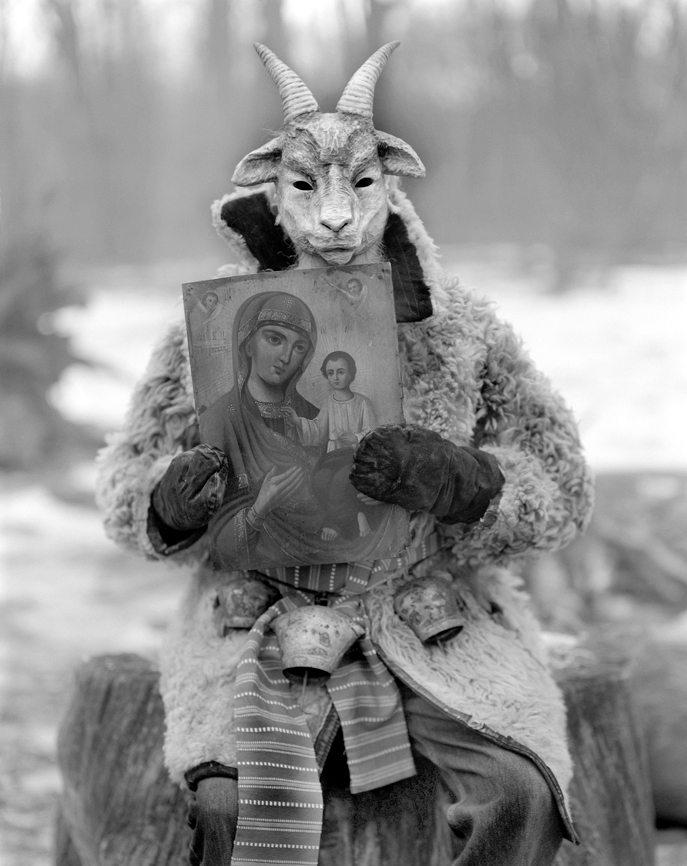
— I am gradually developing the theme of death and its influence on people scorched by war. An excessively aesthetic project. I'm not sure that the average Ukrainian is ready for it. Oddly enough, the theme of the aestheticization of death is actively developing in Poland, Muscovy (Russia), and traditionally in Great Britain.
On Art, Influence, and Inspiration
— How do you combine the artistic vision with documentation to preserve both the truth and the beauty of the frame?
— I don't combine them in any way. Quoting or duplicating reality is of little interest to viewers. And beauty does not contradict truth. I try to transfer the energy of an event through time and space. If the shots are perfectly documentary but do not evoke a response in people's souls, then they are dead and useless shots. The ancient Greeks found an antidote to the absurdity of reality and the hopeless pessimism it generated. This antidote is called art and culture.
— Do you have an "obsessive theme" that pursues you and returns in different works?
— Yes, it is the intersection of the magical and the rational. Some doors, if opened a little wider, are then difficult to close. But a true artist must feel these energies, play with them, and use them in their work. And this is not about drugs, but specifically about the energies around us.
On Personal and Philosophical Matters
— How has the war changed you not only as a photographer but also as a person?
— It hasn't changed me as a photographer at all. I have come to respect people with a noble core even more. I completely ignore cowardly men. They cause major problems not only at the front. I have excluded about half of my friends and acquaintances from my social circle. I unexpectedly began to respect colleagues who signed contracts with the Armed Forces of Ukraine (AFU). Some returned from abroad to do so. Previously, for various professional reasons, I hardly communicated with them. Sometimes I was even harsh with them. I am ready to apologize.
— What is most important to you in photography: truth, emotional impact, or artistic value?
— Truth does not exist at all. Today it's honest truth, and tomorrow it's not so much. Perhaps it makes sense to talk about veritas (truth/verity). But most people fear it like fire. Amateurs rely exclusively on emotion. The works of professionals are multi-layered. Every time you look at a work, you find new meanings. This can go on for quite a long time. I don't know what artistic value is. The value of a craftsman?
For me, the main thing in life is to fulfill my talent. Since God kissed me on the forehead and endowed me with talent, I must thank Him. For example, by polishing my talent, endowing photographs with philosophical meaning and divine beauty, and using the camera to tell stories that others missed. This is my service to the Lord, and through Him, to people.

That is how the albums Volunteers. The Age of Heroes and Liberated Kyiv Region came into being. How is it possible that I am the only photographer who shot not only the battles for Kyiv in the hot phase but also the Kyiv region in the first weeks after liberation? More than 50 settlements in the region fell into the camera's lens. There are 20,000 photographers in Kyiv, and quite a few in the region, but I was the only one who shot it. I cannot otherwise explain that I was a conductor of divine will.
— What shots or moments have stayed with you forever, even after many years of work?
— I love interesting stories with a non-linear plot. For example, near Zhytomyr, the underground command post of Reichsführer-SS Heinrich Himmler is perfectly preserved. And local residents use the caponier of Himmler's headquarters as a shelter from Muscovite missiles. I have a couple of photographs of this bunker and its owner. And of course, there are beautiful shots scattered across the years that are keys to those same interesting stories. There are many of them.
— How do you preserve energy and inspiration when working with themes of war and human tragedy?
— In Ancient Greece, artists were considered messengers of God. An artist could recreate beauty from a rough block of wild marble. For the ancient Greeks, this was a miracle, because no one could even imagine how to do it technically. It was among the Greeks that expressions about divine beauty appeared, the simplest manifestation of which was, again, the divine landscape. During Plato's time, there was the idea of contemplating the traces of Divine creation, where God creates the world as something beautiful, and beauty is the trace of the divine. During the Reformation, people turned away from God, and gradually from beauty. Today, beauty has become suspicious. In the modern cultural environment, there is a tendency to marginalize the aesthetic category of beauty. But beauty matters. Because it is a euphemism for goodness. The name of God is hidden in it. Hope lives in beauty, that we have not yet lost the ability to see goodness.
And therefore, when beauty lives inside, you see exclusively beauty around you. At least, primarily. Finding beauty in the whirlwind of strange events. And it is this divine beauty of the surrounding world that inspires me to continue working.
Andriy Kotiarchuk was born in Kyiv in 1966. He shoots on large-format film, both in the studio and outdoors. He masterfully commands the visual language of vintage bronze lenses from the late 19th and early 20th centuries. Andriy Kotiarchuk's works are represented in many private collections around the world, as well as in the collection of the National Academy of Arts of Ukraine and the Museo Nacional Thyssen-Bornemisza, Spain. He has exhibited projects in all national art museums of Ukraine. His fascination with creativity began in early childhood with drawing pencil landscapes and still lifes. Later, under the influence of the outstanding photographer Mykola Kozlovsky, he began to explore beauty in the mundane, genre photography, and painting with light. With a large-format film camera, Andriy Kotiarchuk explored the rhythms of war during the defense of Mariupol and found inspiration among the pagans of the Ukrainian Polissya. Andriy Kotiarchuk received his art education in 2006 at the National Academy of Management Personnel of Culture and Arts, has been a member of the National Union of Artists of Ukraine since 2021, and a postgraduate student in the Department of Fine Arts, NAMPCAC, since 2023. His main life thesis is: "Since God gave me talent, my service to the Lord and to people is through the polishing of this gift." He is the author of two photo albums, Volunteers. The Age of Heroes, 2019, published by Mystetstvo, and Liberated Kyiv Region, 2024, published by Mystetstvo.
The photographer's social media: Facebook
Credits:
Topic Researcher, Text Author: Vira Labych
Photo Editor: Olga Kovalova
Literary Editor: Yuliia Futei














.jpg)


