

Photographer Maryna Brodovska explained why vernacular photography is sometimes the best way to show contemporary problems, and how to create a visual story about life during the full-scale invasion so that it is understandable to foreigners without war experience.
"Photography can be not only documentation but also reflection"
As a child, I wanted to be an artist and planned to study design. In high school, my mother signed me up for drawing lessons. I wasn't lucky with the teacher—the classes were very boring. I wanted to create, not draw dull still lifes. So, I decided that painting was not interesting at all and I would never do it. However, the urge to create remained.
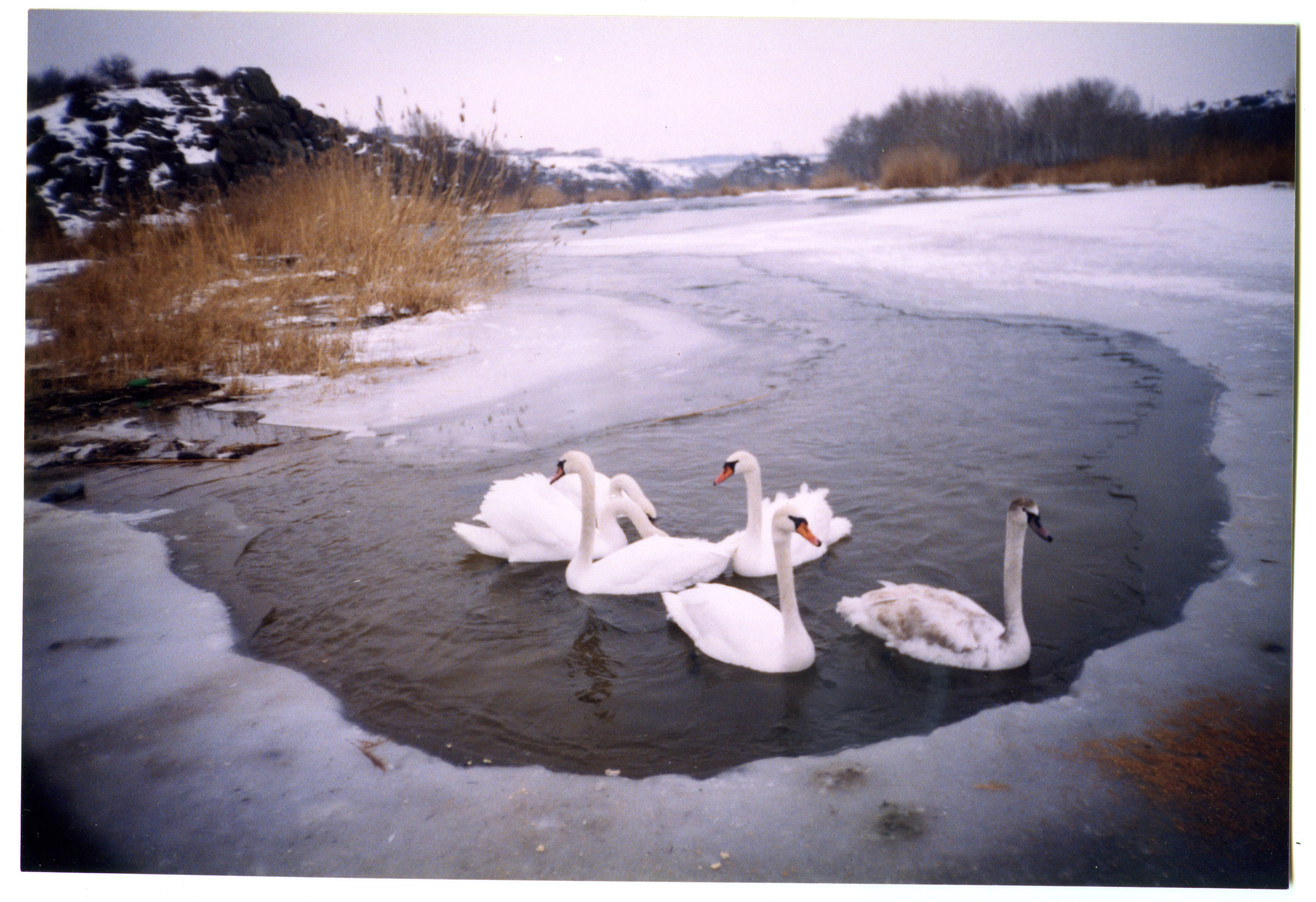
I love the photos I took as a teenager—I keep them in a family album. I am from the small town of Yuzhnoukrainsk, Mykolaiv region—it has very picturesque landscapes, and the Southern Bug river flows through it. I enjoyed going to the river to photograph nature. I still love shooting there when I come home.
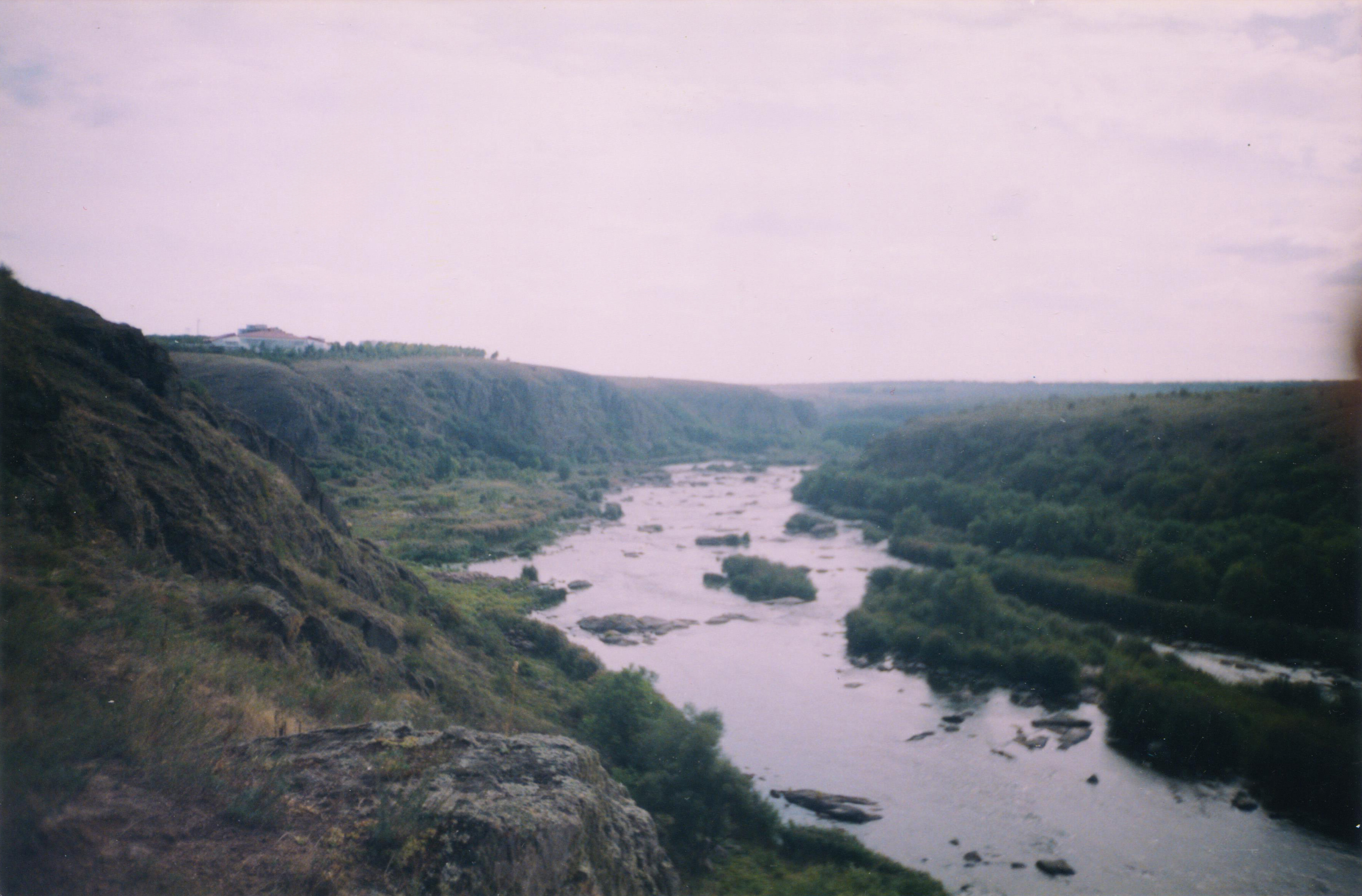
My first camera was a simple "point-and-shoot." I really enjoyed photography; I was captivated by the simplicity, at first glance, of the process. I thought it wasn't boring at all—it was easy and creative. I started seriously pursuing photography in university. I enrolled in "tourism" and after a year of study realized I definitely didn't want to be a geographer. I started looking for photo courses and stumbled upon Viktor Marushchenko’s School of Photography. Since then, photography has always been with me.
I chose Viktor Marushchenko's School of Photography intuitively. I simply had a strong desire to learn how to take pictures. However, Viktor Marushchenko rarely talked about the technical side of shooting, but he showed a lot of photographs from different genres and directions. Although he was a documentary photographer, he also paid significant attention to art photography. In his photo school, I first saw photographs by, for example, Helmut Newton (Helmut Newton) or Wolfgang Tillmans (Wolfgang Tillmans).
Viktor Marushchenko said that it is worthwhile to shoot socially significant projects. I started looking for such themes to shoot but found nothing. At 22, it was difficult for me to work on serious stories. At the same time, I realized in photo school that photography can be not only documentation but also reflection. Now I clearly understand that my strength lies in art photography, where I can use various visual approaches.


"We receive a double dose of war"
For a photographer, visual literacy is important, not only of other authors' photographs but also of visual art in general. I am also a screenwriter; I watch many films, and I am convinced that they influence me as a visual artist. I like many pictures—both experimental documentaries and authorial narrative films—but right now I want to mention the Finnish director Aki Kaurismäki (Aki Kaurismäki). His films convey respect, kindness, and love for people. He shoots poignant and vulnerable stories.

Our reality is very traumatic and difficult right now; we are inside a war that is still ongoing. I feel that hope and the ability to find joy in simple things are desperately needed. We now see many documentary photos and films about the Russian-Ukrainian war. They are very important, but by viewing them, we receive a double dose of war and, consequently, trauma. Therefore, for us, those undergoing traumatic experience, therapy and recovery are crucial to function normally. Art, in all its forms, possesses such properties. For me today, this means the films of Kaurismäki, Joachim Trier, as well as contemporary and classical visual art. The films directed by Aki Kaurismäki and beautiful visual art tear us away from reality for a few hours, giving our wounds time to slightly heal.
Of course, since the start of the full-scale Russian invasion, all my projects have been related to the war theme—the first weeks of life in Kyiv, the experience of forced emigration, the feeling of losing home and safety. Before 2022, creativity was mostly self-reflection for me, whereas today I feel the need to create social projects.
"I have a friend like that, too"
One of my first projects and the eponymous book "My Dear Vira" are still important to me. This project is about female friendship and how it changes with time and distance. I am currently working on a film idea, as this story is still developing. I really wanted to create a photobook about my friend Vira, with whom I have been friends since university.
After graduating, she emigrated to the US, and our close friendship changed. We lived in the same dorm room, and Vira was like family to me; we spent a lot of time together and went through the first traumas of growing up.
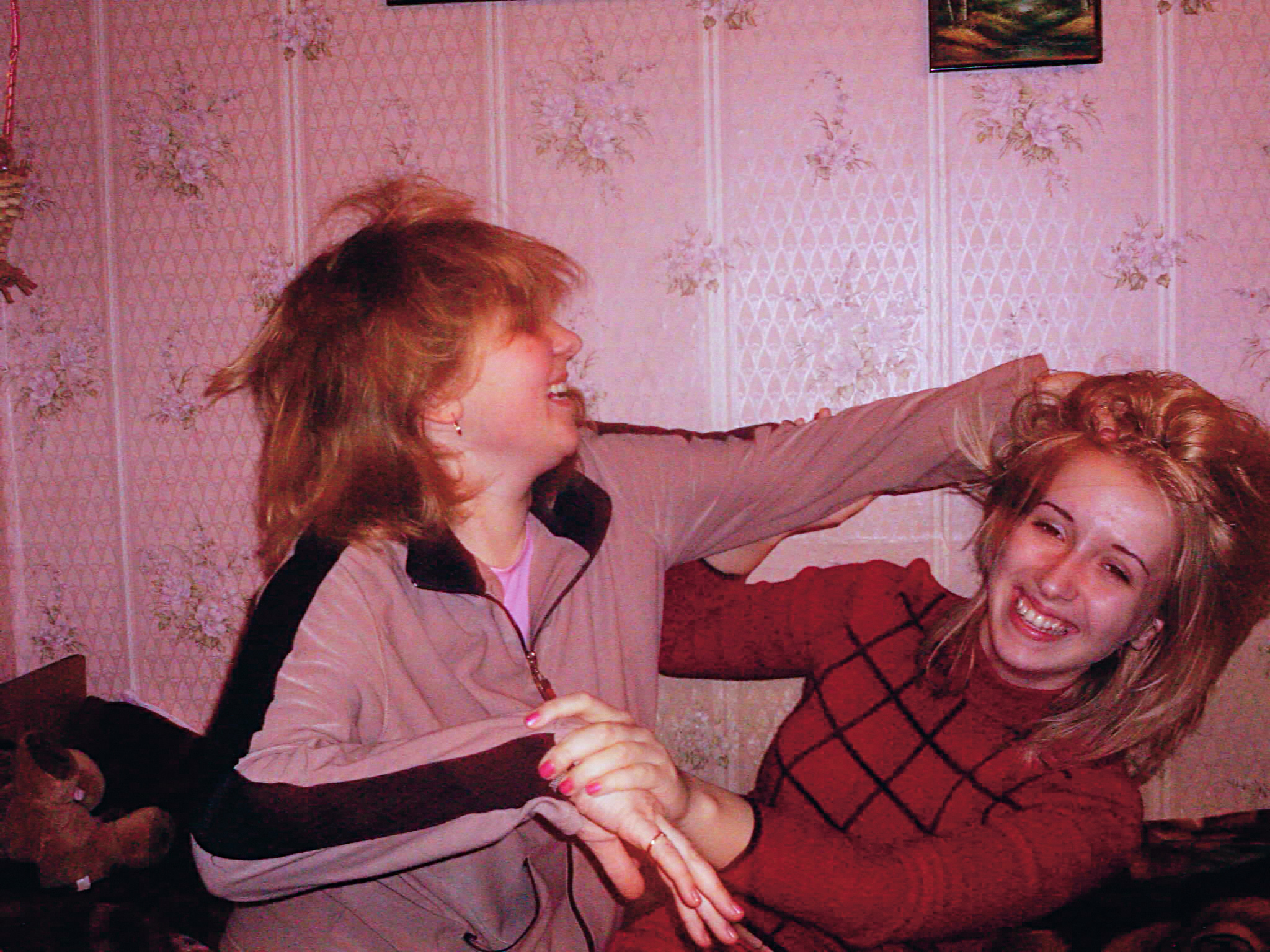
My friend left, but we wanted to maintain the warm friendly relationship that we always had. At first, we actively communicated, then we started following each other's lives on social media. I really wanted to create a photo project about Vira—a Ukrainian woman who moved to the United States and became a servicewoman there. When my friend came to Chernihiv for a while, I decided to take beautiful staged portraits of her in uniform and in civilian clothes. The result disappointed me—those photos were not about Vira at all. So, I intuitively immersed myself in archival photographs featuring much of our student life. That’s how I began to build our story, based on vernacular photography and memories. I really love the aesthetic of archival photography, which is textural, sincere, genuine, and perfect in its imperfection.
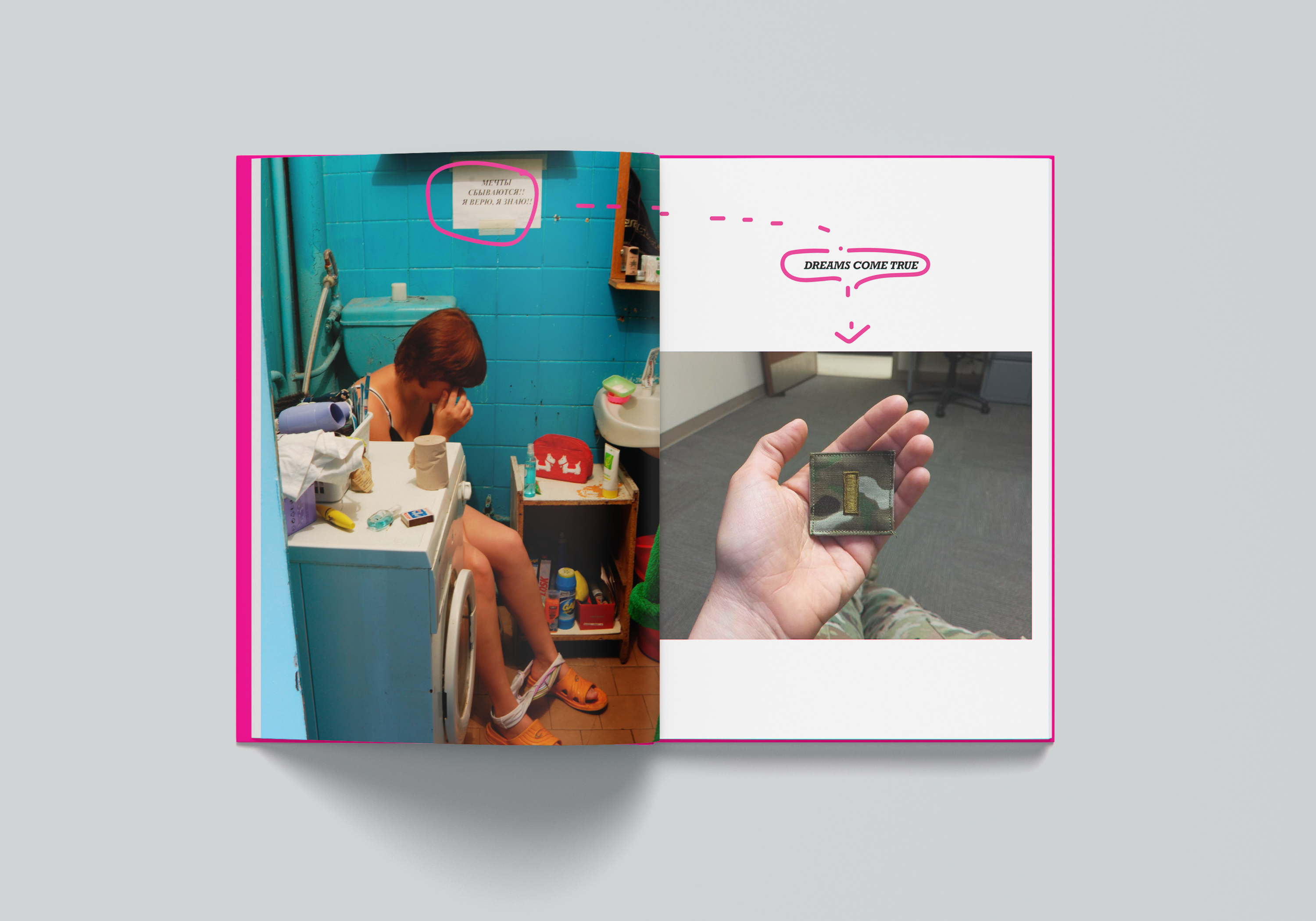
I immediately saw a book as the best form for realizing the project about Vira. When I first started developing the story idea, I went to a book review in Kyiv. The communication with mentors resembled speed dating—you sit down at a table and talk to a person for a few minutes. I was deeply encouraged that all the photographers, after hearing the photobook idea, immediately said: "I have a friend like that, too." I realized that a book was worthwhile because it resonates with people, as this is a story not just about Vira, but also about friendship.
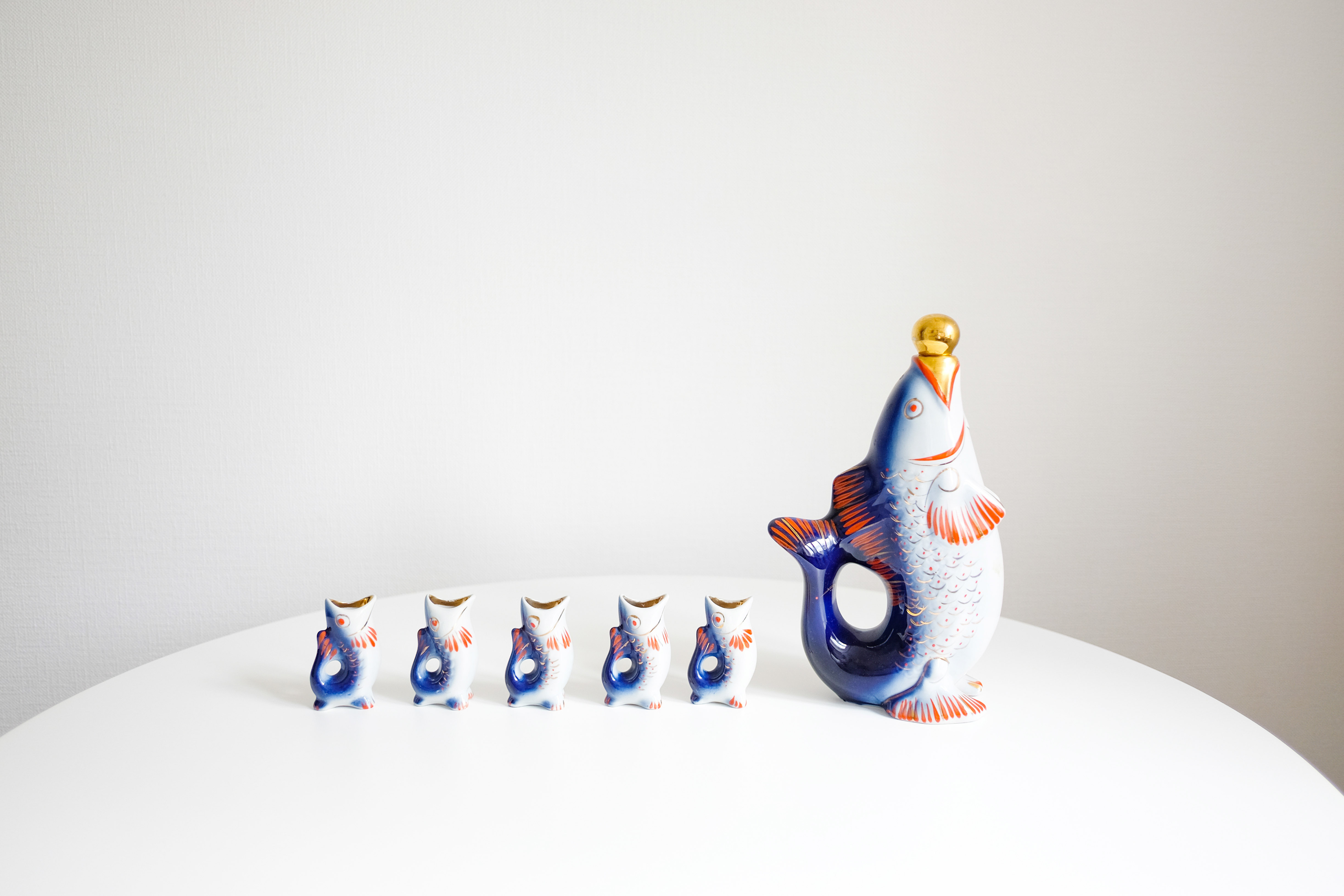
The next photobook was the project "What do you want to be when you grow up." Like the story about Vira, it is also based on vernacular photography. I relied on my own experience, which makes the project as honest as possible. The question "What do you want to be when you grow up?" is one we often hear in childhood. Sometimes it is quite difficult to find an answer to it even in adulthood. I realized I would always ask myself this. The photo project is an attempt to figure myself out, to recall childhood and things associated with it, such as Christmas decorations, chewing gum, or porcelain fish. I used photographs, collages, archival photos, and the result was a quite nostalgic story that also resonated with many people.

As for me, I truly felt like I was in the right place after graduating from Viktor Marushchenko’s School of Photography. We held an exhibition, and I saw my work in the gallery. I really loved that feeling. Of course, afterward there were many doubts, searches for a "normal" job, and a quest for inspiration. However, I realized that I wouldn't be happier if I stopped photographing; in fact, the opposite would be true.
"I joke, therefore I am"
Until the very last moment, I didn't believe that a full-scale Russian invasion could start—I didn't have an emergency kit, a food supply, powerful power banks, or an action plan. I called a friend, and she said we needed to go to a safe place. That place for us turned out to be the morgue of the hospital where my friend's mother worked. "No one comes here willingly. No one will shell a hospital, let alone a morgue," my friend told me, and that statement sounded quite logical at the time. We were at the Okhmatdyt hospital in Kyiv, which was heavily shelled in 2024.
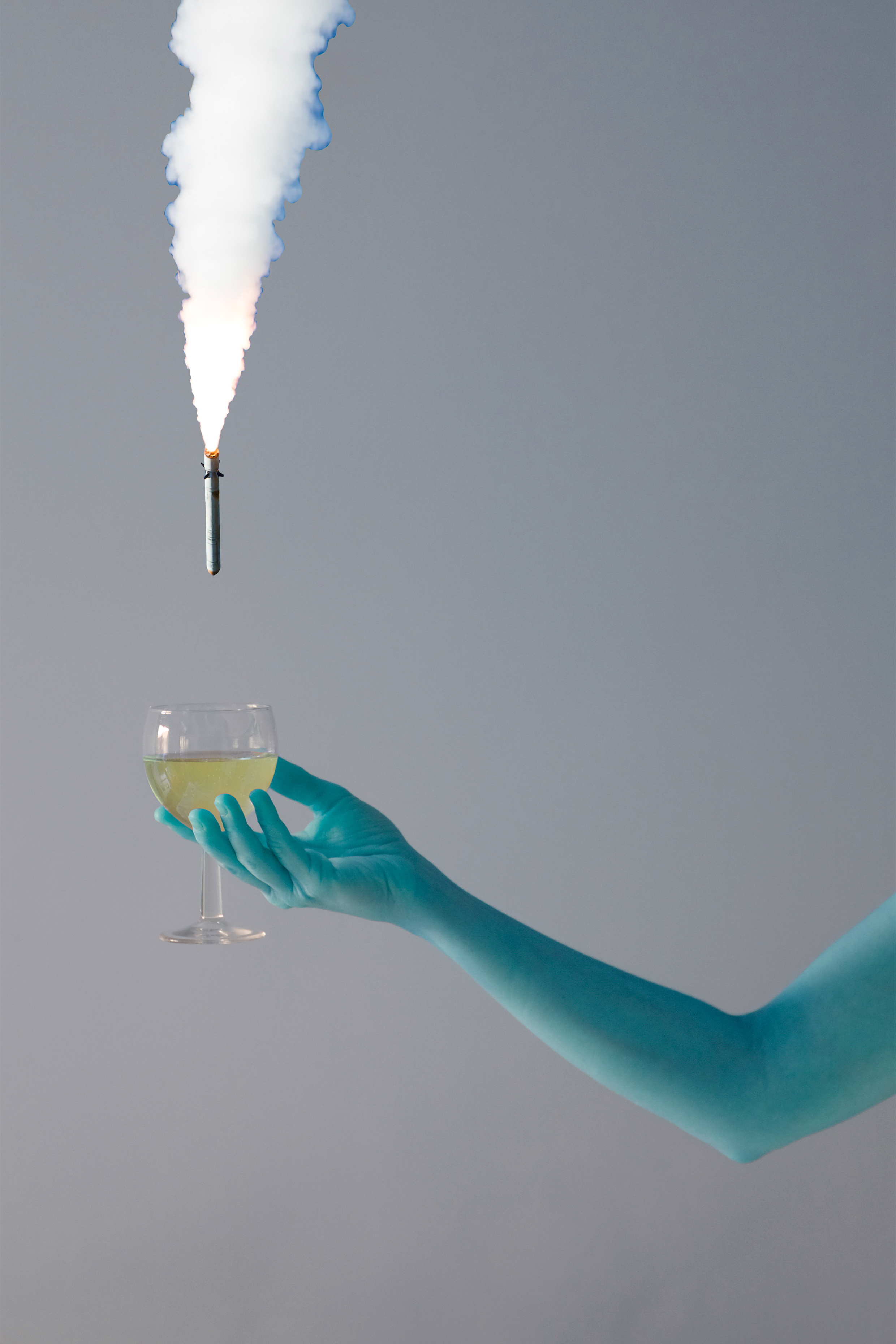
The first days of the full-scale war felt like a nightmare, and I desperately wanted to finally wake up. The feeling of surrealism was amplified by being in the morgue—next to dead people in the basement, I felt safer than with the living on the streets. I was struck by the doctors who, despite everything, came to work—they performed their duties very calmly and even joked, and they joked really well. I thought it would be wise to follow their example and learn to approach the situation with a certain amount of irony. That's how my photo project about the morgue, "I joke, therefore I am," came about.
In the first days of the full-scale Russian invasion, I even took some photos in the morgue with my mobile phone. When I found myself abroad, I decided to preserve these memories of being in the hospital. I was truly very grateful to the hospital and morgue staff for the feeling of safety during the war. There was actually very little visual material, but over time I realized that it wasn't really necessary. It was important for me to convey impressions and emotions, so I wrote text and made such fairytale collages from my memories. I couldn't look at this project for a very long time because, frankly, I didn't want to return my thoughts to that terrible time at all.
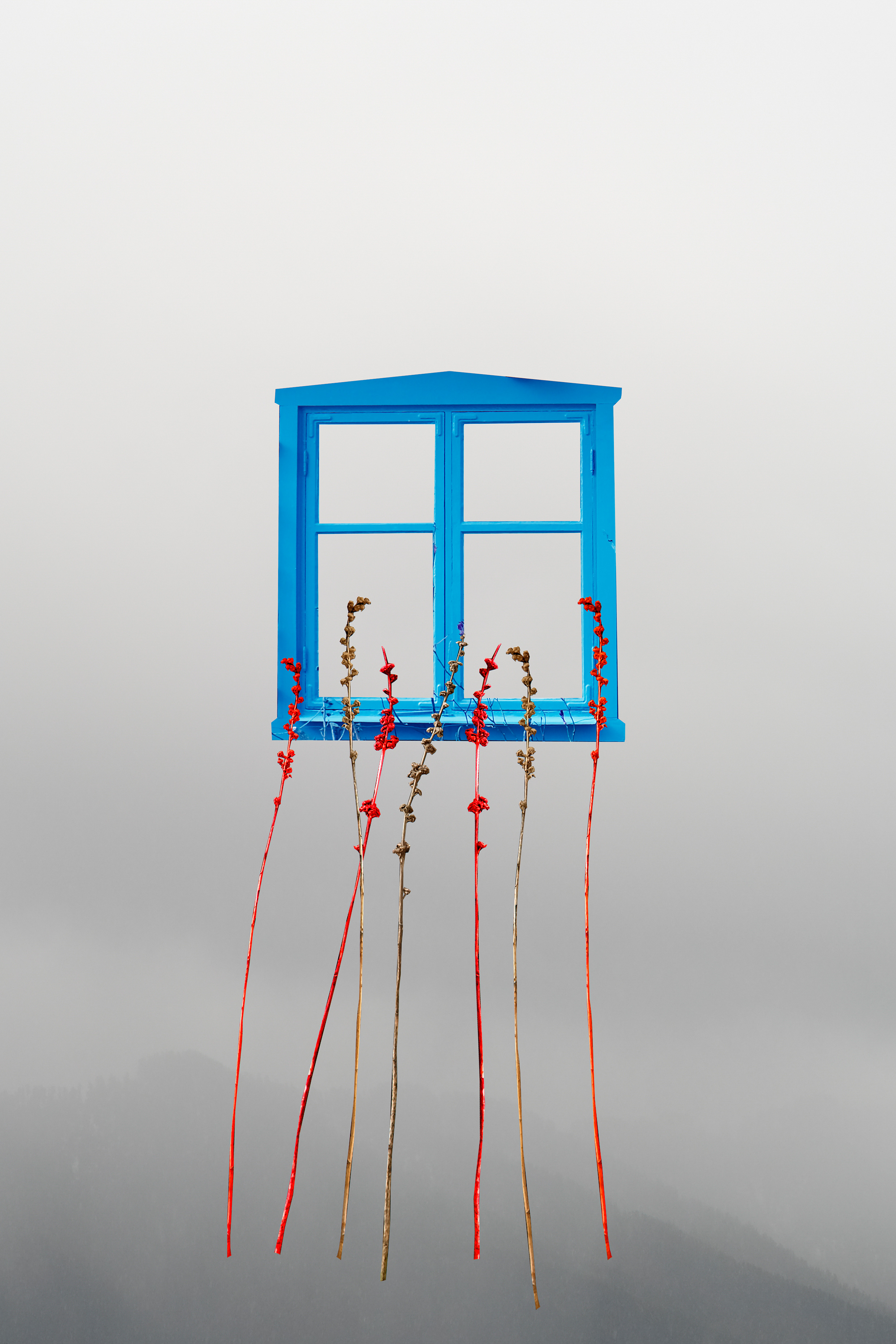
The project about the morgue was presented at many photo exhibitions, including in Italy and France. I realized that I had truly found the right approach—to address something serious with humor. Because even in the third year of the war, Europeans, who are no longer particularly interested in our news, looked at it with great interest. Humor attracts people. It is important to remind, constantly remind the world about the Russian-Ukrainian war. We, as artists, can do this. We must invent a new language every time so that we are understood and heard.
"There is a home, but there is no sense of safety, even at home"
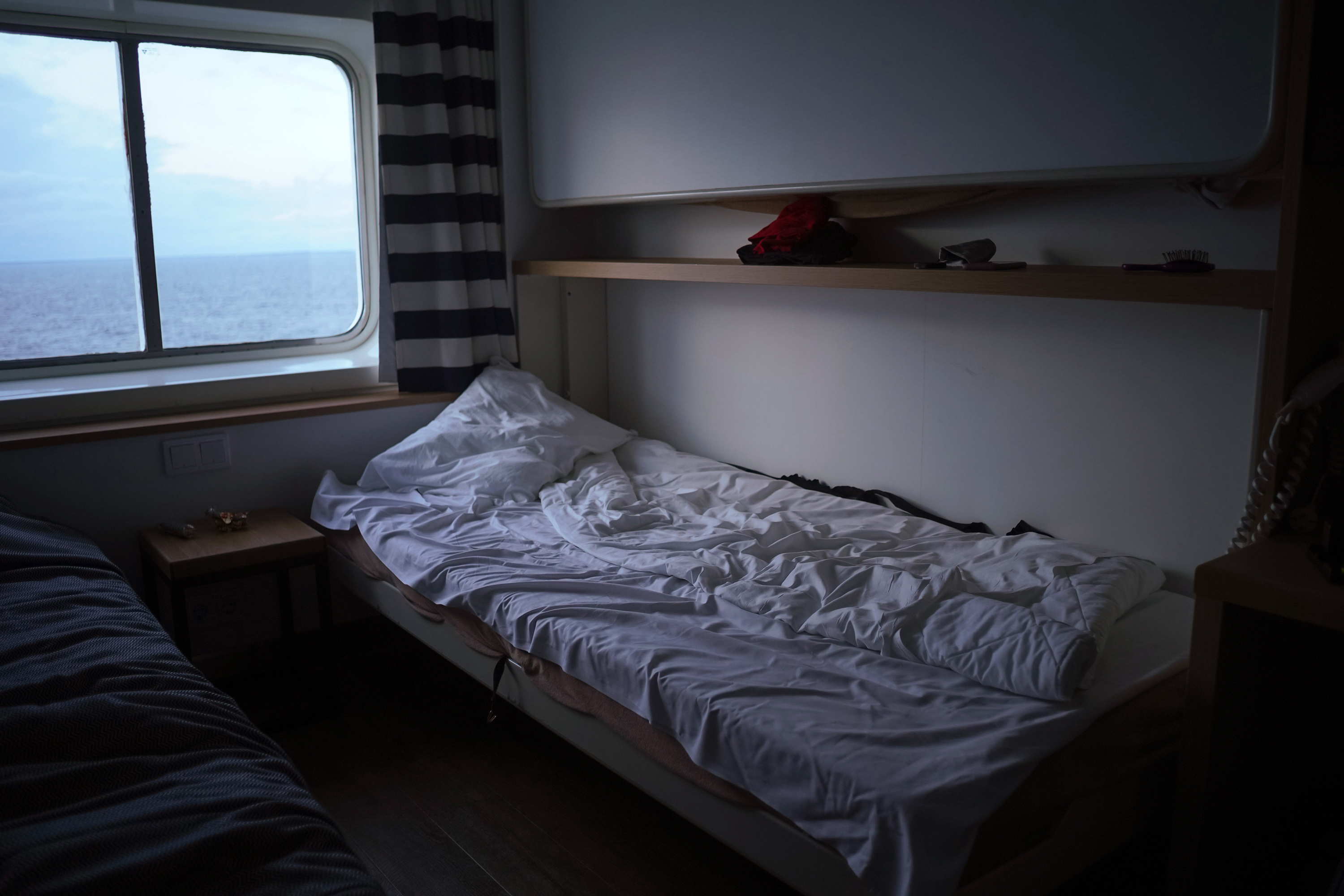
I left Kyiv a week after the start of the full-scale war. Right from the morgue. I stayed with friends and acquaintances from Europe, participated in art residencies, and documented this travel experience for myself. People let me into their homes, sharing such intimate spaces as bedrooms, and for me, this was a great display of kindness. I stayed in many different spaces. For instance, I spent the night in the Dutch city of Horst in an art gallery where my exhibition opening was held. In the morning, I folded up the mattress, and in the evening, beautifully dressed people arrived. I wondered what they were all doing in my bedroom. I had a completely surreal experience—spending the night in Ingmar Bergman's guest house on Fårö Island, on the coast of the Baltic Sea. We were looking at the cold beauty of the northern sea when the first photos from liberated Bucha began appearing in the news. It was very difficult.
I reviewed the photographs and found almost all the sleeping places where I had to stay. I decided to continue photographing different rooms and truly hoped that I would be able to complete this project with a photo of a bed in my parents' house, in the town of Yuzhnoukrainsk. Ultimately, I managed to take such a photo, but realized that I no longer feel safe at home.
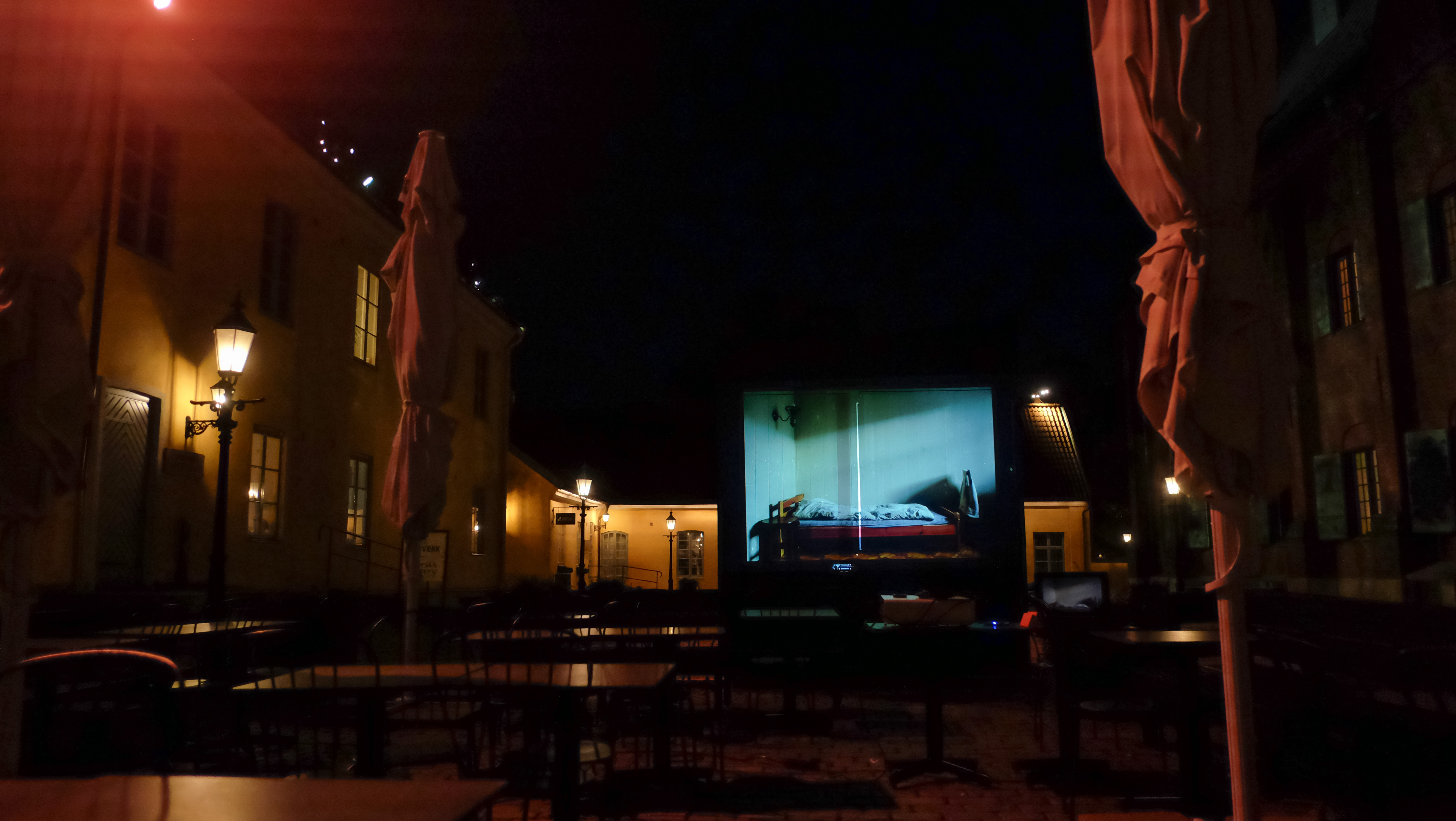
The photo project "I travel in a dream" is a story about small islands of calm. In bed, you are alone with yourself, feeling reliably protected from the entire world. Everything changed with the start of the full-scale war, as there are no absolutely safe places in our country. There is a home, but there is no sense of safety, even at home. Therefore, I decided to continue photographing sleeping places until I regain that feeling of safety—on trips, business travel, and in the Kyiv metro during air raid alerts. This project, unfortunately, may last a lifetime.
During the full-scale war, I made several posters, including for films by Ukrainian documentarians. If the film's theme resonates with me, I can reinterpret it and make a collage. For example, for Olha Chernykh’s film "Photo for Memory" about a family from Donetsk, specifically three generations of women—grandmother, mother, and daughter. Recently, I prepared a poster for Svitlana Rudiuk’s film "Caution: Children." The film is about how children have survived the full-scale invasion and how they cope with such terrible things as the loss of loved ones or acquired disabilities. The director really wanted the film's poster to be more about hope, as children are characterized by optimism and a desire to move forward.
I am currently working on a project about Ukraine's nuclear disarmament. During the full-scale Russian-Ukrainian war, the topic of Ukraine's former nuclear potential has become relevant again. The project will also be based on vernacular and archival photography, on personal and collective memories. Not far from my hometown of Yuzhnoukrainsk, there were many missile silos, but no one talked about it. I photograph landscapes where missile bases once stood, which are now fields of sunflowers; I reinterpret the photographic and video archives available to me. For now, I see this project as an exhibition, but perhaps I will make a photobook later.
"I cannot imagine how I would have coped with everything without photography"
Personally, I have become more vulnerable and sensitive during the war — I can easily cry, but not when I look at pain or sorrow, but when I see something beautiful. Photography allows me to immediately reflect, process, and experience different events. What might have been remembered and analyzed for years is transformed into a photo project. You see the result, you can let go of the problems, and move on. Personally, I started working much more during the full-scale war, and photography has become my main activity. Honestly, I cannot imagine how I would have coped with everything without photography.
Photographers who document events in Ukraine during the war are doing very important work. The world could probably do without my reflections, but I cannot. I have long understood that my life will not be better without art. Photography is a part of my life. I am happy when my visual art, which is based on my own experience, can resonate with other people. Sometimes I feel that this is necessary not only for me, but when I see the feedback of those who have similar traumatic experiences. Foreigners, by putting themselves in the place of our experiences, can understand us better and be more empathetic. This is very important because when empathy disappears, aversion, hatred, and fear emerge.
Maryna Brodovska – a Ukrainian artist and photographer whose work explores themes of identity and memory. Born in Mykolaiv, she currently lives in Kyiv. She uses visual storytelling to make sense of personal experience within the broader context of social and cultural transformations.She began practicing photography in 2008 after graduating from Viktor Marushchenko’s School of Photography. She studied at the Bird in Flight photo school and took a photography course with Roman Piatkovka. In 2019, she received a Master's degree in Cultural Studies and Art Management from Drahomanov Kyiv University.
Maryna has published two photobooks. The photobook "My Dear Vira," self-published in 2020, was shortlisted for the Aperture Photobook Awards, Kassel Dummy Awards, and IPA. Maryna’s photographic projects have been featured in publications such as "Photo Evidence," "Gente di Fotografia," "Open Eye," "Camera Austria," "Bird in Flight Magazine," "Untitled," "5,6," and others.
Brodovska has participated in Ukrainian and international exhibitions since 2008; her works are held in public and private collections.
The photographer's social media: Instagram
The material was prepared by:
Topic Researcher, Text Author: Katia Moskalyuk
Visual Editor: Vladyslav Krasnoshchok
Literary Editor: Yuliia Futei












.jpg)


