“They Carry the Light” is one of the projects selected within the third annual micro‑grant support program for Ukrainian documentary makers implemented by UAPP. The goal of the program is to support authors who continue to document the experience of a country resisting aggression and to create visual testimonies of events that define the history of contemporary Ukraine. The program is implemented with the support of the Embassy of the Kingdom of the Netherlands in Ukraine.
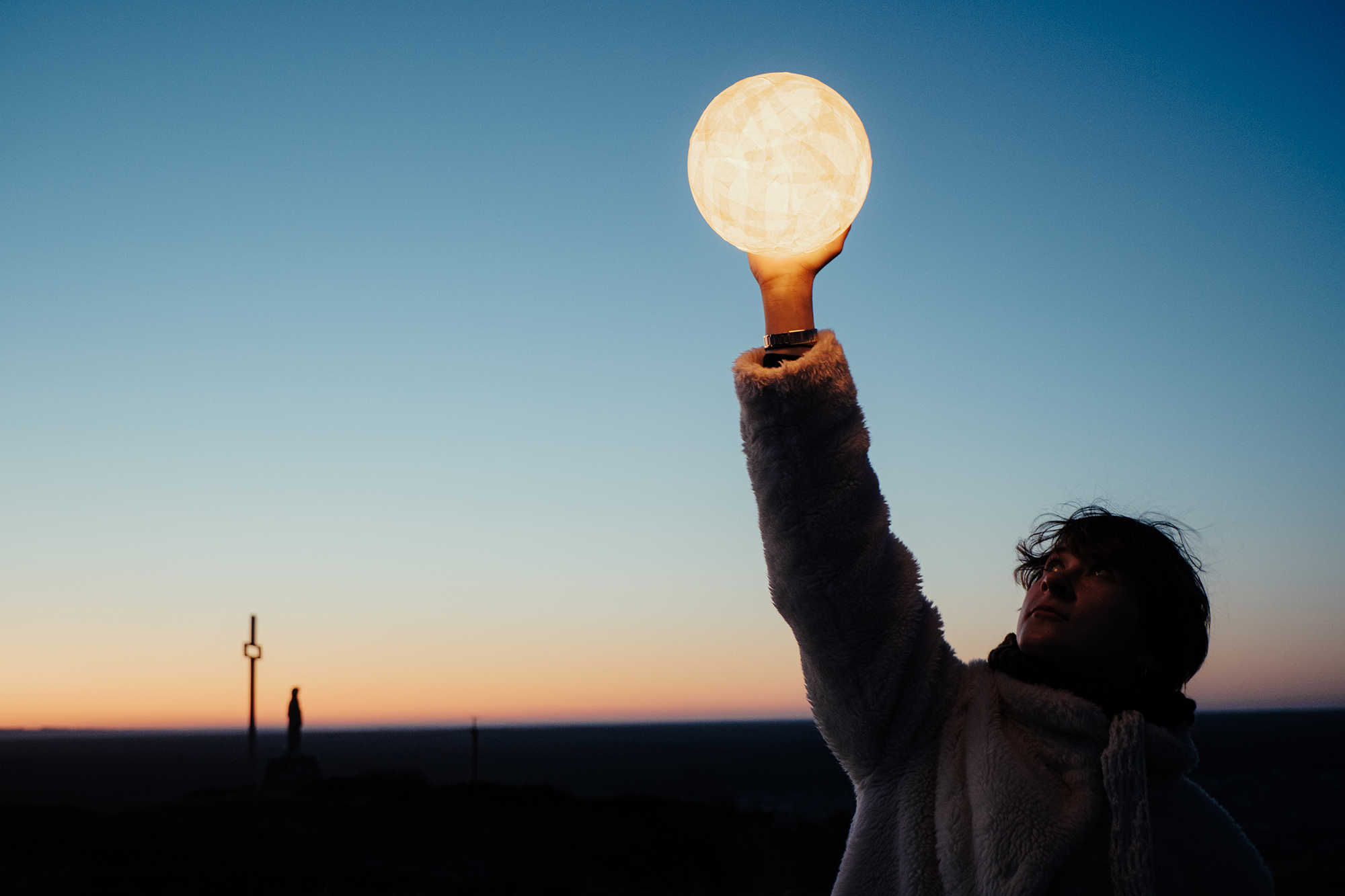
“They Carry the Light” is a documentary photo project by Taras Fedorenko about how the tradition of vertep caroling changes during the full‑scale war.
A vertep is a traditional Ukrainian traveling theater in which performers in costumes go caroling and stage a play about the birth of Jesus Christ, symbolizing the struggle of good against evil.
“As a child, I went caroling to earn a little money, and there were no deeper meanings in it back then; my family was not very religious. Today, however, war — with its fear, pain, and constant presence of loss — seemed like a space in which such traditions were generally inappropriate and irrelevant.”
The winter of 2026 turned out to be the hardest and most difficult winter for Ukrainians — massive Russian shelling, outages of heat and electricity. Born in pre‑electric times, the vertep once again becomes what it once was: a mobile theater that brings people warmth, light, and faith in the victory of good.
“We carried light quite literally, dressed in bright colorful costumes decorated with garlands and small stars — and at the same time we lit people’s eyes and souls with warmth. In blackout‑stricken cold cities, this became a true center of warmth and light.”


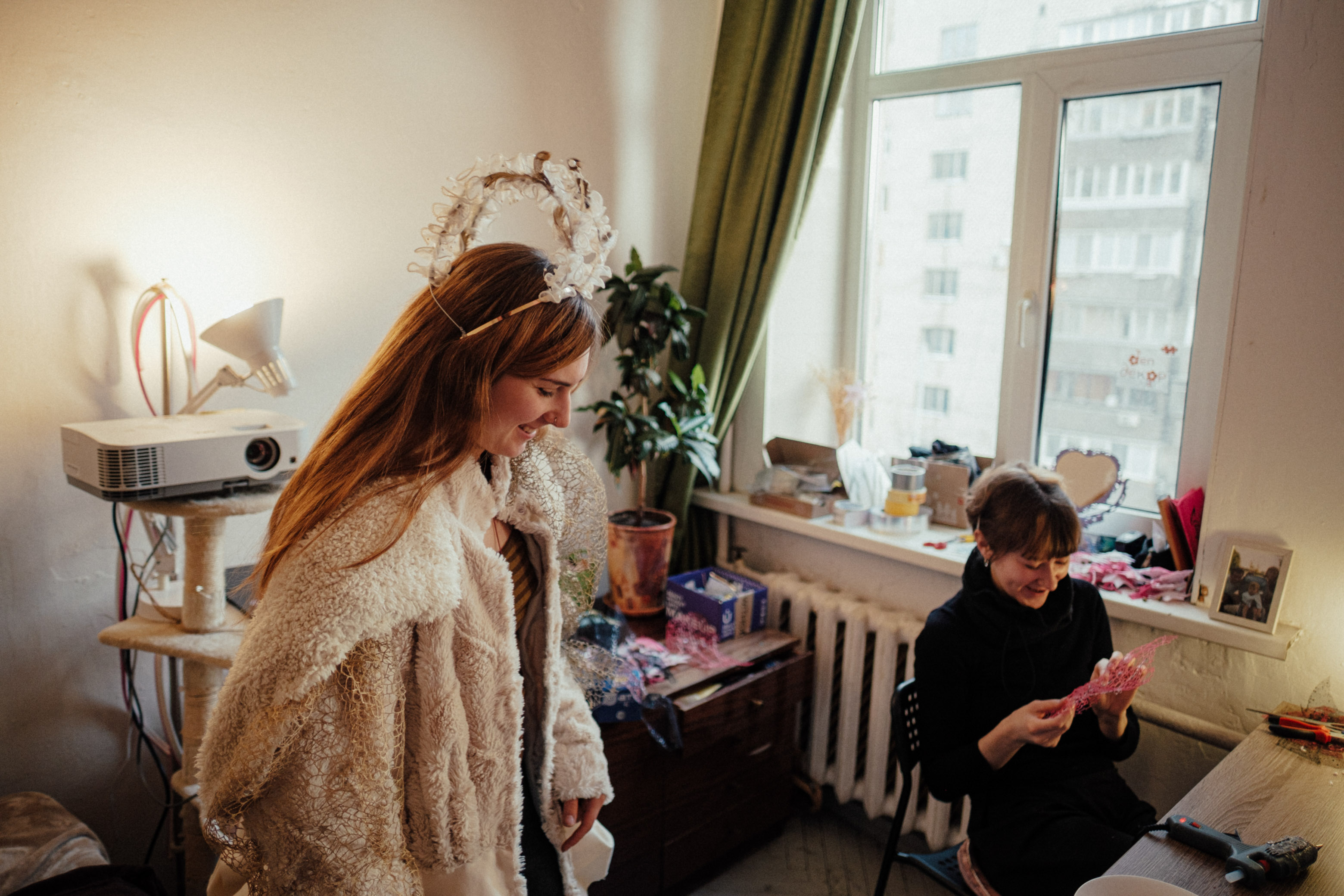


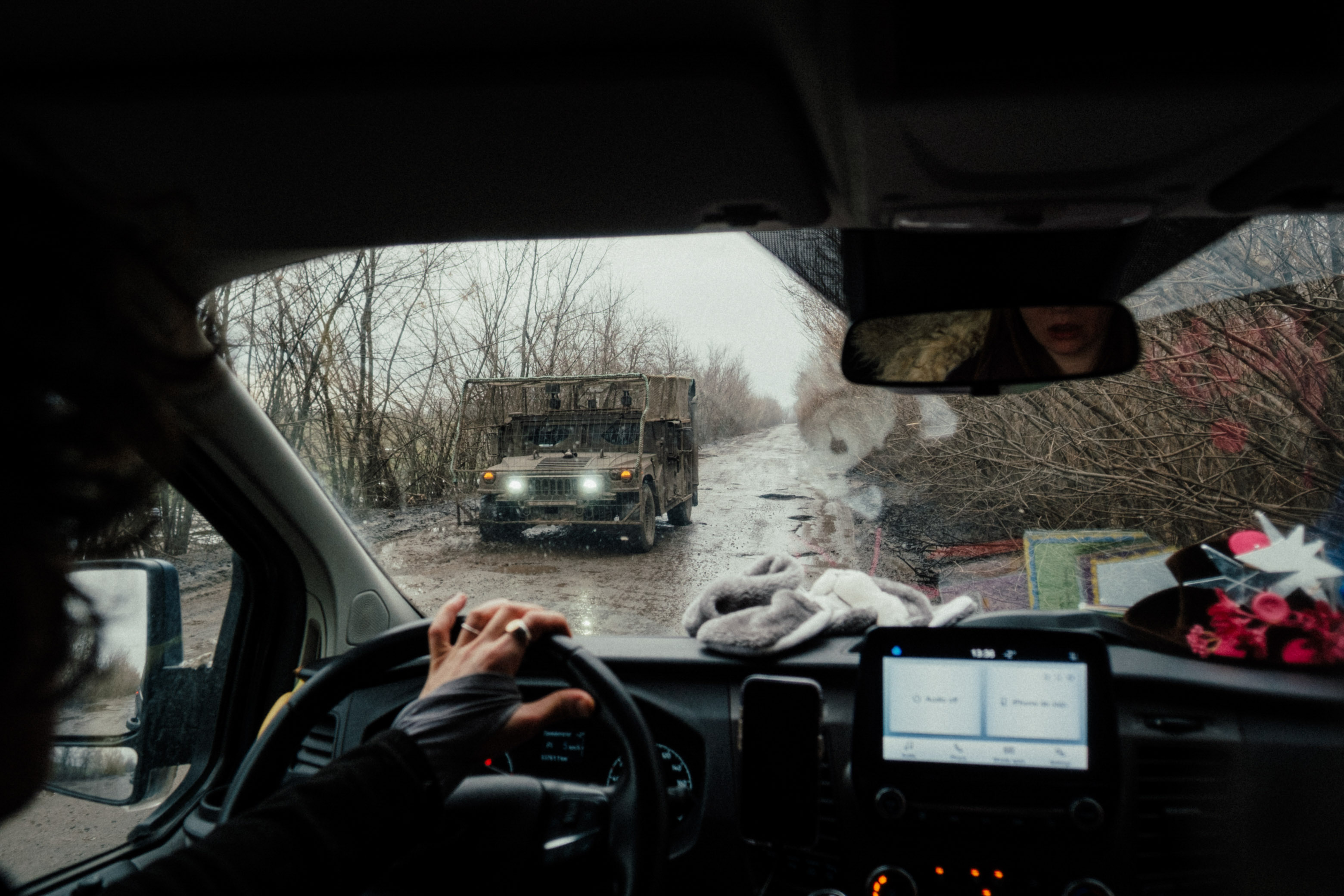
But for a tradition, cyclicality is vital. In January 2025, the team traveled through the Kharkiv and Donetsk regions, visiting Kramatorsk and Sloviansk. However, due to the security situation and the threat of FPV drones in 2026, the vertep has now focused exclusively on the Kharkiv region.
The photo project shows how war physically tears the connection between culture and people, depriving the tradition of its key feature — regular repetition.
“When you can no longer go to the places where you were a year ago, you feel loss; you see the sadness of a friend whose mother welcomed you there at home; you yourself seem to lose a part of home. Now this memory remains in photographs.”


“That is why returning to the same cities that were still accessible became special. Izium in 2025 and Izium in 2026, draped with anti‑drone nets, feel like two different dimensions — yet tradition stitches them together.”
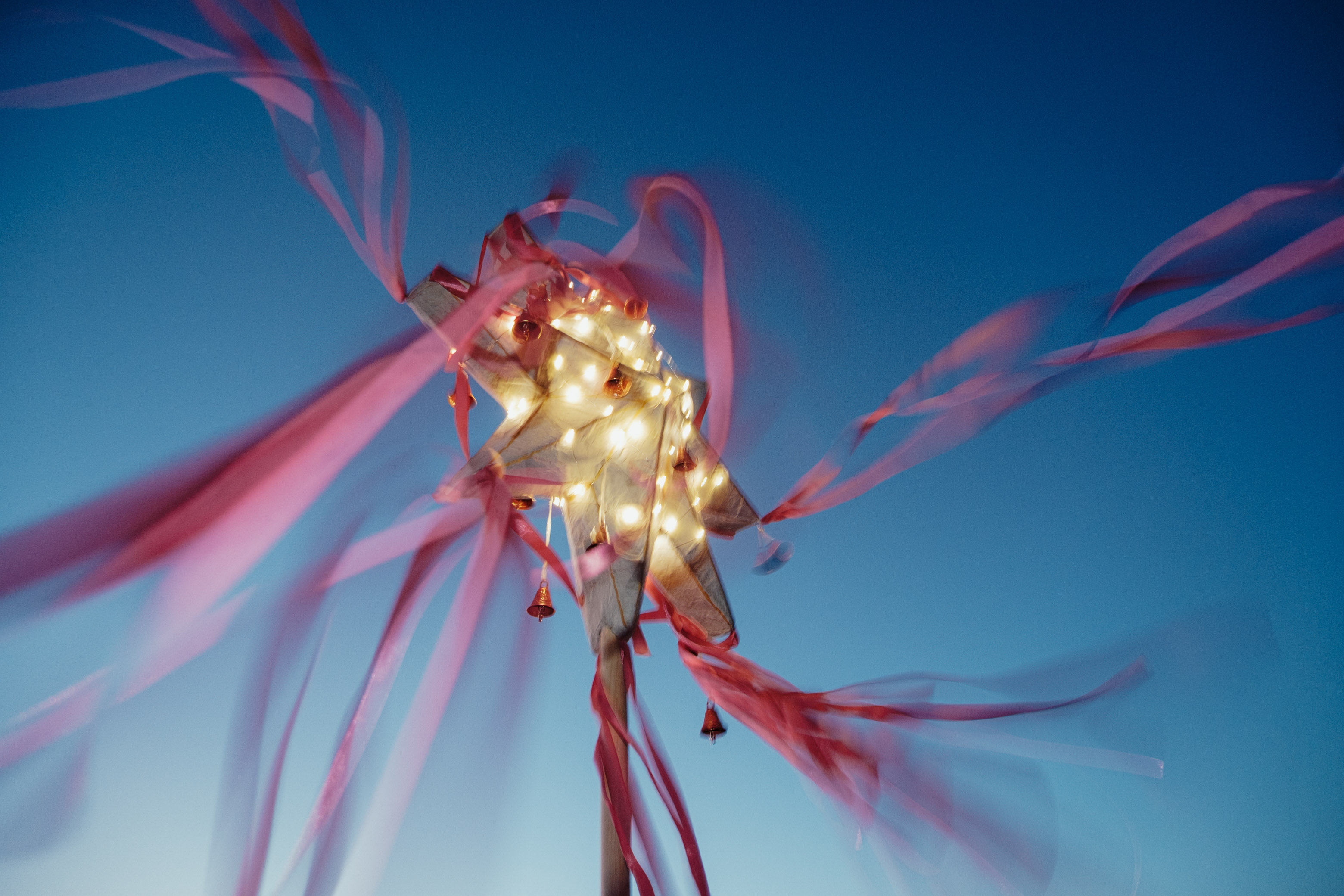


“Yet now you truly begin to value it when you see the same people again as a year ago, when they recognize you and say they were waiting.”
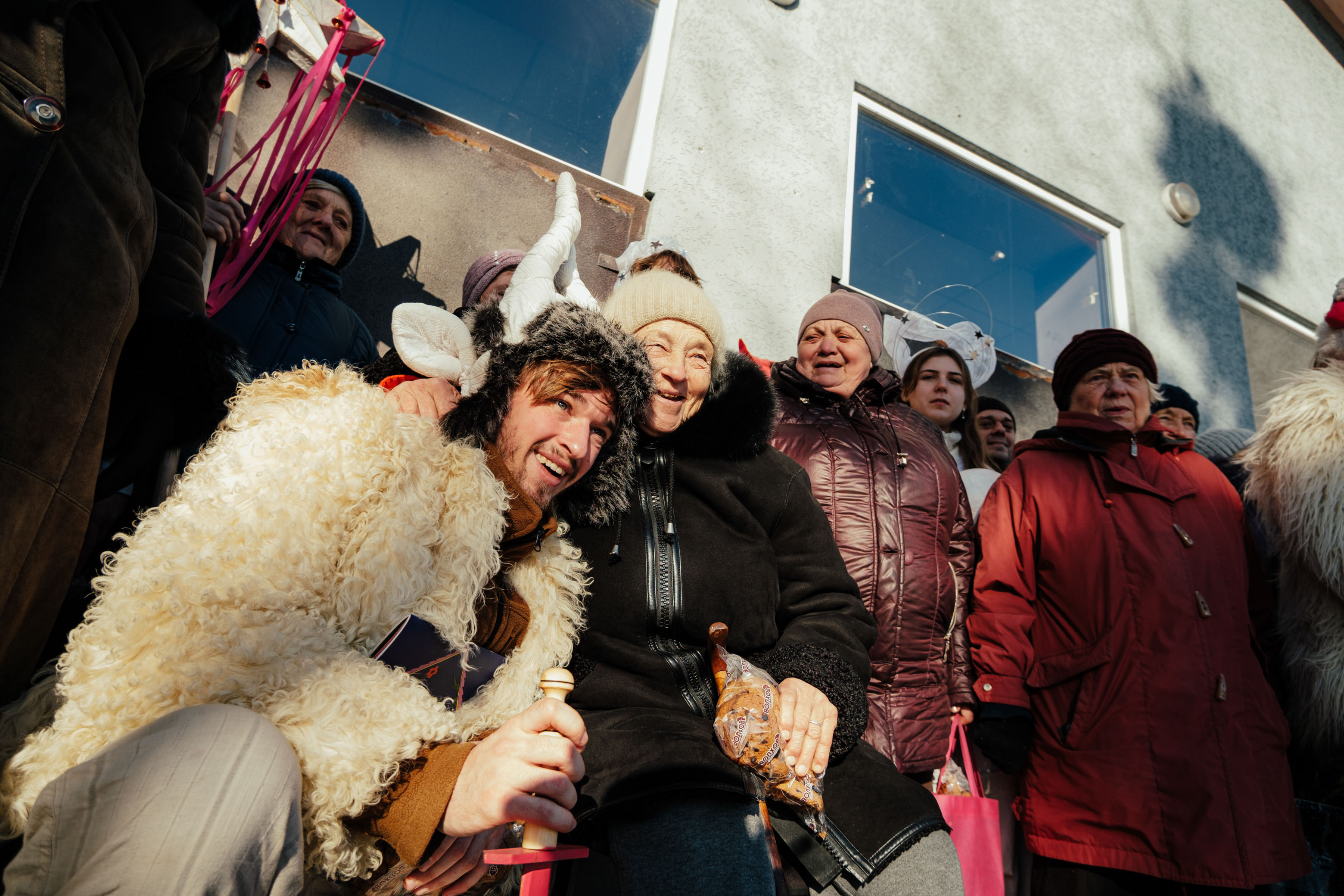


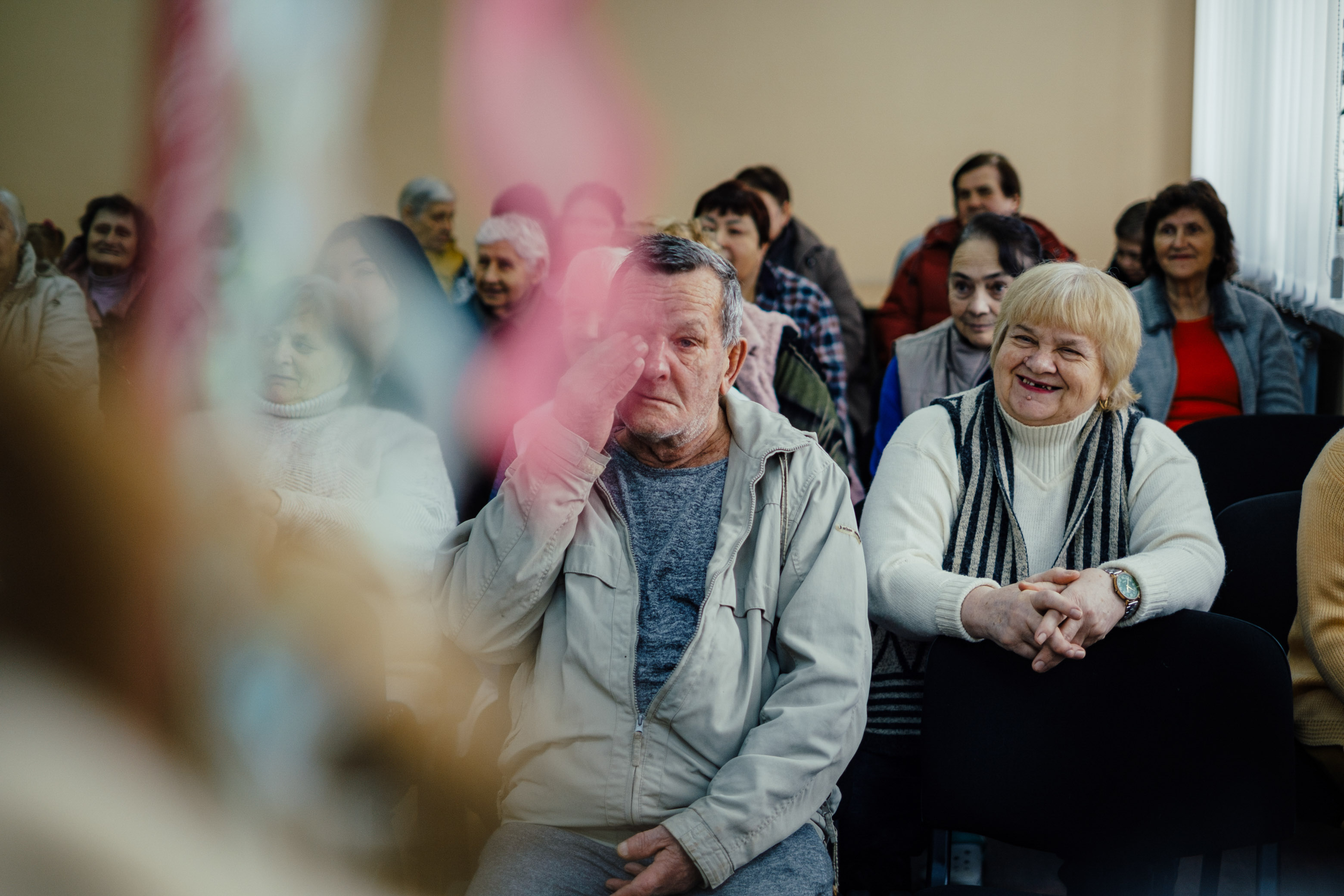
“When we came to de‑occupied cities, communities near the front line, military hospitals, children’s institutions, I increasingly felt that vertep caroling was gaining a special meaning for me. Against the backdrop of darkness, pain, and death, the very appearance of life — loud, bright, young — acted like an injection of faith in the possibility of a future.”


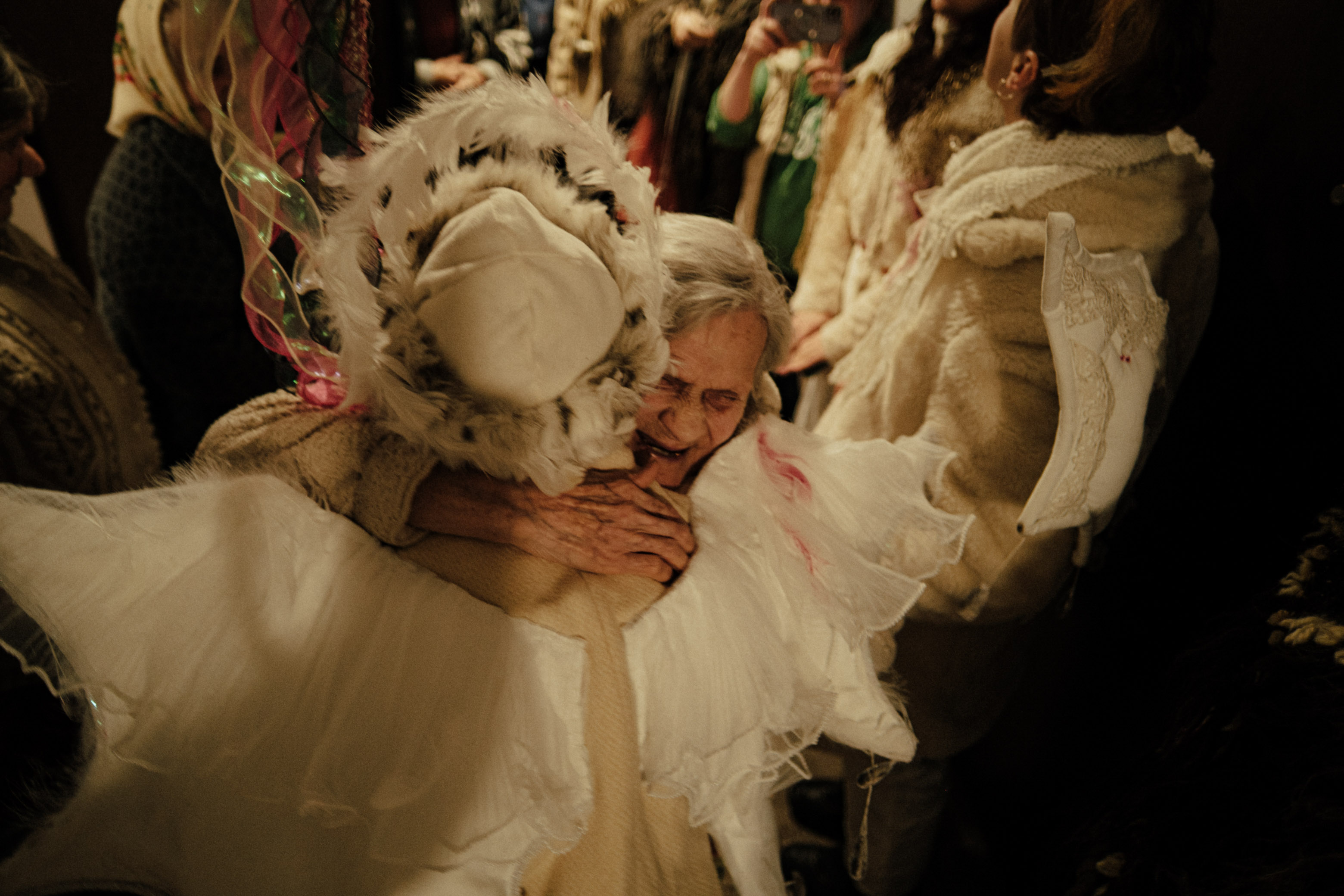
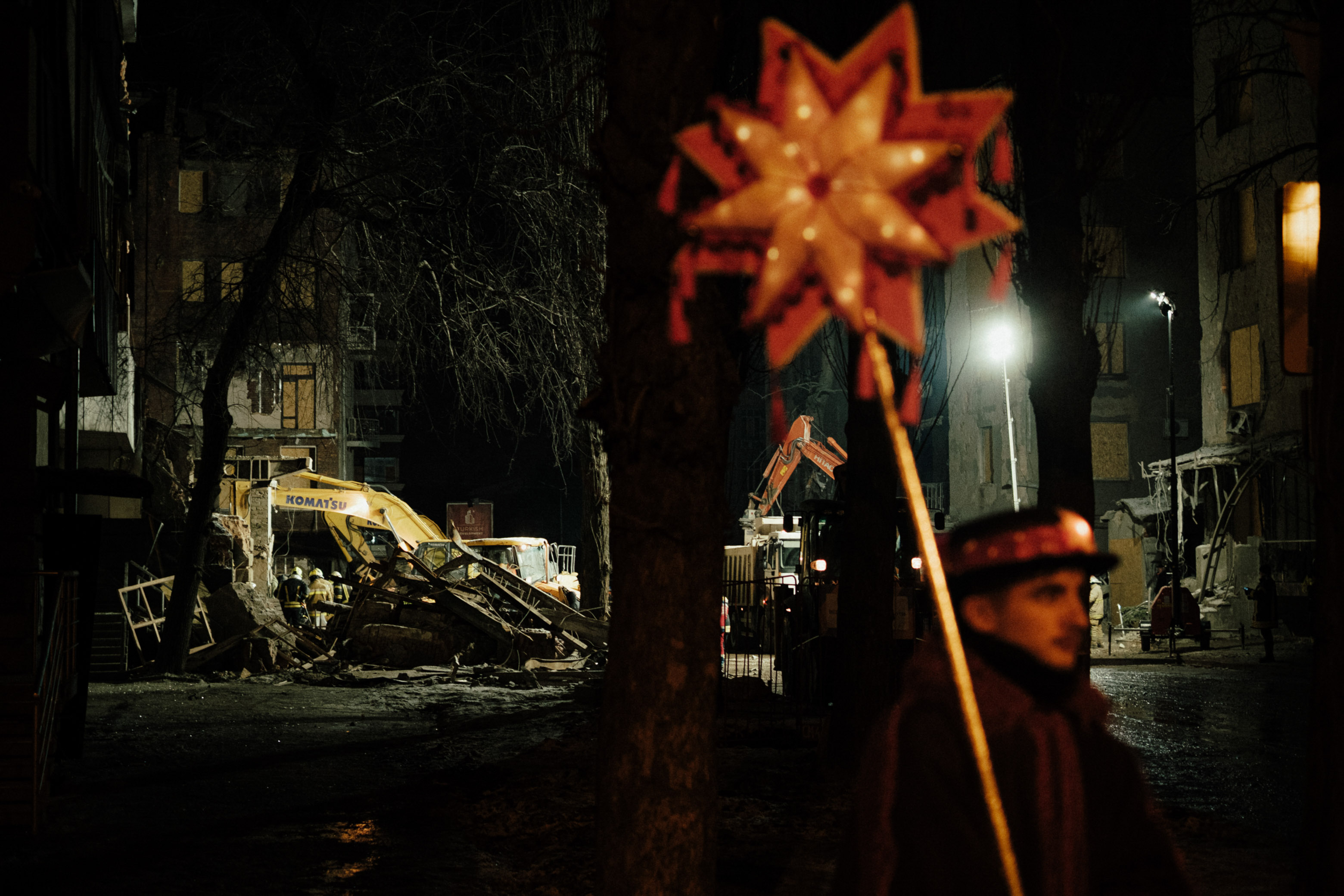


“‘They Carry the Light’ is an observation of how an ancient ritual adapts to the reality of war and how, through it, a simple yet fundamental feeling manifests: life continues even where everything around tries to break it.”
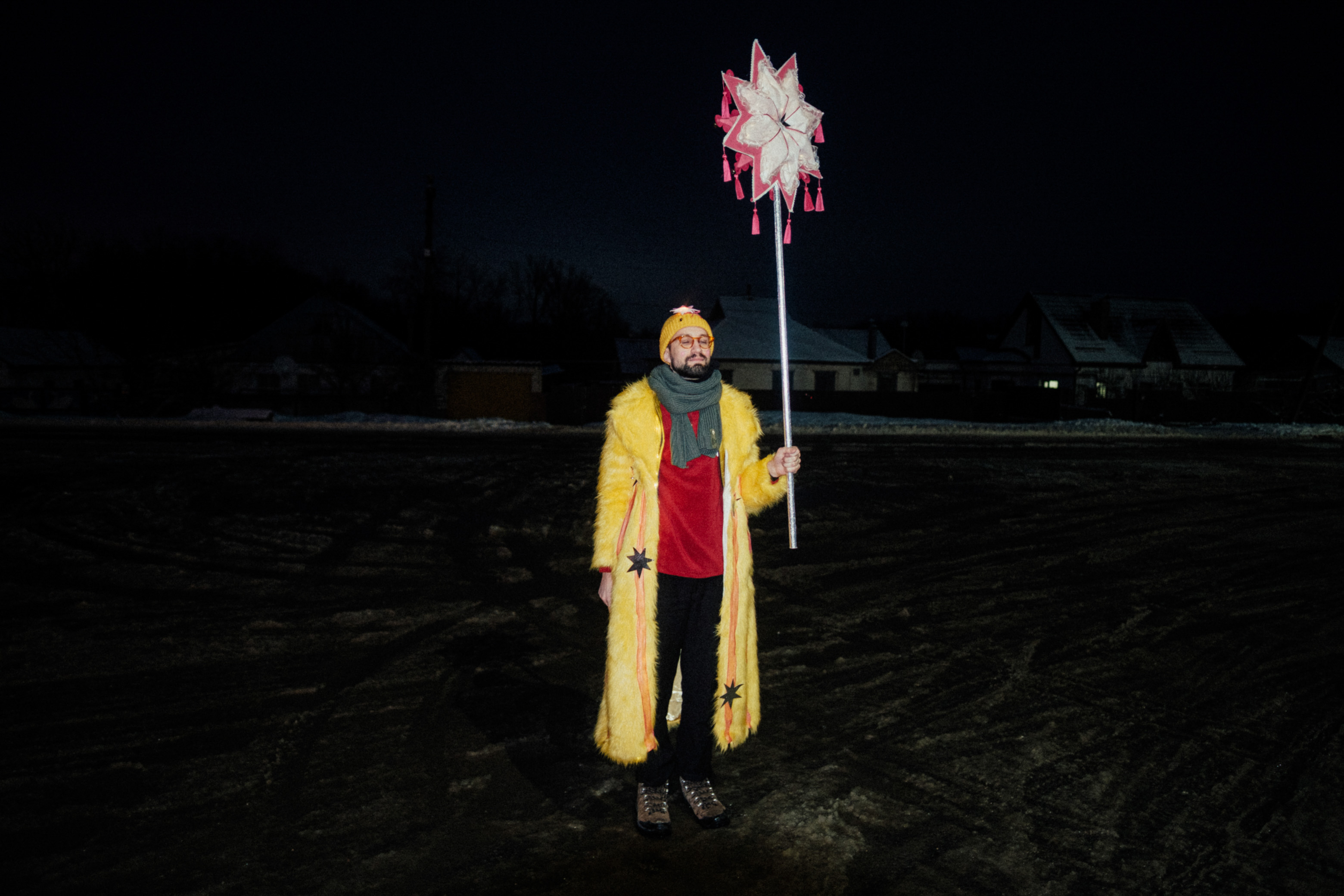
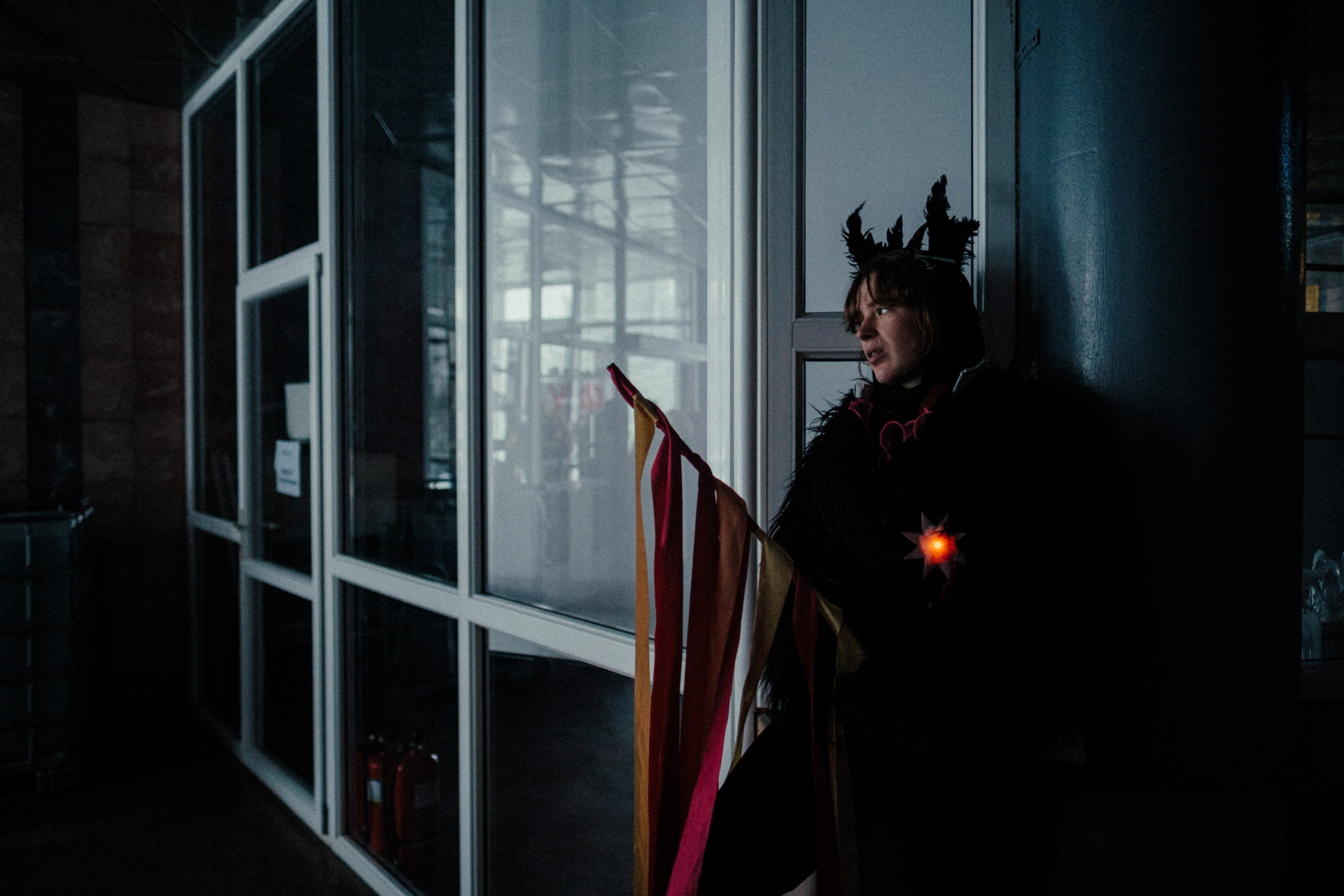


“I want to continue shooting this project and already feel responsible for the annual repetition of this tradition. The greater the resistance that emerges, the stronger the desire to fight and to document the newest history of the vertep.”

Taras Fedorenko— documentary photographer and director. He has been covering the Russian‑Ukrainian war since 2022. He is the author of series about flooded Kherson after the destruction of the Kakhovka HPP, the shelling of the OKHMATDYT children’s hospital, and a report from a prisoner‑of‑war camp. From 2023 to 2025, he worked at “Slidstvo.Info”, where he created a number of frontline reports from the Kharkiv, Donetsk, and Kherson regions. In 2025, as part of cooperation with the Ukrainian Association of Professional Photographers (UAPP), he created a series of documentary films “On the Line of the Frame” as director and cinematographer about military photographers. He had a solo photo exhibition in Stuttgart; his works were exhibited in Quebec and Brussels. In his practice, he explores life during war and the search for normality in abnormal conditions, favoring wide‑angle shooting that allows him to be “inside” events.
.png)