New member of the Ukrainian Association of Professional Photographers, Khrystyna Pashkina, a documentary photographer from Kharkiv, talks about her journey in photography, the challenges of war, and new creative projects that reflect Ukrainians’ lives in difficult times. How has her work—and she herself—changed during the full-scale invasion, and why is it important to keep telling stories through photographs?
Childhood and the beginning of her creative path
Khrystyna says her love for photography began in childhood. Her first memorable shoot took place when she was only six years old:
“I remember very clearly how I photographed my father. It was the first photo like that, and it is still very dear to me. Then they gave me a camera and black-and-white film and said, ‘Here’s your camera—go ahead. Once you’ve shot it, we’ll develop it and see what you got.’”
However, photography became a professional passion much later, while she was studying at university.
“When I was at university, I was 18, and I thought, ‘Why not try to learn how to shoot again?’ Little by little, I started finding my way back into this field. And from 2010 on, I immersed myself in photography completely. That’s when my ‘photo life’ began—photo projects appeared, and we even created our own community,” she shares.
Key projects before the invasion
Before Russia’s invasion, Khrystyna was actively engaged in documentary and reportage photography, telling Kharkiv’s stories through her lens. She recalls:
“Sometime around 2014, I started working for Kharkiv media as well as national outlets. I did reportage shooting, but it paid very little, so I gradually switched to commercial work—though my own creative projects have always remained important to me.”


One of these projects was something Khrystyna shot literally on the eve of the invasion.
“In January 2022, I made a small project called ‘Demons Rise When I Give Up,’ and it still resonates with me now. It was a play with light and color, with these violet-blue shades. When I look at those frames, it feels like even then there was already some tension—stifling pressure in the air. It was like a reflection on events that hadn’t happened yet, but were already approaching,” the photographer notes.
War as a new stage in her work
Before the war began, Khrystyna thought her path in reportage photography was over. But with the invasion, everything changed.
“Did I think I would ever return to reportage shooting? No! Did I want to? Yes! I started working as a photojournalist around 2013. But back then it felt like play. I was very jealous of those who documented events during the Revolution of Dignity. I wanted to as well, but I had too little experience, too little courage. It always seemed to me that I had missed my moment to grow professionally. Over the years that followed, I believed I hadn’t really photographed anything truly significant. It flickered inside me like the ghost of lost opportunities.”

The photographer points out the dismissive attitude toward reportage photography in the commercial environment:
“In the commercial world, reportage is often treated as the simplest genre—something anyone with an ‘iPhone’ can handle. But I always genuinely loved reportage and dreamed of getting a chance one day to photograph something truly meaningful.”
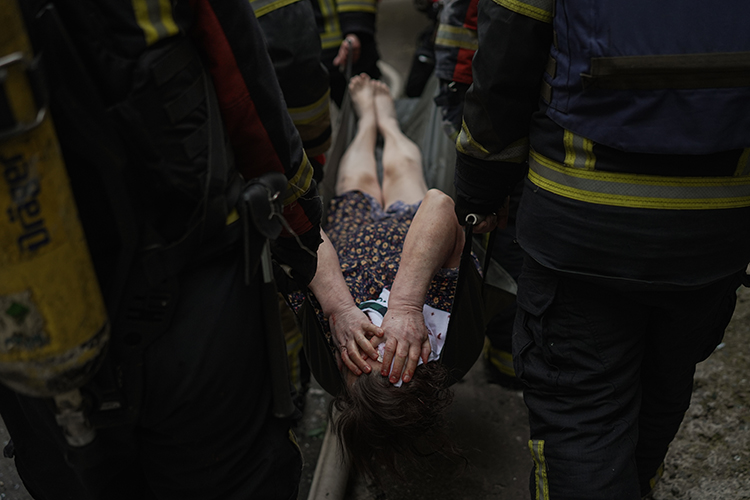
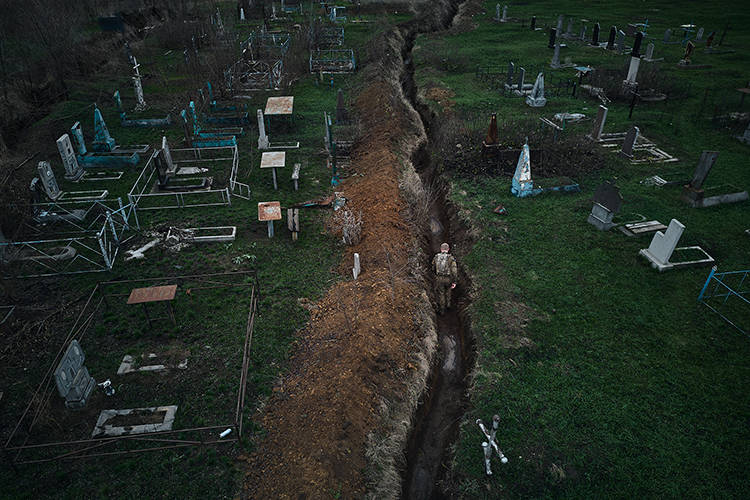
With the start of the full-scale invasion in February 2022, Khrystyna decided it was her duty to record what was happening around her.
“On February 24, I realized I would photograph everything. I carried my camera everywhere because I understood I was living through a very important moment in history, and my only weapon was a camera. I didn’t know what would come out of those frames, but I felt I had to keep shooting,” she recalls.


In the end, Khrystyna realized she was doing what she was meant to do:
“They say that when you do what you love, you eventually end up where you’re supposed to be. Within two months, my photos of Kharkiv were in more countries than I was. I shot stories about the lives of doctors at a perinatal center, people living in the метро, volunteers’ lives—my own life. For the first time in a long while, I was filled with the feeling that I was where I needed to be and that my work was worth something.”
Her photographs quickly began drawing attention not only in Ukraine but abroad as well. Over time, Khrystyna’s work was published in Japanese, Polish, and French media. In addition, her photographs were featured in exhibitions, including one in Vilnius, where the images helped raise money for Kharkiv.
Projects during the war
Today, Khrystyna is working on several documentary projects. One of them is “Families of War,” which tells the stories of families who stayed in Kharkiv during the war.
“I photographed many families during the invasion, and at a certain point I began noticing similar moments in how these stories are represented visually. I want to explore these experiences—which are different, yet have a lot in common,” she explains.


Photo project about the search for identity: “Carried by Scattered Air Currents”
Another project, “Carried by Scattered Air Currents,” is connected to the photographer’s mother:
“This is about searching for and reclaiming Ukrainian identity. My mother was born in Kharkiv, and then her parents sent her to Yakutsk. Now she is learning Ukrainian, and we traveled to a town in Poltava region where her grandmother came from. This story is very personal, but there are many people like her.”
The project “Carried by Scattered Air Currents” is dedicated to exploring Ukrainians’ identity in border regions, where the influence of neighboring countries—especially Russia—is felt particularly acutely. The photographer seeks to show that Ukrainians and Russians are different peoples, and that the story of “intertwined families,” especially in border areas, was artificially constructed.
“My project aims to show how Ukrainians reclaim their stolen identity, and the world must hear our voices,” Khrystyna explains.


The project is based on research into family archives and her own family history, reflecting a collective colonial trauma that was silenced for a long time. Through her photographs, Khrystyna shows a path toward rediscovering one’s national identity—a path other Ukrainians can also take.
Rethinking the path: from crisis to a new level
Half a year before the full-scale invasion, Khrystyna Pashkina was one step away from quitting photography. She recalls walking along Odessa’s scorching streets and thinking about giving up creativity and taking an office job.
“I was at rock bottom emotionally and mentally—I even sent my résumé to different companies. Looking back, I’m glad that idea didn’t come to life,” the photographer admits.
At the time, she felt she was approaching an important stage of growth, but she was still shooting as she had before.
“Our mind runs ahead of our actions, and in that moment it’s easy to give up. But if you don’t stop, you can reach a new level,” Khrystyna explains.
Today, she works with UNICEF, her photographs are published on international platforms, and yet almost three years ago Khrystyna still doubted her abilities.


She sees that crisis as a path to growth:
“I lost my inner voice, shot only what was commissioned, and hardly paid attention to creative work. But deep work on myself helped me spread my wings and regain confidence in my own vision.”
Inspiration and the strength to keep going
Working on documentary projects during the war, the photographer says, is a moral and physical challenge.
“Sometimes it’s so hard that after a shoot you come home and simply collapse. It’s especially difficult to work with stories of children affected by the war. But I’ve never thought I want to step away from this. It matters, and I have to do it,” Khrystyna shares.
One source of inspiration for her is the thought that her work can influence the world:
“Every photograph can help draw attention to the war in Ukraine—for example, through exhibitions abroad. Recently there was an exhibition in Hungary where my photos were combined with children’s drawings, and I feel that this is my contribution.”
Stories that stayed with her
One of the important experiences for Khrystyna was photographing in the Kharkiv metro at the beginning of the invasion.
“I really wanted to photograph how people were living there. But it was difficult to get permission to shoot. When they finally allowed me, I was incredibly happy. This project has remained very special to me,” she says.

A particularly moving story was the photograph that ended up on the cover of TIME.
“It was a portrait of the chief doctor of the Kharkiv perinatal center. I photographed her for David Beckham’s social media pages to raise funds to help Ukraine. And then I saw her portrait on the cover alongside Volodymyr Zelenskyy,” Khrystyna recalls. — “It was a very tender story, and when I learned that my photo had been chosen for the TIME cover, I just cried.”


Khrystyna Pashkina continues working on her projects, using photography as a tool to document stories of Ukrainians’ lives, hope, and struggle. Her work is exhibited around the world, drawing attention to the war in Ukraine and to the fate of people who have remained in the country.
“My task is to show that even in the hardest moments, life goes on. My photographs are about life that doesn’t stop, despite everything,” Khrystyna concludes.
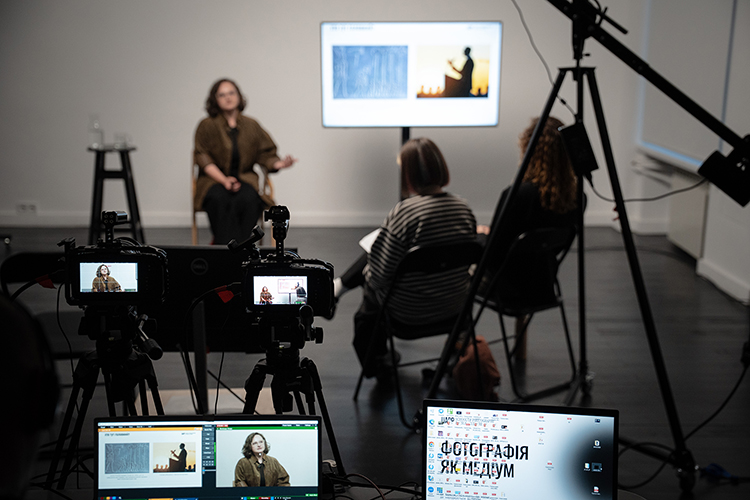
Khrystyna Pashkina is an independent photographer, lecturer, and photography researcher. She has been in the profession for 14 years. She shoots documentary stories, social projects in support of women and the LGBTIQ+ community, reportage, and creative shoots; she collaborates with international organizations such as UNICEF and the UN FAO. Khrystyna’s work has been published in TIME magazine, Forbes, and other international local media. She teaches two university-level courses in photography of her own design and mentors emerging photographers.
The photographer’s social media.
Prepared by:
Topic researcher, text author: Vira Labych
Photo editor: Viacheslav Ratynskyi
Literary editor: Yuliia Futei