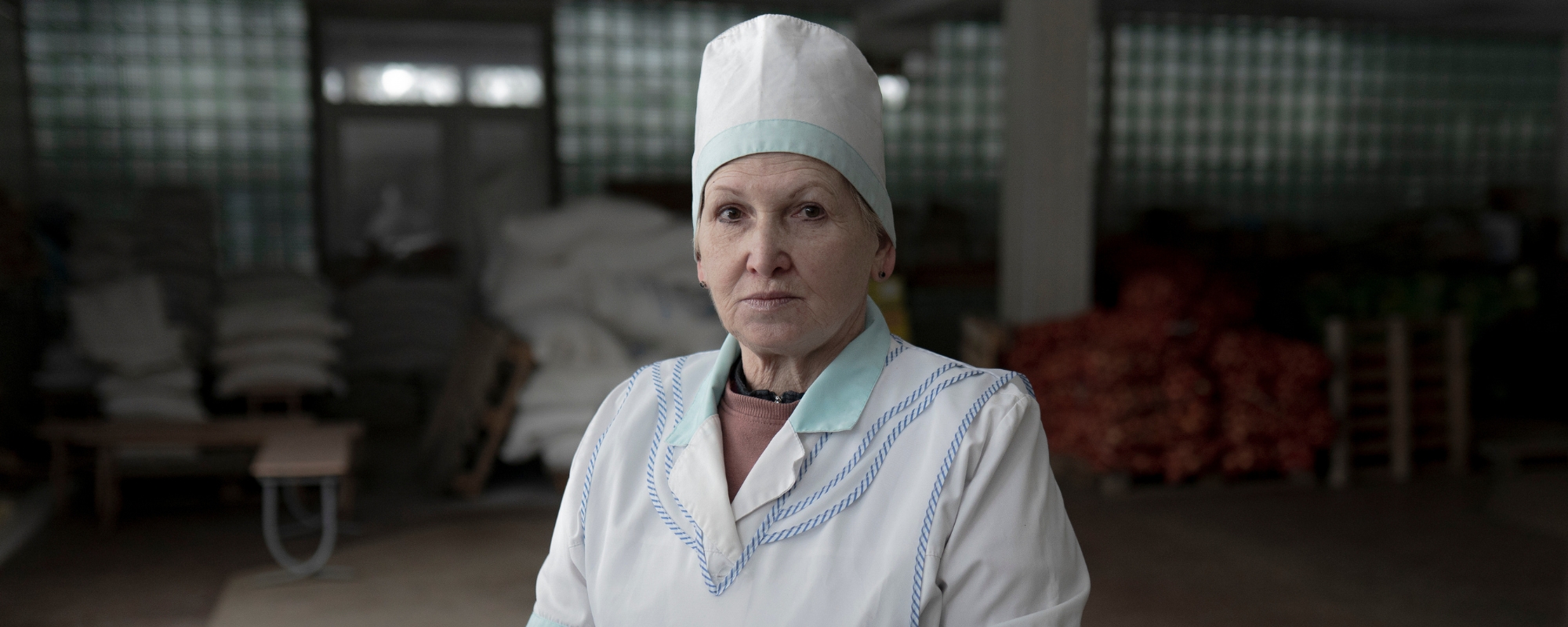
Kharkiv photographer and videographer Mykyta Kuznetsov works at the epicenter of events. He combines fast-paced news reporting with deep, artistic documentation of life during wartime. His photographs serve as vital testimonies of the war's reality, published in both Ukrainian and international media.
Mykyta Kuznetsov shared how he searches for a new metaphorical language to record tragedy, why ethics and respect for his subjects are more important than getting the "perfect shot," and how a scientific study on soil toxicity in Kharkiv is transforming into an artistic document of our era.
— Why did the camera become your tool of reflection, and who got you interested in photography?
— I started doing photography around the age of 16. At first, I tried shooting on film, but nothing came of it. Later, I bought my first digital camera and began taking photos of my friends while experimenting with street photography. I began pursuing photography seriously and professionally in 2024. That marked the beginning of my journey into journalism. At the time, I was working as a photographer at an art museum. I probably didn't fully understand what I was doing yet. I shot workers, exhibits, paintings, ceramics, and much more.
In 2024, I met photographer Heorhii Ivanchenko, and he was the one who inspired me to shoot. Heorhii suggested that we work on a joint project together. The goal was to archive and evacuate photographs that had been damaged in enemy shellings. Those photos needed to be saved no matter what, because sooner or later they would simply be lost forever.
For me, as someone who was still very far from professional journalism and documentary work and was just starting out, this was a massive challenge. I was truly amazed and touched that Zhorzh wanted to do this project with me. That was when I decided I wanted to follow the path of a photographer, just like Heorhii Ivanchenko. I reached out to Frontliner, and they gave me a chance, taking me on board. I worked with them for a few months.
I don't have a degree in journalism at all—I initially studied fashion design, and then switched to graphic design for my master's degree. So my studies and the profession of a journalist didn't overlap at all. On the other hand, design also involves a sense of style, vision, and an understanding of composition, which naturally helped a lot in photography.
I never formally studied photography. I think it's just visual exposure and constantly observing composition and truly great photographers. Of course, I know the basic principles of composition, but now I unconsciously notice and feel what's happening around me. I intuitively track form. For instance, even when I'm photographing a building in the background, even if it's not the main element of the frame, I try not to crop it carelessly. If there is a form, it should be preserved whenever possible. It all works on a subconscious level now.
— I know you work with both photo and video. How difficult is it to switch between these two formats, and are you able to balance them harmoniously?
— In our field, some people shoot video while others shoot photos. It all depends on the situation. For example, at strike sites, I usually shoot both photos and video at the same time. It's inconvenient, of course, but you want to work and keep moving forward. Right now, I work for Suspilne Kharkiv, where my primary duty is video, but I take photos as well. Sometimes I have to manage both simultaneously, literally holding a video camera in one hand and a photo camera in the other.
Naturally, photography appeals to me more. Shooting a video report isn't too difficult for me, but when it comes to something visual, photography is where I perform better.
— Can we say that the full-scale war radically changed your perspective on framing and your overall perception of photography itself?
— I think so. I'm from Kharkiv myself. I remember the first few weeks in the subway—even then, thoughts started popping up that all of this was important and that this horror needed to be documented. For instance, how people were spending the night at stations or delivering humanitarian aid directly through the tunnels. But everything felt so unknown that I came to photography much later. Back then, it was intimidating to even pull out a phone and take a picture because everyone was terrified of saboteurs and spies.
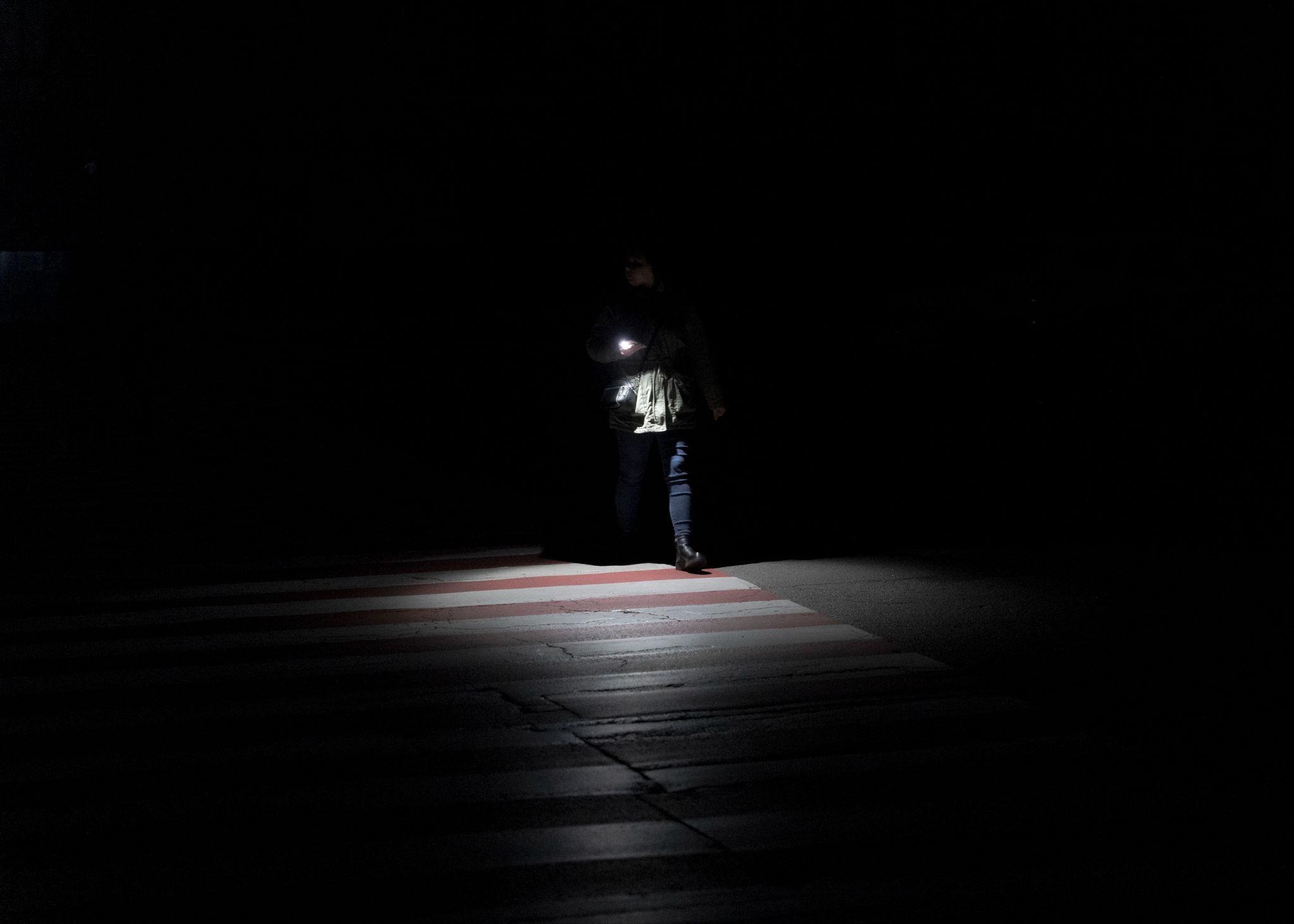
Actually, it was Heorhii who really inspired me to pursue photography seriously. He often showed me what he was shooting and asked for my opinion on his work. I was very touched that he trusted my perspective. I shared my impressions with him—pointing out great dynamics, strong composition, or interesting lighting. Overall, photography now helps me cope with all these events. When you hold a camera, you start seeing a bit more and understanding everything around you on a deeper level.
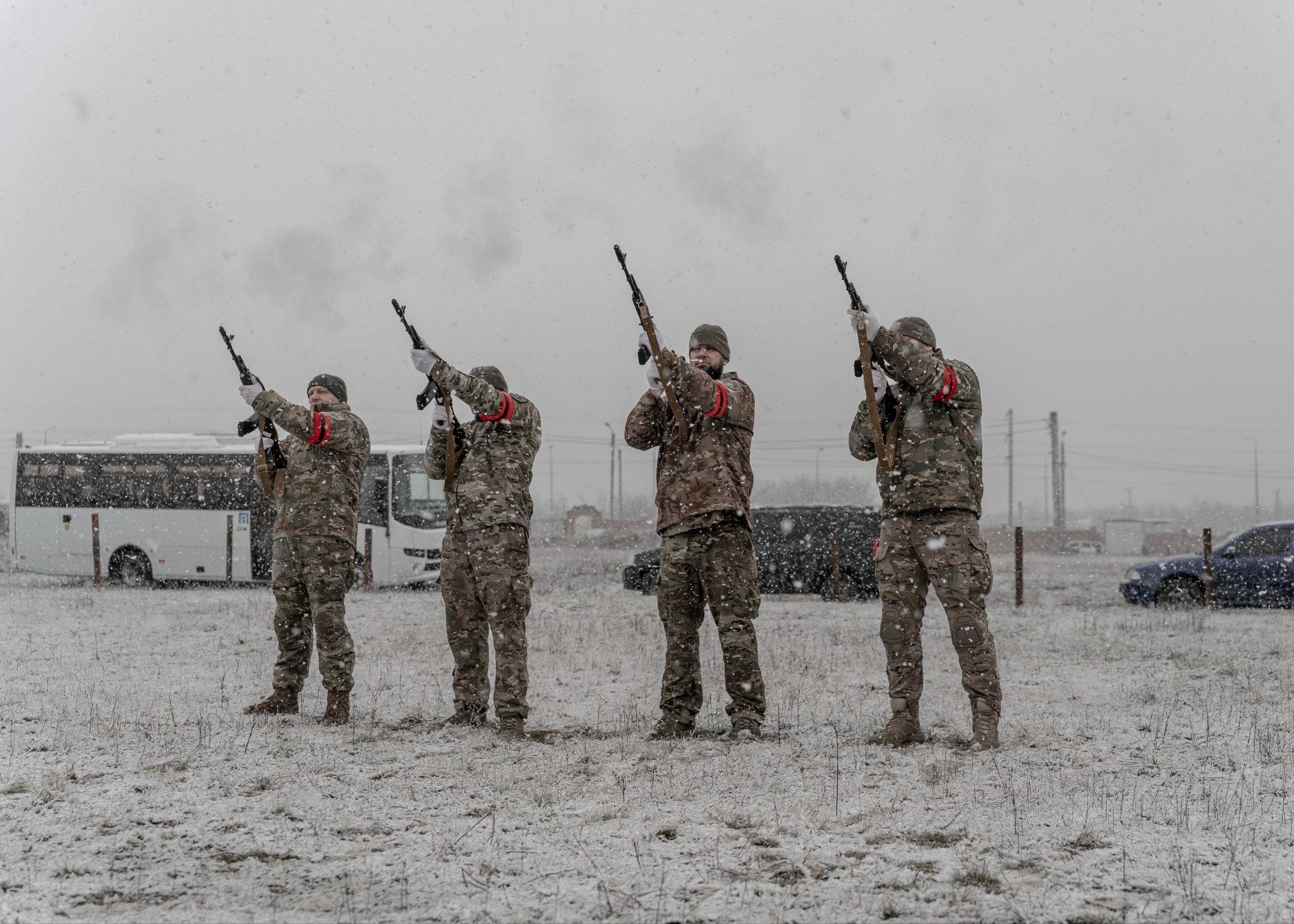
— What topics did you start with in photography? Did you have a specific vision back then regarding the directions you wanted to explore, or was that choice intuitive?
— At the beginning, I didn't fully understand what I wanted to focus on—that vision crystallized gradually. For instance, Frontliner works in a story format. Of course, any reportage is a story, but theirs felt better thought out and planned compared to local regional media, giving room for artistic expression. My first piece of that kind was about abandoned horses in the Kharkiv region. I captured too few details back then—it was mostly wide and medium shots. Even the portraits lacked depth, looking more like portraits within an environment. Though, looking back, I still like that shoot.
I'm still trying to figure out what interests me most. I want to search for new, unique stories. I'm curious about how people actually live; I want to look beneath the surface. The psychological aspect appeals to me—creating a psychological portrait, exploring internal barriers. I want to work more on these themes, even though they are probably quite difficult to visualize.
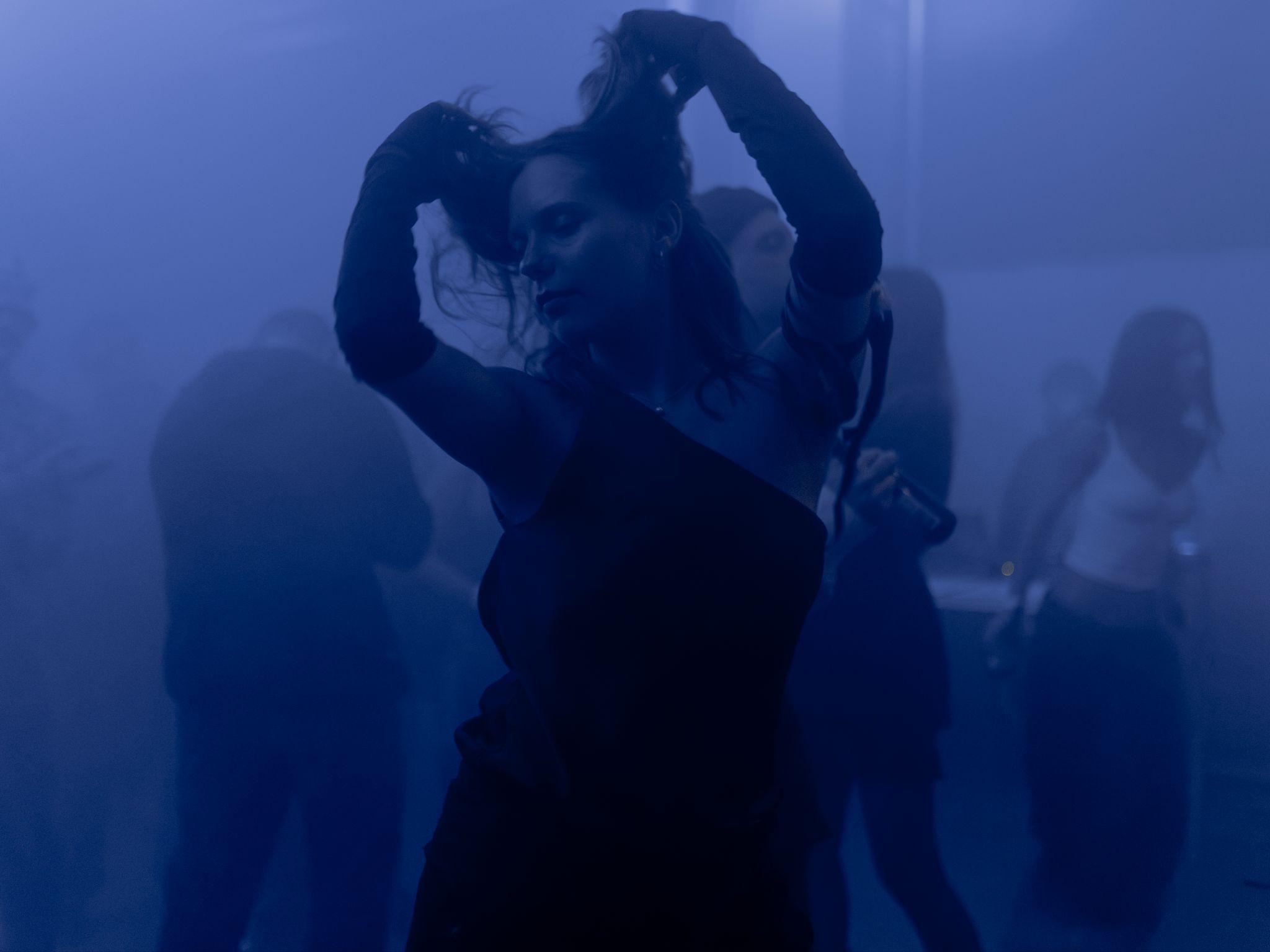
— How do you feel your focus of attention has shifted from the moment you first picked up a camera to today? What topics interest you now?
— Before the full-scale war, I photographed youth culture and raves a lot, and I would love to return to that now. I want to use the lens to discover how the current generation lives, what they feel and experience. Even though I'm 25 now, I'm still part of this environment and partially identify with it. At the same time, I'm interested in talking to even younger people: hearing about their plans for the future and understanding how they navigate through war. This topic requires deep exploration.
It was a surprising revelation for me just how massive the mental health crisis has become. Among my friends and acquaintances, depression and antidepressants are extremely common. Often even therapists can't help because the root cause is obvious: constant shelling, chronic stress that's hard to cope with alone, and the breakdown of family relationships.
Another crucial aspect is education during wartime. In my opinion, the remote learning format has a very negative impact on the process, so I am genuinely interested in exploring how young people manage their education under these conditions.
— Today, Kharkiv attracts many photographers, including foreign colleagues. In your opinion, what advantages does being a local resident who sees this city from the inside every day give you? How deeply are you immersed in the Kharkiv context, and do you have separate photo projects dedicated specifically to Kharkiv?
— Each of us has our own idea of Kharkiv. However, I am convinced that someone who has just arrived in a new city finds it much easier to spot unique details than those who have lived here since birth. Their vision hasn't grown accustomed to it yet, so a fresh perspective allows them to capture extraordinary things.
Kharkiv amazes me with its specific local quirks. You could call it a kind of strange cultural filter. A truly unique aesthetic exists here. For example, someone might cut the lid off a box of chocolates and just tape it to the wall in an entryway because they sincerely think it looks nice. On the streets, you might see carpets with plush tigers neatly placed on them outdoors. It doesn't look like trash at all—someone clearly put them there intentionally. I capture this urban atmosphere in my shots.
I have a photo project about Kharkiv titled "Living on a Tripwire." Its main concept is to show the immense problem of people living in constant, grueling anticipation of the unknown. While in Kyiv there might be at least two minutes to react when a Kinzhal missile is incoming, in Kharkiv ballistic missiles often struck before the air raid siren even sounded. You literally live on a tripwire, never knowing what will happen to you in an hour or even a minute. There were multiple instances in my life when I was walking down a street, and half an hour later a missile or guided bomb hit that exact spot.
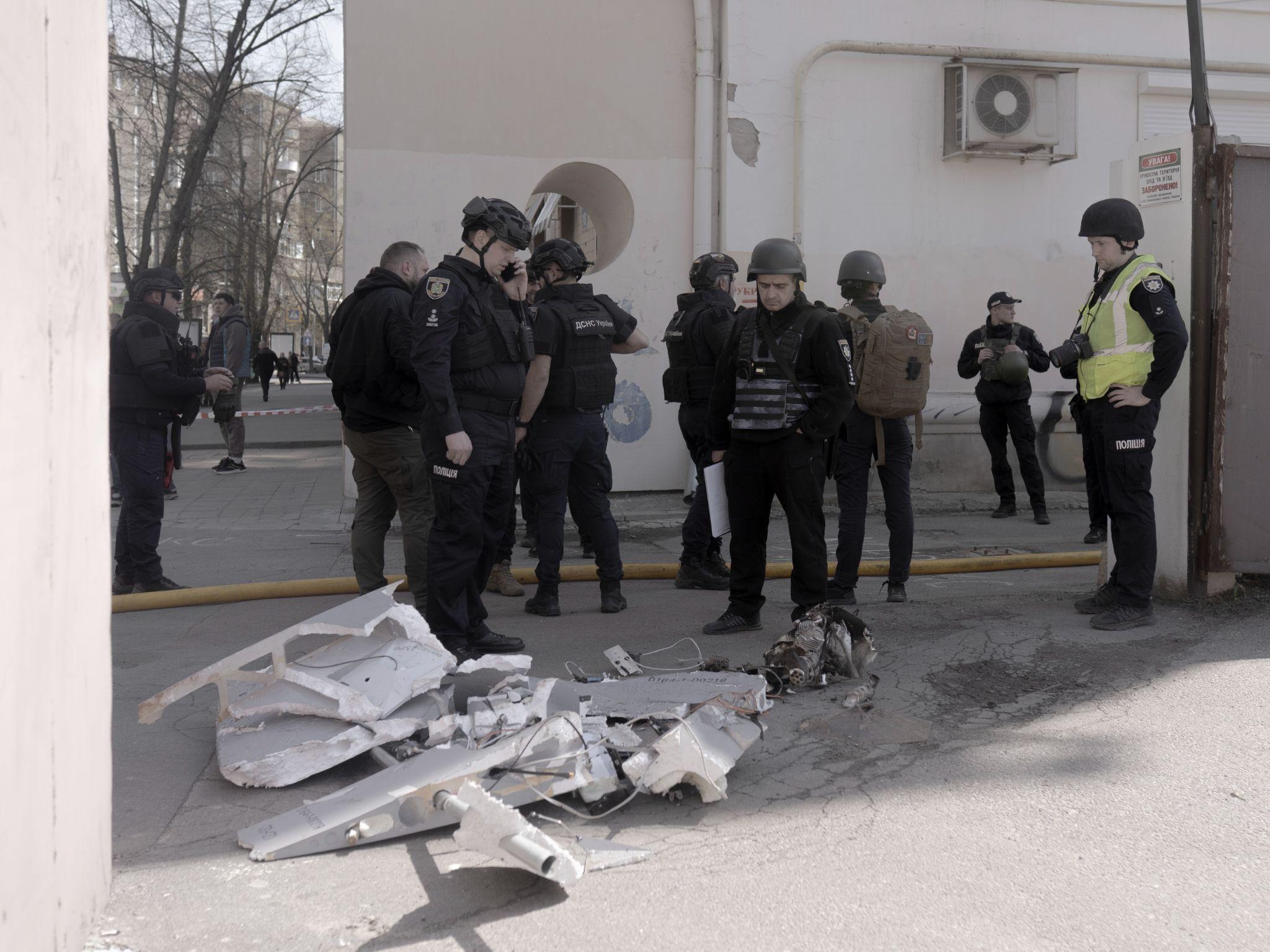
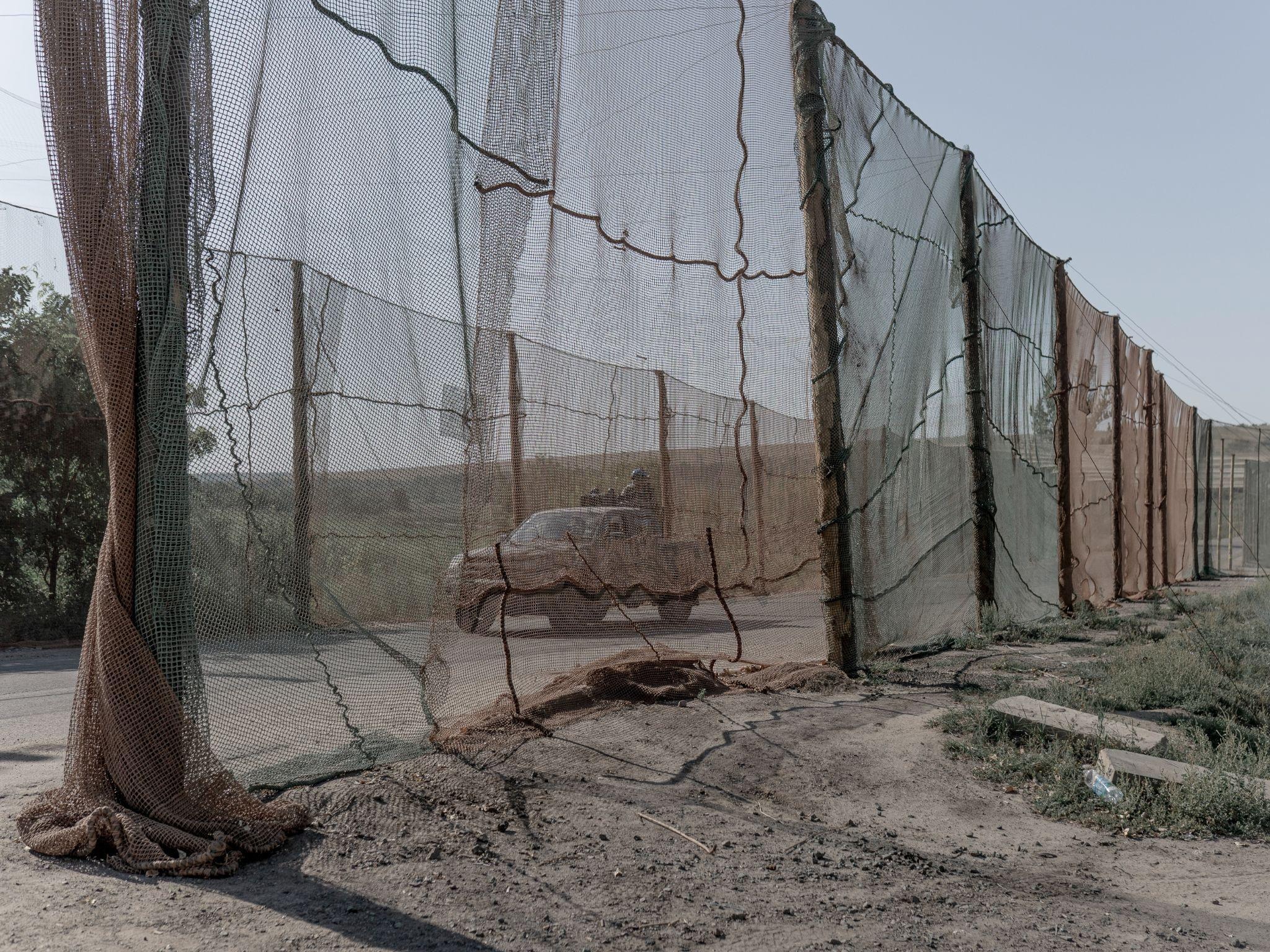
For a long time, the city faced severe issues specifically with ballistics and Shahed drones, which were extremely difficult to shoot down under our conditions. The enemy was striking ordinary residential neighborhoods and private sectors where people often had nowhere to hide. Now the situation has improved, and compared to Odesa or Kyiv, Kharkiv has become much calmer. However, I still vividly recall that primal, instinctive fear that prevailed in 2023–2024. It was truly terrifying.
I created my project precisely as a reflection on these events. However, in my opinion, it remains unfinished: it doesn't yet capture enough of the everyday, civilian life unfolding against the backdrop of this horror. I feel this material needs to be rethought and reworked to more accurately convey the contrast between daily life and constant mortal danger.
— Why do you pick up the camera every day? What is your core internal motivation? Working at such a pace is exhausting—have you experienced burnout?
— I've always found it difficult to answer why I do this. It might sound overly simple, but first and foremost, I just love photography. As Mykhailo Palinchak put it, photography is another language, a way of communicating with the world.
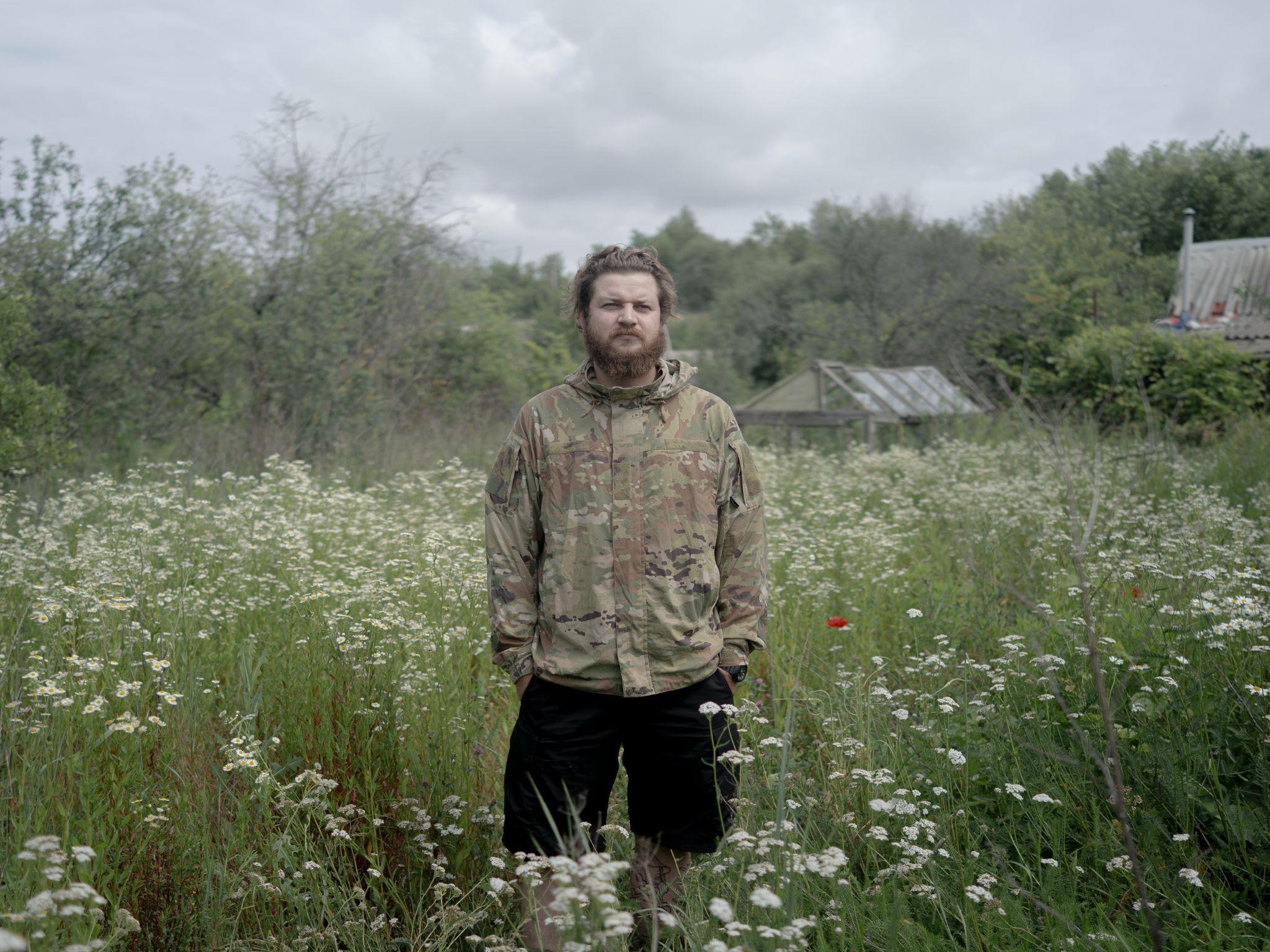
Of course, I also experience moments of burnout. It feels like everyone has grown used to this reality and already knows what evil the Russians are committing on our land. Yet, documenting it remains necessary. I don't know for sure what this will lead to in the future—perhaps these shots will serve as evidence for reparations. Nonetheless, these are historical documents of our time that we are obligated to preserve. One might think everything is already clear, given there have been tens of thousands of shellings. But even when exhaustion sets in, I don't stop shooting. I don't publish many of the photos from strike locations anywhere, but I still meticulously maintain that archive.
— How do you reach viewers through photography in an age of visual saturation? Do you look for alternative, perhaps metaphorical or non-obvious tools, so that yet another image of destruction doesn't look to people like "just another strike"?
— That's a complex question. To a person who isn't involved in visual arts, another report from a strike scene looks identical: another hit, another destroyed building or injured person. As the viewer's gaze becomes desensitized, we need to search for new visual tools and metaphorical methods, as well as delve deeper into contemporary topics.
The catalyst for rethinking my approach was a fellowship program where Mykhailo Palinchak became my mentor. During one of the lectures, photography researcher and curator Kateryna Radchenko shared an important insight: there are always several ways to tell a story. You can create a classic reportage that lives for just one day in a news feed, or you can build a deeper visual project that endures.
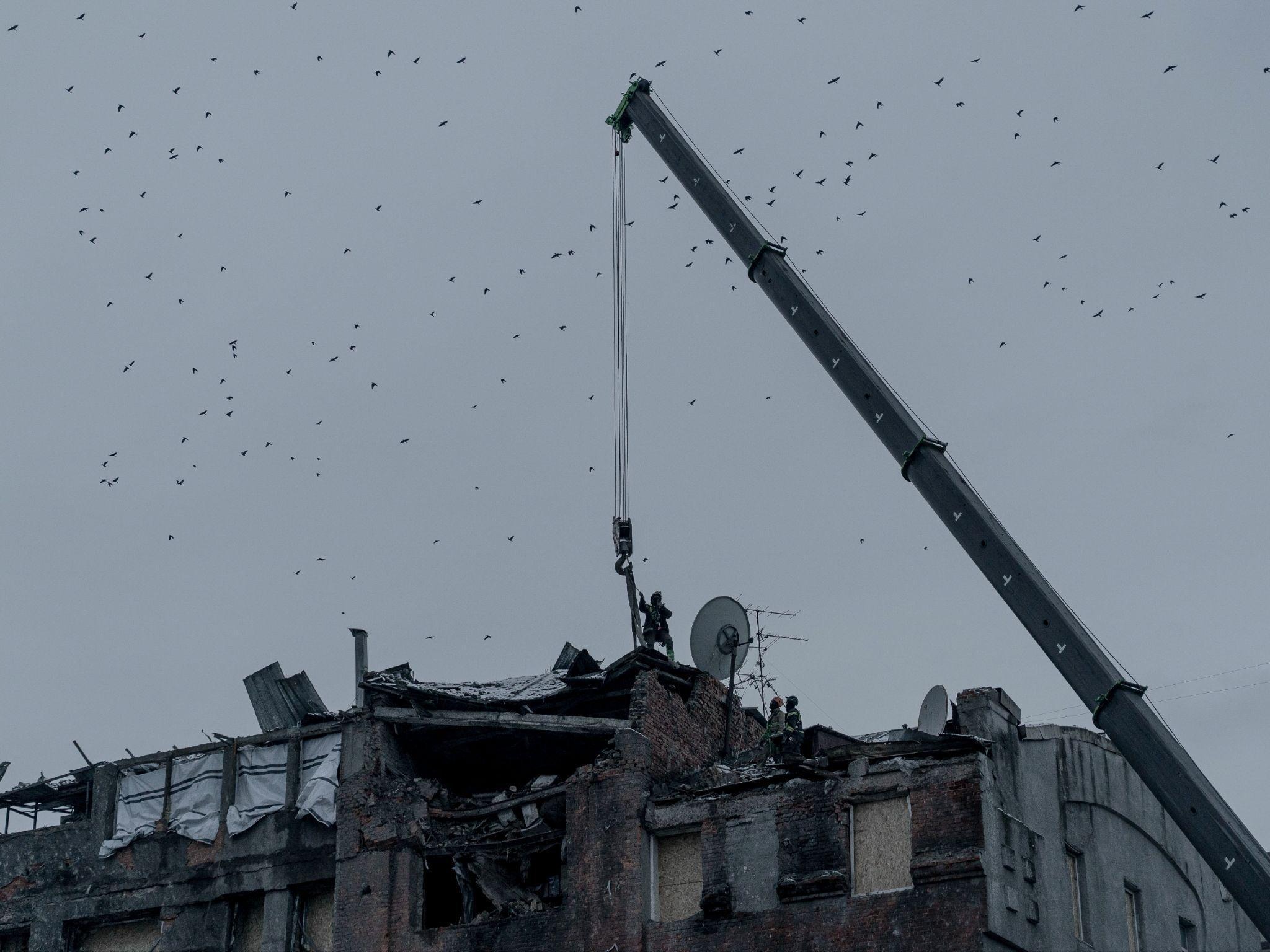
Mykhailo Palinchak suggested fascinating artistic methods for developing my theme. Currently, I am working on a visual study examining soil toxicity following enemy bombardments. It is through these non-obvious, ecological, and scientific metaphors that I attempt to show the long-term consequences of war, inviting the viewer to see the war from a different angle.
I managed to find the Ukrainian Researchers Society—an independent organization that operates across the country without state funding. In September, I literally caught the last train of their final expedition. They collect soil samples directly from strike craters. Their approach is striking in its absolute precision: it's rigorous mathematics and equations I had previously only seen in textbooks. Scientists take numerous samples from a single field. They don't just grab soil from one spot; they take precise measurements meter by meter from the center of the crater, as the dispersion of toxic substances is always variable and uneven.
This project will combine a deep scientific component with a metaphorical visual search. I have already documented the researchers working in the field and identified the types of weaponry that directly impacted these soils. Now I am shooting in the laboratory to document the chemical analyses.
I plan to weave the results of these analyses into the visual fabric of the project. For example, graphs where a curve spikes sharply, capturing an excess of a specific hazardous substance. Scientists are also examining samples under a microscope. Although it's hard to determine the degree of toxicity or plasticity of a material visually through a microscope, it looks incredibly beautiful and mesmerizing. This scientific aesthetic will help me build an artistic image of the long-lasting, destructive impact of war on our land.
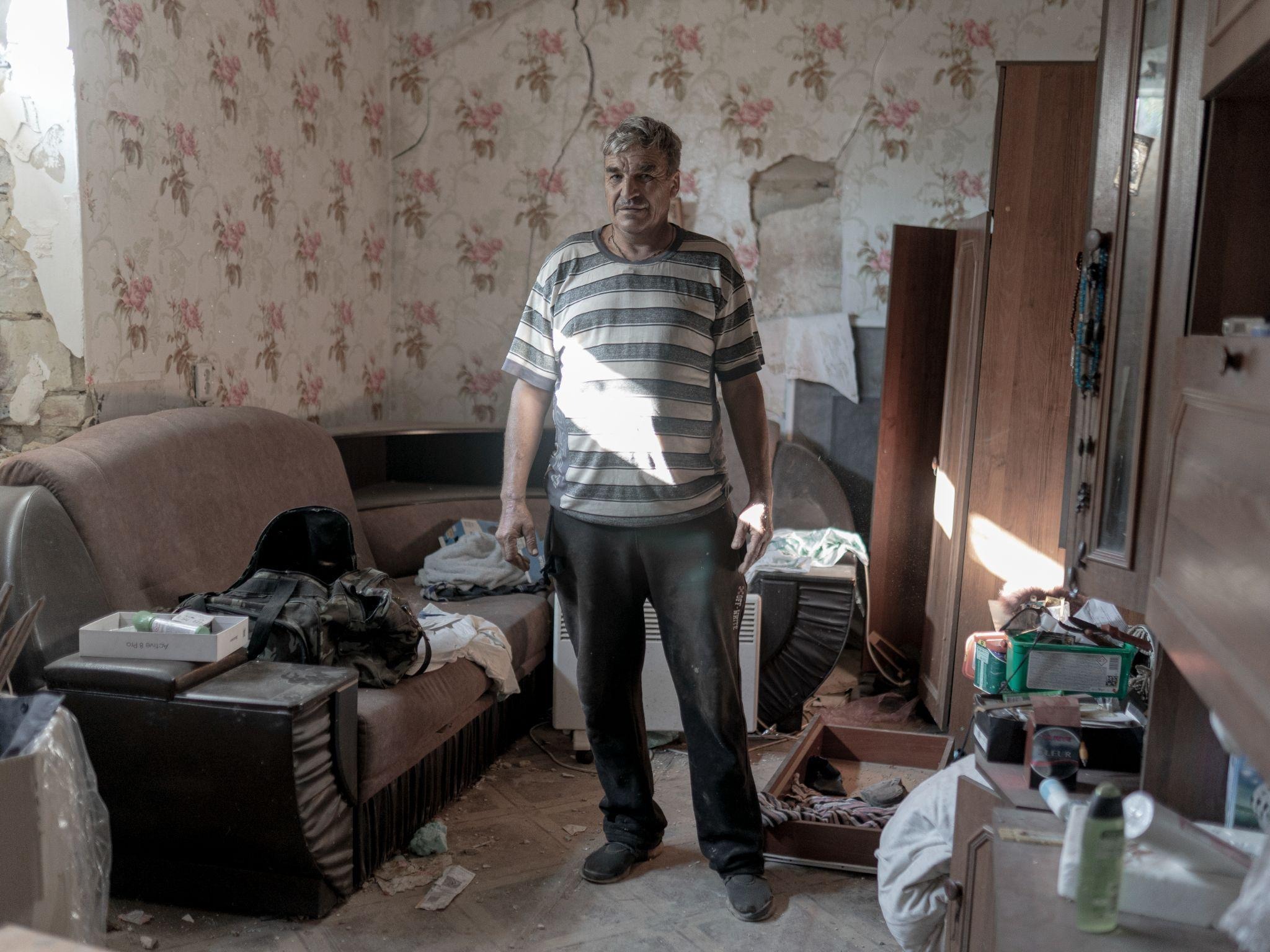
— Reflecting on your experience shooting over these years, can you recall stories or strike locations that moved you personally the most?
— Even though you gradually get used to war, you can never fully put yourself in the shoes of someone who has suffered. Every time, you involuntarily wonder how these people will manage the aftermath of the Russian invasion—simply fixing blown-out windows and dealing with complex everyday issues.
I was deeply moved by a story at one of the strike scenes. There was an elderly woman caring for her bedridden, paralyzed mother, alongside a cat and a dog. This woman was passionate about skiing and was just getting ready to leave for a competition. Because of the shelling, every window in the house blew out; she was forced to search through the chaos for her documents, and her trip fell through. It was painful to see her heartbreak—she was so devastated to lose the chance to do what she loved. Thank God they survived, but the sheer weight of this domestic and emotional nightmare leaves a lasting mark.
It's equally heartbreaking to witness how children live in the region. Before Christmas, I traveled with volunteers from the Czech Republic to the Staryi Saltiv community to hand out sweets to children. There are no playgrounds there, and I still can't imagine how they survive mentally with the background sounds of explosions echoing nearby. When I looked at those kids, I was struck by their adult expressions—it felt as if they had already seen a lifetime of hardship in their early teens. In such moments, you desperately want to help, but you simply don't know how.
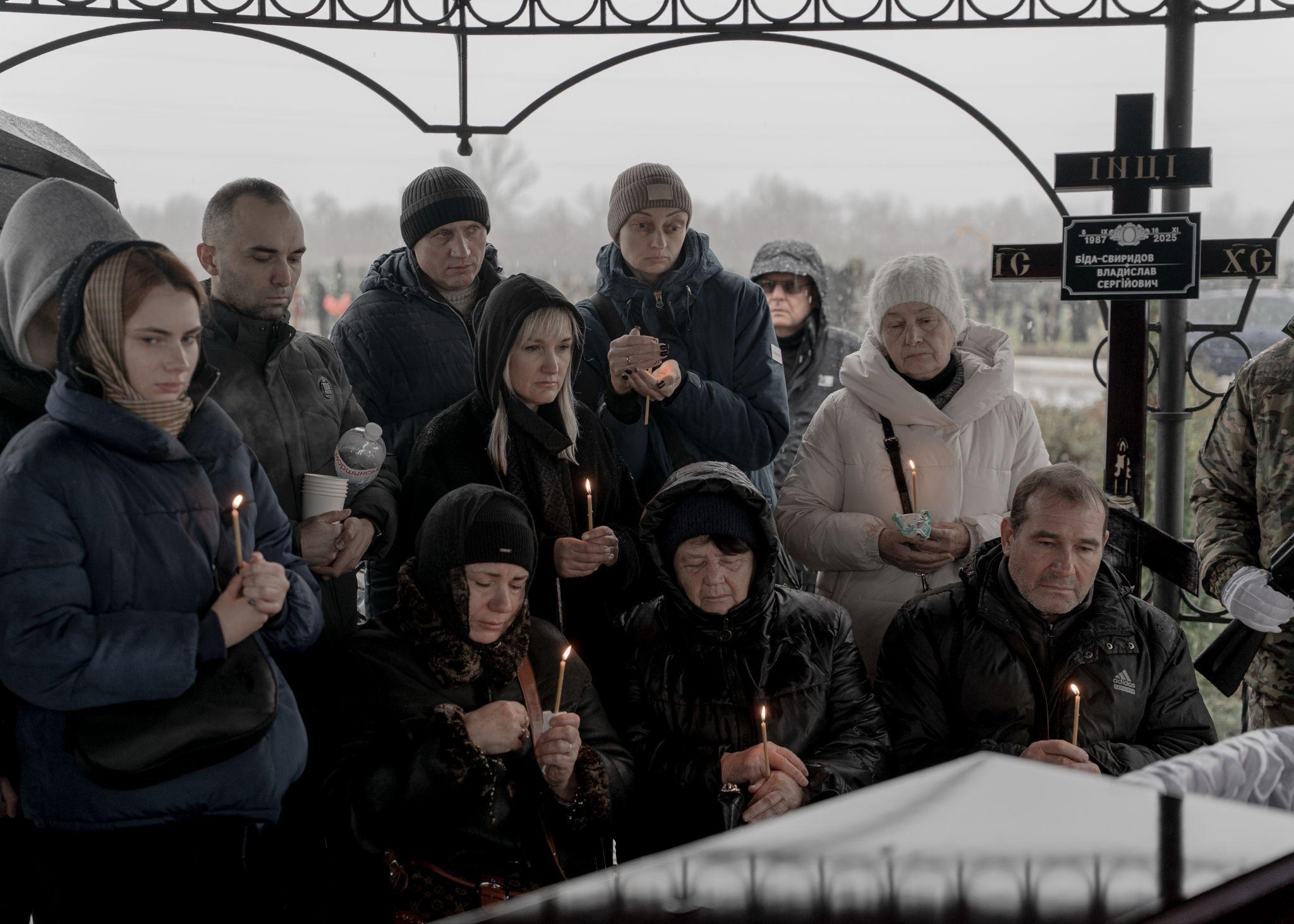
Yet the most horrific thing you can witness and document is funerals and the torment of families who have lost loved ones. Death evokes terrifying feelings. When you see a family suffering, it feels as though a person was severely stabbed right in front of you and is bleeding out. Empathizing with this unspeakable human anguish while continuing to shoot is probably the hardest test in my work.
— For you personally, does photography help you cope with and navigate the tough moments of this war, or does it sometimes become an additional emotional burden?
— Photography helps me survive difficult times rather than making them harder. Sometimes I reflect on how terrible it is to see all of this with my own eyes. Perhaps because I have a deeper understanding of how everything happens in reality, it's emotionally tougher for me. On the other hand, if I hadn't seen it firsthand, I might overthink or imagine worse scenarios. Now, living under these circumstances and carrying on with my work has become a new normal for me.
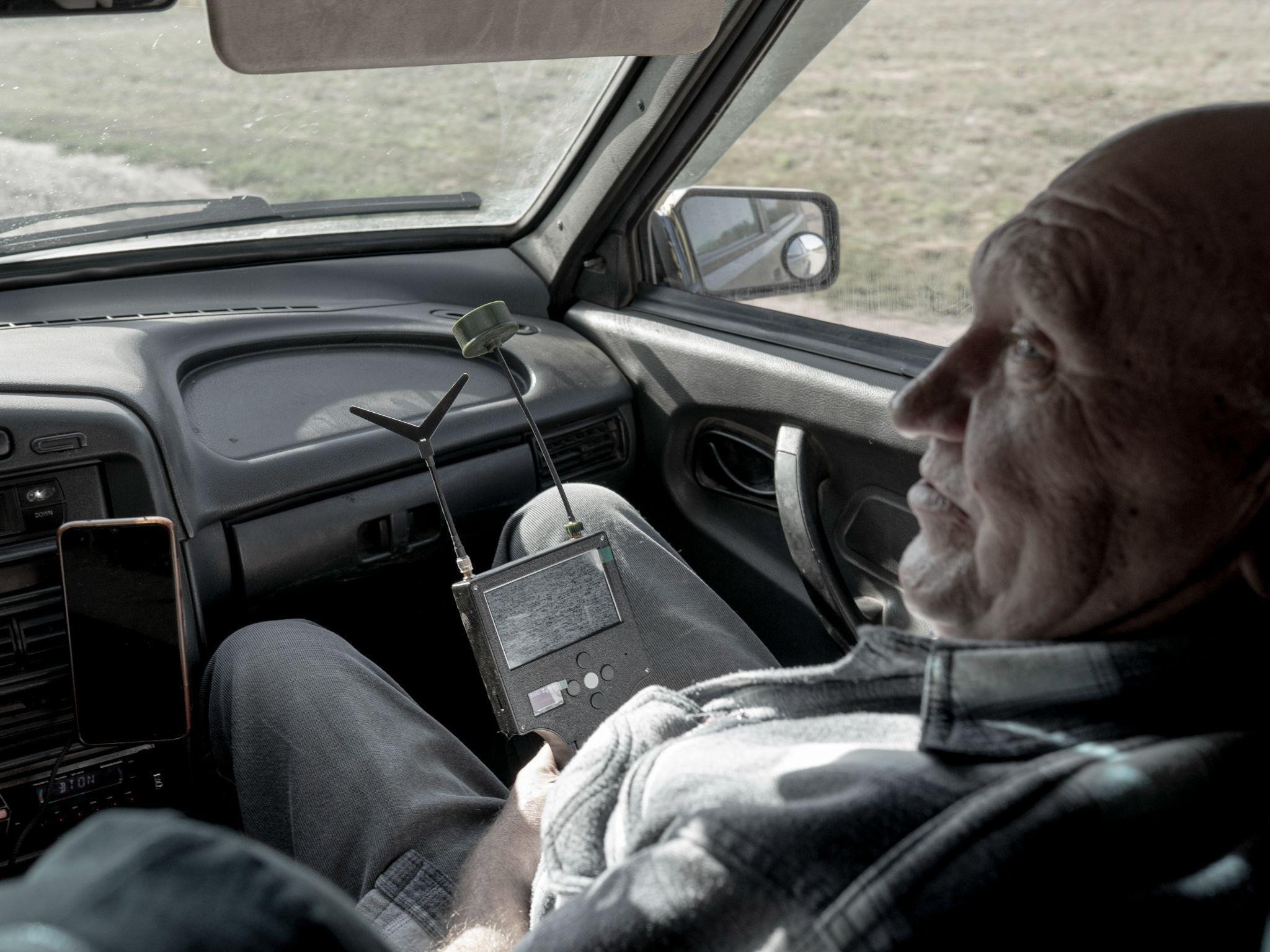
At the same time, I realize there is much I haven't seen yet. I've never traveled to the Donbas and have worked very little with the military. I'm not a war correspondent like Zhorzh Ivanchenko, Vlada and Kostiantyn Libปรับ, or many other colleagues. So, so to speak, I haven't yet had to shoot the absolute worst horrors of this war.
In my archive, there are photos I definitely won't post on social media or show to anyone for now. Working at strike sites, I notice that people often don't mind being filmed—they convey this non-verbally because, in the moment of tragedy, it simply doesn't concern them. Despite this, I always try to shoot in a way that doesn't make a person look humiliated or terrible. Even in the direst situations, maintaining respect for the dignity of victims is essential to me.
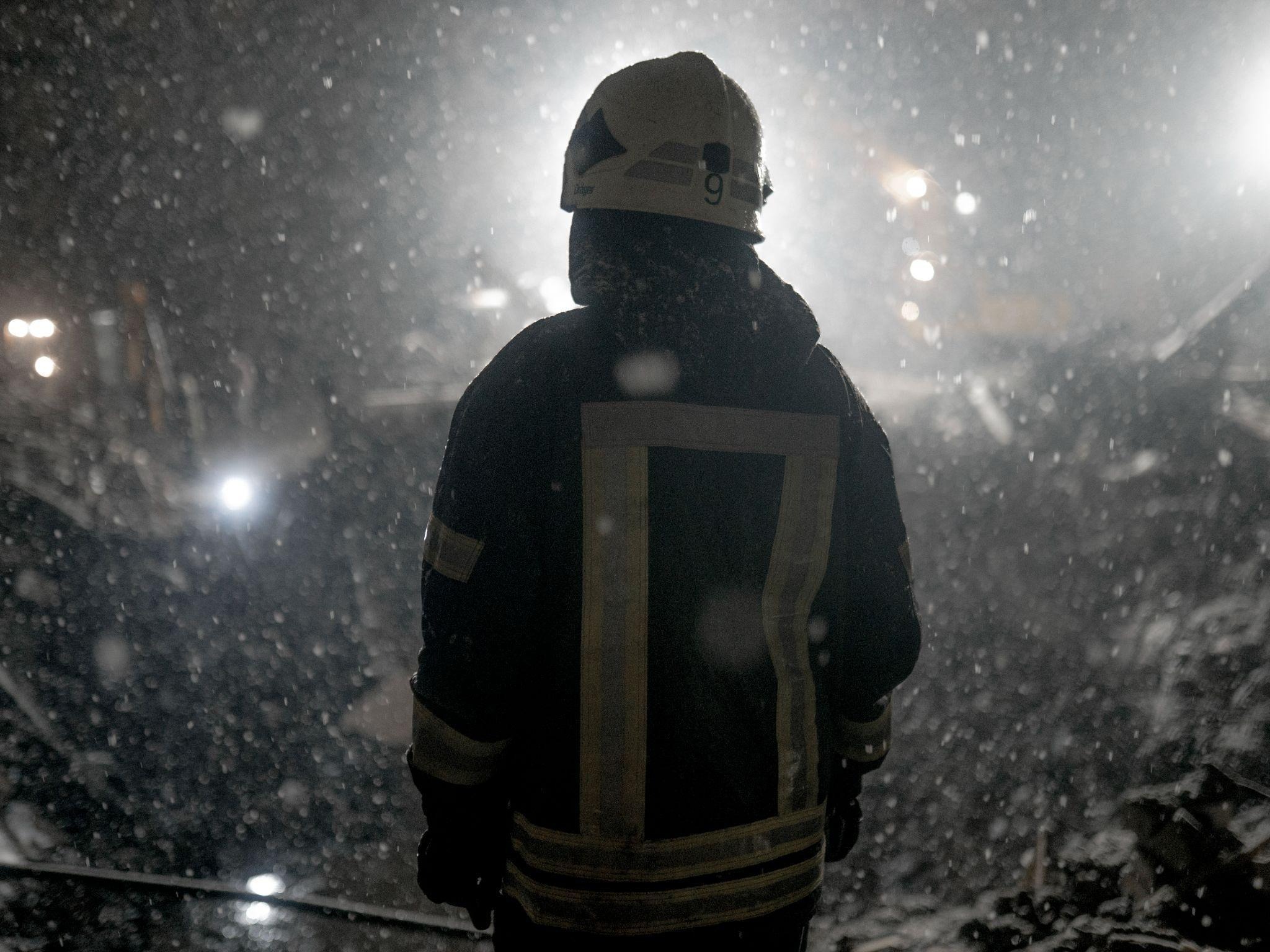
Whenever possible, I always ask for permission to shoot. But during bombardments, everything happens so rapidly that there's simply no time for conversation. When time permits, I try to talk to people and offer support. I don't know how appropriate it is from the standpoint of classic journalism, but when someone is crying, I might just hold their hand. It matters to me that in that second, they feel they aren't left alone with their grief.
— What do you personally see as the main value and power of documentary photography right now?
— That's a difficult question. Photographing people is important to me—their faces can tell everything without words. People look incredibly exhausted, slightly nervous, or frightened. Their expressions vary greatly, but through deep sorrow, a remarkable inner kindness often still shines through.
Mykyta Kuznetsov is a Ukrainian journalist and documentary photographer from Kharkiv. He started taking photos in 2017, focusing on street photography, portraits, Kharkiv youth, and the local urban environment. Following the start of the full-scale invasion, he returned to active photographic practice. In 2024, he worked as a photographer at the Kharkiv Art Museum, documenting exhibits, daily institutional life, and the people maintaining its operations during wartime. Kuznetsov has collaborated with Frontliner and Gwara Media, and currently produces reports for Suspilne Kharkiv as a videographer and photographer. His practice focuses on memory, local identity, war, and everyday life in Ukraine.
Credits:
Interviewer: Katya Moskalyuk
Picture Editor: Vladyslav Krasnoshchok
Copy Editor: Yulia Futey