
%20(2).png)
In early August, Russian airstrikes damaged the Ostrivsky Bridge—the only road bridge connecting the Korabel microdistrict, also known as Ostriv (Island), with the mainland part of Kherson. After several attacks, the bridge survived but sustained significant damage. An urgent evacuation of the Ostriv population began.
A huge crater gapes in the middle of the Ostrivsky Bridge road surface, which drivers have learned to bypass. Vehicles move at enormous speed, as enemy drones constantly hover over the bridge. Ukrainian documentary photographer Stanislav Ostrous has traveled this road many times with volunteers. His photographs feature the people of Kherson who are forced to leave their native homes. Perhaps—forever.
The Last Ticket
“I saw the news about the shelling of the Ostrivsky Bridge and realized I needed to go to Kherson. I know the city's context very well, having lived there for twenty-five years,”– says Stanislav Ostrous. –“If the bridge is completely destroyed, the people of the Ostriv microdistrict, surrounded by the Dnipro and Kosheva rivers, will find themselves in complete isolation. Consequently, an evacuation should have started there, which I wanted to document.”
In August 2025, about 1,800 people still remained in the Ostriv microdistrict. Before the full-scale war, it was one of the best residential areas in Kherson. Now it is under constant shelling.
“I give photography lectures to students, and on my days off, I decided to go to Kherson. When I opened the app to buy a ticket for the Kramatorsk – Kherson train, only one seat was left. I took this as a sign of fate that dispelled all doubts about the advisability of the trip,”– says Stanislav Ostrous with a smile.
Immediately upon arriving in the city, the photographer called his acquaintance, volunteer Oleh Dehusarov, who works at the charitable foundation "Spravzhni," and went with the team to evacuate people.
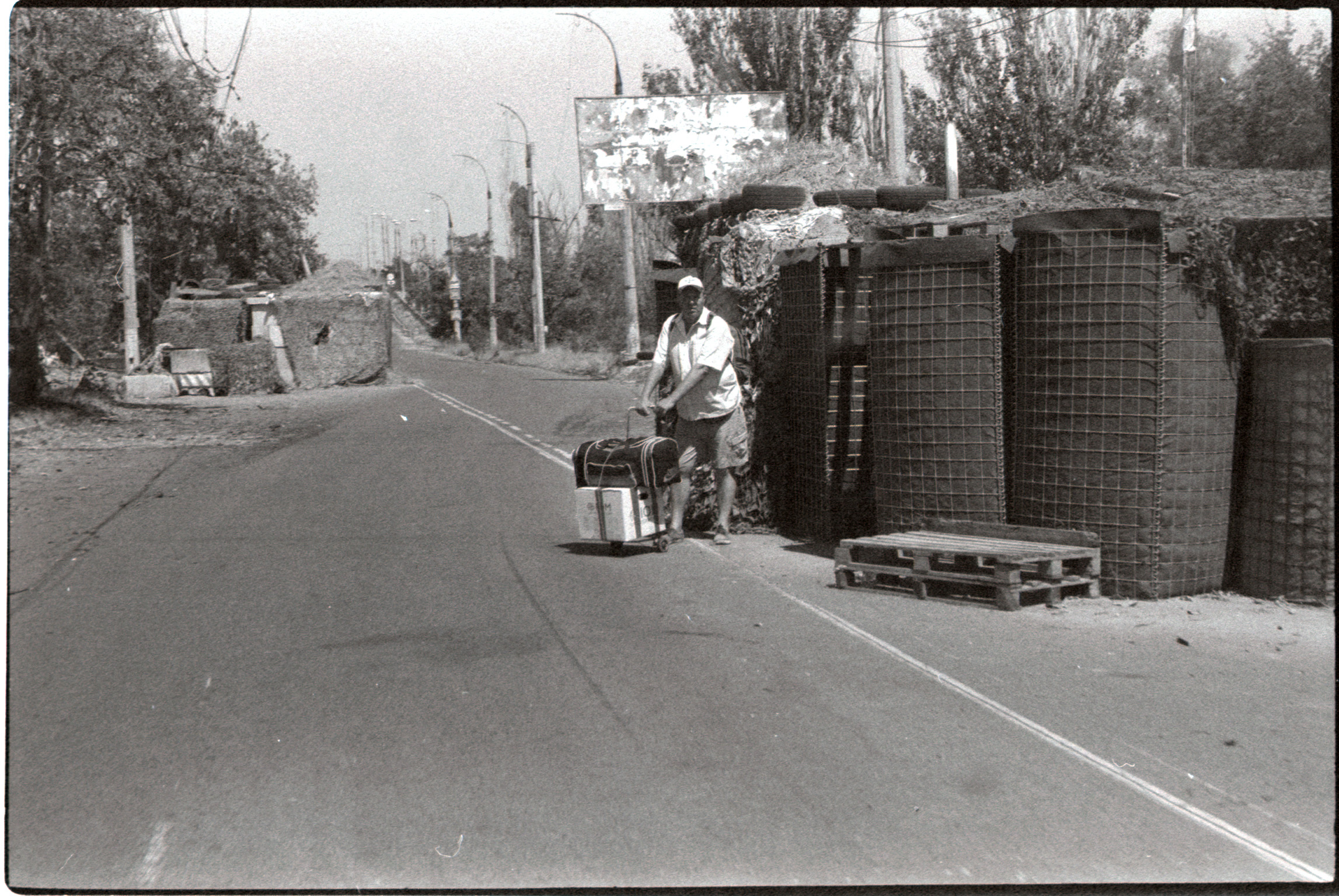
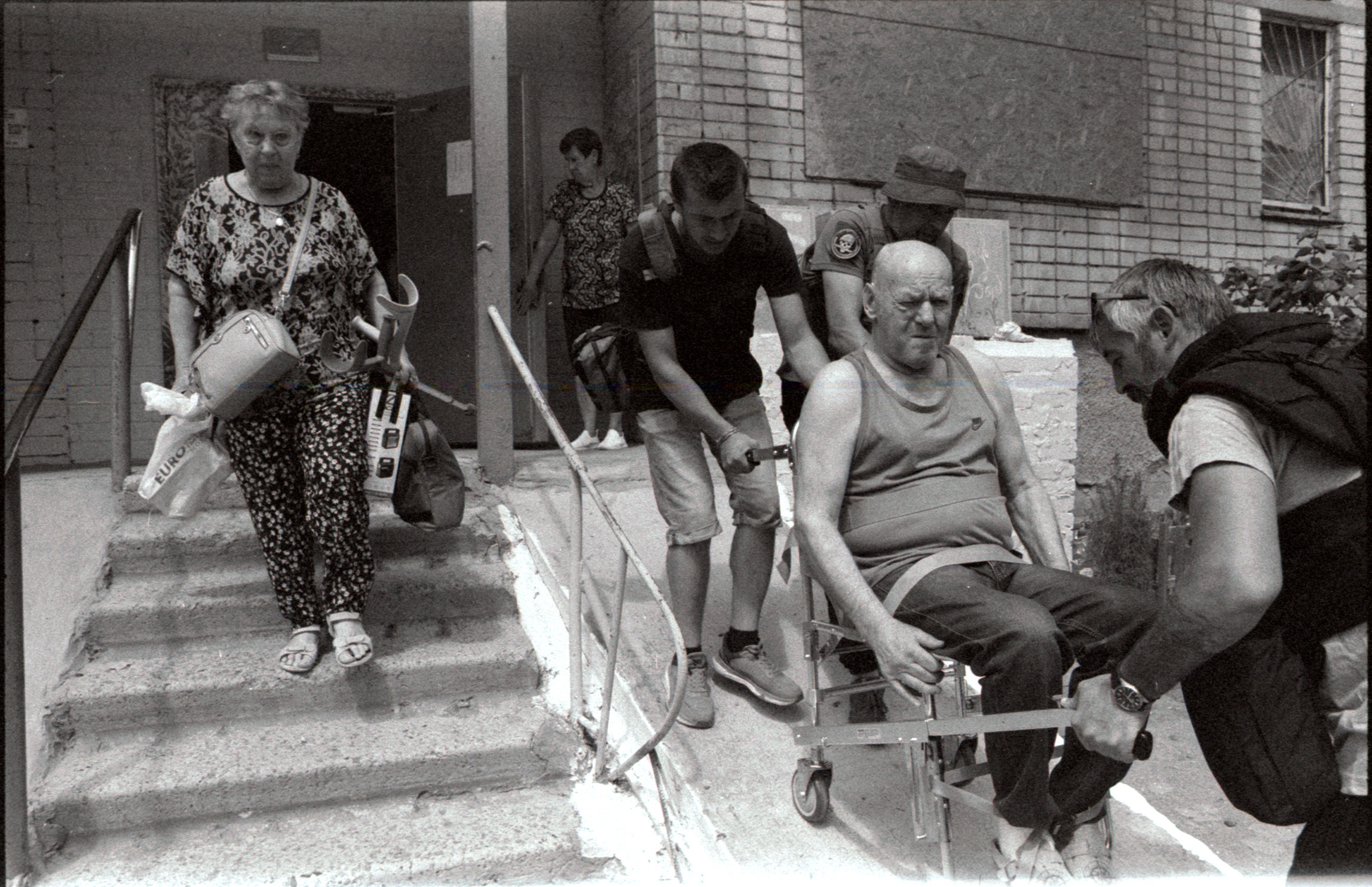
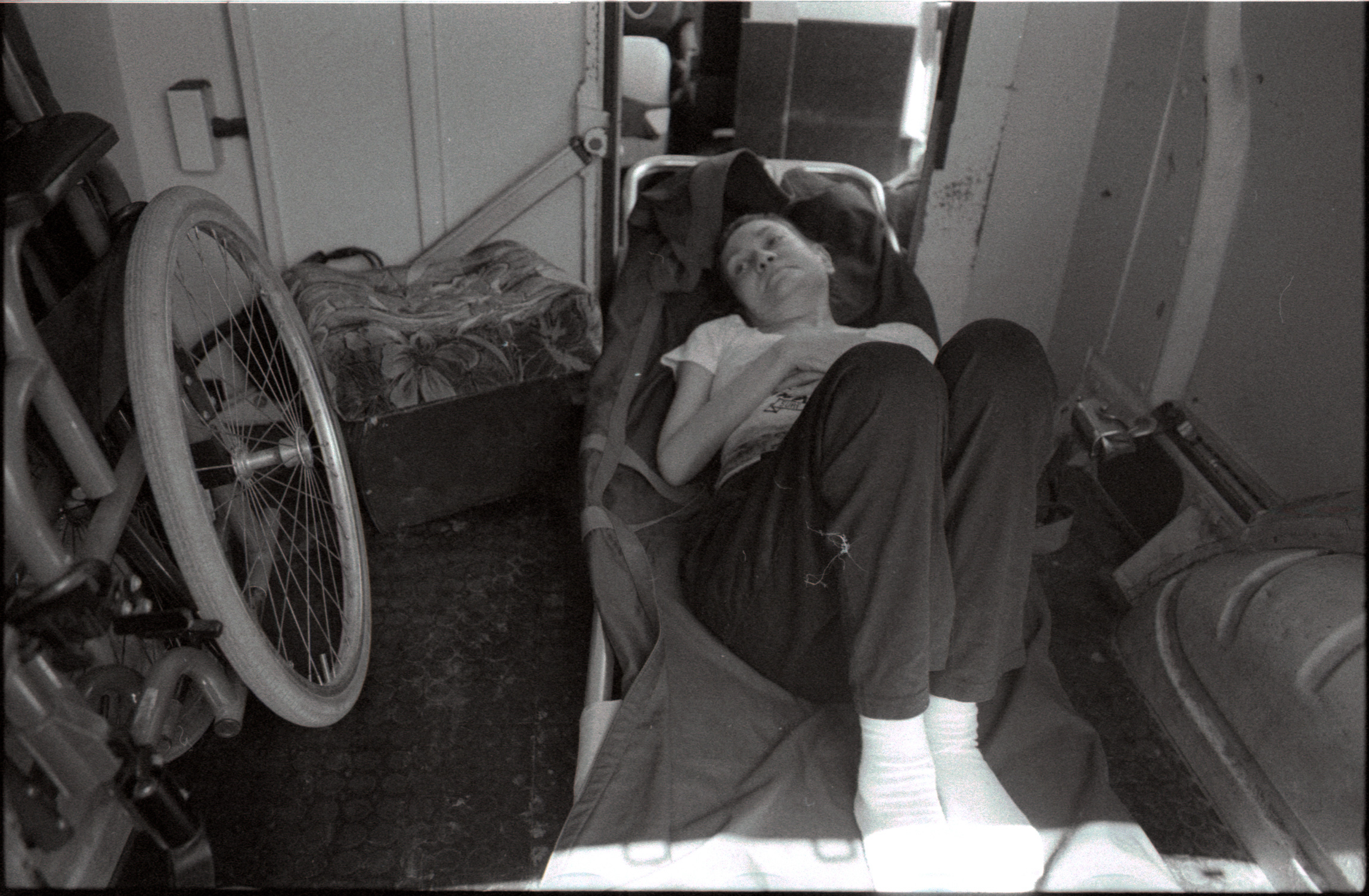
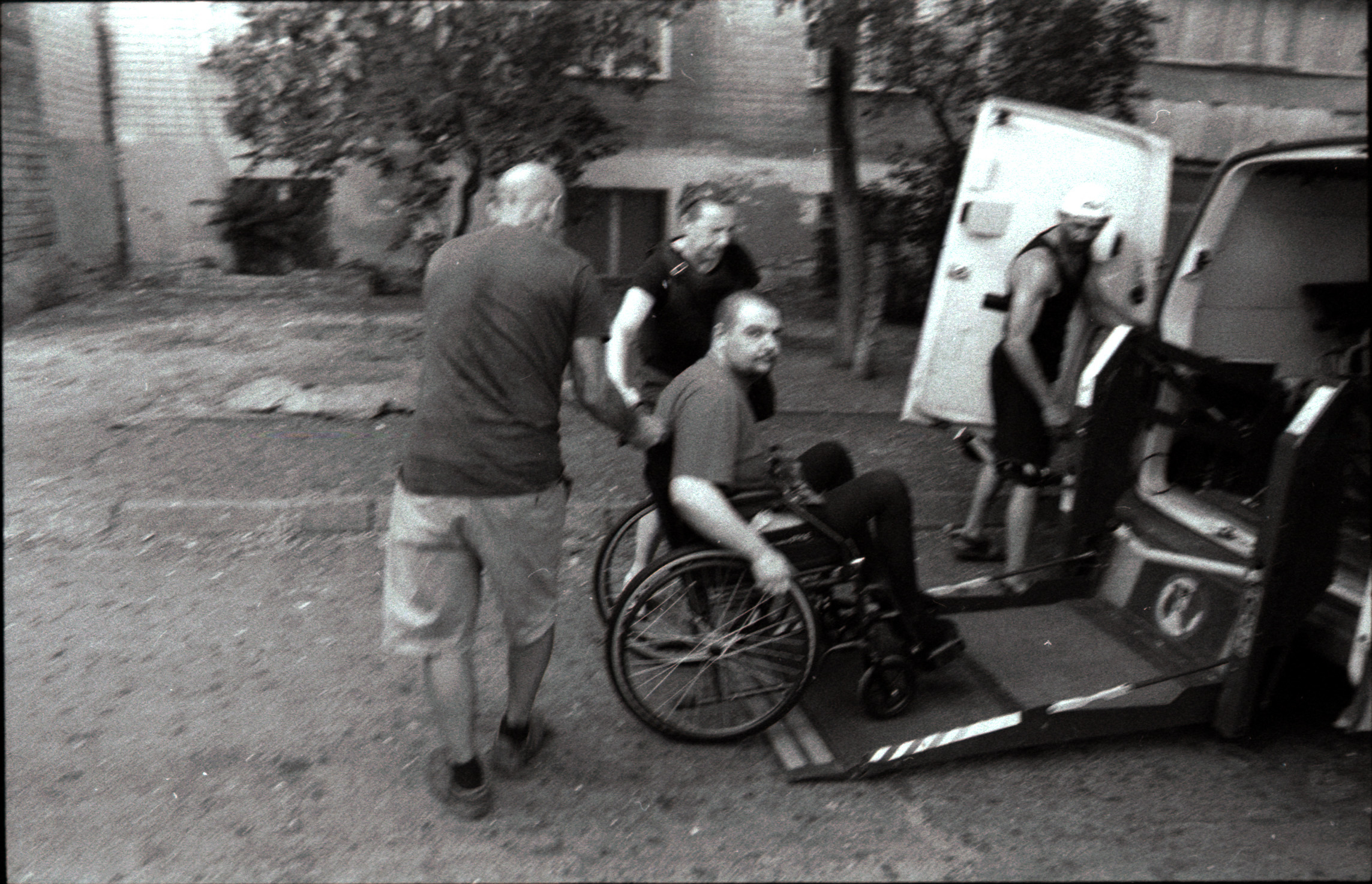
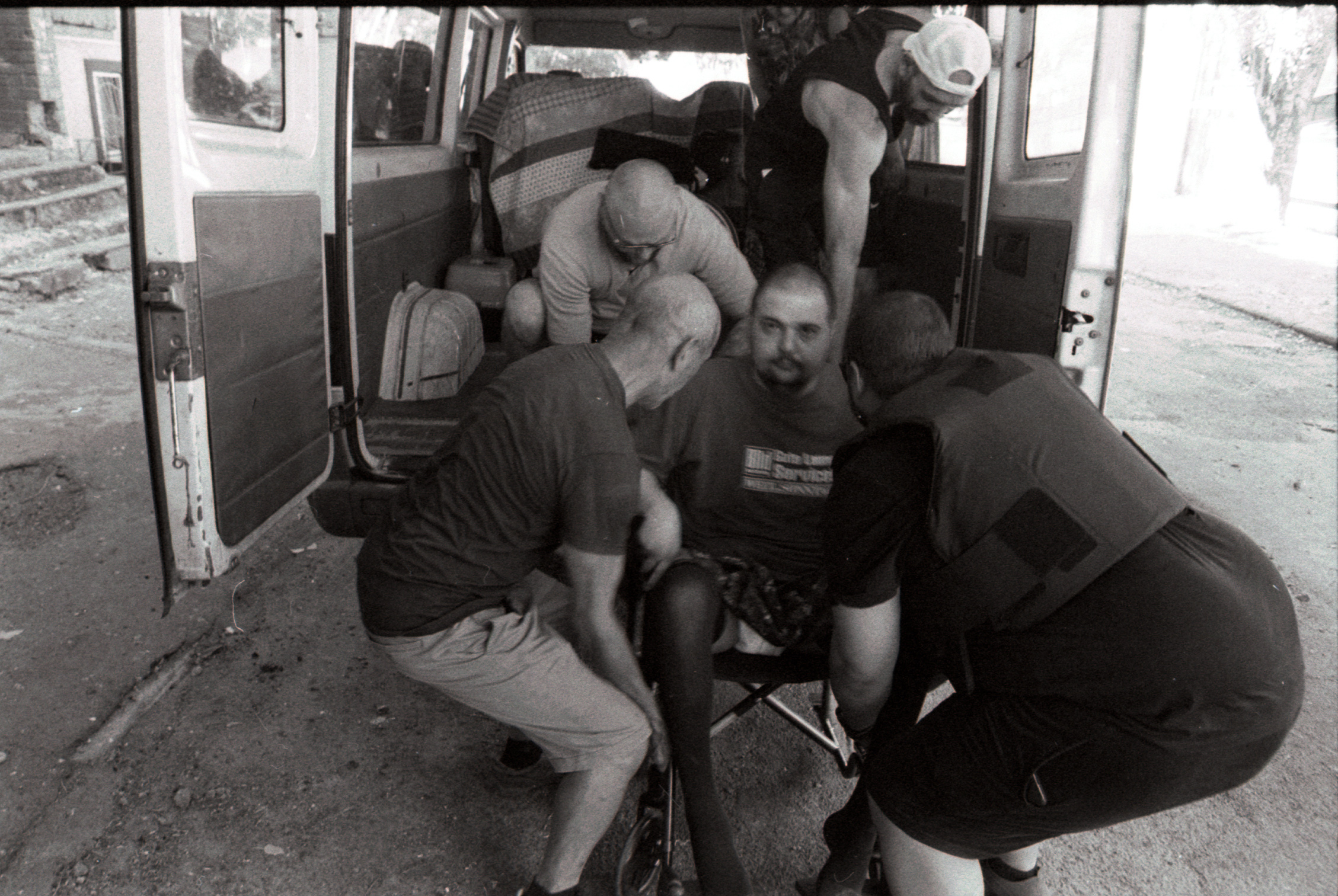
Stanislav Ostrous took all the photographs of the bridge literally on the go from the window of an armored minivan—stopping there is dangerous. The volunteers the photographer traveled with primarily evacuated people with limited mobility and disabilities. They had a list of applications and addresses from which they picked up people.
Other residents of Ostriv could come to a bus stop in the center of the microdistrict and board evacuation buses there, which transported people across the bridge. A temporary shelter was organized in the gym of one of the Kherson schools, where people could rest, process documents, and travel further—to relatively safer microdistricts of Kherson or to other cities, such as Mykolaiv or Kyiv.
“As long as the bridge is relatively intact, people will still travel to Ostriv. Residents who do not want to or cannot leave their homes for various reasons still remain there, hoping, if necessary, to cross the river by boat,”– says the photographer.
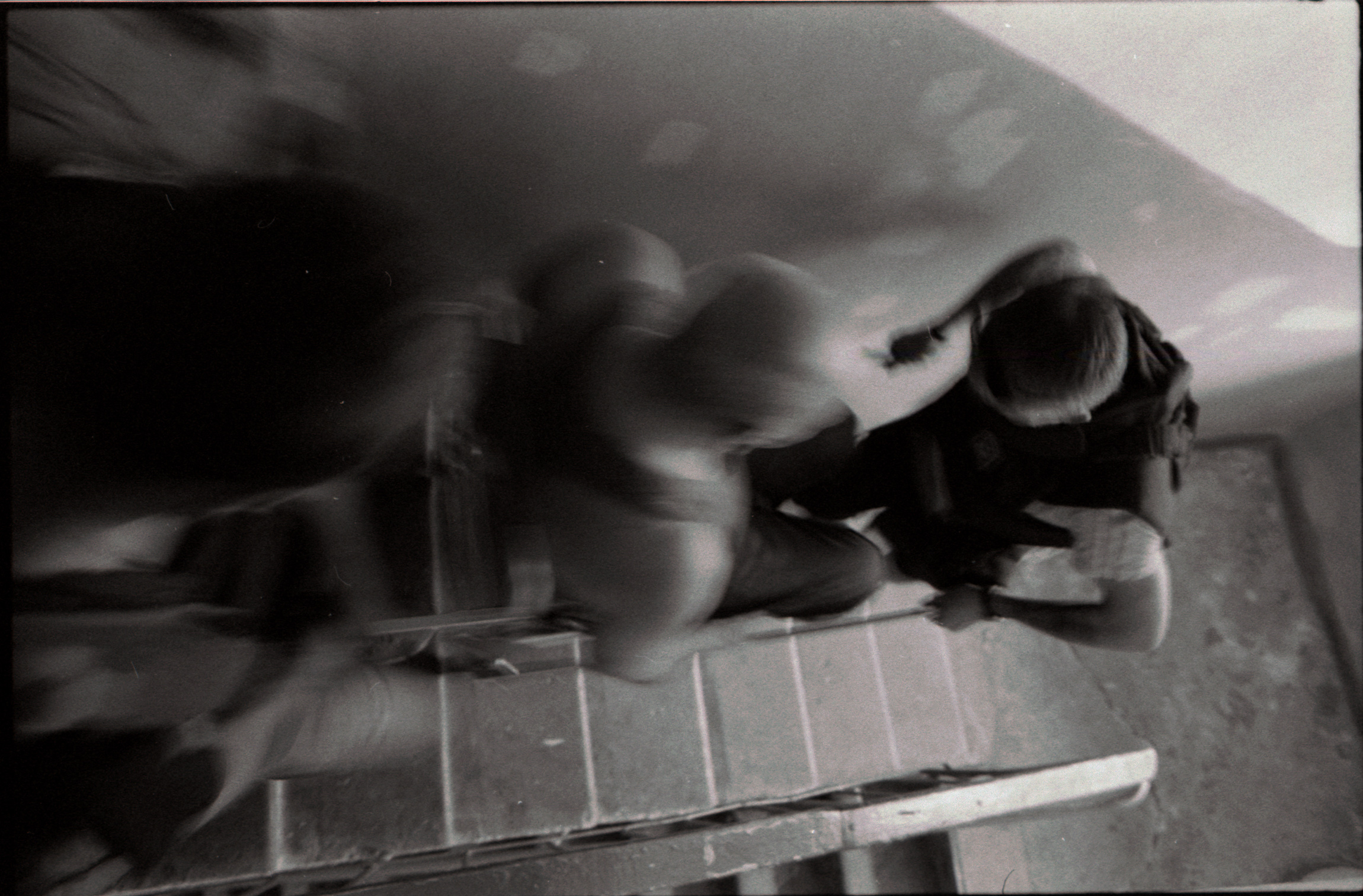
“When we were climbing the eighth floor on foot to pick up people with limited mobility, I accidentally ran into my close friend. His mother cannot walk, and they had submitted an evacuation request to the volunteers,”– recounts Stanislav Ostrous. –“Vitalik and I used to be friends, visiting each other for many years. Then our paths diverged, and we hadn't seen each other for a long time. It was very moving.”
During the evacuation, the photographer not only took pictures but also helped the volunteers. Most people had to be carried down from the eighth or ninth floors in wheelchairs or on improvised stretchers made of blankets. Since Ostriv is cut off from electricity and the elevators have not been working for a long time, the entire journey had to be made on foot.
The Last Bridge
The volunteer team’s work starts in the morning and lasts until three o’clock. After noon, moving around the city becomes dangerous, as shelling intensifies during this time and life in Kherson stops. The Ostriv microdistrict is constantly under fire.
“On the third day of the evacuation, the volunteers and I came under shelling. When we hid in a shelter, there was a strike on a neighboring house,”– recalls Stanislav Ostrous. –“However, the most dangerous moment of the evacuation is the road across the bridge, over which drones constantly hover. The drivers don't just drive fast there; they fly. If the bridge is hit and the armored minivan, which has almost no windows, plunges into the water—no one will manage to get out. People just pray during these few minutes, holding their pets in their arms. The animals sense this tense atmosphere, meowing, barking, and biting. It’s just awful.”
Ostriv is already cut off from electricity, gas, and water supply. The last boiler room recently stopped working there. Stanislav Ostrous met a man on one of the evacuation trips who prepared the boiler room for de-energizing. People usually pack their belongings in the dark, trying to take the most valuable items. If the bags are too large, the volunteers ask them to leave behind whatever is least valuable, as that space can be taken by another person, not a suitcase. Stanislav Ostrous decided to stay on Ostriv during one trip to allow a person who needed evacuation to board. They agreed that the photographer would be picked up during the next trip.
“I walked around Ostriv and took some shots. Near one of the houses, I saw an elderly man with a bottle of water and a bag. It turned out his son had a disability—he sustained an industrial injury at the factory. The man wanted to leave but didn't know how to do it. I told him about the volunteers, and the very next day we managed to evacuate him and his son,”– shares Stanislav Ostrous, relating one of many stories.
He recalls a young man in a wheelchair who had to be carried down the stairs from the ninth floor. He was very happy that everything worked out.
The Last Chance
“I also brought a digital camera, as sometimes photographs need to be handed over very quickly after a shoot. However, film photos remain the most valuable to me,”– says Stanislav Ostrous. –“Furthermore, photos on film can serve as genuine evidence in war crimes trials. A physical trace on silver that cannot be faked. In our era of digital photography and artificial intelligence, a film negative is one hundred percent proof.”
Photographers who document the events of the full-scale Russian-Ukrainian war are doing important work for posterity. We live in an information environment that requires constant visual confirmation. If an event is not photographed, it is lost in the information flow forever.
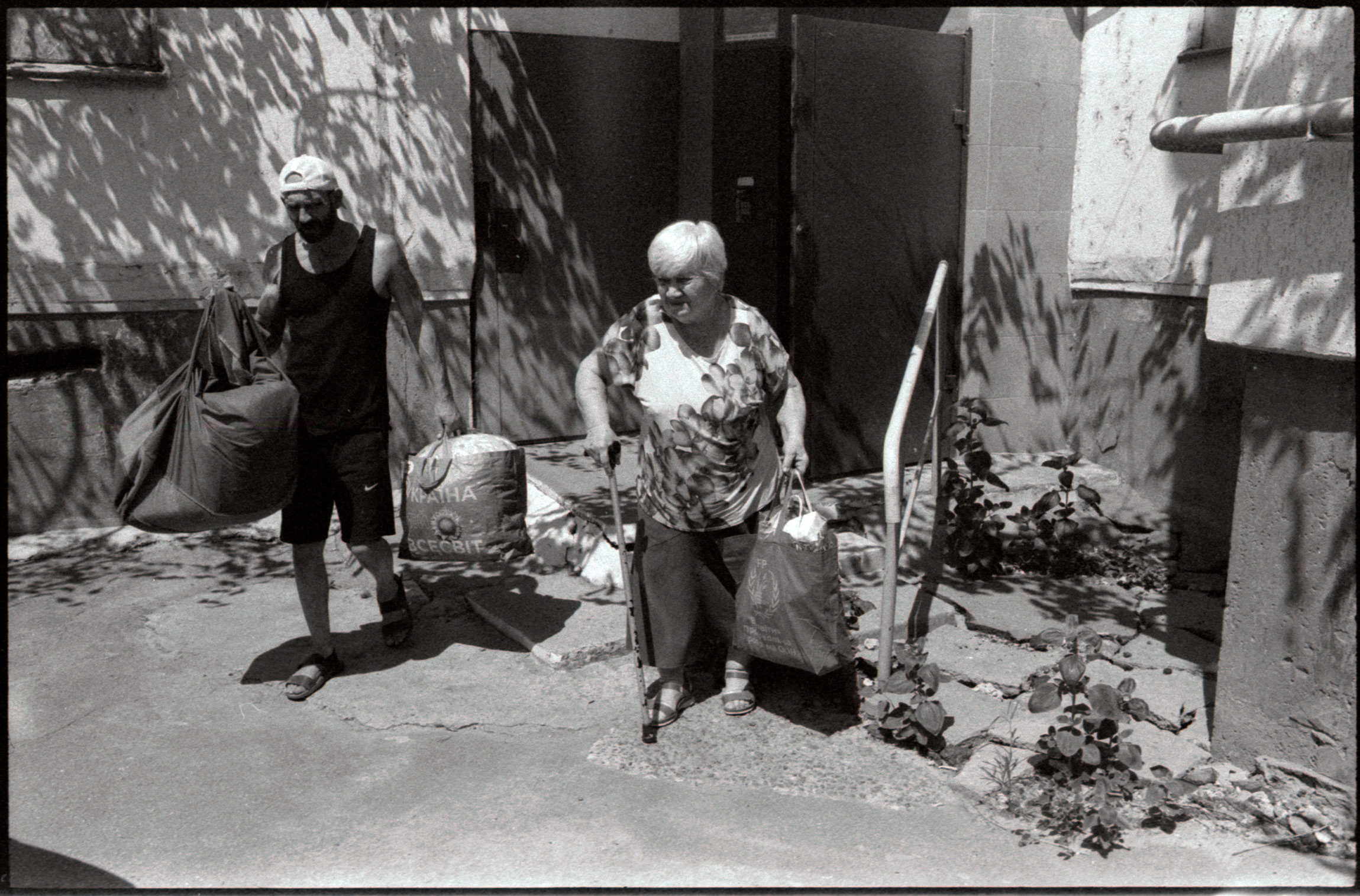
“Everything related to Kherson is important to me. The Kherson I knew and lived in no longer exists. The Russian military is gradually destroying a part of my life. It is already almost destroyed. Perhaps Kherson will be rebuilt in the future, but it will be a different city,”– explains Stanislav Ostrous.
Almost all of the photographer's friends and acquaintances have left the city; only a few remain.
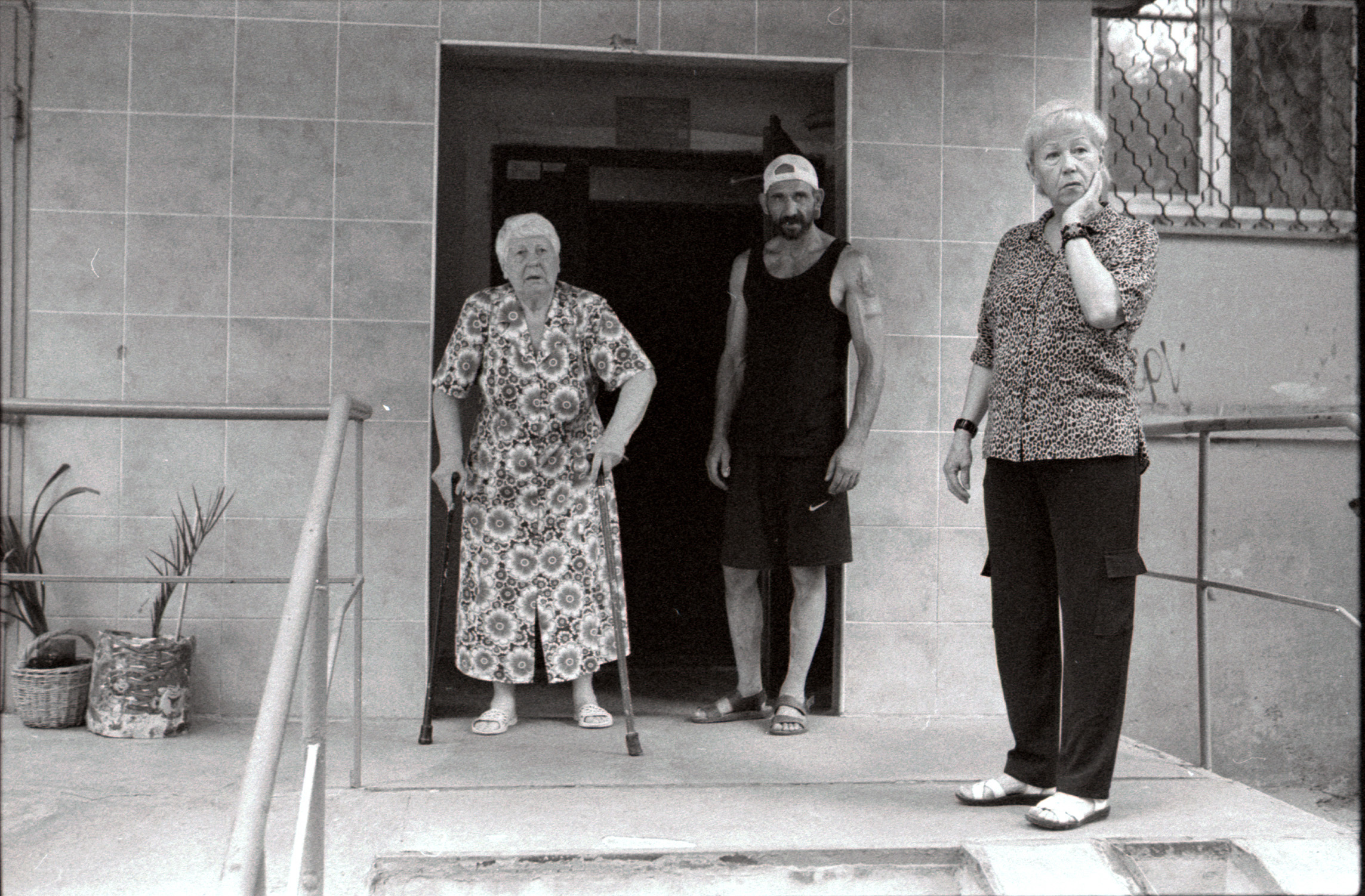
“Some have managed to find themselves in this new reality, started volunteering, or joined the military. Many Kherson residents now live in other cities and even countries. And then there is a third group of city residents who are lost in this situation—they don't know what to do or where to go. Unfortunately, these people often abuse alcohol,”– says Stanislav Ostrous. –“It is important for me to document the life of Kherson while it remains on the map of Ukraine.”
The people and volunteers reacted very calmly to the fact that they were being photographed during the evacuation.
“I am convinced that if people understand why the shooting is being conducted, they even want to be photographed. They say, show us to the world that remains silent. The residents of Kherson really want people to know about them, because we are all living through important historical events right now,”– says Stanislav Ostrous.
He adds that he wants to thank the volunteers for their work, which is too often taken for granted rather than seen as a good deed for people they do not even know.
Stanislav Ostrous — was born in Zhmerynka, Ukraine, in 1972. He began photographing in 2012. He is a member of UPHA — Ukrainian Photographic Alternative and MYPH. Finalist for the Leica Oskar Barnack Award 2025. Participant in the main exhibition of the "Batumi Photodays" festival (2016 - 2019). Shortlisted for PhotoCULT 2019. He currently lives and works in Kharkiv, Ukraine.
The photographer's social media: Instagram Facebook
Credits:
Topic Researcher, Text Author: Katia Moskalyuk
Photo Editor: Vladyslav Krasnoshchok
Literary Editor: Yuliia Futei















.jpg)


