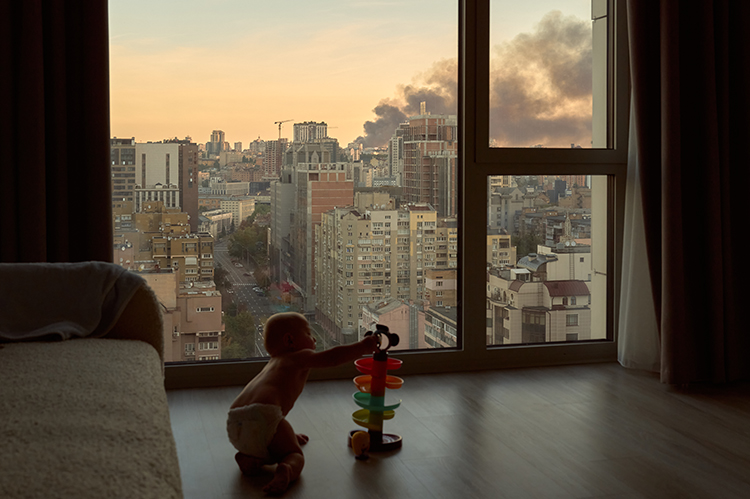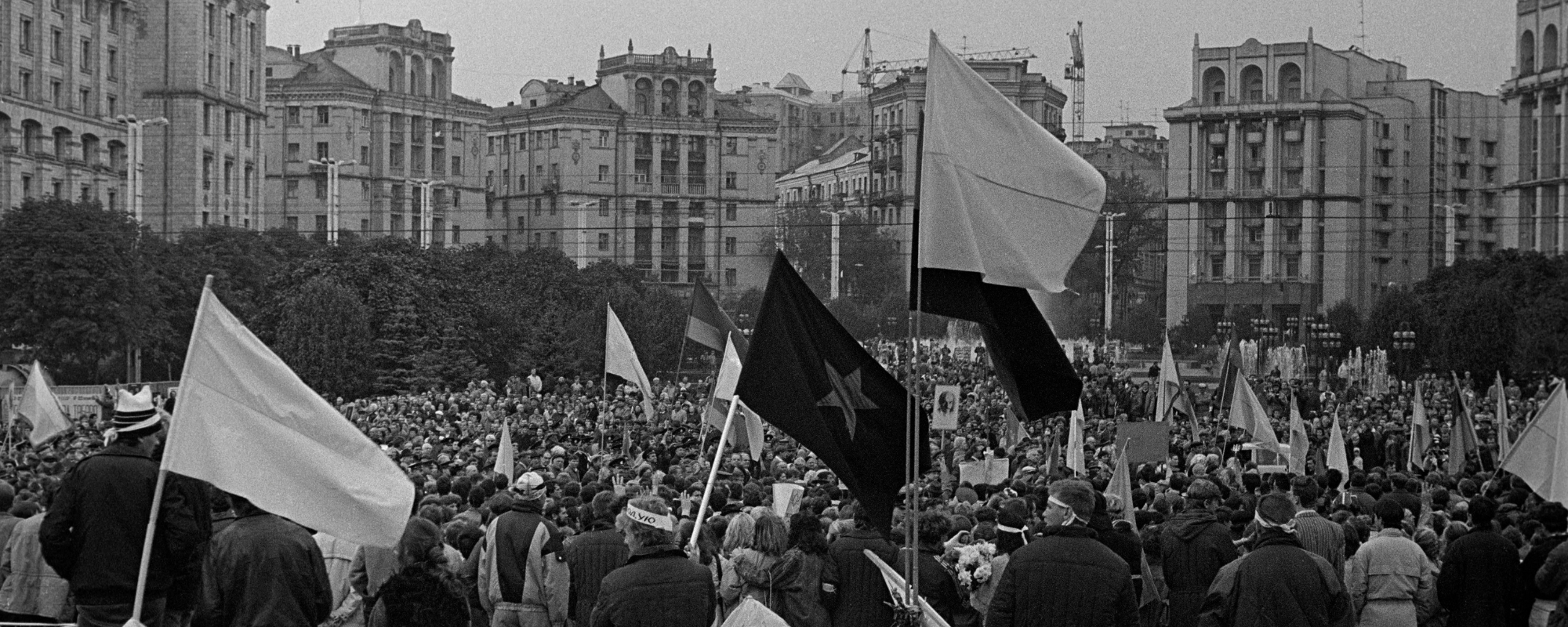
A societal desire for change and nonviolent resistance became the cornerstone of Ukraine’s tradition of defending human dignity. The first striking manifestation of this spirit was the Revolution on Granite. Oleksandr Hliadielov, one of Ukraine’s foremost documentary photographers and a Taras Shevchenko National Prize laureate, witnessed and chronicled those momentous days. He captured the faces of young students whose heroic resistance reshaped the nation. His photographs seamlessly bridge the past and the present, showing how human resilience forms the future of Ukraine.
In the autumn of 1990, Ukraine stood on the threshold of major historic shifts. Mounting grievances across every sphere of life in the Soviet Union fueled a wave of public indignation. At the time, several patriotic youth organizations operated in the Ukrainian SSR, including Lviv’s Student Brotherhood, which aimed to restore an independent Ukraine. Inspired by the electoral victories of national democratic forces and the Velvet Revolutions in Central and Eastern Europe, active student youth embarked on an unprecedented act of civil disobedience. Their resolve culminated in the Revolution on Granite, which lasted from October 2 to October 17, 1990.


The idea for the protest originated during summer events marking the 500th anniversary of the Zaporozhian Sich. Ukrainian students adopted hunger strikes as a tool of protest from their Bulgarian peers. The principal organizers and driving forces were the Ukrainian Student Union, led by Oles Doniy, and Lviv’s Student Brotherhood, led by Markiyan Ivashchyshyn. Other key organizers included Oleh Tyahnybok, Vyacheslav Kyrylenko, and Oleh Barkov, who represented the student movement from eastern Ukraine.
“I photographed the Revolution on Granite, which began on October 2, 1990, with a student hunger strike in Independence Square. For many, it came as a complete surprise. Massive rallies took place, and people gathered to march in columns toward the Verkhovna Rada. Kyiv’s streets were filled with crowds and countless Ukrainian flags. That scene quickly became familiar to many Kyivans, and I am sure to the people of Lviv as well,” Oleksandr Hliadielov recalls of the initial demonstrations.
The students presented the authorities with five clear demands: refuse to sign the new Union Treaty aimed at preserving the USSR in a altered form; dismiss Vitaliy Masol, Chairman of the Council of Ministers; hold multi-party parliamentary elections in the autumn of 1991; nationalize the property of the Communist Party and Komsomol; and guarantee that Ukrainian conscripts would not be forced to serve outside the republic without their explicit consent.

On the morning of October 2, protesters occupied what was then October Revolution Square (now Independence Square) and pitched a tent city. Taras Korpal, a student from a Kyiv university, was elected camp commandant. Swift self-organization by activists and a subsequent official permit for rallies from the Kyiv City Council deterred law enforcement from forcefully dispersing the students.
Life in the camp was strictly structured. Rigorous entry controls and round-the-clock guards maintained exemplary discipline, thwarting any attempts by the authorities to stage provocations.

Protesters wore white armbands, while a security detail in black armbands ensured order. Dedicated press and medical services also operated on-site. Hunger strikers underwent daily medical checks, and exhausted participants were replaced by new volunteers. In total, around 150 young men and women from 24 Ukrainian cities took part in the hunger strike.
Protesters were deeply moved by the outpouring of support from Kyivans and local authorities, who supplied essential household goods and moral encouragement. Central Kyiv quickly transformed into a hub of political discussion, attracting prominent cultural figures, dissidents, and popular bards standing in solidarity with the students. Poet Lina Kostenko and writer Oles Honchar visited the protest site, while actress Nila Kryukova joined the hunger strike alongside the students.
“Because Ukrainians naturally care for their younger generation—a dynamic that reemerged during Euromaidan—many people from diverse backgrounds, including the artistic community, rallied behind the protesting students,” notes Oleksandr Hliadielov.

Initial attempts to reach an agreement with the government failed. Following parliament’s refusal to dismiss Masol’s cabinet, opposition deputies joined the hunger strike. On October 15, the protesters declared a general student strike. Youth took control of the Red Building of Kyiv University, and a second tent encampment was established outside parliament. Overall, roughly 100,000 students, workers, and local residents rallied in the city center.
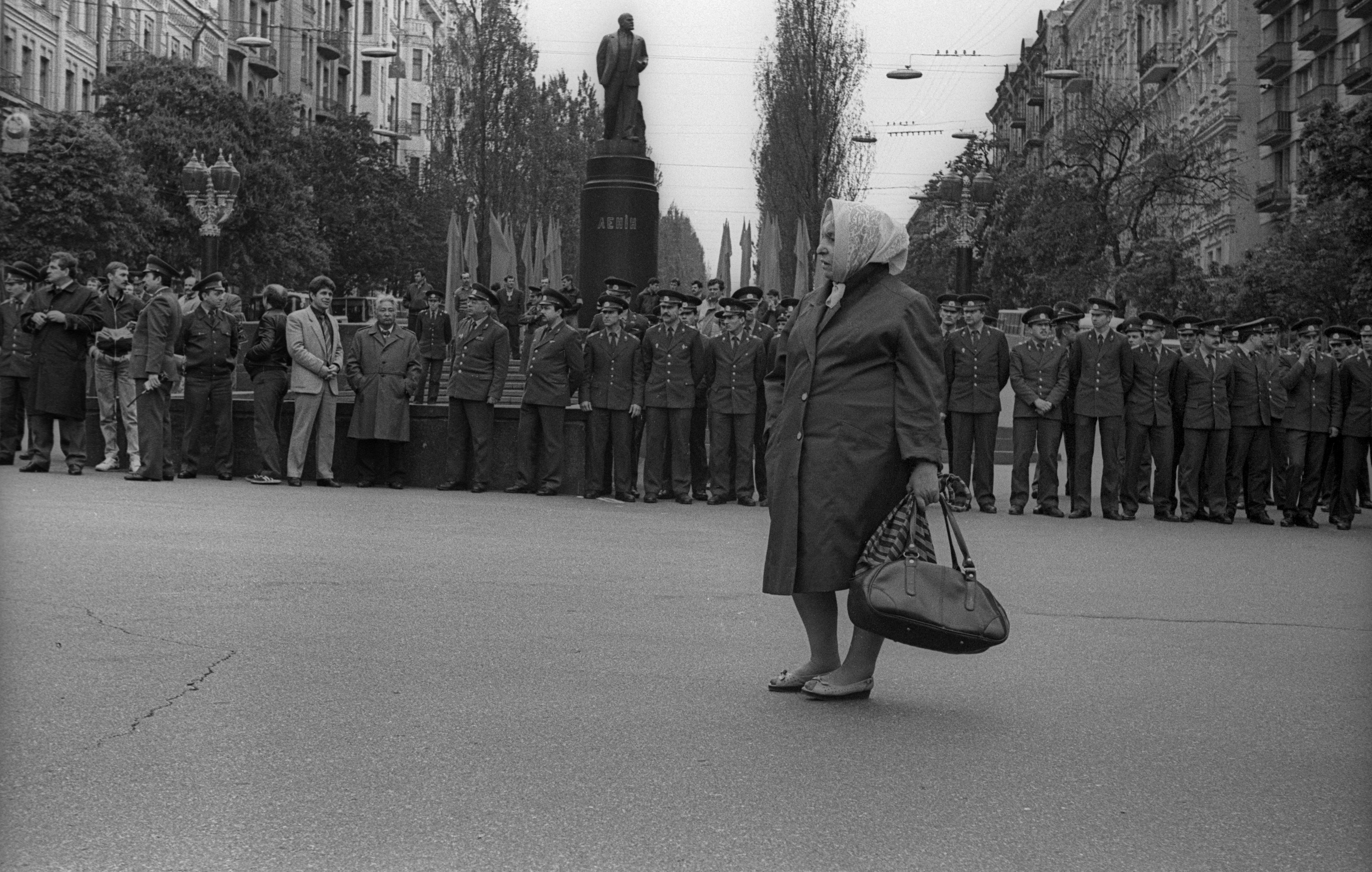
“The Revolution on Granite took place in the autumn of 1990, when Ukraine was still part of the USSR. The October Revolution anniversary was approaching, and I have a photo of people walking past the Maidan carrying portraits of Lenin on sticks. Those were different times,” Hliadielov says of the atmosphere that autumn.
Despite government resistance, news of the protest spread worldwide through the diaspora, while pressure from international politicians compelled the Kremlin to exercise restraint. Ultimately forced to negotiate, parliament passed a resolution on October 17 granting partial approval of the protesters’ demands. Vitaliy Masol was dismissed, legislation secured the right of Ukrainian conscripts to serve exclusively within Ukraine, and the authorities dropped plans for the new Union Treaty. Lawmakers pledged to draft legislation addressing the remaining demands.
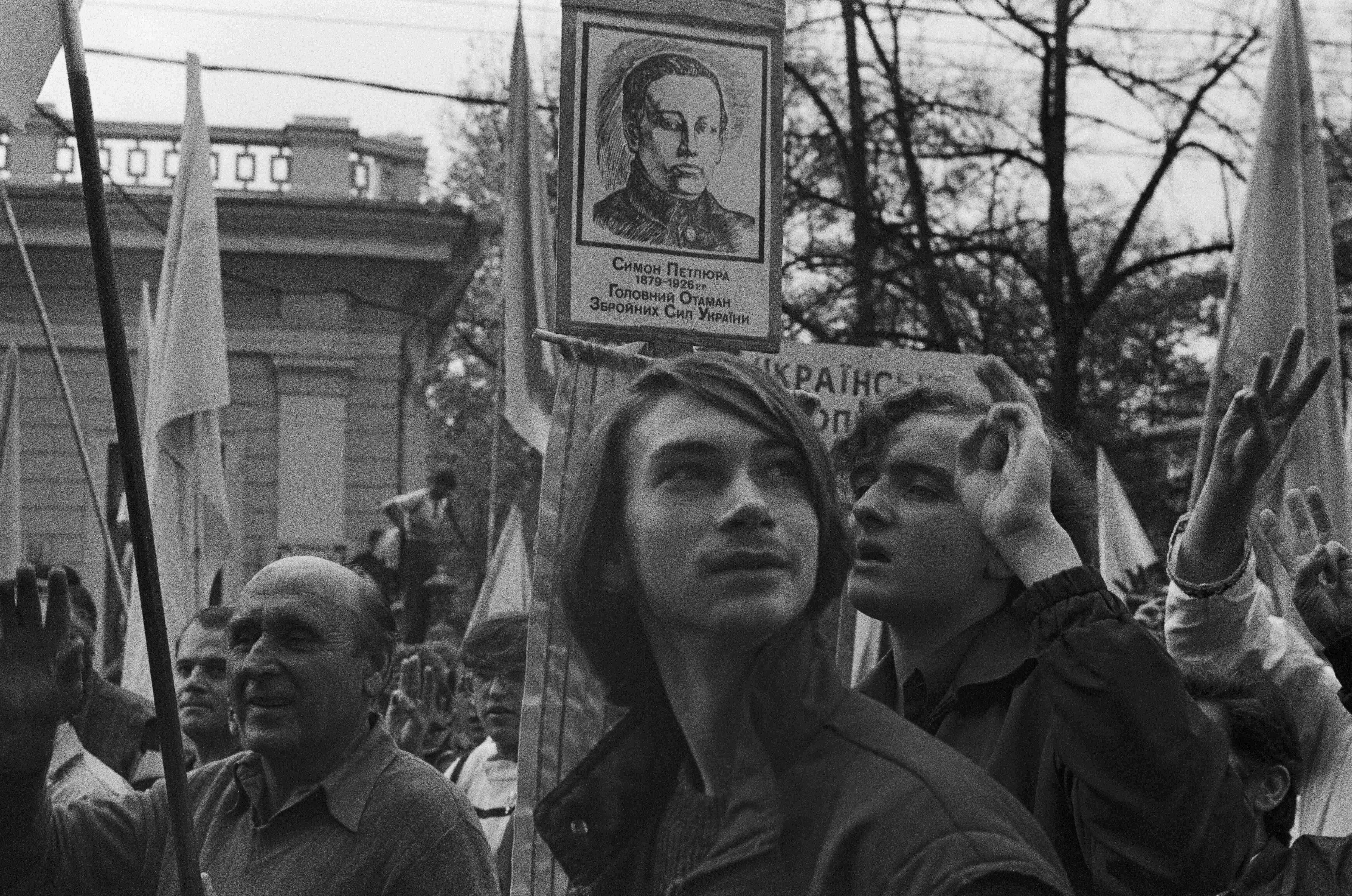

Although early parliamentary elections were not held, the Revolution on Granite marked a pivotal turning point. It proved civil society’s power to influence government, accelerated Ukraine’s push for independence, and hastened the collapse of the USSR. Just nine months later, Ukraine declared independence, and the Soviet regime collapsed completely.
Criminal charges were initially opened against protesters, and Oles Doniy was briefly detained, but public outcry quickly secured his release. Many student leaders and activists from the movement later helped build various sectors of a young, independent Ukraine.
Today, the nation’s resilience draws strength from the experience and courage of past generations, affirming that Ukraine’s choice of a free European future remains steadfast.
Oleksandr Hliadielov is a Ukrainian documentary photographer who covered wars and armed conflicts in Moldova, Nagorno-Karabakh, Chechnya, and Ukraine. Alongside his frontline work, he developed long-term documentary projects focusing on vulnerable children, the HIV/AIDS epidemic, and post-Soviet prisons. His photographs have been widely exhibited, published in photobooks, and recognized with numerous honors, including the Taras Shevchenko National Prize (2020).
Social media: Facebook, Instagram
Credits:
Researcher and Author: Yana Yevmenova
Photo Editor: Marusya Maruzhenko
Copy Editor: Yulia Futey
.jpg)
.jpg)