
Ukrainian photographer Oksana Parfeniuk shared when photography became for her not just fixation, but a way of thinking, how she transforms moments of daily life into valuable shots, and why so many stories still remain untold today.
Please tell us about yourself — how do you formulate your role in photography today? What, in your opinion, shaped your visual approach?
Today, it is primarily photojournalism; I dedicate most of my time to shooting for foreign media. Sometimes I work on my own projects, but lately, not very often. I see my role as telling the story of Ukraine to an international audience. I started taking photos back in 2009—it was my hobby. I entered photojournalism in 2017 while simultaneously working on personal projects.
When I first started shooting, I was about 19 or 20 years old, and I was influenced by my uncle who lived in Kharkiv. He is a constitutional law lawyer, but he was passionate about photography. My uncle brought me large photo albums of various photographers to Kyiv, mostly portraitists and those from the fashion industry. That’s how my passion for shooting began, along with the understanding that the art of photography exists in the world.
My visual approach is formed like a puzzle from everything that surrounds me. This includes the work of other photographers, as well as films, books, events, and the people I meet. Dialogues influence me: when I hear people talking, I then think about how to find and convey those moments in a photograph. I love having the opportunity to visit exhibitions in Ukraine and abroad. I always go to museums and look at a lot of visual art, especially from the turn of the nineteenth and twentieth centuries. This greatly helps to develop a visual language. I enjoy watching documentary films and analyzing how a shot is constructed. I truly absorb a lot of everything, and this influences how I shoot.
According to official data, 55 people were killed in the attack, and 328 were injured. Photo by Oksana Parfeniuk
Tell us, why did you choose photojournalism?
When the Revolution of Dignity began, I was invited to work as a fixer for foreign photographers. This happened quite accidentally and became my entry into photojournalism. I had never thought before that I could work in this field. When I was on Maidan for the first time, we talked a lot with people; I translated interviews and arranged meetings with protagonists. I enjoyed observing everything with my own eyes, being at the center of events, and even finding myself in unusual situations.

In 2014, I went to work as a fixer in Donbas and hardly shot anything myself then. I was afraid that I would fail, and I didn't know how to properly photograph people I didn't know. I gave myself time to learn and gain self-confidence. Photography had been my hobby long before Maidan, but after it, I realized that shooting people interested me. Of course, I used to take nice shots of my friends and tried street photography, but these were all just for myself. Photojournalism is an opportunity to travel, see the lives of other people, and tell others about them.
When did photography become for you not just fixation, but a way of thinking?
I had many different hobbies that appeared and quickly faded away. However, with photography, I immediately felt that this would last. Starting in 2014, I became more interested in documentary photography: I watched projects by various photographers and attended master classes because I did not have a formal visual arts education. I understood what stories and photo projects were and began to think consciously about how to tell stories using visual language. Besides documentary projects, I am very interested in creative visual approaches, not just direct photography.
Over time, my passion for photography became more serious. If I go somewhere and don’t take my camera with me, I still notice various details, moments, or stories that could become a separate photo project or shots for future major stories.

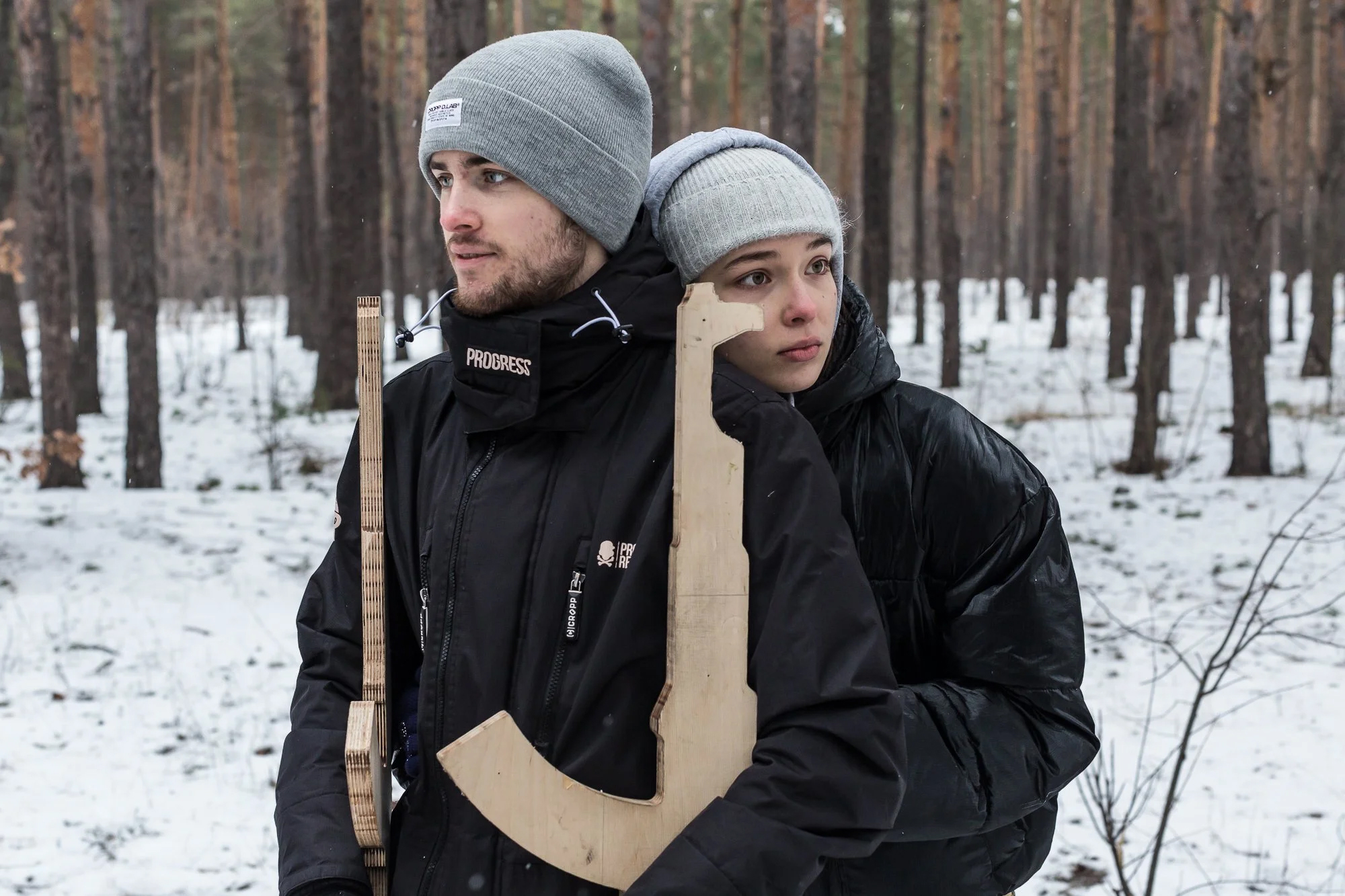
Please tell us about the themes you worked on before the start of the full-scale Russian invasion?
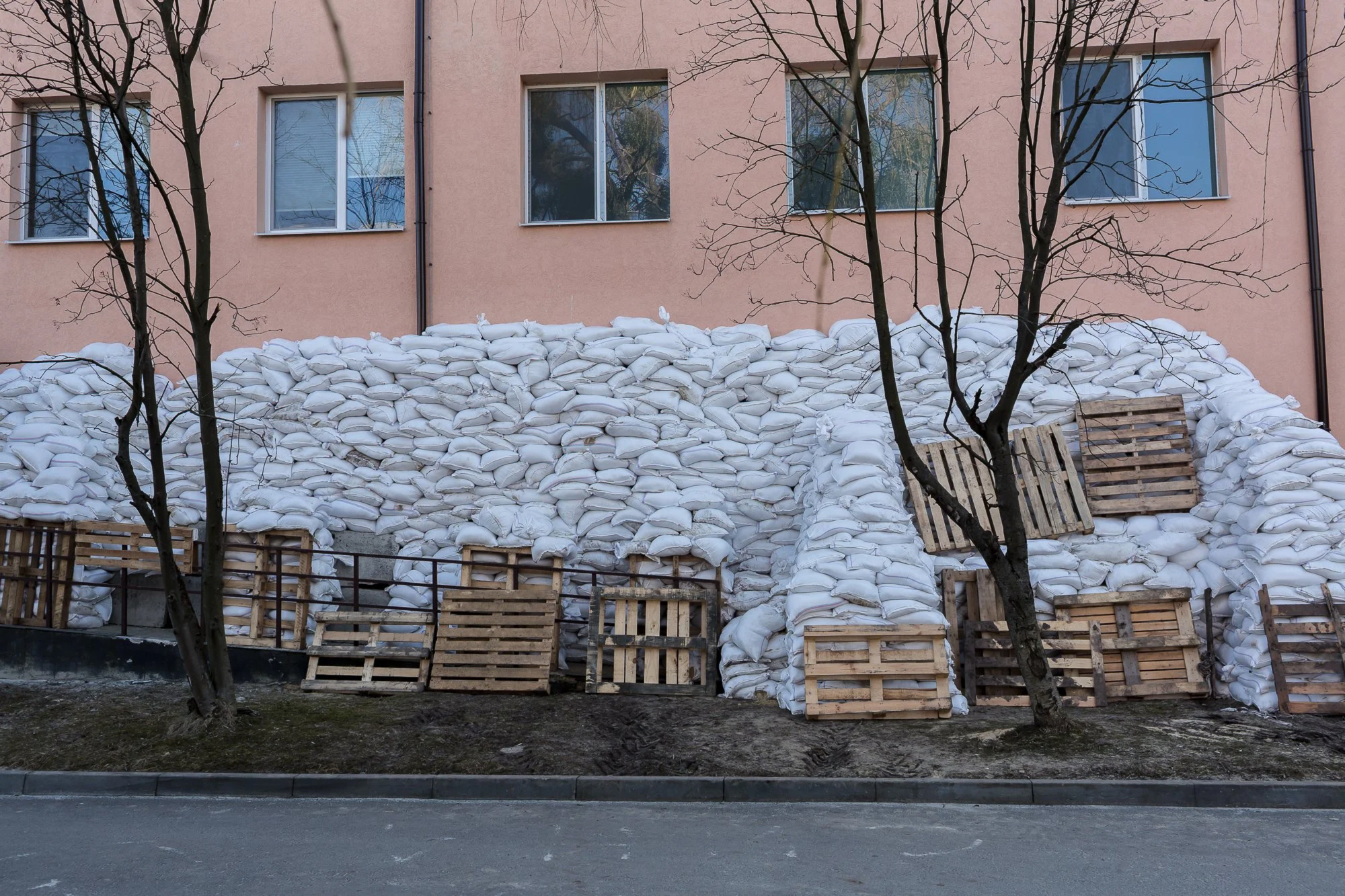
Everyone was talking about the inevitability of the full-scale Russian invasion; it was literally hanging in the air. I photographed the training people underwent as they prepared for war. At the start of the full-scale war, I was pregnant, and my husband and I left Kyiv. We stayed in Vinnytsia, then Lviv—I tried to photograph something, but I couldn't go to places that were too dangerous.

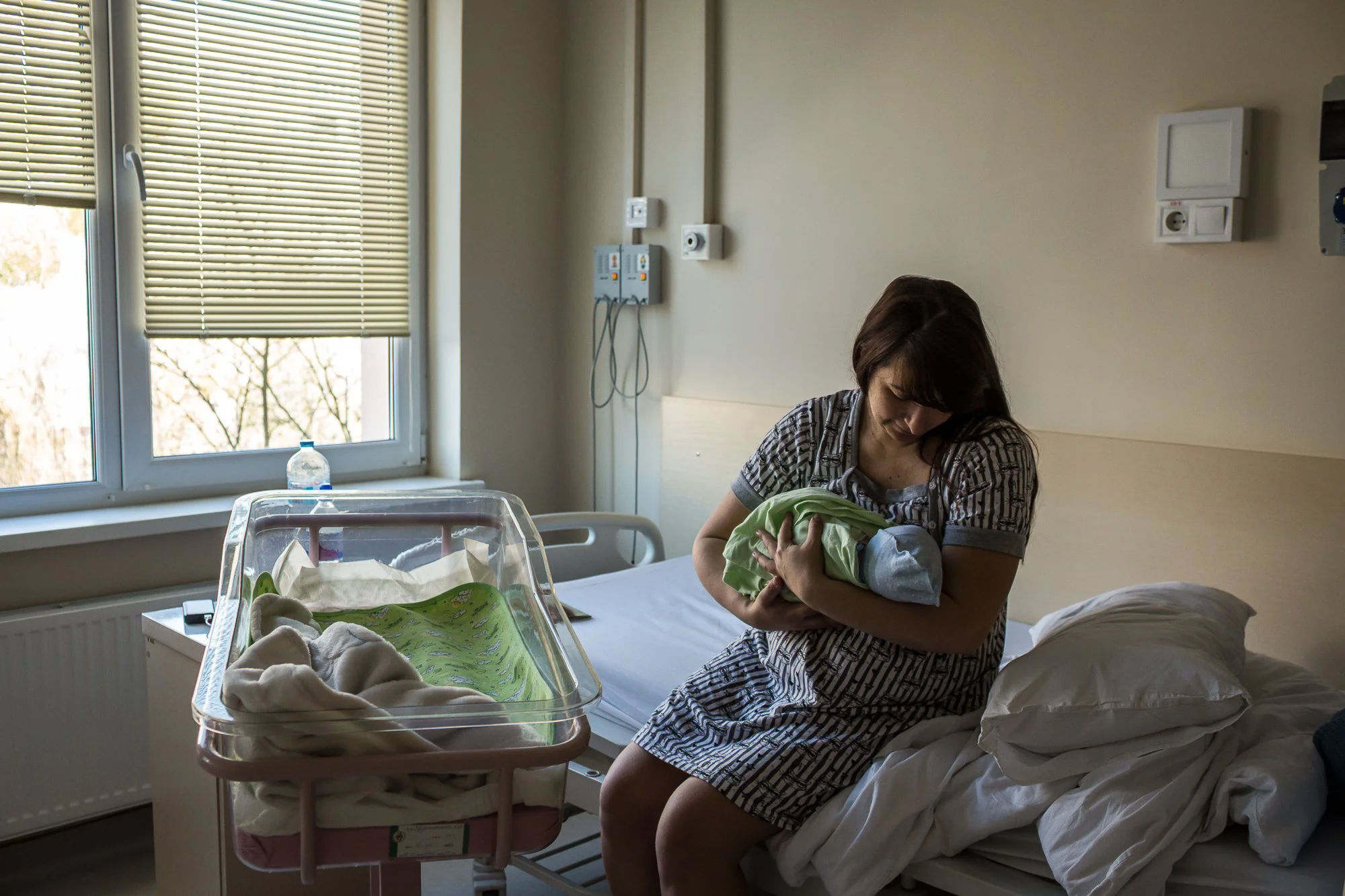
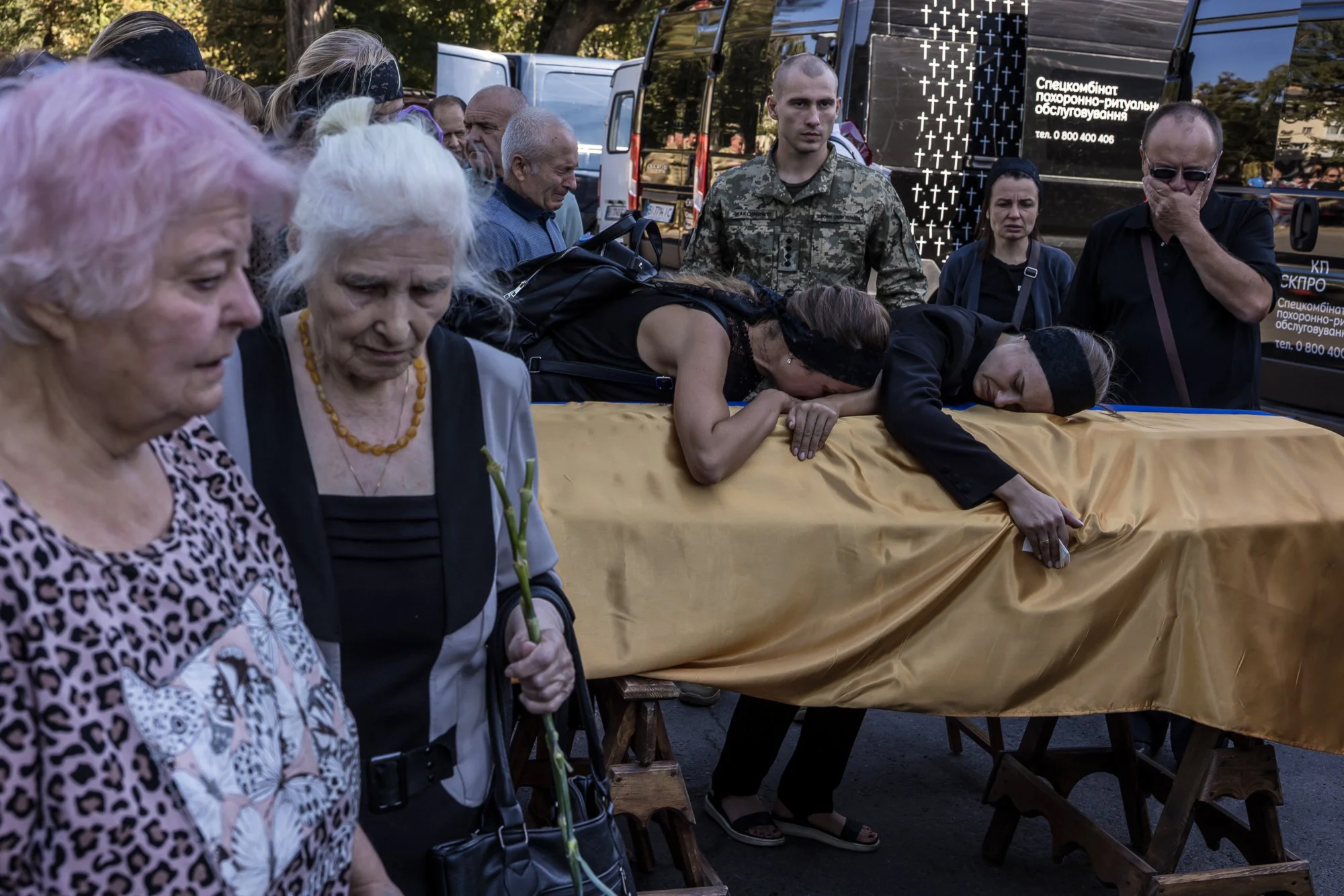
After my son was born, I had a break from photography. I was afraid to leave my son and, consequently, could not go on long assignments. I started working again in 2023. Many Ukrainian photographers have an archive documenting important events since the start of the war. In contrast, most of my photographs are away from the front—for example, I shoot stories about veterans returning to civilian life, and about families whose loved ones died in battle or as a result of Russian shelling of our cities.
Do you consider yourself part of the generation of Ukrainian documentarians formed during the Maidan?
Partially yes, partially no. When the Maidan began, I worked as a fixer and simultaneously went to my office job in the center of Kyiv. I took my small camera and shot in Maidan during the evenings and on weekends. These were my first attempts to document the events. Of course, my interest in documentary photography was born there, but I started practicing photography professionally later, in Donbas.
At the same time, I started being interested in photography long before the Revolution of Dignity. So, I cannot say that my vision or understanding of documentary photography originated there.
In many of your series, there is a very quiet, delicate observation of everyday life. How do you sense the moment when something mundane becomes worth preserving?
I often have shoots where not much is happening. The lives of civilian people pass in routine activities. When a photographer arrives, they start doing things for the camera. I always wait for the moment when they return to their authentic selves. Recently, I photographed the story of a girl named Solomiia, who lived in occupied territory for three and a half years and did not see her mother all that time. She was with her grandmother and couldn't leave when the full-scale invasion began. The journalist and I met the family at the border, where we were not allowed to shoot, and traveled with them by bus to Kyiv. The girl was given a small Ukrainian flag; she hung it on the bus window and fell asleep. For me, that was a very genuine moment, and I took a photograph.
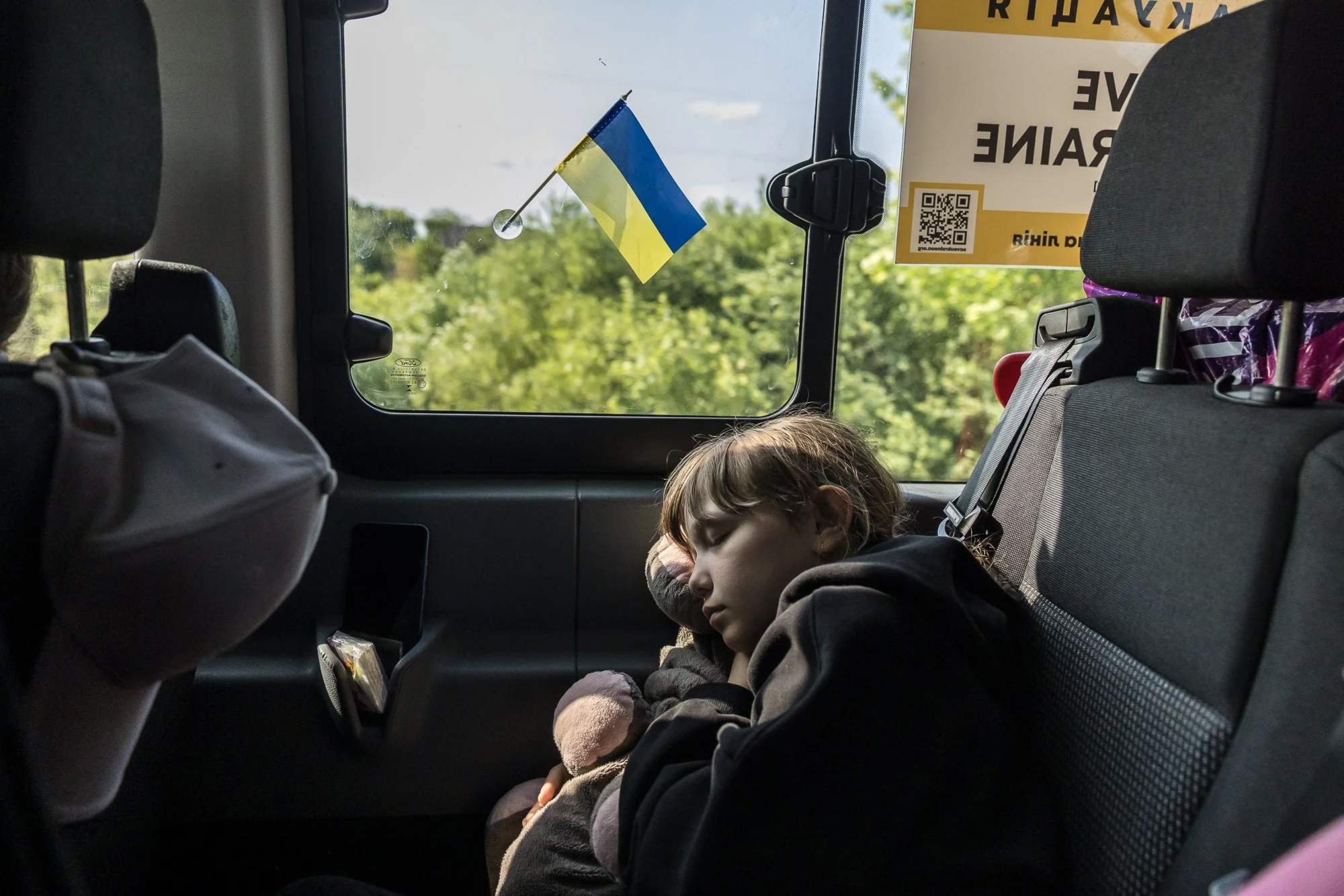
Solomiia had been traveling for a week; she was going to her mother, with the native landscape passing outside the window. The first thing Solomiia asked when she crossed the border was whether she could speak Ukrainian now. The viewer won't see this information in the photograph, but for me, this frame best conveys the atmosphere—when a child, tired from a long journey, finally arrived in Ukraine.
I am a very empathetic person; I feel people and try to convey that feeling in a photograph. Sometimes I succeed. I love quiet moments where emotions emerge, which are actually quite difficult to convey in a photograph.
You said that in Ukraine, a photographer cannot "step out of the context of war." How does this feeling of continuity influence your vision—do you seek calmness in the frame, or, conversely, concentrate on tension?
Ukrainian photographers do not arrive to shoot a report or a project; they live everything alongside their family and friends, being part of this story themselves. Therefore, when I photograph stories, they all seem important to me. When I am offered assignments, it is very difficult for me to say that a story is unimportant. All stories now are somehow connected to the war. Even if a story is not the most dramatic, it is still very important.


In August 2022, during the retreat of his unit near Bakhmut, a mortar shell exploded between him and his close friend Yura, who was killed. Soroka sustained severe injuries to his face and legs and lost sight in both eyes. In September 2023, he married his wife, Vladyslava. Photo by Oksana Parfeniuk
When I meet people, I try to gauge their state and what is currently important to them. I want to learn as much as possible about their lives to understand what is important to convey visually, and what can work for the story and for the viewer.
We constantly live in war, and it is sometimes difficult for us to understand what we ourselves can and want to see, and what can be shown to foreigners. We feel that there is no real choice, and the events of the war must still be photographed. For example, the consequences of the shelling that happens all the time, but which must still be documented. Sometimes it is simply difficult to find the internal resource, both physical and moral, to continue shooting all this.
The war has been going on for a very long time. Posts on Instagram used to get a big reaction, but now only a few dedicated subscribers comment. Nevertheless, I continue to publish images and photograph.
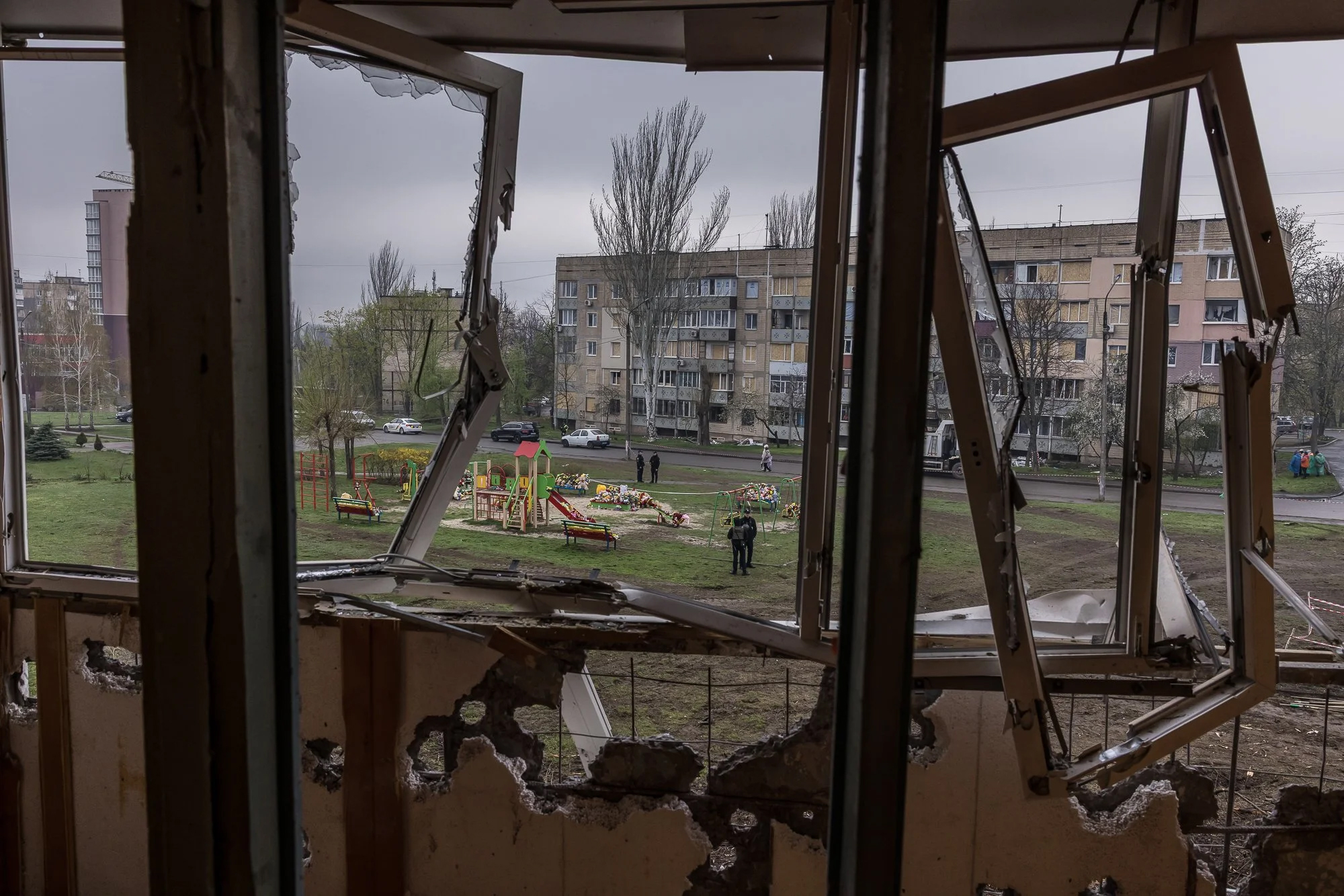
The Russian missile strike on Kryvyi Rih on April 4 claimed the lives of at least 19 people, including 9 children, and injured 79 others. The youngest victim was only three months old. Photo by Oksana Parfeniuk

Both died as a result of a Russian ballistic missile strike that occurred on April 4 in a residential area near a playground. Photo by Oksana Parfeniuk

Local residents—both from surrounding homes and from other parts of the city—continuously came to the playground, bringing flowers, soft toys, sweets, and children’s playthings. Photo by Oksana Parfeniuk
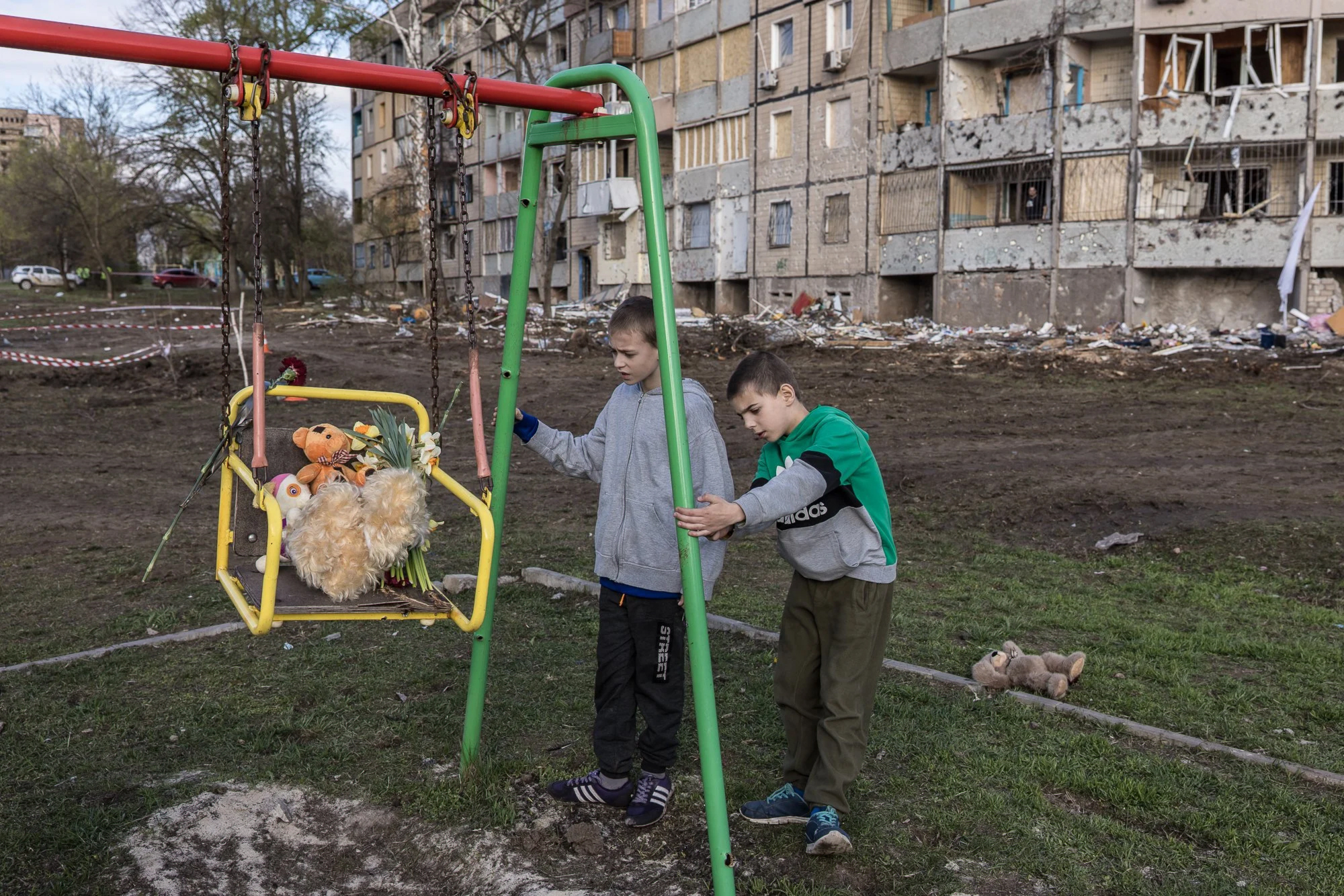
The Russian missile strike on the city of Kryvyi Rih on April 4 claimed the lives of at least 19 people, including 9 children, and injured 79 others. The youngest victim was only three months old. The missile hit a residential area near a playground. Photo by Oksana Parfeniuk
When was the last time you shot just for yourself—without a deadline, without an assignment, simply for pleasure?
I have even forgotten what it's like to just shoot. Sometimes I photograph my child, but it is difficult to call it creative photography. There is simply a need to document these moments because my son is growing up so fast. I often take these shots not even with a camera, but with a phone. Sometimes I feel a certain emotional burnout. When I shoot a story about the war, the importance of any other photography seems to fade away. It shouldn't be like that.
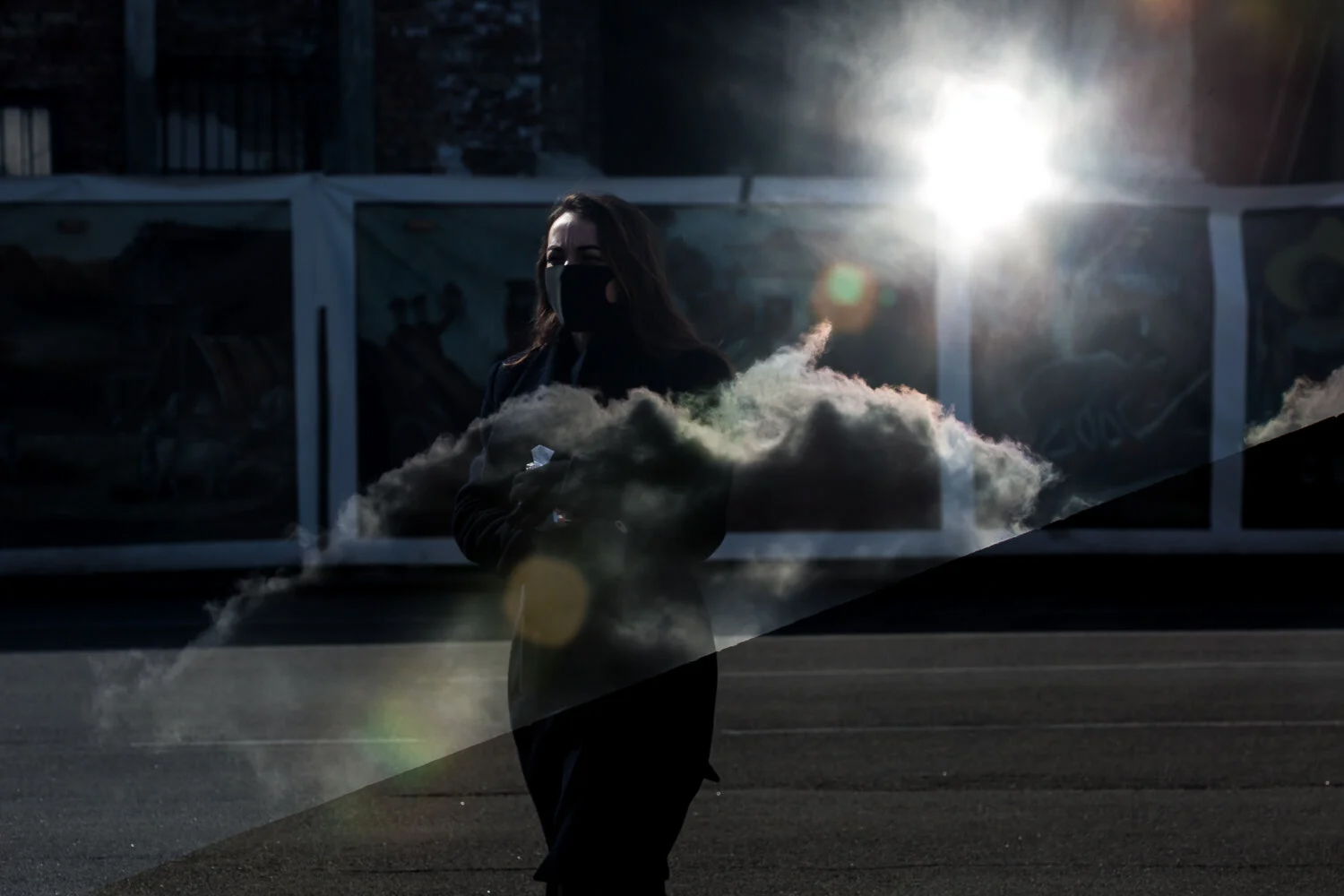
In the project Dreams in the Time of Coronavirus, you photographed the quiet of the quarantine, isolation, and semi-reality. These images resemble memories that lack clear boundaries. Why was it important for you to address the topic of dreams—and did you shoot them as a document, a metaphor, or a personal fixation of the moment?
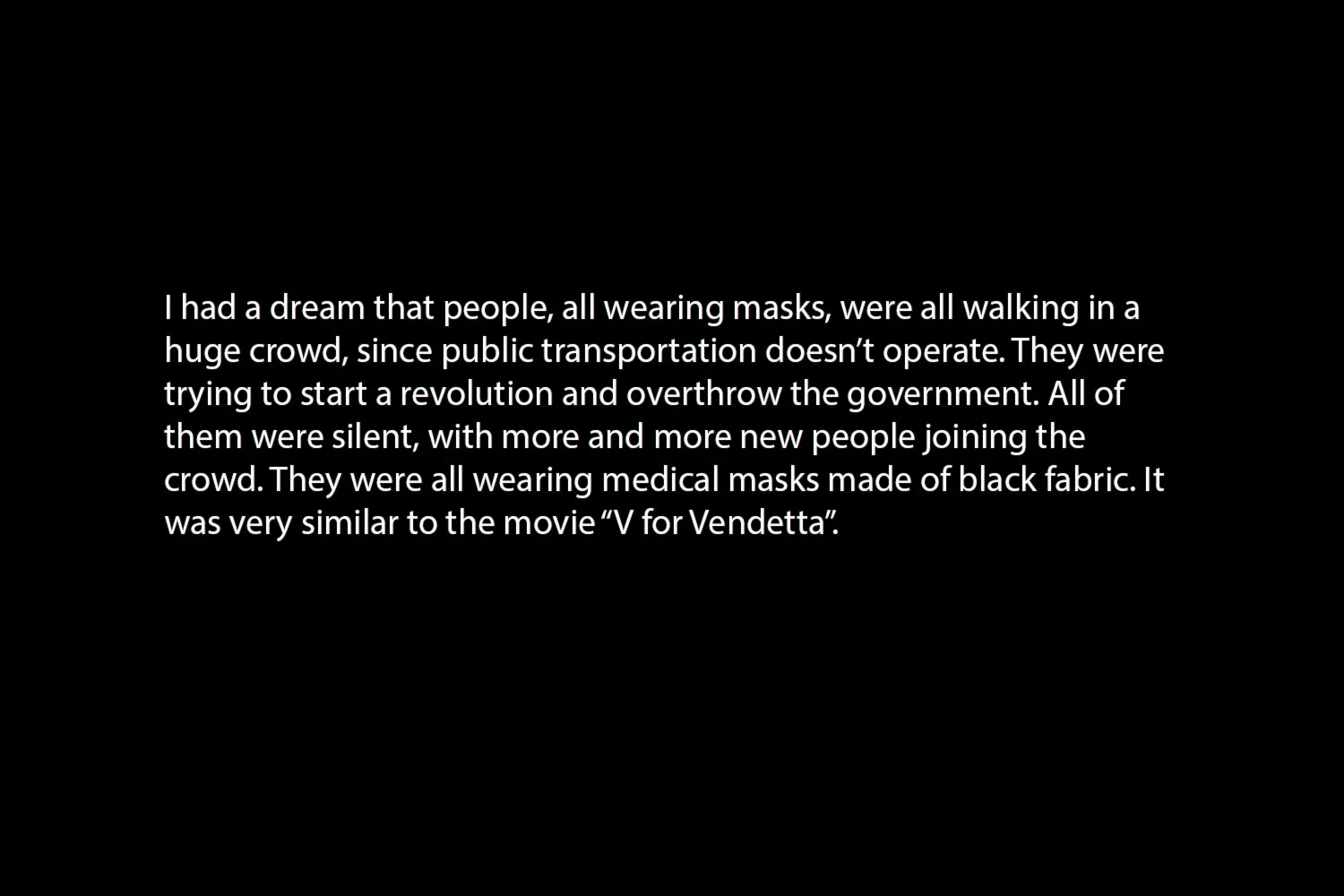
The project Dreams in the Time of Coronavirus is a good illustration of my own projects, in which I am interested in seeking a different visual language. During COVID, we couldn't go anywhere, and I had very strange and frightening dreams. I started thinking about what other people were seeing in their dreams at that time. I reached out via social media asking people to share their dreams with me. I thought about how to visualize these stories and did so using multiple exposures.
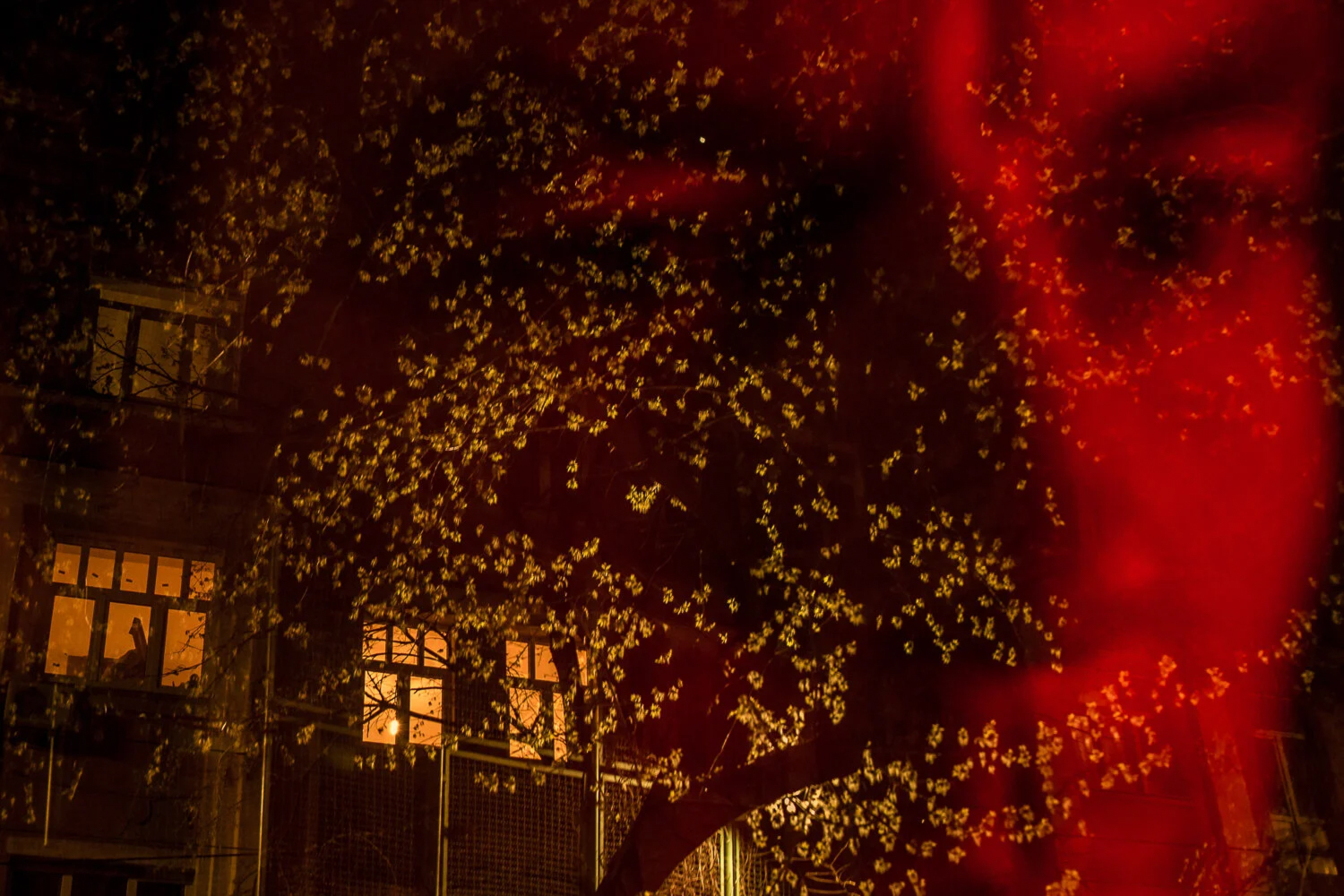
I walked around Podil, where I live, and looked for the best way to juxtapose the shots. I thought about the person's dream and tried to take a shot that would convey its atmosphere and mood. This was also an attempt to find a way to capture the state we were all in at the time—restricted in movement and the ability to communicate with other people. We were all wearing masks and keeping a great distance from one another.
In Goalball: Field of Vision, you work with the theme of sports for the visually impaired—and you do so very subtly, with respect for the experience, and not the "difference." What was the most difficult thing about working with this topic—and what, conversely, provided inspiration?
When Ukraine won third place overall at the Paralympic Games in 2016, I was impressed by the success. I realized that I knew nothing about Ukrainian Paralympians. I started getting interested in our athletes and came across a sport I had never heard of — Goalball. It is a team game for people with visual impairments and the blind. I accidentally found the phone number of a coach in the Zhytomiv region who works with children. She was open to communication, I went to watch a training session, and I became fascinated with this team.


Goalball is important for the participants not only because it offers opportunities to develop in sports but also because it helps them orient themselves in space. Sports are also a community, as people with disabilities often feel lonely. Team members are part of a community, and this is especially important for children.
I continued to photograph the team for two years—traveling to training sessions and talking with the athletes. I wanted to publish the story in foreign media, but they lacked an informational hook. In the end, I published the photo project in Ukraine because few people here know about this sport either. It was important for me to document and publish this story.

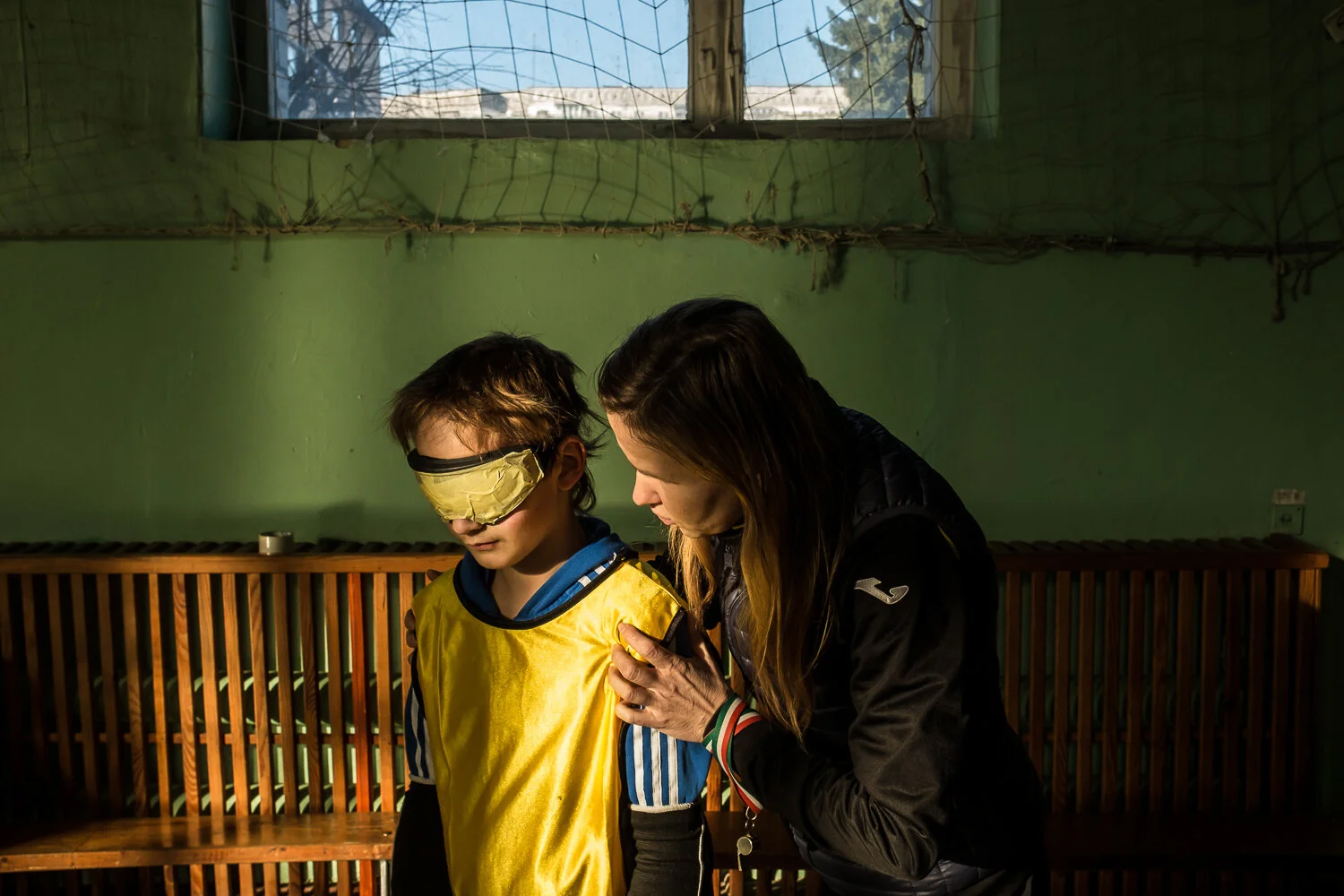
Goalball was created after World War II for the rehabilitation of veterans who had lost their sight. Back in 2016–2017, I was interested in whether any Ukrainian veterans played Goalball. A month ago, I also called the coaches, but they don't work with veterans. They say they have poor funding.
In the project with the wooden box, very intimate things are stored—photos, letters, fragments of life. How do you work with such materials so as not to "appropriate" them, but simply allow them to be?
Working with archival photographs was one of my first attempts to create a project about internally displaced persons from the Luhansk region. They settled in a sanatorium next to the house where my mother grew up. We often visit this house in the summer, and I have many special childhood memories associated with it. At that time, I thought a lot about displacement and the forced loss of home. I understood that people had lost places they also had many memories connected to. I tried to process this and went to meet a family of two sisters. They immediately became interested in the idea of doing a joint project.
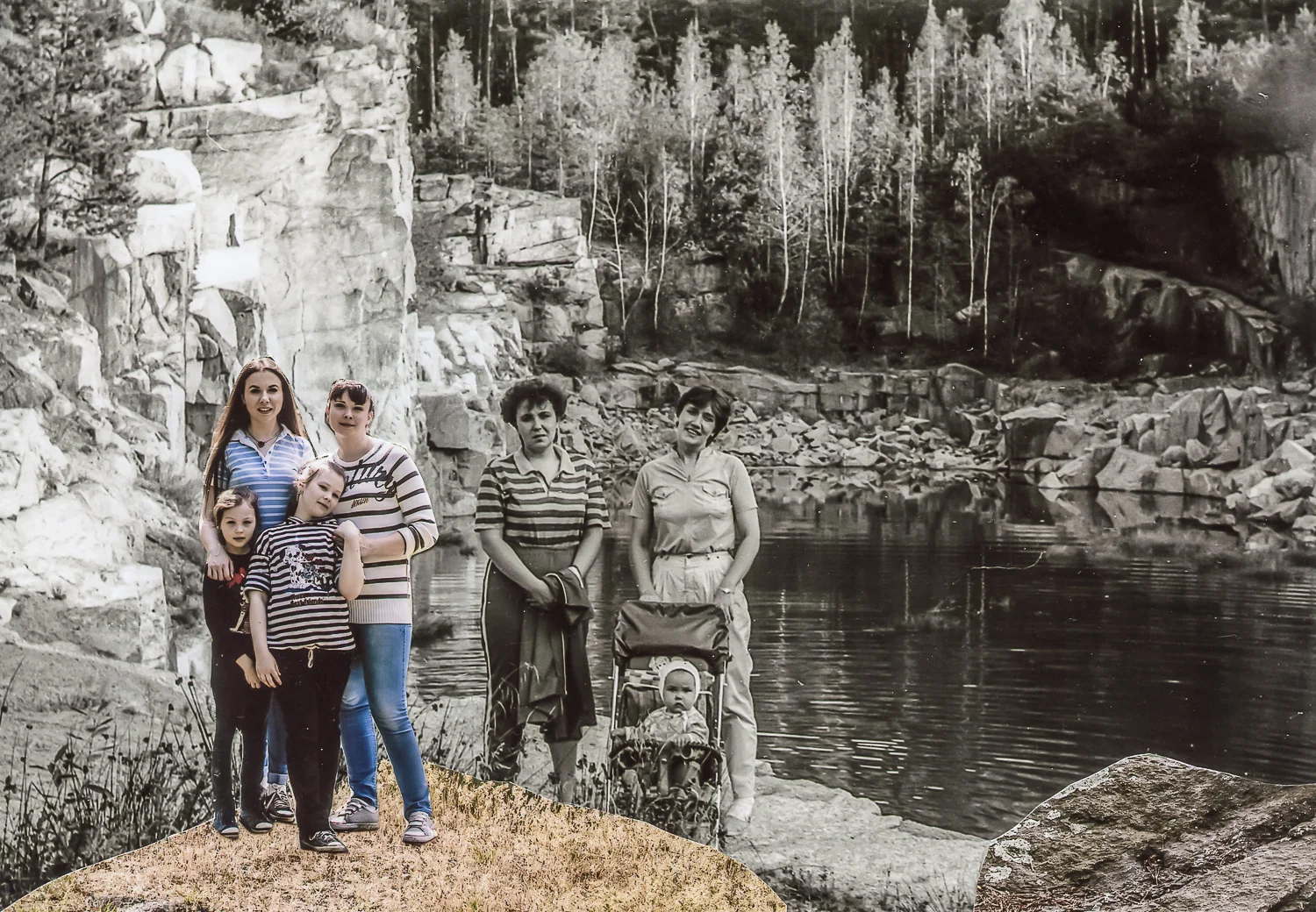
I photographed the girls in the places where my parents once photographed me, and I made a series of collages: I cut out new photos and inserted them into my old shots. For me, this was an opportunity to get to know this family and show them interesting places, so that they might become a little more familiar to them. The family showed me their old photographs that they managed to take with them. Most of the albums remained in the Luhansk region.
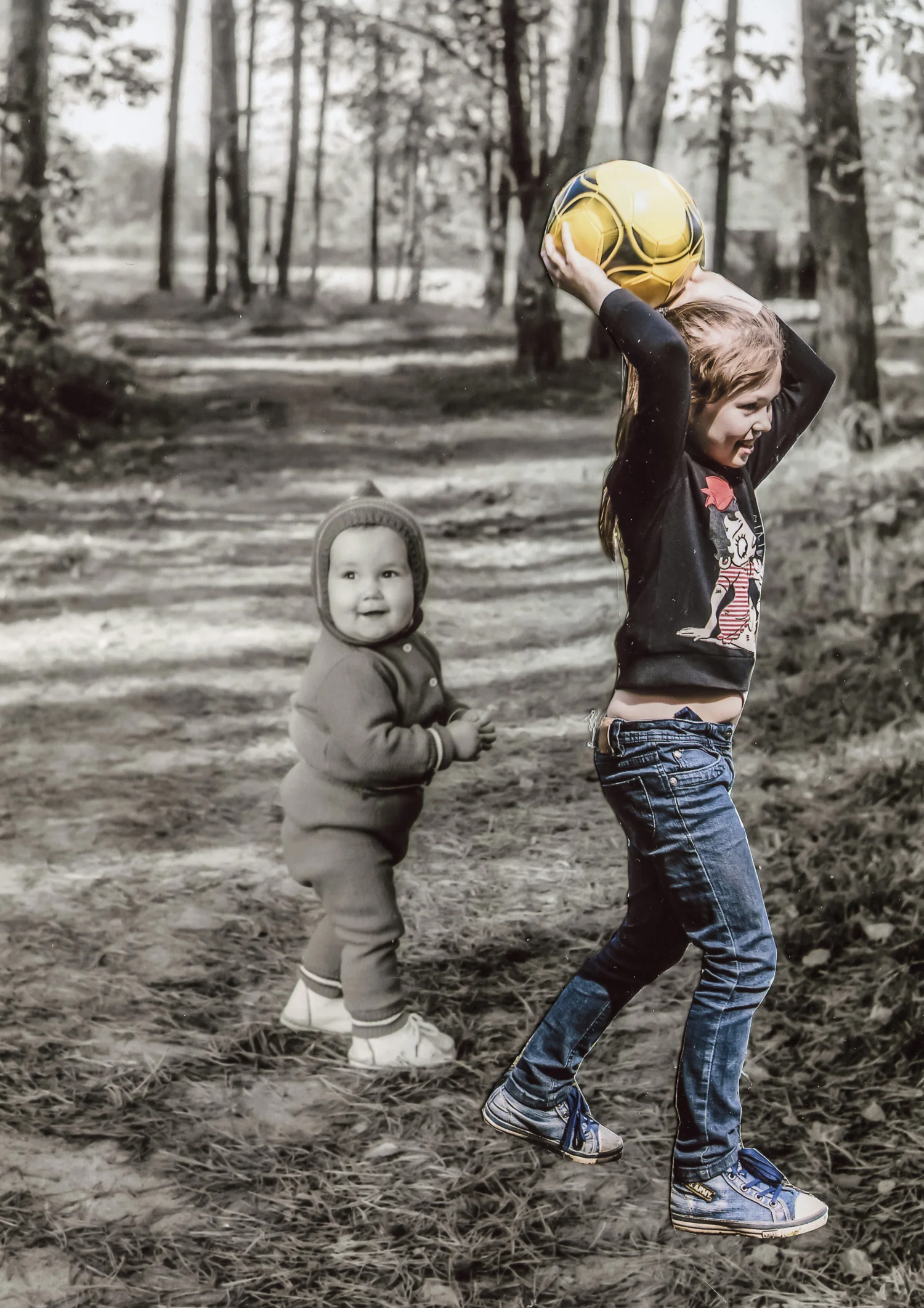

I don't know how successful the photo project turned out to be, but for me, the most valuable outcome was getting to know and connecting with this family. I regret not starting to shoot a documentary project about them because they have a very interesting story. One of the sisters later went to study and worked in the police, moving to Kyiv. The other sister, who already had children, remained in Zhytomyr, and after the full-scale invasion, she went abroad. Last summer, the sister who moved to Kyiv, along with her father, died from a missile that hit their house. It was a real shock for me. I went to the funeral, not to photograph, but to say goodbye.
I built very close relationships with this family; they are very open to communication. Through the story of this family, one can tell everything that has happened with Ukraine over the last ten years. It is very difficult for me to look at this project now; I feel deeply for this family.
What is your attitude toward the idea of an archive—in documentary photography, in life, and in memory?
Speaking of the family archive, I remember from childhood that my parents took many photos with a film camera. It was the 90s, and we lived in a dormitory, but my parents found the time to print photos in a small closet. At my parents' house, there is a box with a bunch of photos that I still haven't scanned. Moreover, our family has preserved a lot of photographs of grandparents, so we have quite a large archive.
I often loved looking through these photos when I was little. Photography has always been important in our family. It is the preservation of memory. In addition, many of my relatives wrote memoirs and personal recollections. When I take photos now, I also try to organize my archives.
I think a lot now about how best to preserve archives. When a missile hit very close to our house, I realized that I should take some of the hard drives with photos to my sister. Today, for all of us, archives are not only a way to preserve memory but also to document crimes. Perhaps we ourselves do not yet fully realize how important it was to be in a certain place and document the events.
I recall that in the first weeks after the start of the full-scale invasion, it was physically painful for me that I hadn't taken photographs of life on the streets, for instance, of Mariupol or other cities that no longer exist today. Documenting various, even seemingly insignificant, events is important, especially in a country at war. Unfortunately, the importance of preservation and fixation can only be realized over time. I have many stories that I didn't shoot, and I deeply regret it.
How do you see Ukrainian photography now—not as a market or a trend, but as a community?
There are many young Ukrainian photographers now. Recently, my friend Emine Ziyatdin organized a workshop, and cool young Ukrainian photographers, whom I didn't know and whose work was interesting to see, attended it.
Ukrainian photographers today are a community that lives through special moments that are sometimes even difficult to explain to photographers from abroad. The Ukrainian photography community is holding up well and doing very, very much, and sometimes this is insufficiently appreciated abroad. I remember the first six months of the full-scale Russian invasion, when there were many requests for exhibitions and publications; everyone wanted to showcase Ukrainian photographers. Now there is much less of that. On the other hand, we work a lot within the country. UAPP does a lot for the community, and Sasha Maslov and Katia Radchenko are working on the Ukrainian House of Photography. Many important events are happening that bring our community together. Personally, it is very important for me to listen to colleagues and share my own experience.
You work as a freelancer for major foreign media outlets. How does this coexist with your personal series? Do you manage to find a balance?
Over the past few years, I have primarily collaborated with media outlets, and I don't have time left for personal projects. It is more important for me to spend time with my child than to dedicate it to my own photo project. I couldn't find the time or sufficient motivation for personal projects.
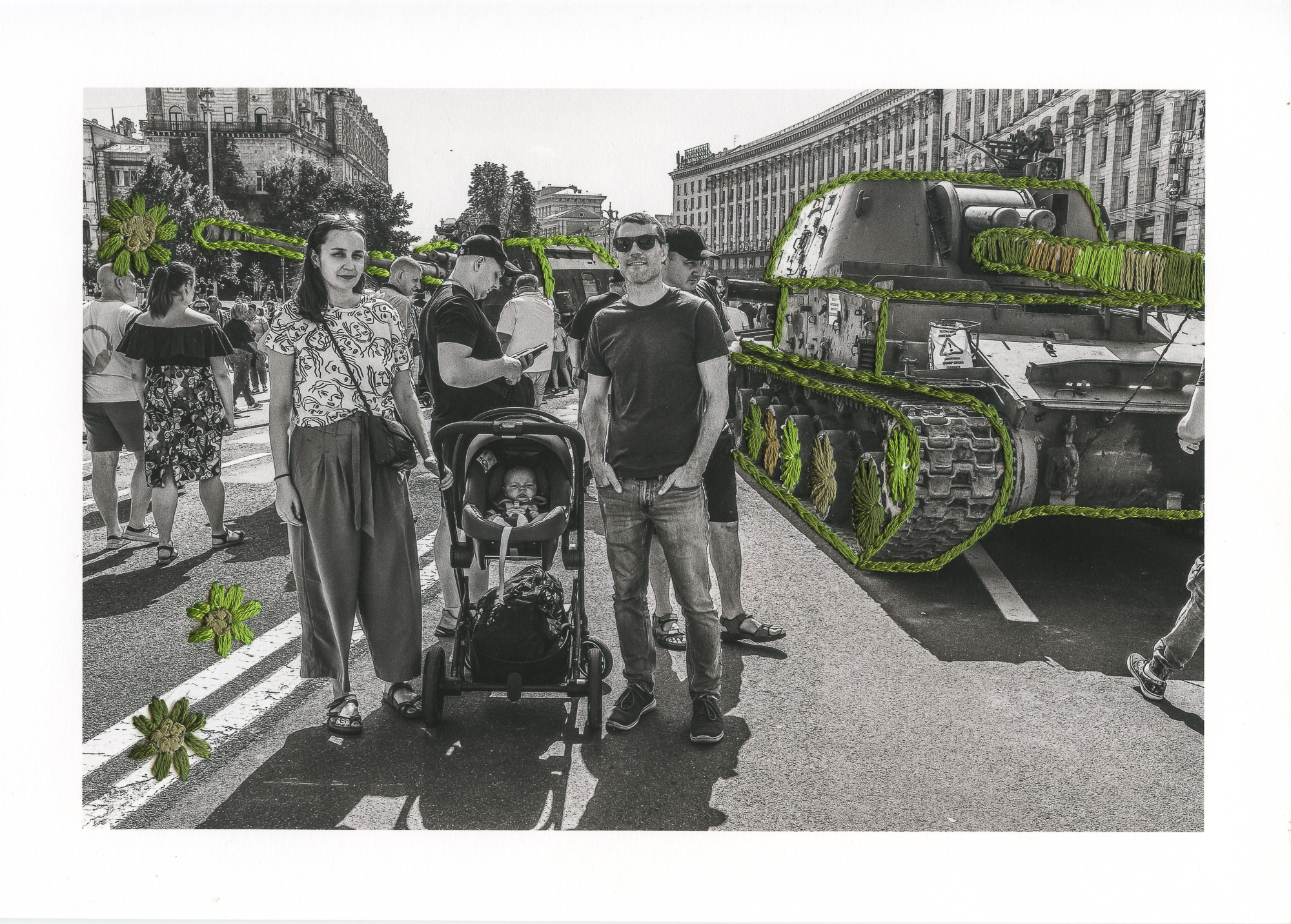
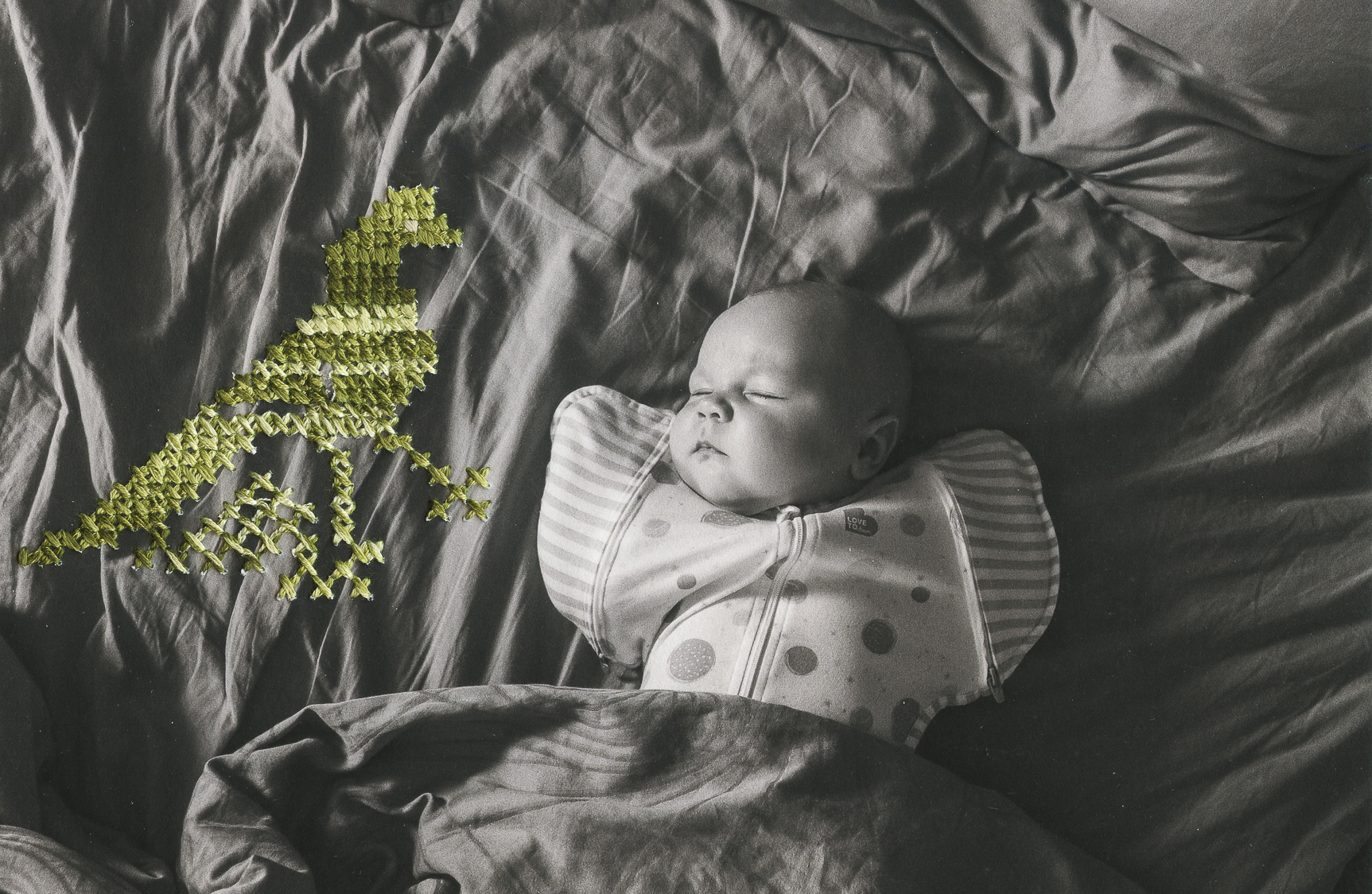
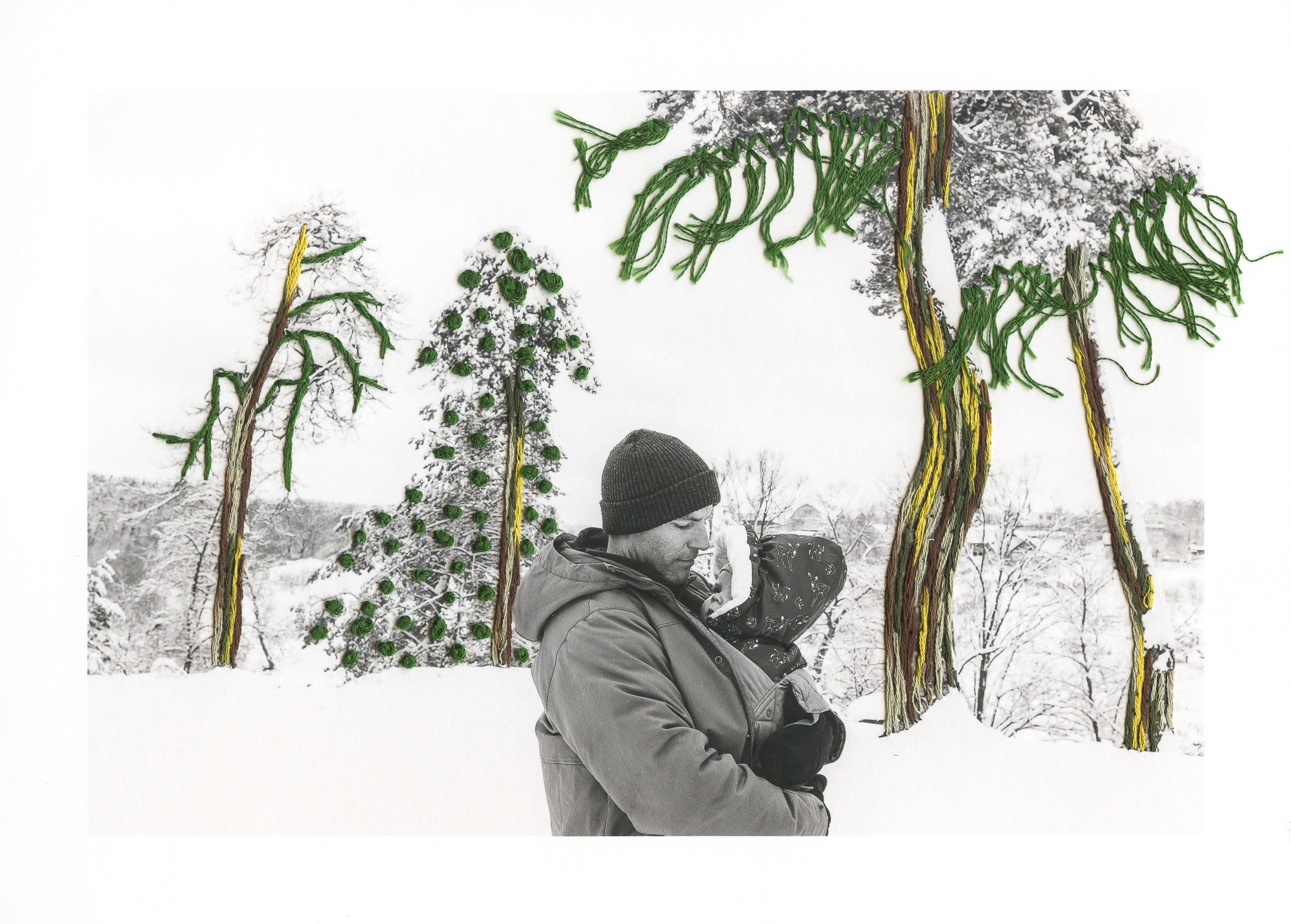
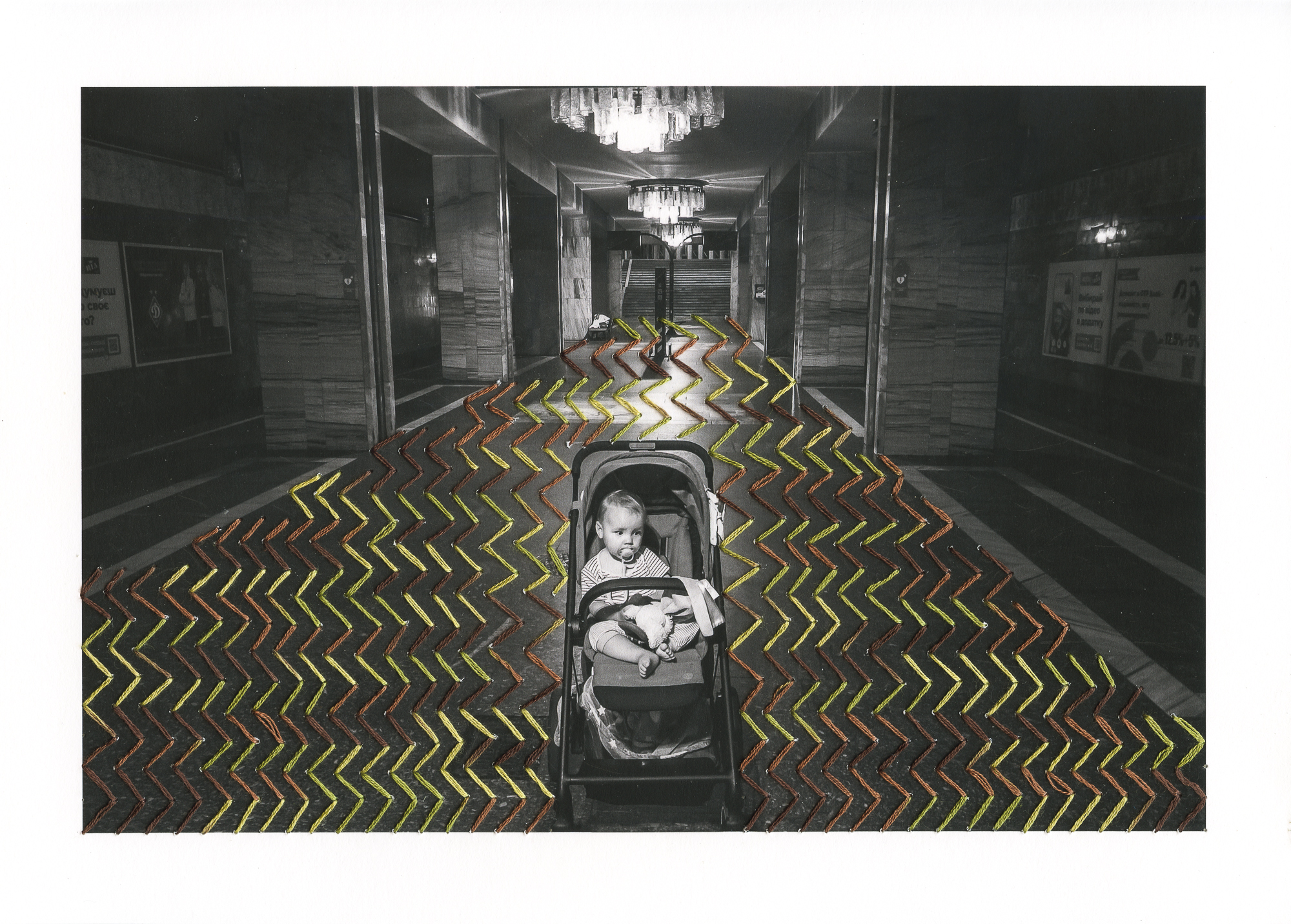
I thought a lot about the family photos I took with my child and husband. In most of the photographs, it is unclear that my son is growing up in a country at war. However, these photos were taken at exactly this time and are also stored in memory this way. I came up with the idea of embroidering these photographs with camouflage-colored threads to show that war permeates our entire lives. This is a very personal project. I didn't even plan to show it to anyone; it was rather my attempt to do something creative, reflect, and distract myself. However, it happened that ICP in New York (International Center of Photography — ed. note) was planning an exhibition for which they were looking for creative projects, and they liked my embroidery. I have only made five photographs so far, but I will try to make more.
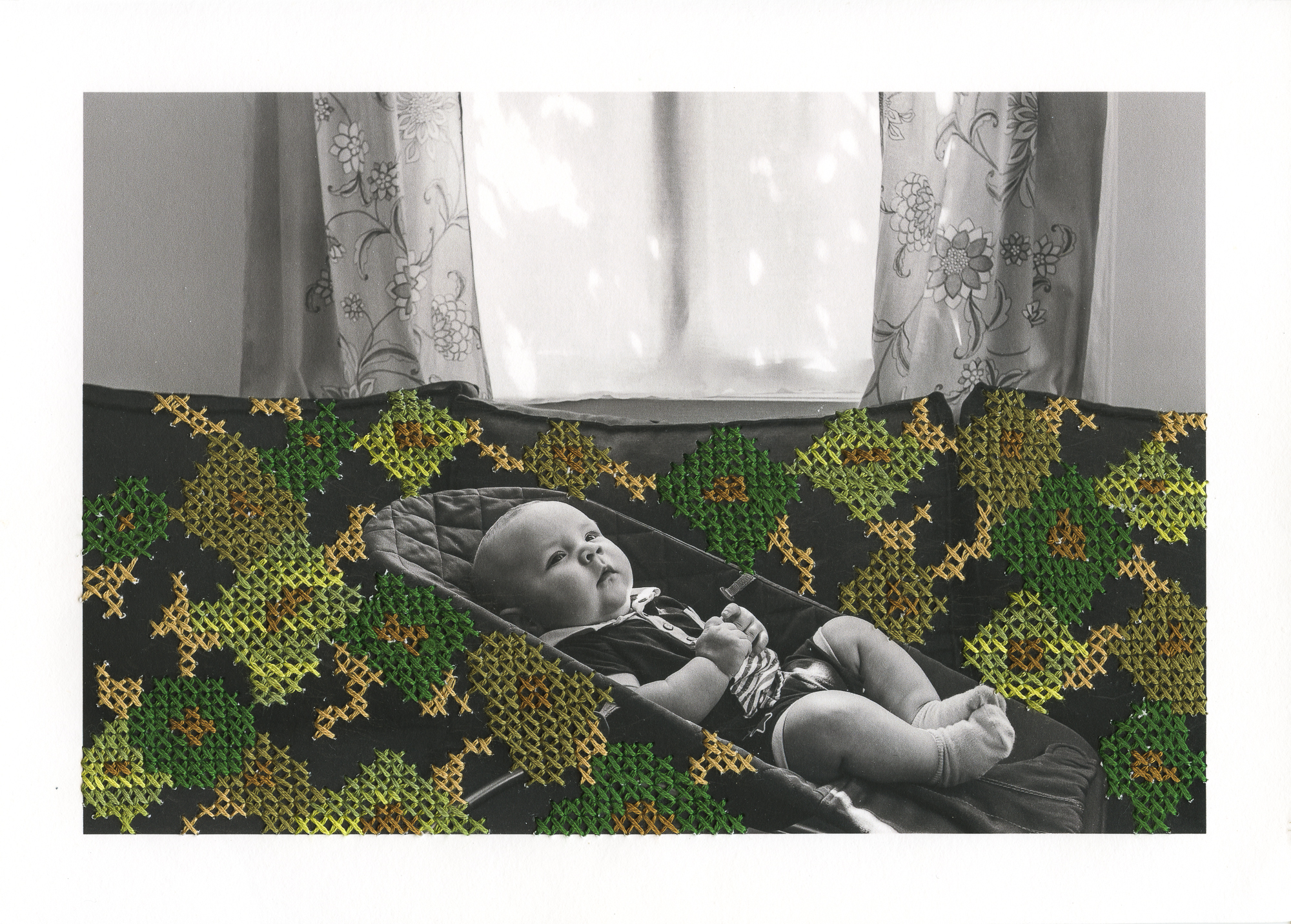
I believe that the experience of living in Ukraine and all the events we are going through, even when we work only with media, forms the necessary basis for future personal photo projects. I do not consider the time I dedicated exclusively to assignments to be lost.
What do you think is worth documenting today in the context of the war? What themes are important not to lose?
Of course, it is important to shoot the front line, but in our circumstances, this is becoming increasingly difficult. However, outside the front line, an incredible number of important themes remain. Sometimes, through collaboration with foreign media, I look at themes through their perception. In fact, all themes are important. I recently worked on a story about veterans with facial injuries. We took portraits and observed how operations take place. However, these soldiers have actually undergone not just one, but 20 or 30 operations. These injuries affect their family life and life in society. This means one can delve much deeper into the topic and shoot an important story.

Mykyta was wounded in an accident near the front line during the offensive in the direction of Izium in September 2022. His car was destroyed, and doctors suspect the vehicle was struck by an explosive device. Photo by Oksana Parfeniuk
It seems to me that such stories are lacking. Perhaps it is worth following the story of one family instead of doing superficial coverage of ten families. For example, there are many children now who have suffered complex injuries and amputations. One could follow how this child grows up, what happens in their life, stay close to them for a long time, and create a project about it. I am personally always impressed by such deep stories, where the photographer spends a lot of time with their subjects. However, this requires a lot of internal resources.
On the other hand, so much is happening here right now that there simply aren't enough photographers. It is very sad when so many different events—both pleasant and tragic—happen to people, and they might remain untold.
Oksana Parfeniuk — an independent photographer living and working in Kyiv, where she explores the manifestations of human resilience and dignity among people facing hardship. Her primary interest lies in exploring creative approaches in documentary photography.In addition to her personal projects, Oksana has collaborated with and published her work in The Washington Post, The New York Times, Time, Le Monde, Der Spiegel, NBC News, BuzzFeed News, The Wall Street Journal, Al Jazeera English, Rest of World, U.S. News & World Report, Newsweek, MSF Doctors Without Borders, UN Women, UNHCR, L'Oeil de la Photographie, and others.
Oksana was an instructor at a National Geographic photo camp in Moldova in May 2023. She is a member of Women Photograph and The Journal Collective.
Oksana holds a Master’s degree in French/Francophone Civilization, Culture, and Society from Middlebury College, where she was awarded the Kathryn Davis Fellowship for Peace. The author is fluent in English, French, and Ukrainian.
Personal Website and Instagram of the photographer
The material was prepared by:
Topic Researcher, Text Author: Katia Moskalyuk
Visual Editor: Olga Kovalova
Literary Editor: Yuliia Futei













.jpg)


