
%20(1).png)
Vladyslav Krasnoshchok was born and lives in Kharkiv. From 1997 to 2002, he studied at the Faculty of Dentistry and worked for over ten years at an emergency hospital. However, photography became his way of seeing and speaking about the world. Since 2010, he has been a member of the art group "Shylo," known for its radical visual gestures. Vladyslav Krasnoshchok expands the tradition of Kharkiv photography, working with archives, hand-coloring, collages, and sculptural objects. Since the first days of the full-scale Russian invasion of Ukraine, he has been documenting the war and capturing its events on black-and-white film.
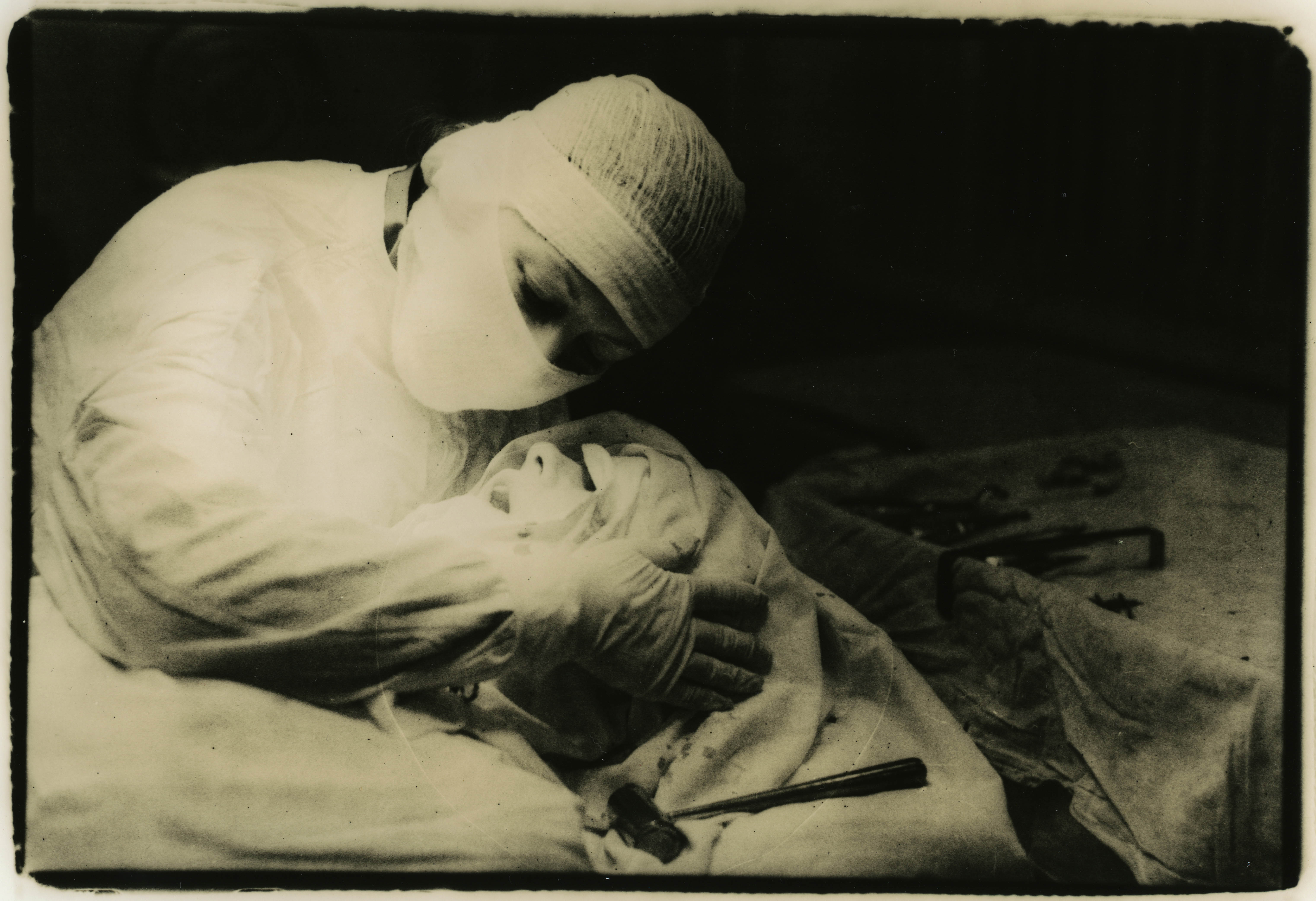
Dream and War
"Vlad, a creative person from Kharkiv. In addition to other visual practices, I work with photography," — is how the artist Vladyslav Krasnoshchok introduces himself.
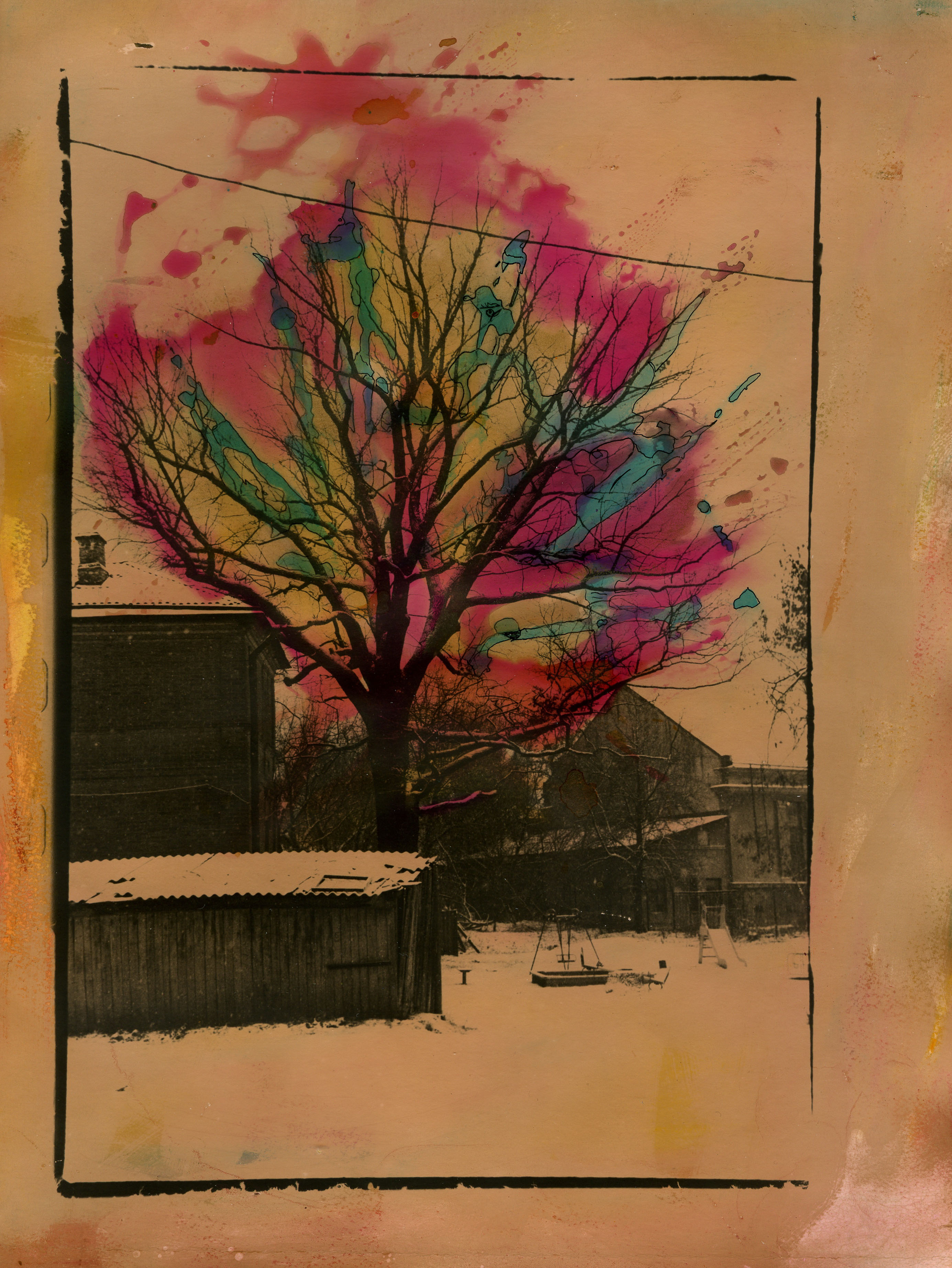
He compares his artistic work to a tree, where each branch represents a separate creative direction.
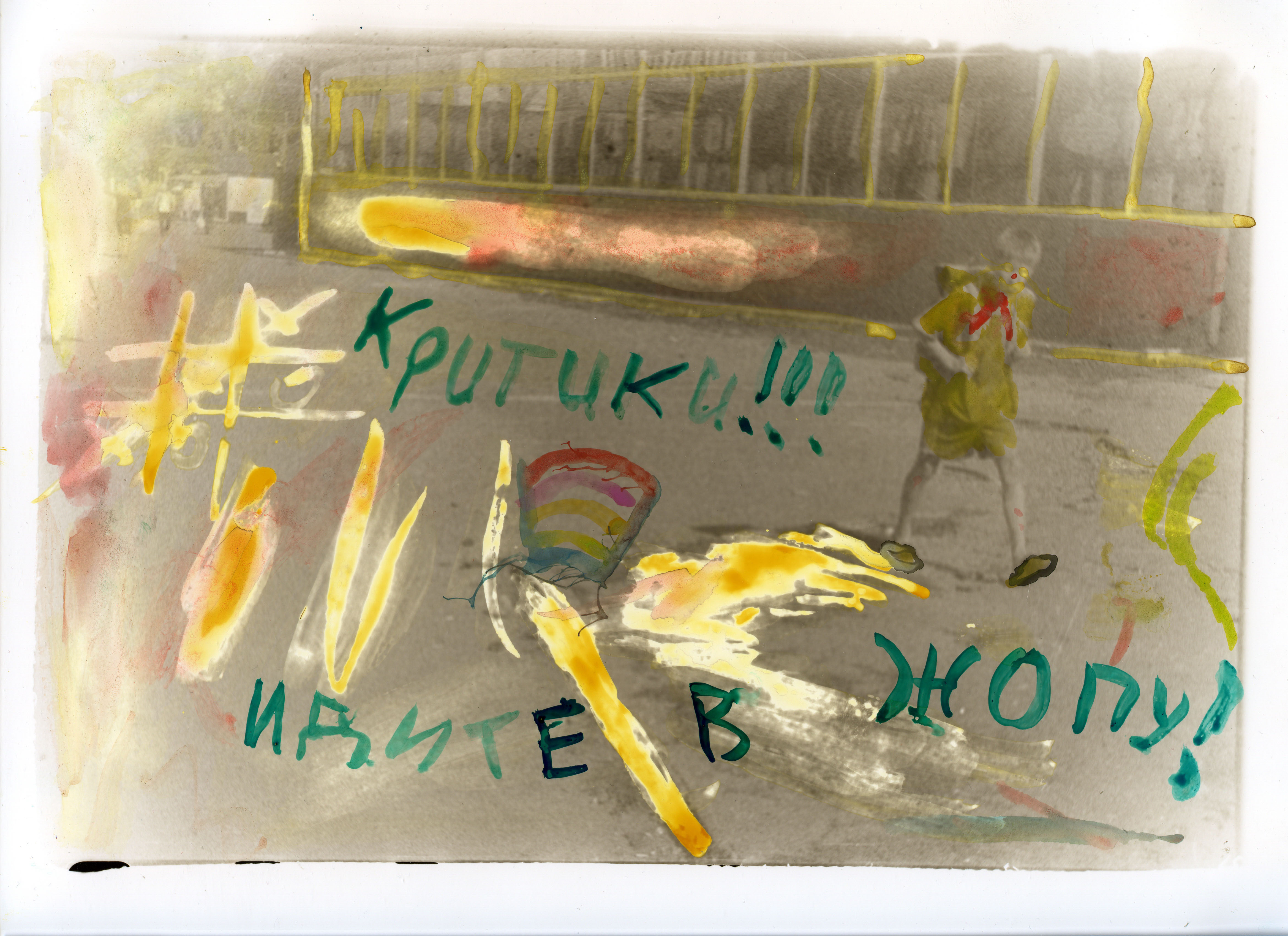
"The roots are Kharkiv and its environment. The trunk is photography, because that's where I started. Then the tree grew, and new branches appeared. I photographed, then hand-colored my pictures, bought photographs at flea markets and colored them," — Vladyslav Krasnoshchok recounts. — "I worked with trimmings from my photographs, making collages, assemblages—three-dimensional collages. Later, graphics, painting, and much more appeared."

When one branch of creativity becomes uninteresting to Vladyslav Krasnoshchok, he switches to another, or "grows" a new one.
"Before the full-scale war, I had a long break from photography. When the Russian invasion began, I realized I needed to photograph again," — says Vladyslav Krasnoshchok. — "Photographing war was a dream of mine. I just never thought the war would come to our country."
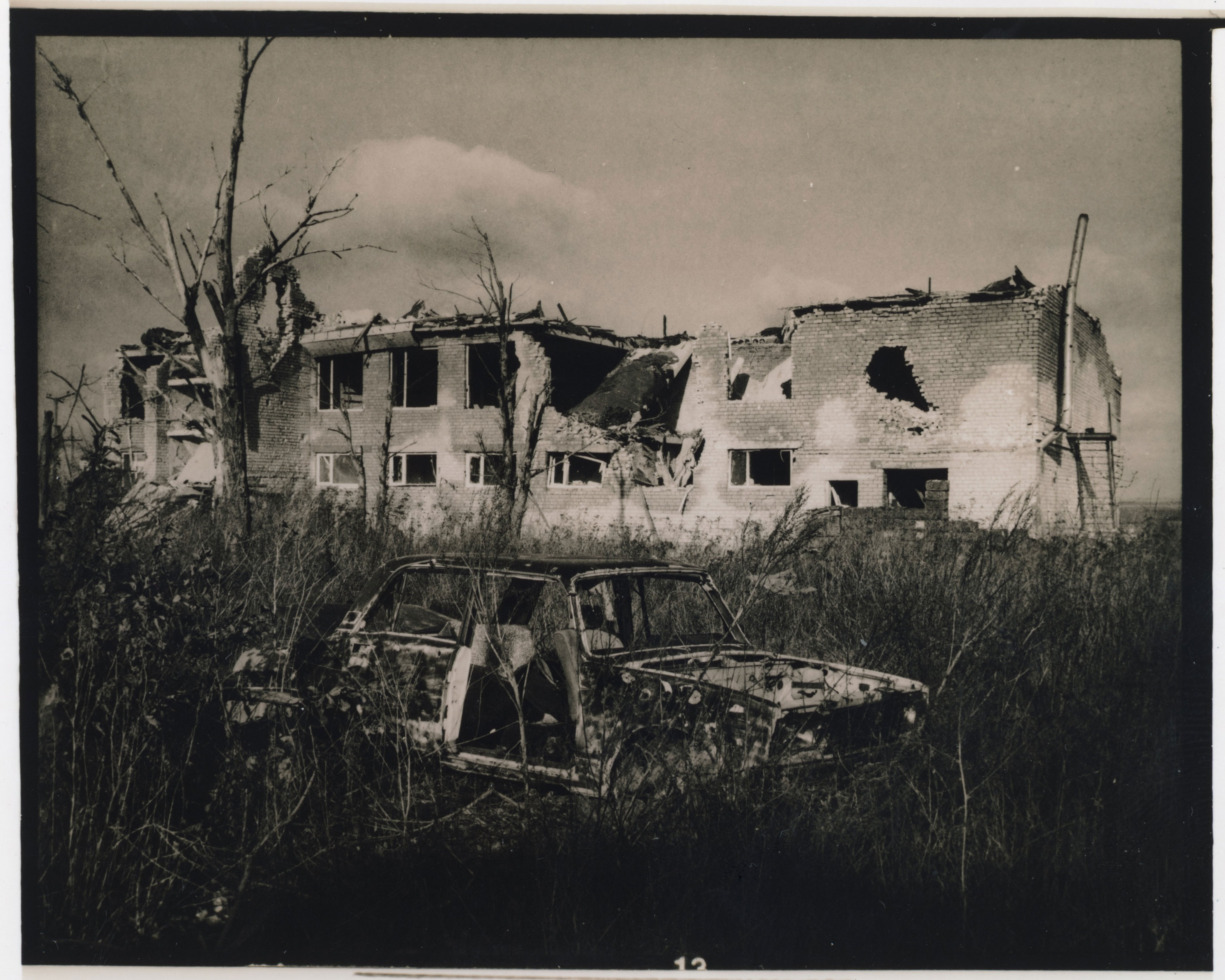
Vladyslav Krasnoshchok became interested in photography more than fifteen years ago. Initially, he showcased his work on various photo websites.
"I was lucky to join a photo website that had harsh criticism. When I received a lot of negative comments, I would go to the library and read books on photography," — Vladyslav Krasnoshchok recalls.
In 2010, together with other Kharkiv photographers, he established the group "Shylo." In 2018, Serhiy Lebedynskyi, an active member of "Shylo," founded the Museum of the Kharkiv School of Photography.
"The Kharkiv School of Photography is a great legacy. It is gratifying that my native city has such a concentration of outstanding photographers who created highly aesthetic, beautiful, yet aggressive photography," — the artist states.

Vladyslav Krasnoshchok created a museum in his childhood home, where he exhibits his numerous works.
"I have a philosophy that there are no defects. I try to bring any image to a state where it starts working for the viewer. I work with many techniques, I throw nothing away, and as a result, you have a home-museum with all walls covered in picture-tattoos," — Vladyslav Krasnoshchok says with a smile.
Honesty and Photography
War photography currently contains many repetitions and clichés.
"A new frame is when you find yourself in an environment you haven't been to before, and you shoot something completely unknown to yourself. When you have a new subject, you see a situation and start working with it. If you can get a new image out of that situation, that will be a new frame," — says Vladyslav Krasnoshchok.
He has conditionally divided the war into separate subjects, on which he works sequentially.
"I slowly put the puzzle together, and if I get 70–80 percent of the planned shots, that’s already a decent result," — says Vladyslav Krasnoshchok.
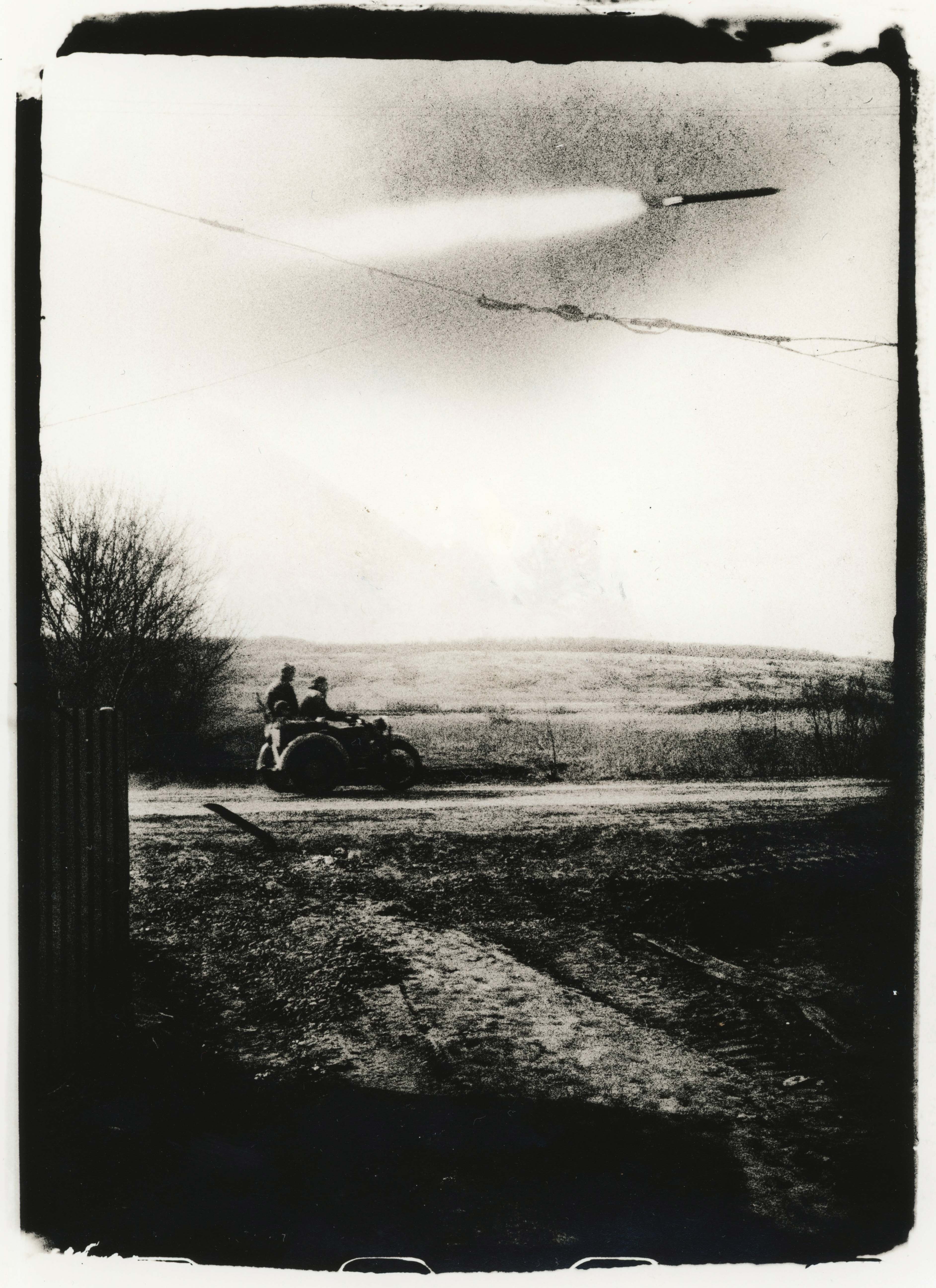
The photographer emphasizes that all his pictures are honest, made without any additional manipulations.
"I have one photograph where I intervened. I combined two photographs, just as war photographer Dmitry Baltermants once added a sky to his photo," — Vladyslav Krasnoshchok explains. — "I went to film the work of Grads in the Donetsk region. I come back to Kharkiv, take out my backpack, the camera falls, and the frame with the missile is overexposed. I had another frame from the Lyman direction, where a motorcyclist is riding through a village. I combined the missile that remained from the previous shot with the motorcycle."
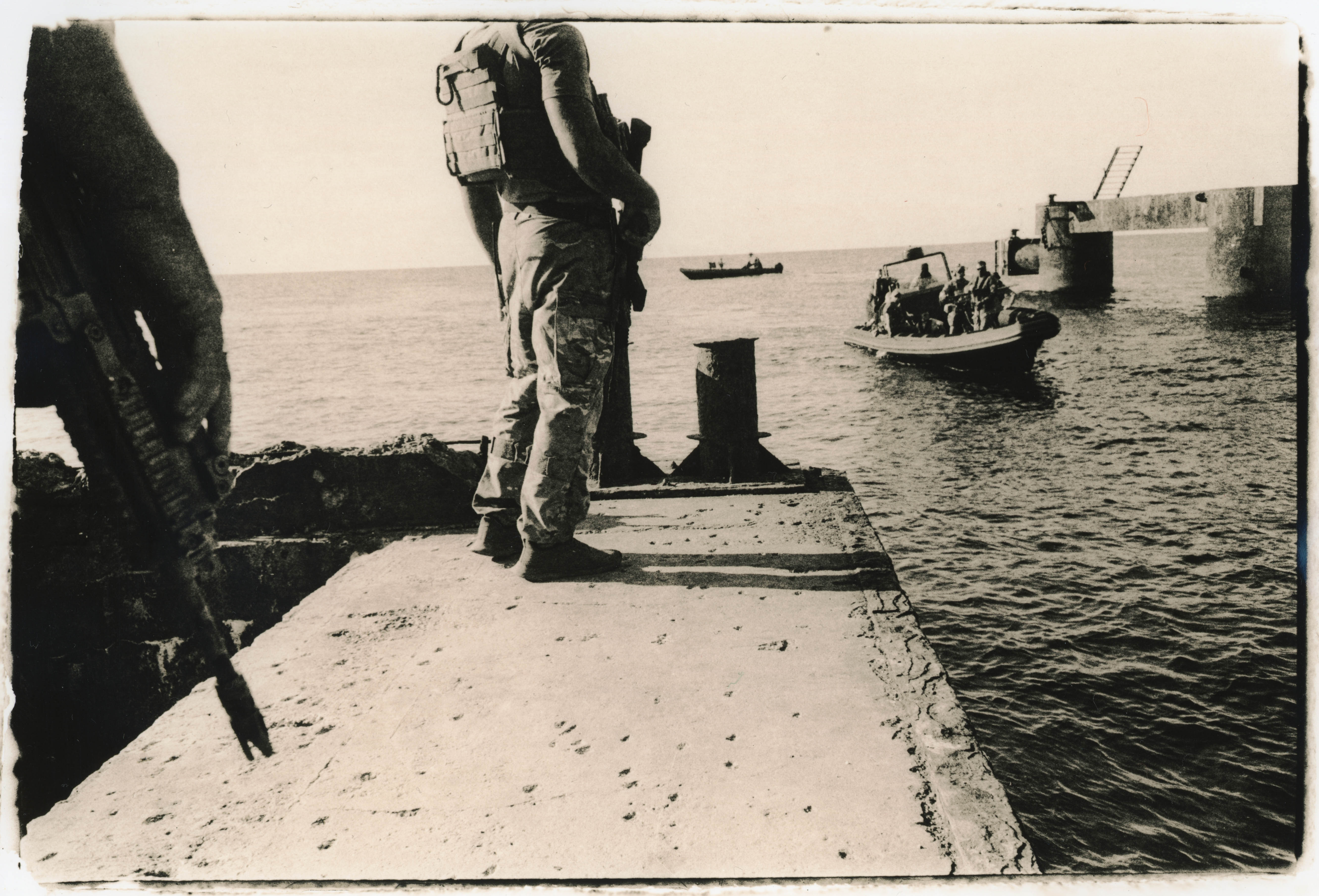
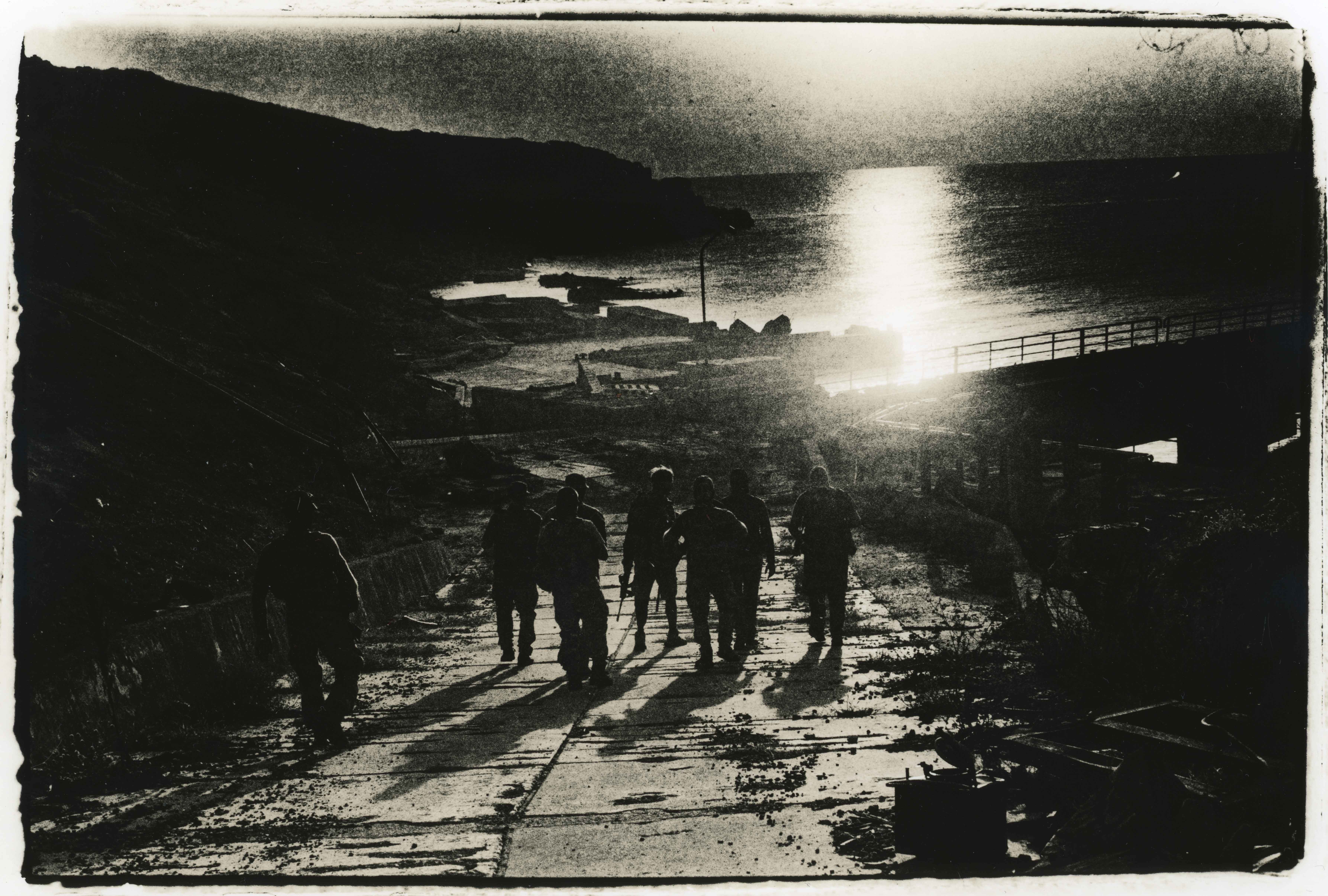
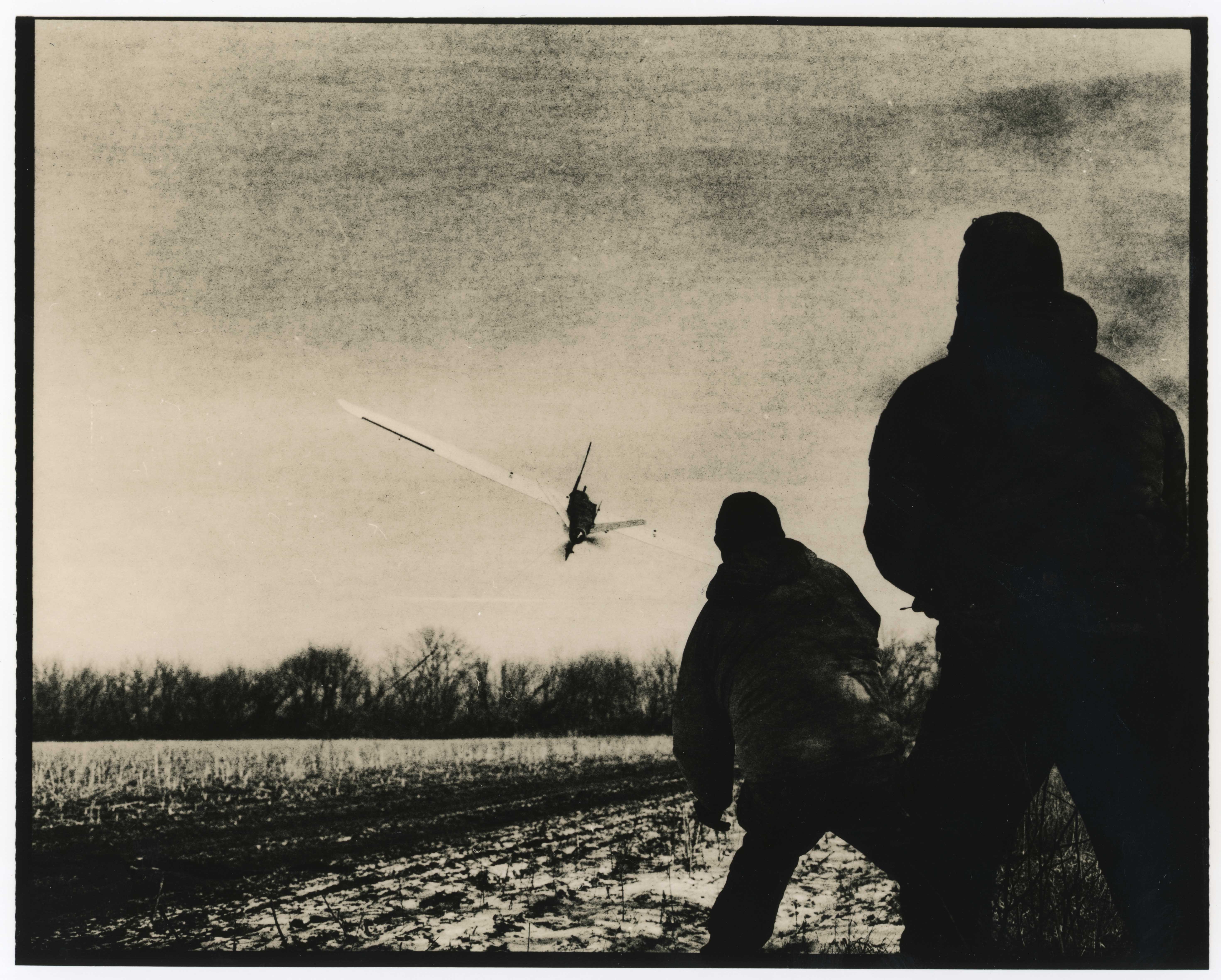
Vladyslav Krasnoshchok’s post-processing of photographs resembles the work of contemporary photographers in Lightroom, with the only difference being that all processes take place in a darkroom. He uses old paper and the lith printing technique, which allows for a unique tonal range, high contrast, pronounced grain, and more.
"I have been working with lith printing for more than fifteen years and I completely control this process. Now it's easy for me, and I can print 10–15 images in three or four hours," — the photographer says.
Form and Depth
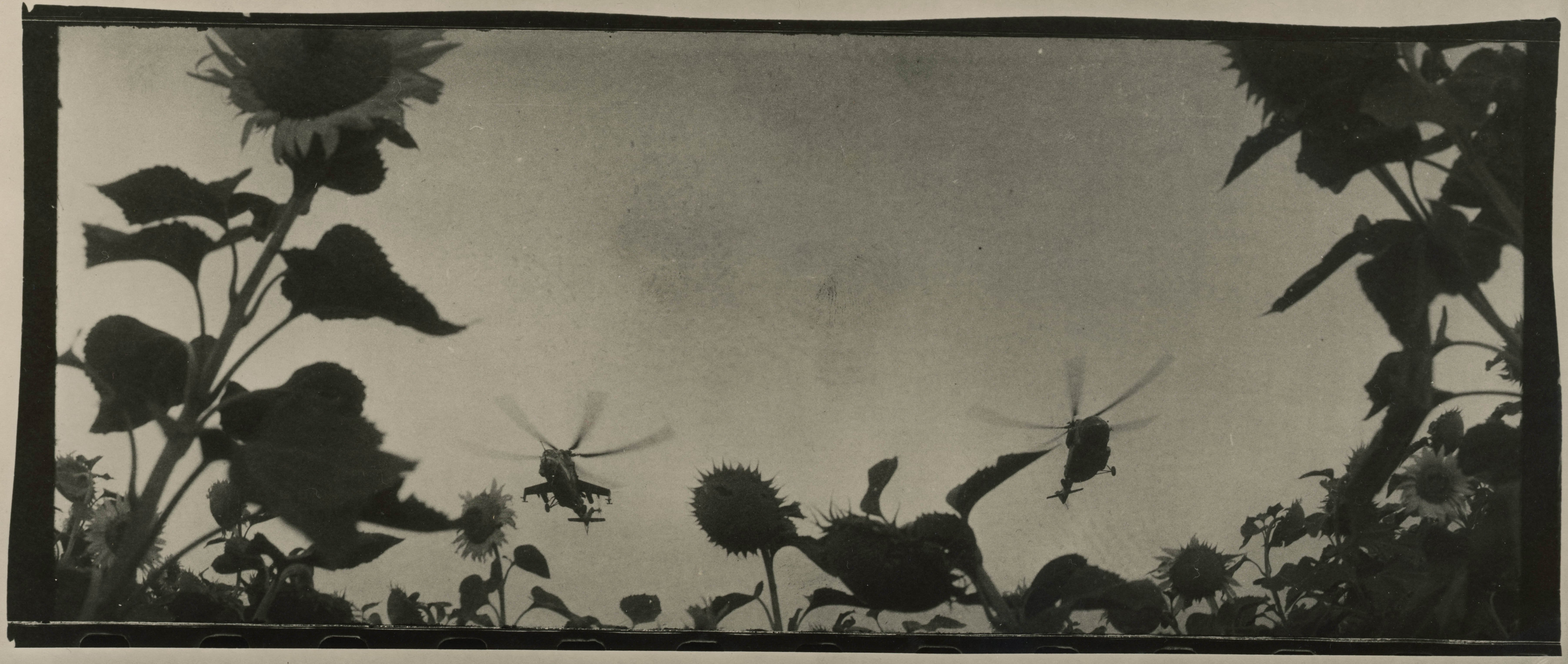
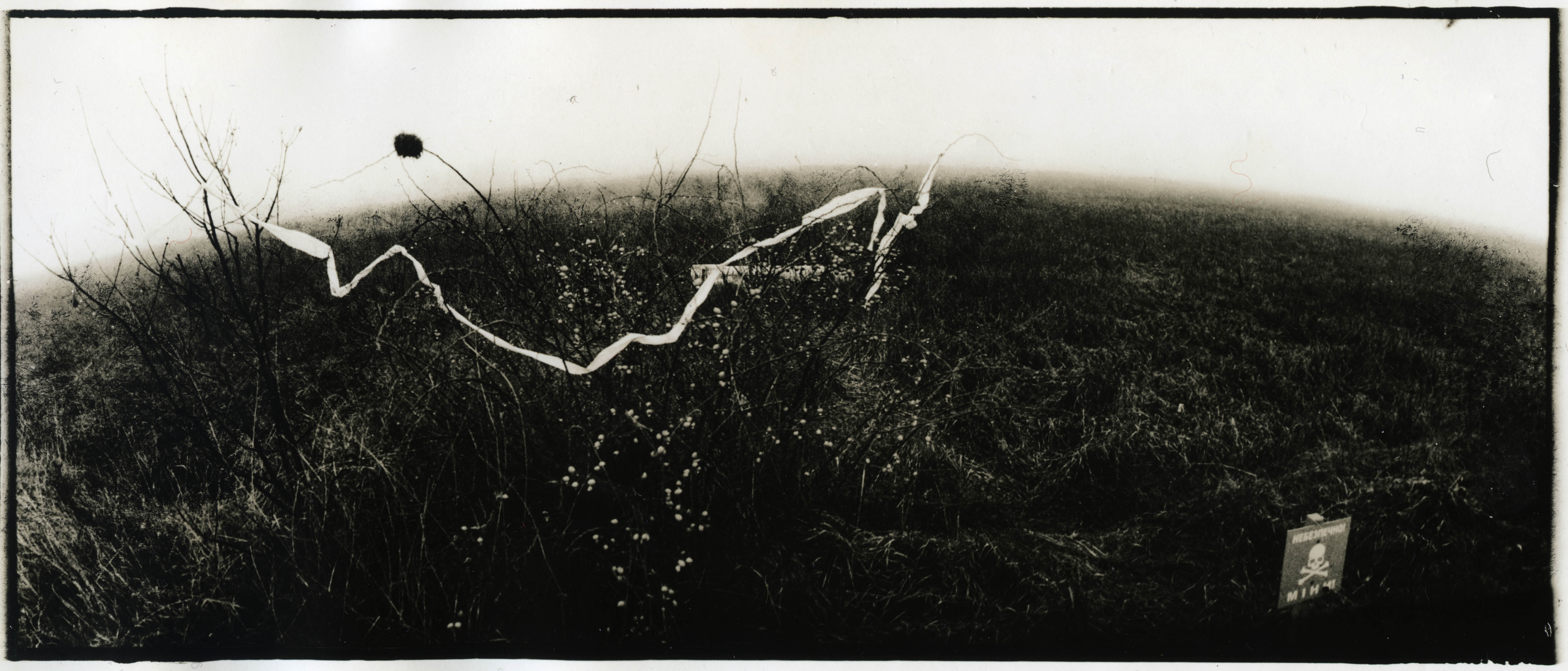
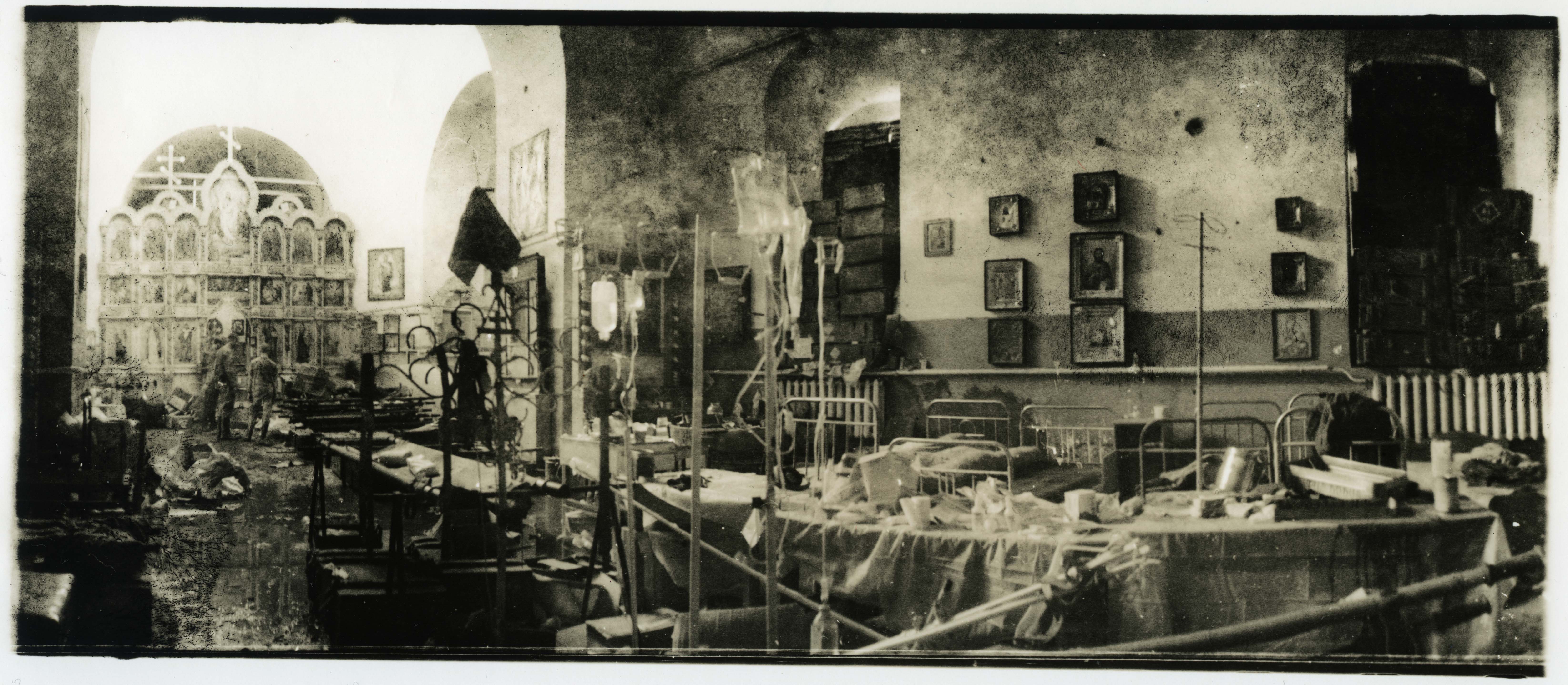
"When I shoot the war, I always think about the image. I pay attention to the form," — says Vladyslav Krasnoshchok. — "I believe that if you capture the form, it can transform into an image. An image is a beautiful, static photograph."
Vladyslav says he does not need to pitch topics to various media or sell shots to news agencies.
"I take all the pictures for myself, building up my treasury of photographs. Then I work with them, creating projects and books," — the photographer states.
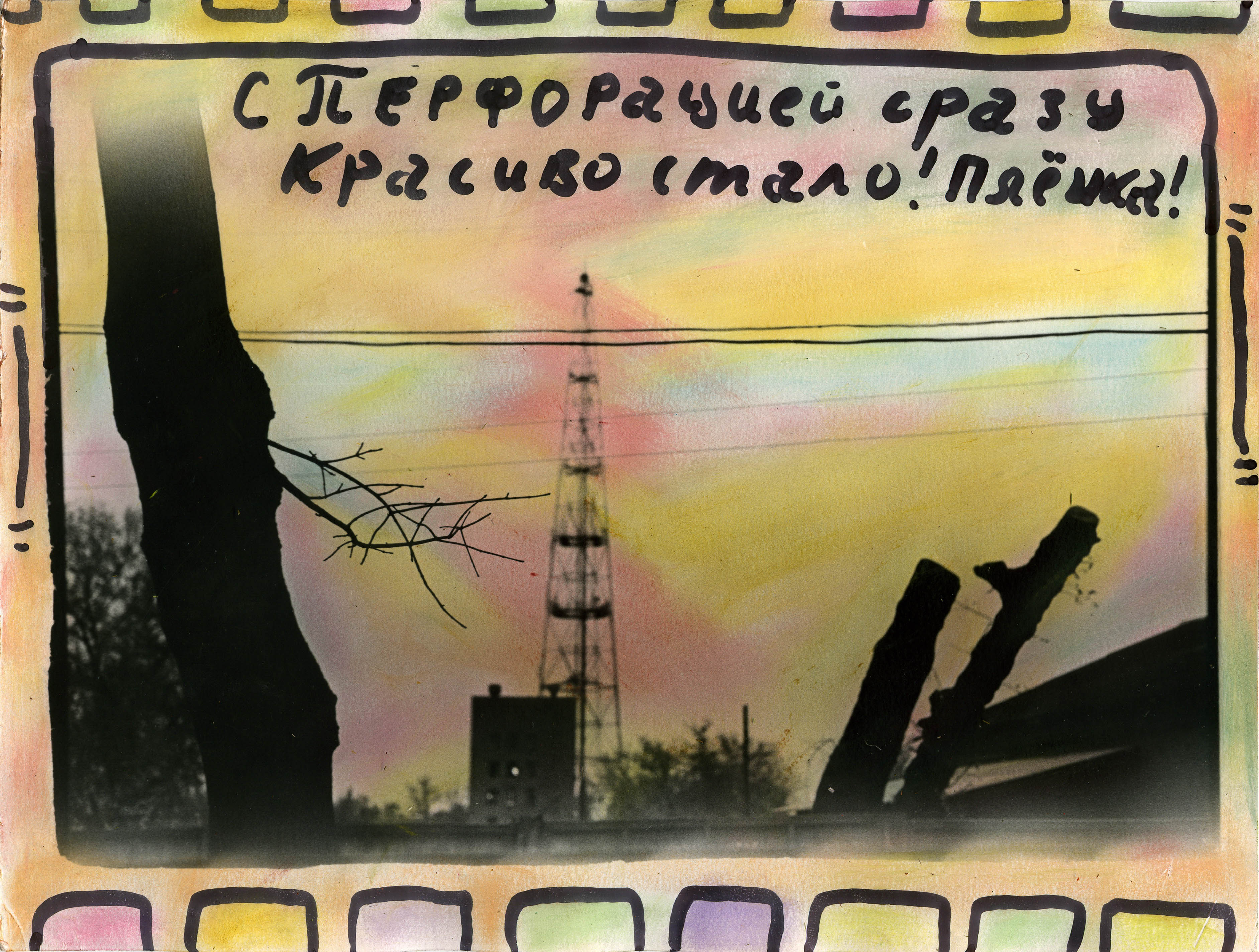
Vladyslav Krasnoshchok works primarily with film.
"It's a habit because I understand the process very well. Besides, I am a lazy person, and it’s easier for me to work this way: shot, developed, scanned the film, and no need to spend a long time working in Photoshop or Lightroom," — Vladyslav smiles. — "Plus, I get a physical object. If another blackout happens, I will still have the photographs."
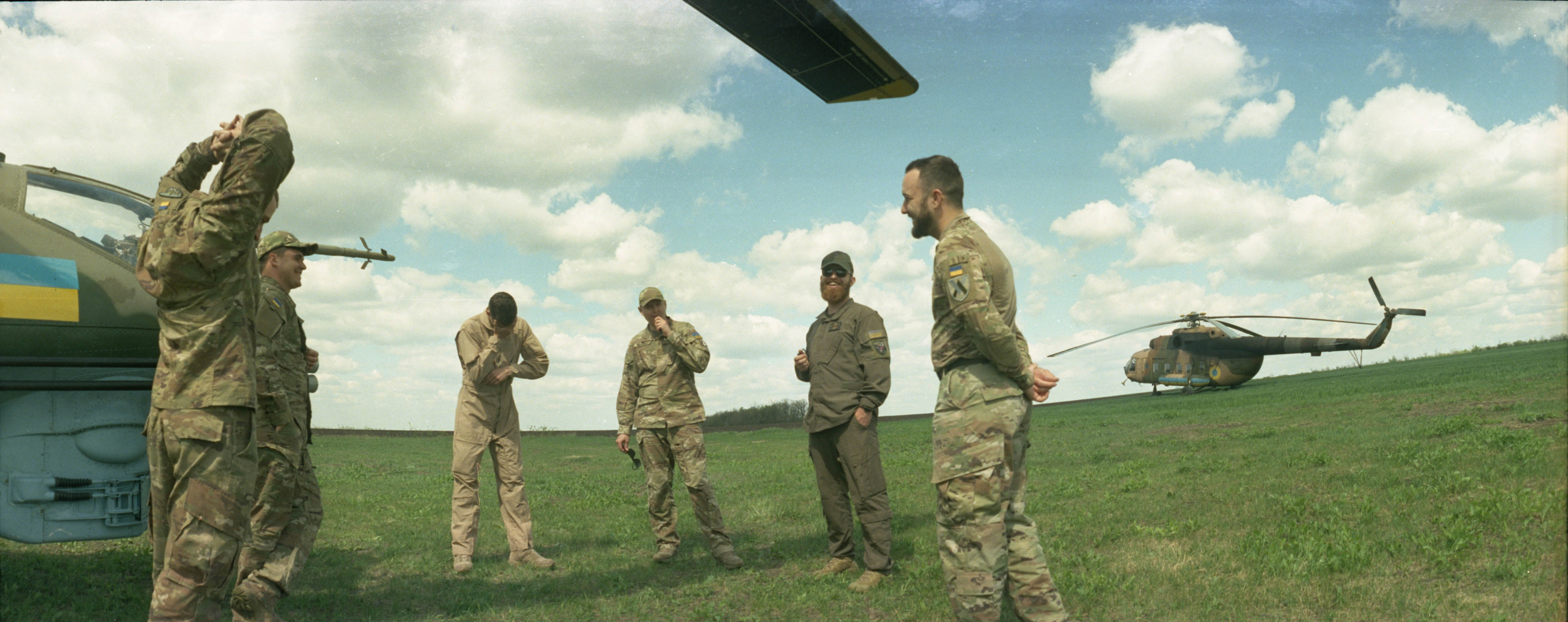
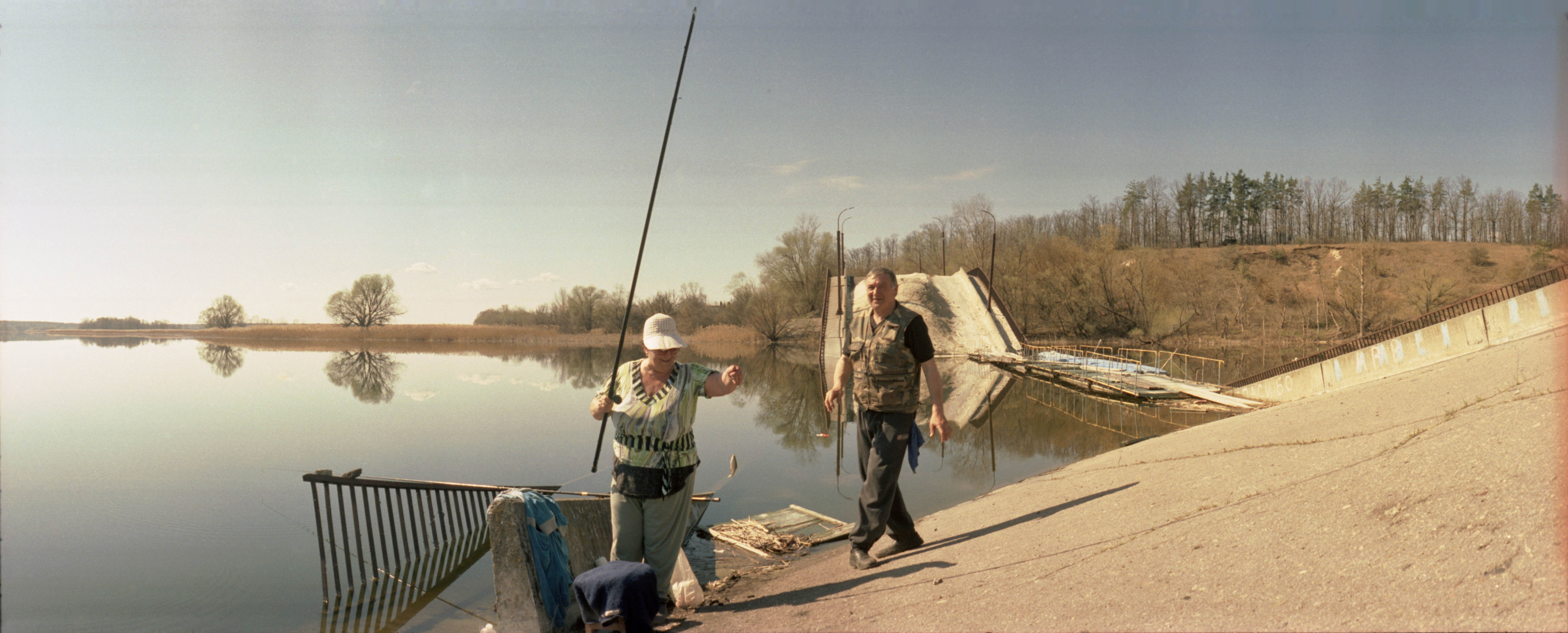
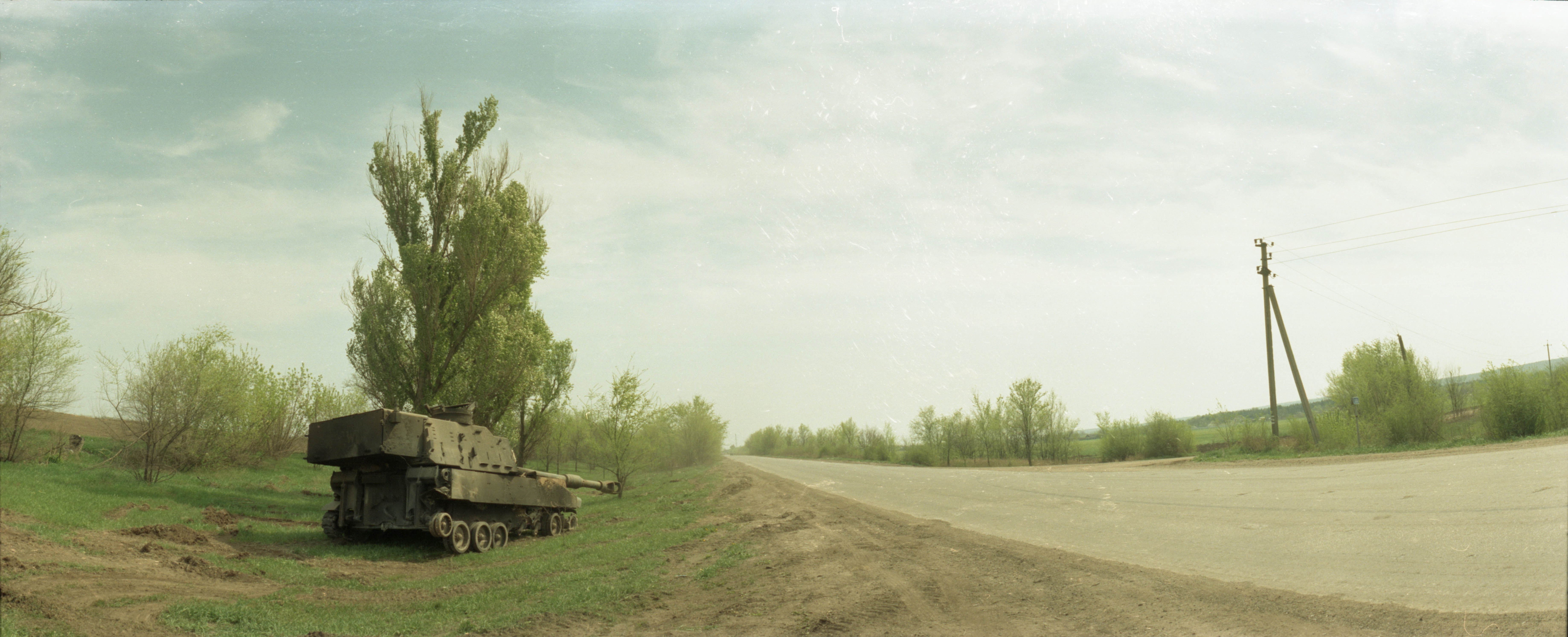
Vladyslav Krasnoshchok’s photographs are mostly black-and-white. Color shots require a different approach to shooting; it is a different aesthetic and philosophy. The photographer says that color will always dominate formal structure, and composition will have to be constructed differently.
"I am not against color and I photograph in color as well. However, I can’t say that color will give me something I wouldn't be able to achieve in a black-and-white image," — says Vladyslav Krasnoshchok.
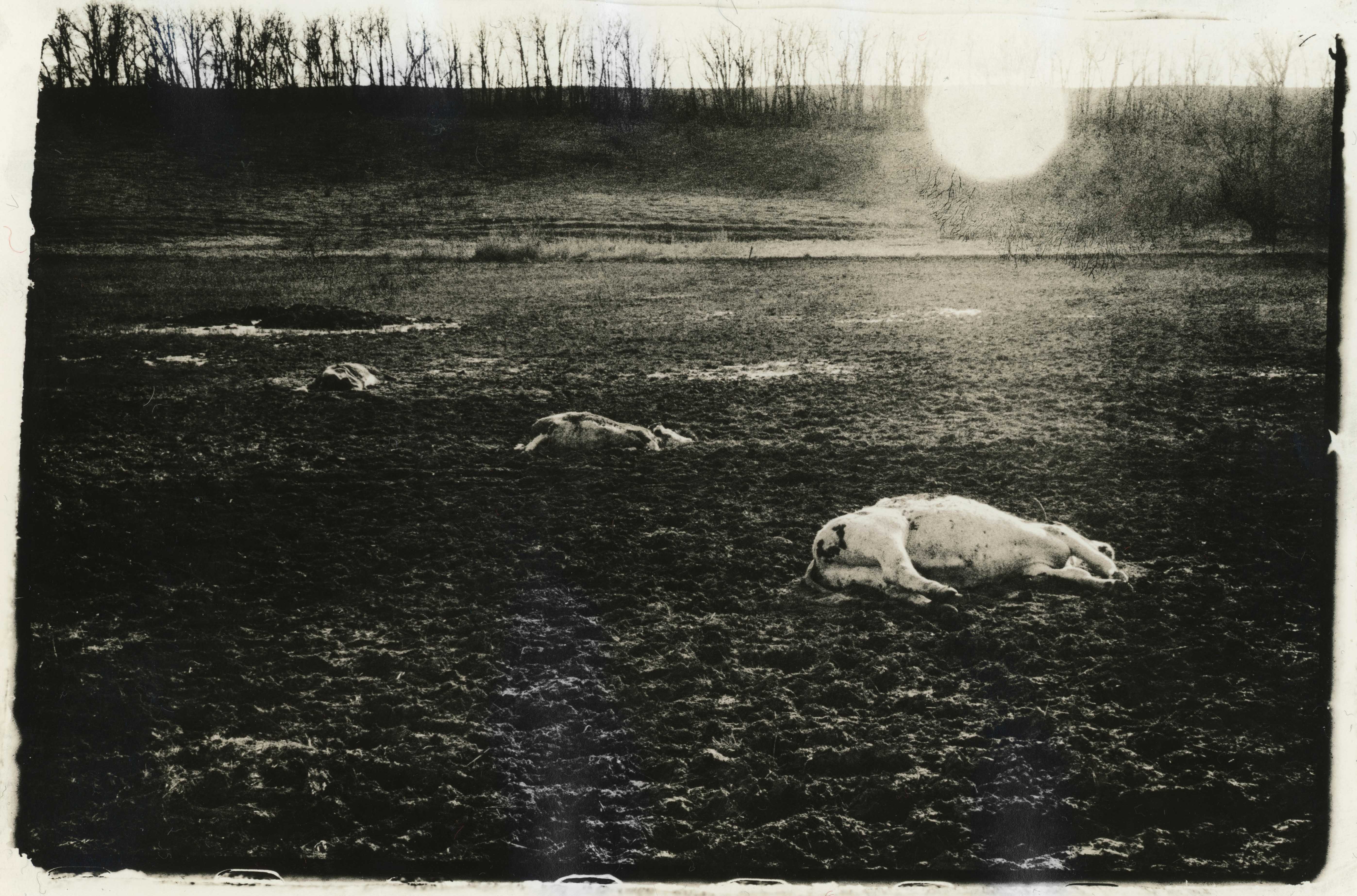
Vladyslav Krasnoshchok's photographs feature a clear and laconic composition.
"Initially, thanks to cropping, I tried to make something pleasant out of a bad photograph. I did this constantly. Then I made it a habit to immediately frame the image I see in the camera's viewfinder. I try to control all planes and instantly create a good picture," — the photographer shares. — "Now I never crop photographs. I deliberately made a black border by hand so that people understand they are looking at the full frame. Perhaps that's how the succinctness emerged."
Vladyslav Krasnoshchok coined the term "compositional ruff" for himself—a structure that interferes with viewing the picture as a whole. For instance, posts or other crude verticals that the photographer tries to avoid.
Memory and Book
"For me, documentary photography is a novel, reportage photography is a paragraph, and news photography is a word. Not many authors are creating novels right now," — says Vladyslav Krasnoshchok. — "War photography today is a collection of diverse facts. Of course, there are many great photographers and great pictures, but I have hardly seen any cohesive works."
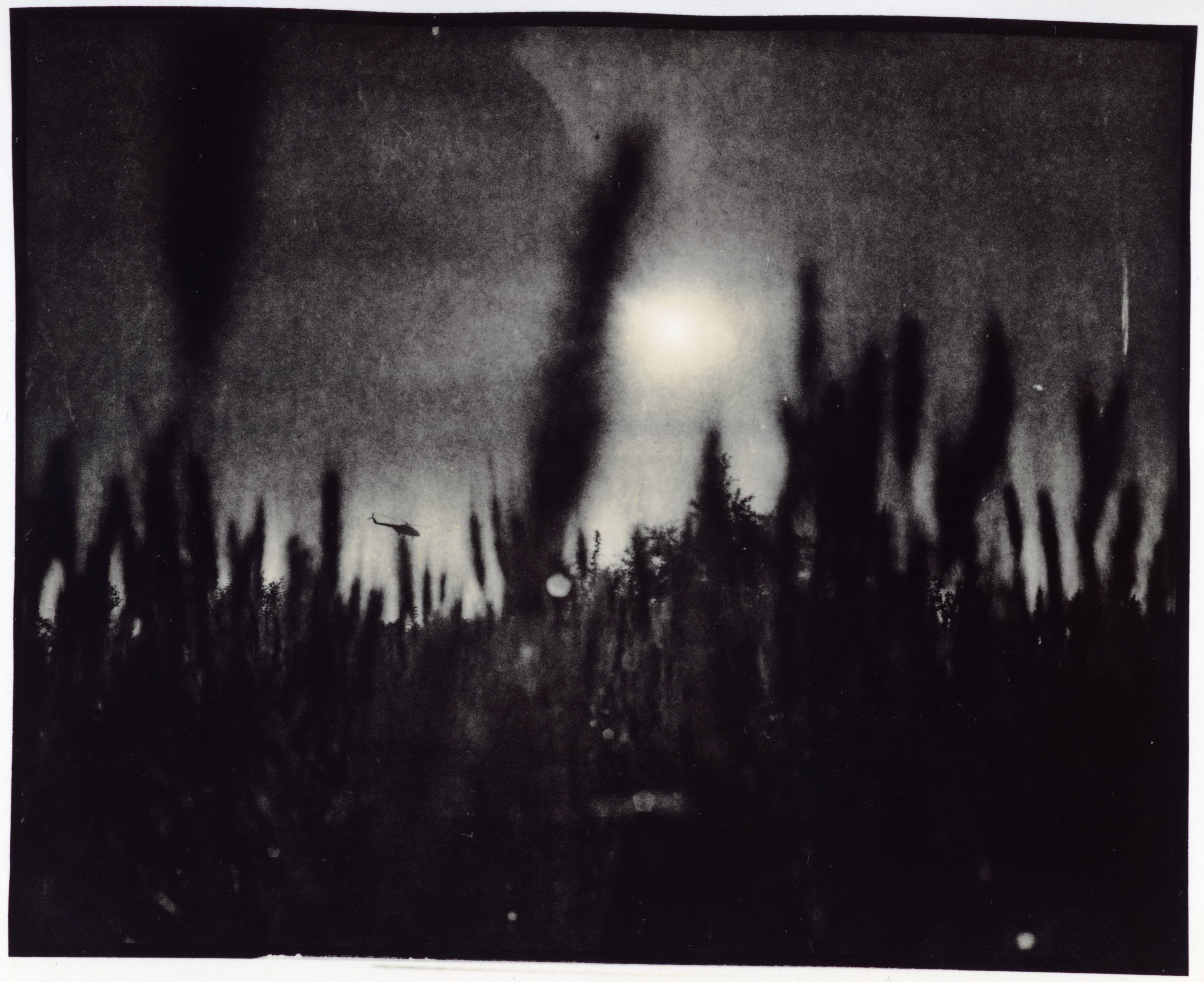
Vladyslav Krasnoshchok has been documenting the full-scale Russian-Ukrainian war since its beginning. During this time, he has accumulated many memorable stories.
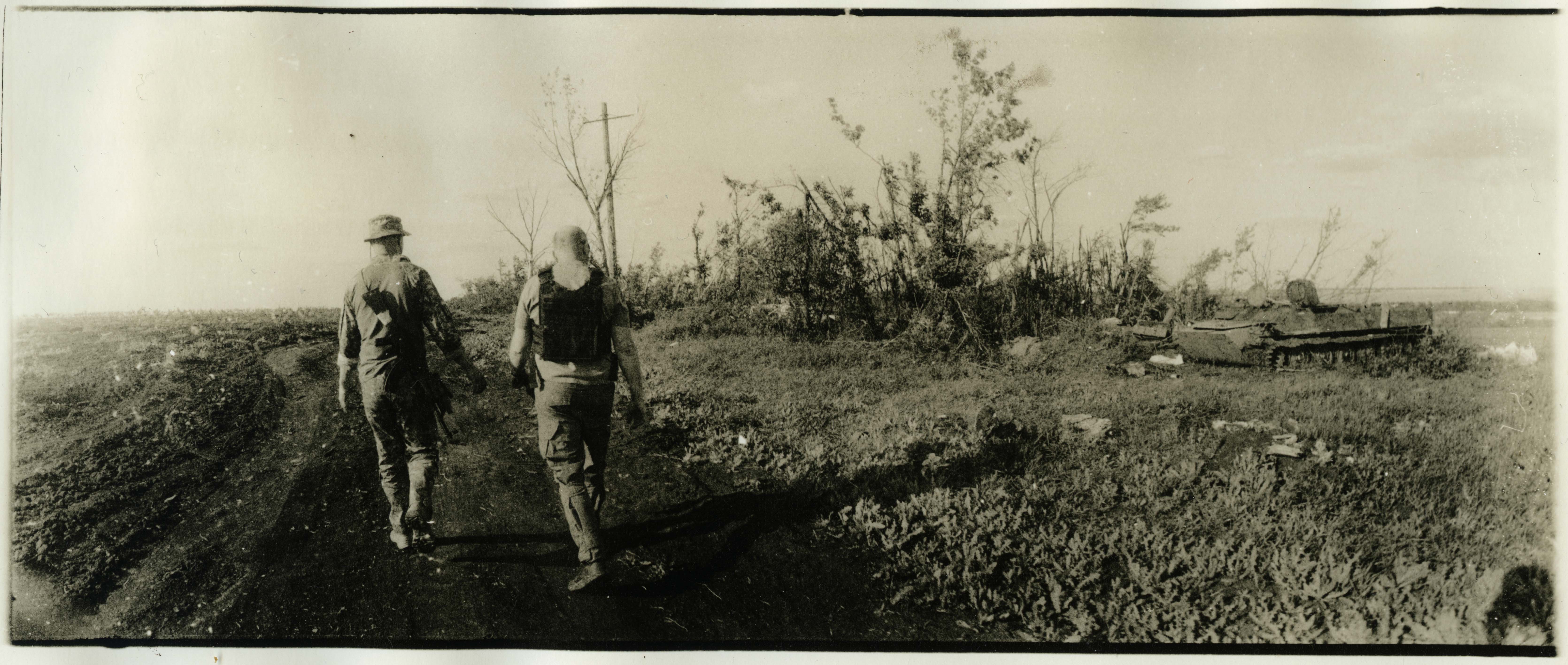
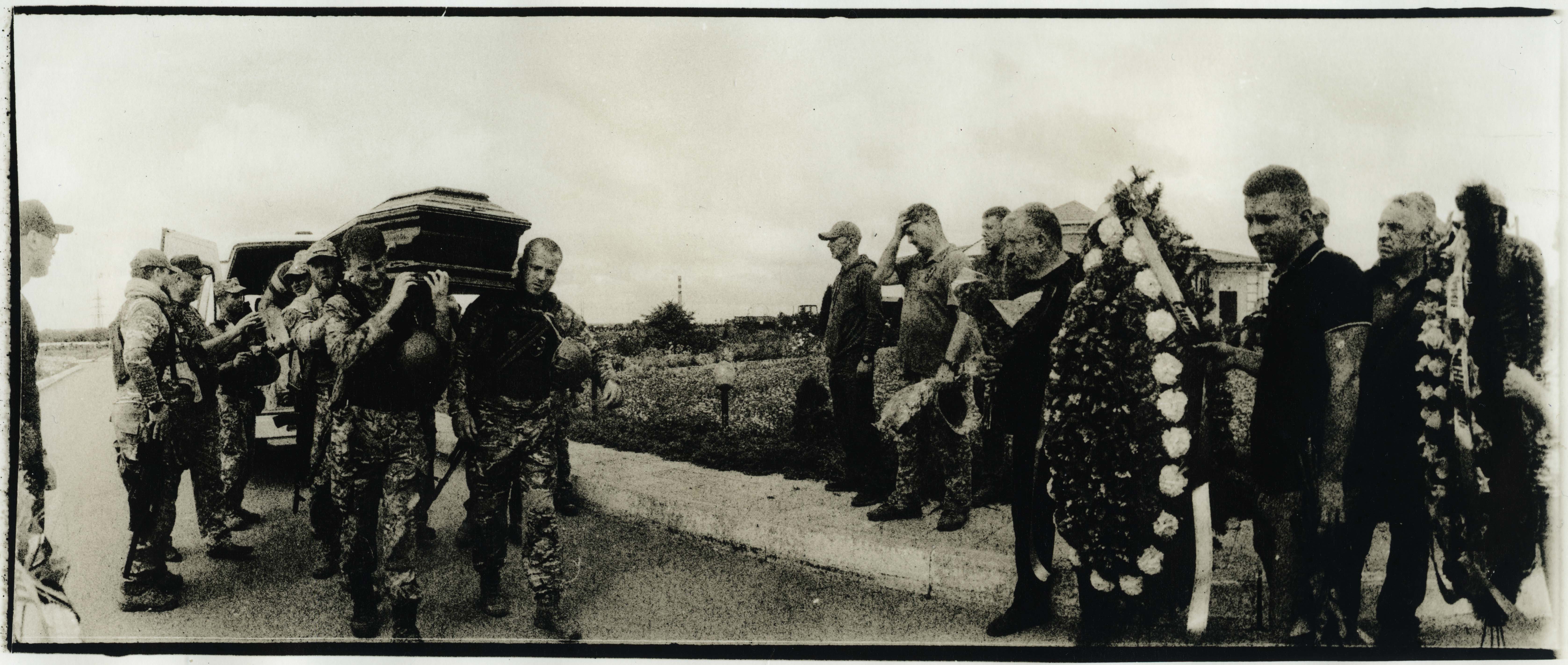
"When Mala Rohan near Kharkiv was liberated, I was walking with two servicemen near a tree line. One of the guys, Sashko, was the commander who liberated that tree line from the Russian military. We became friends, even attending a mutual acquaintance's birthday together. Then I learned that Sashko had died, and I photographed his funeral. This was the first time I had met a person while they were alive and then photographed their farewell. That story really stuck in my memory," — Vladyslav recounts.
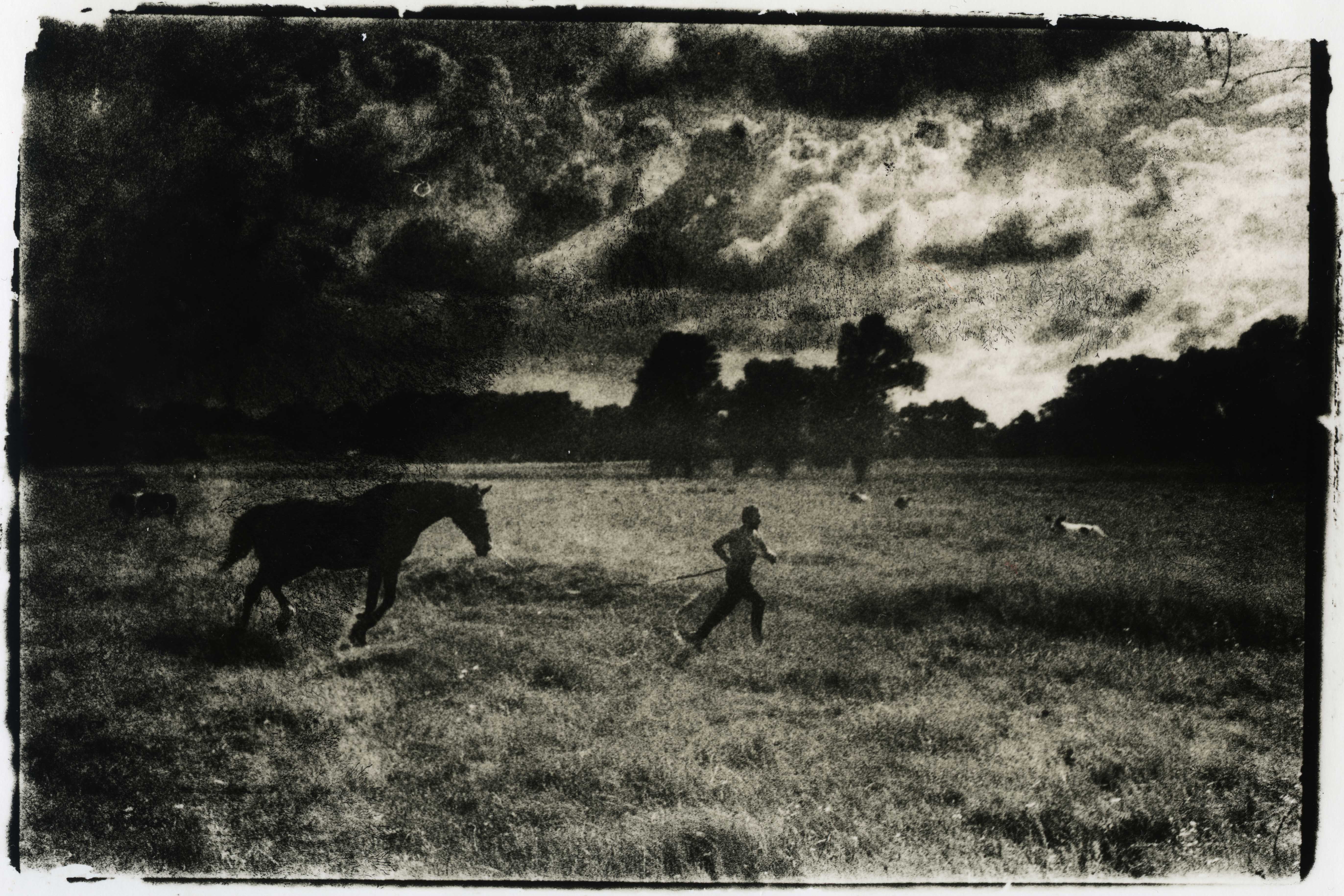
Vladyslav Krasnoshchok is currently working with a designer on the book «Documentation of the war», which a New York publisher will print.
"From every trip, you still bring something back: whether it's images or feelings. You always return with something," — says Vladyslav Krasnoshchok. — "It's enough for me to bring back a few valuable images from one assignment. If the images form a story, then I plan a book. The concept is very simple: take good photographs and connect them with each other."
Vladyslav dreams of photographing an American aircraft carrier in the future, which might enter the Black or Mediterranean Sea. In addition to army aviation, he would like to photograph tactical aviation as well. However, according to the photographer, the hardest part of the job right now is simply surviving.
Vladyslav Krasnoshchokis a Kharkiv artist. From 1997 to 2002, he studied at the Faculty of Dentistry at Kharkiv State Medical University. From 2004 to 2018, he worked at the O. I. Meshchaninov Kharkiv State Clinical Emergency and Urgent Care Hospital. He has been involved in photography since 2008, and in 2010 he became a member of the "Shylo" group, along with Serhiy Lebedynskyi, Vadym Trykoz, and Vasylisa Nezabarom. In addition to documentary photography, which is aesthetically transformed through technical manipulations, he works with archives and hand-coloring—techniques that were formed in Kharkiv photography starting from the late 1970s. He also combines frames with three-dimensional sculptural objects. He engages in easel and printed graphics, and street art.
The photographer's social media: Facebook, Instagram
Credits:
Topic Researcher, Text Author: Katia Moskalyuk
Photo Editor: Vladyslav Krasnoshchok
Literary Editor: Yuliia Futei















.jpg)


