UAPP Logo
Massive shelling of Dnipro and nightly terror in Odesa: a weekly overview of enemy attacks
Dnipro and Odesa are once again recovering from strikes on residential neighborhoods. Following the twenty‑hour shelling of Dnipro on April 25, nine civilians were confirmed dead and 61 injured; the attack the day before claimed three more lives. In Odesa, two people were killed and nearly twenty wounded. The week was marked by a sharp escalation of shelling in border and frontline regions. Sumy, Nizhyn, Chernihiv, and Kharkiv suffered from enemy strikes, with intensified attacks in northern Kharkiv region. The situation remains consistently severe in the south and east — in Kherson, Zaporizhzhia, and Donetsk. In Kyiv, the death toll from the April 18 terrorist attack rose to seven after a man died in hospital; seven more people, including a child, remain under medical care. At the same time, Prosecutor Ruslan Kravchenko clarified that it was not the mother of the injured child who died, but her sister.
read more
Massive shelling of Dnipro and nightly terror in Odesa: a weekly overview of enemy attacks
Dnipro and Odesa are once again recovering from strikes on residential neighborhoods. Following the twenty‑hour shelling of Dnipro on April 25, nine civilians were confirmed dead and 61 injured; the attack the day before claimed three more lives. In Odesa, two people were killed and nearly twenty wounded. The week was marked by a sharp escalation of shelling in border and frontline regions. Sumy, Nizhyn, Chernihiv, and Kharkiv suffered from enemy strikes, with intensified attacks in northern Kharkiv region. The situation remains consistently severe in the south and east — in Kherson, Zaporizhzhia, and Donetsk. In Kyiv, the death toll from the April 18 terrorist attack rose to seven after a man died in hospital; seven more people, including a child, remain under medical care. At the same time, Prosecutor Ruslan Kravchenko clarified that it was not the mother of the injured child who died, but her sister.
read more
Russian propaganda in action: how the Hungarian government used Kremlin narratives in its election campaign
In the pro‑Russian information space, baseless accusations were spread that Ukraine’s Main Intelligence Directorate, with Brussels’ support, was controlling the Hungarian opposition party *Tisza*. This conspiracy theory served as a tool to accuse Ukraine and the European Union of attempting to illegally change power in Hungary. The Ukrainian Association of Professional Photographers publishes key anti‑Ukrainian narratives with a Hungarian focus, while Maksym Kishka’s photo report from Hungary documents the public mood in the country with factual precision.
read more
A tragic week for Ukraine: brutal Russian attacks on peaceful cities and an armed assault on people in the capital
Russia turned Easter Week into a time of relentless airstrikes. The most brutal and destructive attacks targeted Dnipro, Kyiv, and Odesa. Around one hundred civilians were injured during the massive assault of April 15–16, when Russia launched more than 700 aerial targets. Russian drone and missile strikes claimed the lives of children in three cities: in Cherkasy, an 8‑year‑old boy was killed on a playground; in Kyiv, a ballistic missile killed a 12‑year‑old child in bed; in Chernihiv, a teenager was found dead under the rubble of a collapsed building. During the week, Russians cynically attacked medics and hospitals, bombed a reservoir, and carried out assaults on civilian vessels. Over the weekend, tragedy struck in Kyiv: six people were killed in a shooting. Among the wounded was a boy whose parents were victims of the assailant.
read more
Tragic consequences of Russian attacks during Holy Week
On the eve of Easter, Russian forces deliberately struck peaceful towns and villages. The enemy targeted energy infrastructure, administrative buildings during working hours, crowded markets, public transport, cultural and historical landmarks, and the homes of ordinary Ukrainians. Odesa, Nikopol, and Kramatorsk were in mourning for the dead. In Nikopol — a city of about 40,000 residents — more than 100 people have been killed or injured since the beginning of April, according to Ukrainska Pravda. Life. Civilian casualties are also high in Kherson, which remains under constant threat from shelling and remote mining.The scale of destruction to residential areas is captured in photo reports from Odesa, Kharkiv, Sumy, Kherson, and Kramatorsk.
read more
Breaking News
News
This week, Russia continued its missile and drone terror against Ukrainian cities. Hundreds of Shahed-type UAVs and dozens of tactical missiles were launched every day — from the well-known Iskander missiles to the latest Grom-1 models.
·
This week, Russia continued its missile and drone terror against Ukrainian cities. Hundreds of Shahed-type UAVs and dozens of tactical missiles were launched every day — from the well-known Iskander missiles to the latest Grom-1 models.
·
News Stories
5.7.2025
This is some text inside of a div block.
Combined terror: the most powerful missile and drone strike on Kyiv since 2022
The beginning of July 2025 in Ukraine marked a new stage of escalation. On the night of July 3-4, Russia launched the most powerful combined strike since the start of its full-scale invasion. Kyiv and at least five other regions of the country were attacked by drones and missiles. Overall, the week from June 30 to July 4 was one of the most intense: more than 500 strikes, dozens of wounded, destroyed buildings, fires, and human casualties.
News Stories
5.7.2025
Combined terror: the most powerful missile and drone strike on Kyiv since 2022
The beginning of July 2025 in Ukraine marked a new stage of escalation. On the night of July 3-4, Russia launched the most powerful combined strike since the start of its full-scale invasion. Kyiv and at least five other regions of the country were attacked by drones and missiles. Overall, the week from June 30 to July 4 was one of the most intense: more than 500 strikes, dozens of wounded, destroyed buildings, fires, and human casualties.
Photo Stories
4.7.2025
This is some text inside of a div block.
“Whoever controls Zmiinyi Island controls the sea.” On the anniversary of the island's liberation, the UAPP publishes photos by Vitalii Yurasov.
On July 4, 2022, the Ukrainian military installed the state flag on Zmiiny. This was the final stage of a complex operation to liberate the island by Ukrainian forces. On June 30, the Russian garrison left Zmiiny under the pressure of Ukrainian attacks.
Photo Stories
4.7.2025
“Whoever controls Zmiinyi Island controls the sea.” On the anniversary of the island's liberation, the UAPP publishes photos by Vitalii Yurasov.
On July 4, 2022, the Ukrainian military installed the state flag on Zmiiny. This was the final stage of a complex operation to liberate the island by Ukrainian forces. On June 30, the Russian garrison left Zmiiny under the pressure of Ukrainian attacks.
Photo Stories
2.7.2025
This is some text inside of a div block.
“All sorts of drug addicts grabbed automatic weapons and took up positions at checkpoints.” Anatolii Stepanov's archive on the “Russian Spring” in Donbas
Spring 2014. Ukraine has not yet recovered from the deaths on the Maidan and the annexation of Crimea, as Russia has already swung its south and east. In April, she provoked Kharkiv, Odessa, Donetsk and Luhansk regions. This is how the war began, which continues today — in 2025. War without declaration, but already with weapons in hand. Russia boldly and openly entered the Donbas — under the guise of “referendums”, “people's republics” and “militias”. In some cities, she was repulsed — Kharkiv and Odessa survived. Others were unable to contain the invasion. Donetsk and part of the region were captured. Documentary photographer Anatoly Stepanov was at the center of events. He saw with his own eyes how the scenario of a hybrid invasion unfolded: rallies, seizure of administrative buildings, the appearance of armed “volunteers” from Russia, the first killed. In April 2014, he filmed the funeral of a pro-Ukrainian deputy in Horlivka, stood near the captured district department in Slavyansk, recorded the resistance in Donetsk, Mariupol and the aftermath of the tragedy in Odessa on the morning of May 3 near the burned Trade Union House.
Photo Stories
2.7.2025
“All sorts of drug addicts grabbed automatic weapons and took up positions at checkpoints.” Anatolii Stepanov's archive on the “Russian Spring” in Donbas
Spring 2014. Ukraine has not yet recovered from the deaths on the Maidan and the annexation of Crimea, as Russia has already swung its south and east. In April, she provoked Kharkiv, Odessa, Donetsk and Luhansk regions. This is how the war began, which continues today — in 2025. War without declaration, but already with weapons in hand. Russia boldly and openly entered the Donbas — under the guise of “referendums”, “people's republics” and “militias”. In some cities, she was repulsed — Kharkiv and Odessa survived. Others were unable to contain the invasion. Donetsk and part of the region were captured. Documentary photographer Anatoly Stepanov was at the center of events. He saw with his own eyes how the scenario of a hybrid invasion unfolded: rallies, seizure of administrative buildings, the appearance of armed “volunteers” from Russia, the first killed. In April 2014, he filmed the funeral of a pro-Ukrainian deputy in Horlivka, stood near the captured district department in Slavyansk, recorded the resistance in Donetsk, Mariupol and the aftermath of the tragedy in Odessa on the morning of May 3 near the burned Trade Union House.
News Stories
2.7.2025
This is some text inside of a div block.
Межа кадру Анатолія Степанова: як знімати війну і не зникнути в ній
News Stories
2.7.2025
Межа кадру Анатолія Степанова: як знімати війну і не зникнути в ній
Photo Stories
1.7.2025
This is some text inside of a div block.
10 photos of June
UAPP in partnership with Kyiv Independent continues its monthly column — a selection of key photographs that most accurately convey the events, mood and challenges of the next month of full-scale war.
Photo Stories
1.7.2025
10 photos of June
UAPP in partnership with Kyiv Independent continues its monthly column — a selection of key photographs that most accurately convey the events, mood and challenges of the next month of full-scale war.
Photo Stories
28.6.2025
This is some text inside of a div block.
Olga Ivashchenko: “For me, the main thing is not to lose my humanity and attentiveness to people.”
Ukrainian photographer Olga Ivashchenko explained why she spends much more time with people than is necessary for high-quality photography, and why photos from the war have deeper meanings than meets the eye.
Photo Stories
28.6.2025
Olga Ivashchenko: “For me, the main thing is not to lose my humanity and attentiveness to people.”
Ukrainian photographer Olga Ivashchenko explained why she spends much more time with people than is necessary for high-quality photography, and why photos from the war have deeper meanings than meets the eye.

Photo Stories

This section features the best images of the month, interviews with photographers, and in-depth visual stories. Discover compelling narratives and events through the lens of our talented authors.


Photo Stories
9.6.2025
Living inside history. Alexander Klymenko's photographs as evidence of time
Photo Stories
8.6.2025
Photo with history: portrait of a hug
Photo Stories
1.6.2025
10 photos of May
Photo Stories
31.5.2025
“Three coffins from one family... it's not just a picture — it's something that stays with you,” - Kostyantin Liberov about the sorrow of war in Sumy region.
Photo Stories
28.5.2025
The city of salt, the city of war: Soledar through the eyes of Irina Rybakova
Photo Stories
24.5.2025
Max Chorny: “Where the Road Leads, Part 1”

Our partners

We tell the world about Ukraine through the prism of photography.

Join and support the community of Ukrainian photographers.

UAPP is an independent association of professional Ukrainian photographers, designed to protect their interests, support, develop and promote Ukrainian photography as an important element of national culture.

UAPP's activities span educational, social, research and cultural initiatives, as well as book publishing.

UAPP represents Ukrainian professional photography in the international photographic community and is an official member of the Federation of European Photographers (FEP) — an international organization representing more than 50,000 professional photographers in Europe and other countries around the world.

Support and join us
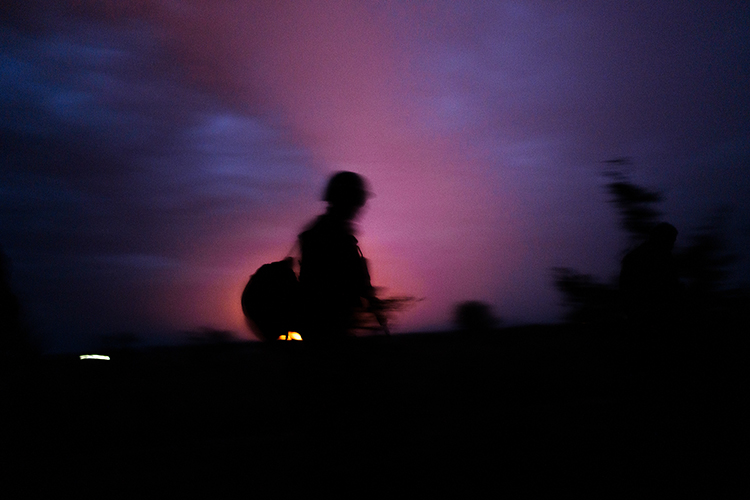
A couple of men walking across a grass covered field.