UAPP Logo
Massive shelling of Dnipro and nightly terror in Odesa: a weekly overview of enemy attacks
Dnipro and Odesa are once again recovering from strikes on residential neighborhoods. Following the twenty‑hour shelling of Dnipro on April 25, nine civilians were confirmed dead and 61 injured; the attack the day before claimed three more lives. In Odesa, two people were killed and nearly twenty wounded. The week was marked by a sharp escalation of shelling in border and frontline regions. Sumy, Nizhyn, Chernihiv, and Kharkiv suffered from enemy strikes, with intensified attacks in northern Kharkiv region. The situation remains consistently severe in the south and east — in Kherson, Zaporizhzhia, and Donetsk. In Kyiv, the death toll from the April 18 terrorist attack rose to seven after a man died in hospital; seven more people, including a child, remain under medical care. At the same time, Prosecutor Ruslan Kravchenko clarified that it was not the mother of the injured child who died, but her sister.
read more
Massive shelling of Dnipro and nightly terror in Odesa: a weekly overview of enemy attacks
Dnipro and Odesa are once again recovering from strikes on residential neighborhoods. Following the twenty‑hour shelling of Dnipro on April 25, nine civilians were confirmed dead and 61 injured; the attack the day before claimed three more lives. In Odesa, two people were killed and nearly twenty wounded. The week was marked by a sharp escalation of shelling in border and frontline regions. Sumy, Nizhyn, Chernihiv, and Kharkiv suffered from enemy strikes, with intensified attacks in northern Kharkiv region. The situation remains consistently severe in the south and east — in Kherson, Zaporizhzhia, and Donetsk. In Kyiv, the death toll from the April 18 terrorist attack rose to seven after a man died in hospital; seven more people, including a child, remain under medical care. At the same time, Prosecutor Ruslan Kravchenko clarified that it was not the mother of the injured child who died, but her sister.
read more
Russian propaganda in action: how the Hungarian government used Kremlin narratives in its election campaign
In the pro‑Russian information space, baseless accusations were spread that Ukraine’s Main Intelligence Directorate, with Brussels’ support, was controlling the Hungarian opposition party *Tisza*. This conspiracy theory served as a tool to accuse Ukraine and the European Union of attempting to illegally change power in Hungary. The Ukrainian Association of Professional Photographers publishes key anti‑Ukrainian narratives with a Hungarian focus, while Maksym Kishka’s photo report from Hungary documents the public mood in the country with factual precision.
read more
A tragic week for Ukraine: brutal Russian attacks on peaceful cities and an armed assault on people in the capital
Russia turned Easter Week into a time of relentless airstrikes. The most brutal and destructive attacks targeted Dnipro, Kyiv, and Odesa. Around one hundred civilians were injured during the massive assault of April 15–16, when Russia launched more than 700 aerial targets. Russian drone and missile strikes claimed the lives of children in three cities: in Cherkasy, an 8‑year‑old boy was killed on a playground; in Kyiv, a ballistic missile killed a 12‑year‑old child in bed; in Chernihiv, a teenager was found dead under the rubble of a collapsed building. During the week, Russians cynically attacked medics and hospitals, bombed a reservoir, and carried out assaults on civilian vessels. Over the weekend, tragedy struck in Kyiv: six people were killed in a shooting. Among the wounded was a boy whose parents were victims of the assailant.
read more
Tragic consequences of Russian attacks during Holy Week
On the eve of Easter, Russian forces deliberately struck peaceful towns and villages. The enemy targeted energy infrastructure, administrative buildings during working hours, crowded markets, public transport, cultural and historical landmarks, and the homes of ordinary Ukrainians. Odesa, Nikopol, and Kramatorsk were in mourning for the dead. In Nikopol — a city of about 40,000 residents — more than 100 people have been killed or injured since the beginning of April, according to Ukrainska Pravda. Life. Civilian casualties are also high in Kherson, which remains under constant threat from shelling and remote mining.The scale of destruction to residential areas is captured in photo reports from Odesa, Kharkiv, Sumy, Kherson, and Kramatorsk.
read more
Breaking News
News
This week, Russia continued its missile and drone terror against Ukrainian cities. Hundreds of Shahed-type UAVs and dozens of tactical missiles were launched every day — from the well-known Iskander missiles to the latest Grom-1 models.
·
This week, Russia continued its missile and drone terror against Ukrainian cities. Hundreds of Shahed-type UAVs and dozens of tactical missiles were launched every day — from the well-known Iskander missiles to the latest Grom-1 models.
·
News Stories
22.6.2024
This is some text inside of a div block.
Russians struck a residential building in Kharkiv with a KAB guided bomb. The consequences of this war crime through the lens of documentarian Heorhii Ivanchenko
Thirty‑seven people were injured and three were killed — these are the consequences of yet another Russian strike on Kharkiv on 22 June 2024. The occupiers hit the city with guided aerial bombs. Before the attack, the Air Force had warned about launches of guided aviation bombs by tactical aircraft in the Kharkiv region.
News Stories
22.6.2024
Russians struck a residential building in Kharkiv with a KAB guided bomb. The consequences of this war crime through the lens of documentarian Heorhii Ivanchenko
Thirty‑seven people were injured and three were killed — these are the consequences of yet another Russian strike on Kharkiv on 22 June 2024. The occupiers hit the city with guided aerial bombs. Before the attack, the Air Force had warned about launches of guided aviation bombs by tactical aircraft in the Kharkiv region.
News Stories
21.6.2024
This is some text inside of a div block.
“Security forces turned out to be weak forces.” How Ukraine lost Donetsk in the photographs of Serhii Vaganov
Twelve years ago, in March 2014, Russian hybrid forces began seizing government buildings in Donbas. Before that, Russian “little green men” had annexed Crimea, and soon after they started gradually occupying Donetsk and Luhansk regions. Ukrainian cities resisted — among them the million‑strong city of Donetsk.
News Stories
21.6.2024
“Security forces turned out to be weak forces.” How Ukraine lost Donetsk in the photographs of Serhii Vaganov
Twelve years ago, in March 2014, Russian hybrid forces began seizing government buildings in Donbas. Before that, Russian “little green men” had annexed Crimea, and soon after they started gradually occupying Donetsk and Luhansk regions. Ukrainian cities resisted — among them the million‑strong city of Donetsk.
News Stories
18.6.2024
This is some text inside of a div block.
Revolution is near — the events of Maidan in the photographs of Viacheslav Ratynskyi
On 21 November 2013, the Azarov Government disrupted the signing of the EU Association Agreement. As a result, the first protesters began gathering in the center of Kyiv. Later, on 30 November, students were beaten on the Euromaidan. This became the beginning of the Revolution of Dignity, which forever transformed Ukrainian society and launched political changes in the country. The Ukrainian Association of Professional Photographers is publishing the photographs of Viacheslav Ratynskyi, who documented the key events of the Revolution.
News Stories
18.6.2024
Revolution is near — the events of Maidan in the photographs of Viacheslav Ratynskyi
On 21 November 2013, the Azarov Government disrupted the signing of the EU Association Agreement. As a result, the first protesters began gathering in the center of Kyiv. Later, on 30 November, students were beaten on the Euromaidan. This became the beginning of the Revolution of Dignity, which forever transformed Ukrainian society and launched political changes in the country. The Ukrainian Association of Professional Photographers is publishing the photographs of Viacheslav Ratynskyi, who documented the key events of the Revolution.
Photo Stories
15.6.2024
This is some text inside of a div block.
Where Holopynka and the Oleshky Sands are located. Photos with history through the eyes of Olena Huseynova
I remembered this photo of Ivan Antipenko in the first week of June. Blooming lilac and a fighter with a smoke block. Antipenko took this photo back in April. In the Kherson region. In the south, lilac blooms faster. Strawberries and cherries ripen faster. Russian air bombs arrive faster. And many more things in the south are happening faster. But I don't know how to use the word “faster” when describing the path to the Hola Marina or the Oleshkov Sands.
Photo Stories
15.6.2024
Where Holopynka and the Oleshky Sands are located. Photos with history through the eyes of Olena Huseynova
I remembered this photo of Ivan Antipenko in the first week of June. Blooming lilac and a fighter with a smoke block. Antipenko took this photo back in April. In the Kherson region. In the south, lilac blooms faster. Strawberries and cherries ripen faster. Russian air bombs arrive faster. And many more things in the south are happening faster. But I don't know how to use the word “faster” when describing the path to the Hola Marina or the Oleshkov Sands.
News Stories
15.6.2024
This is some text inside of a div block.
The Ukrainians presented the photo book *“How We Walk Through the Fire”*.
Two years of Russia’s full‑scale invasion captured in 195 photographs. The Ukrainians have prepared an English‑language photo book, *“How We Walk Through the Fire,”* featuring key images of the war. The publication includes all photographs from the English special issue of *Reporters* magazine, as well as new images documenting significant events of the Russian‑Ukrainian war. All photos were taken between February 2022 and February 2024. This is the first book released by The Ukrainians Publishing.
News Stories
15.6.2024
The Ukrainians presented the photo book *“How We Walk Through the Fire”*.
Two years of Russia’s full‑scale invasion captured in 195 photographs. The Ukrainians have prepared an English‑language photo book, *“How We Walk Through the Fire,”* featuring key images of the war. The publication includes all photographs from the English special issue of *Reporters* magazine, as well as new images documenting significant events of the Russian‑Ukrainian war. All photos were taken between February 2022 and February 2024. This is the first book released by The Ukrainians Publishing.
News Stories
13.6.2024
This is some text inside of a div block.
Occupation, liberation, shelling, occupation again. The tragic fate of Mariupol in the photographs of Serhii Vaganov and Mstyslav Chernov
Over 13 years of the Russian‑Ukrainian war, Mariupol has lived through Russian occupation, liberation, the shelling of a civilian district, and a second occupation. The Ukrainian Association of Professional Photographers is publishing moments from the life of the city of Mary between 2014 and 2022.
News Stories
13.6.2024
Occupation, liberation, shelling, occupation again. The tragic fate of Mariupol in the photographs of Serhii Vaganov and Mstyslav Chernov
Over 13 years of the Russian‑Ukrainian war, Mariupol has lived through Russian occupation, liberation, the shelling of a civilian district, and a second occupation. The Ukrainian Association of Professional Photographers is publishing moments from the life of the city of Mary between 2014 and 2022.

Photo Stories

This section features the best images of the month, interviews with photographers, and in-depth visual stories. Discover compelling narratives and events through the lens of our talented authors.


Photo Stories
24.5.2025
Max Chorny: “Where the Road Leads, Part 1”
Photo Stories
22.5.2025
“I hate taking photos.” Dmytro Kozatsky on his shots from Azovstal, the burden of recognition, and internal pressure
Photo Stories
18.5.2025
One could have omitted Achilles
Photo Stories
17.5.2025
Anna Klochko. From Sumy to the Vatican: visual stories at the intersection of worlds
Photo Stories
14.5.2025
Yelizaveta Bukreeva: “I digest other people's grief and express it in images”
Photo Stories
12.5.2025
Apocalypse after three o'clock. Coastal areas of the city of Kherson in photos by Stas Ostrous

Our partners

We tell the world about Ukraine through the prism of photography.

Join and support the community of Ukrainian photographers.

UAPP is an independent association of professional Ukrainian photographers, designed to protect their interests, support, develop and promote Ukrainian photography as an important element of national culture.

UAPP's activities span educational, social, research and cultural initiatives, as well as book publishing.

UAPP represents Ukrainian professional photography in the international photographic community and is an official member of the Federation of European Photographers (FEP) — an international organization representing more than 50,000 professional photographers in Europe and other countries around the world.

Support and join us
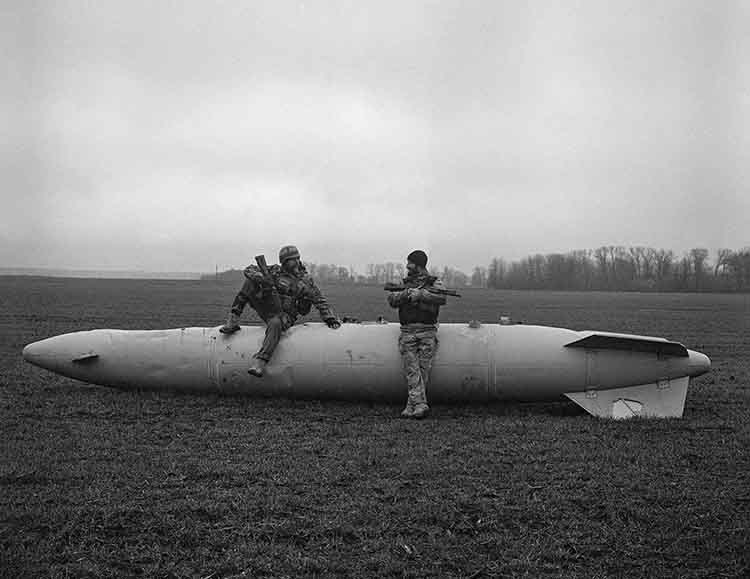
A couple of men walking across a grass covered field.