UAPP Logo
Russian propaganda in action: how the Hungarian government used Kremlin narratives in its election campaign
In the pro‑Russian information space, baseless accusations were spread that Ukraine’s Main Intelligence Directorate, with Brussels’ support, was controlling the Hungarian opposition party *Tisza*. This conspiracy theory served as a tool to accuse Ukraine and the European Union of attempting to illegally change power in Hungary. The Ukrainian Association of Professional Photographers publishes key anti‑Ukrainian narratives with a Hungarian focus, while Maksym Kishka’s photo report from Hungary documents the public mood in the country with factual precision.
read more
Russian propaganda in action: how the Hungarian government used Kremlin narratives in its election campaign
In the pro‑Russian information space, baseless accusations were spread that Ukraine’s Main Intelligence Directorate, with Brussels’ support, was controlling the Hungarian opposition party *Tisza*. This conspiracy theory served as a tool to accuse Ukraine and the European Union of attempting to illegally change power in Hungary. The Ukrainian Association of Professional Photographers publishes key anti‑Ukrainian narratives with a Hungarian focus, while Maksym Kishka’s photo report from Hungary documents the public mood in the country with factual precision.
read more
A tragic week for Ukraine: brutal Russian attacks on peaceful cities and an armed assault on people in the capital
Russia turned Easter Week into a time of relentless airstrikes. The most brutal and destructive attacks targeted Dnipro, Kyiv, and Odesa. Around one hundred civilians were injured during the massive assault of April 15–16, when Russia launched more than 700 aerial targets. Russian drone and missile strikes claimed the lives of children in three cities: in Cherkasy, an 8‑year‑old boy was killed on a playground; in Kyiv, a ballistic missile killed a 12‑year‑old child in bed; in Chernihiv, a teenager was found dead under the rubble of a collapsed building. During the week, Russians cynically attacked medics and hospitals, bombed a reservoir, and carried out assaults on civilian vessels. Over the weekend, tragedy struck in Kyiv: six people were killed in a shooting. Among the wounded was a boy whose parents were victims of the assailant.
read more
Tragic consequences of Russian attacks during Holy Week
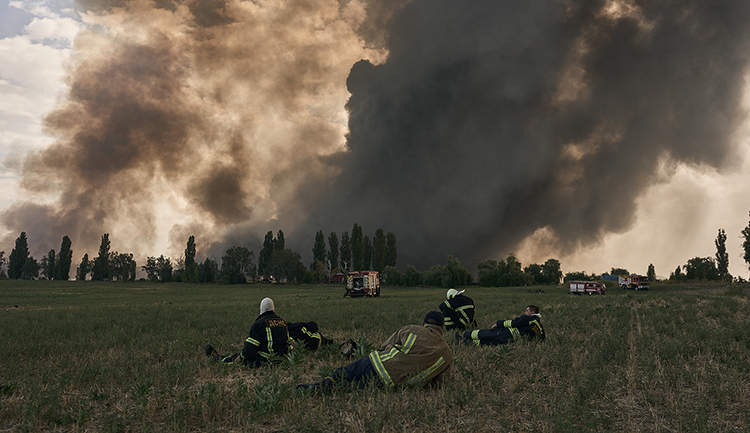
On the eve of Easter, Russian forces deliberately struck peaceful towns and villages. The enemy targeted energy infrastructure, administrative buildings during working hours, crowded markets, public transport, cultural and historical landmarks, and the homes of ordinary Ukrainians. Odesa, Nikopol, and Kramatorsk were in mourning for the dead. In Nikopol — a city of about 40,000 residents — more than 100 people have been killed or injured since the beginning of April, according to Ukrainska Pravda. Life. Civilian casualties are also high in Kherson, which remains under constant threat from shelling and remote mining.The scale of destruction to residential areas is captured in photo reports from Odesa, Kharkiv, Sumy, Kherson, and Kramatorsk.
read more
Four years since the terrorist attack at the Kramatorsk railway station
In memory of the victims — and in the name of justice — we recall how Ukrainian and international documentarians, along with human rights organizations, disproved Russian disinformation about the missile strike on the Kramatorsk railway station on April 8, 2022. On that day, a Russian missile armed with cluster munitions turned a crowded train station into a battlefield, cutting short the lives of people who were trying to flee the war.
read more
Breaking News
News
This week, Russia continued its missile and drone terror against Ukrainian cities. Hundreds of Shahed-type UAVs and dozens of tactical missiles were launched every day — from the well-known Iskander missiles to the latest Grom-1 models.
·
This week, Russia continued its missile and drone terror against Ukrainian cities. Hundreds of Shahed-type UAVs and dozens of tactical missiles were launched every day — from the well-known Iskander missiles to the latest Grom-1 models.
·
Photo Stories
29.4.2026
This is some text inside of a div block.
“Beyond the Verdict” — a documentary project by Nadiia Karpova
“Beyond the Verdict” is one of the projects selected within the third annual micro‑grant support program for Ukrainian documentarians implemented by UAPP. The goal of the program is to support authors who continue to document the experience of a country resisting aggression and to create visual evidence of events that define the history of contemporary Ukraine. The program is carried out with the support of the Embassy of the Kingdom of the Netherlands in Ukraine.
Photo Stories
29.4.2026
“Beyond the Verdict” — a documentary project by Nadiia Karpova
“Beyond the Verdict” is one of the projects selected within the third annual micro‑grant support program for Ukrainian documentarians implemented by UAPP. The goal of the program is to support authors who continue to document the experience of a country resisting aggression and to create visual evidence of events that define the history of contemporary Ukraine. The program is carried out with the support of the Embassy of the Kingdom of the Netherlands in Ukraine.
Photo Stories
27.4.2026
This is some text inside of a div block.
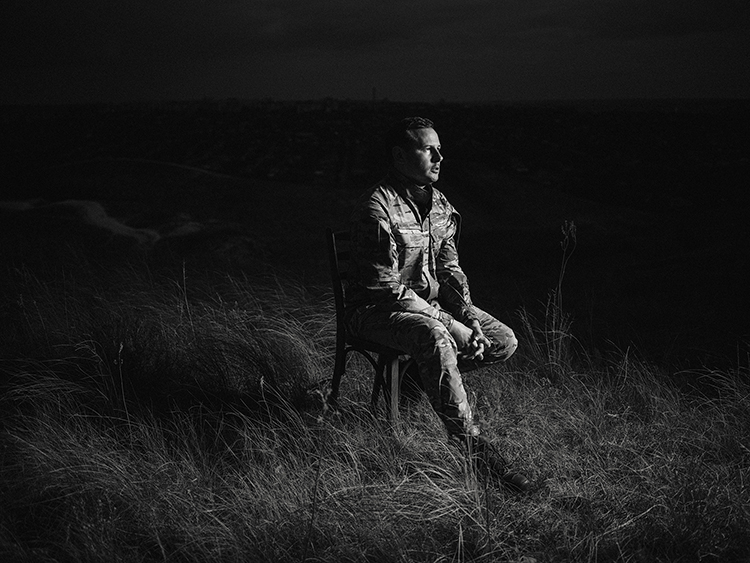
Butoh dance‑meditation and war. The philosophy of the frame by Yevhen Titov
Ukrainian photographer Yevhen Titov works at the intersection of documentary photography, journalism, and cinema. He is known as a freelance photographer whose works are published by leading Ukrainian and international outlets. Since the beginning of Russia’s full‑scale invasion, he has been actively documenting events in Ukraine, particularly in the Kharkiv and Donetsk regions. His photographs of the aftermath of Russian shelling, the work of rescuers, and the military regularly appear in year‑end selections of the best images by major news agencies such as Associated Press. In addition, Yevhen Titov also works as a documentary film cameraman.
Photo Stories
27.4.2026
Butoh dance‑meditation and war. The philosophy of the frame by Yevhen Titov
Ukrainian photographer Yevhen Titov works at the intersection of documentary photography, journalism, and cinema. He is known as a freelance photographer whose works are published by leading Ukrainian and international outlets. Since the beginning of Russia’s full‑scale invasion, he has been actively documenting events in Ukraine, particularly in the Kharkiv and Donetsk regions. His photographs of the aftermath of Russian shelling, the work of rescuers, and the military regularly appear in year‑end selections of the best images by major news agencies such as Associated Press. In addition, Yevhen Titov also works as a documentary film cameraman.
Photo Stories
26.4.2026
This is some text inside of a div block.
Planetary catastrophe
Forty years ago, on April 26, 1986, one of the largest technological disasters in human history occurred — the accident at the Chernobyl Nuclear Power Plant. In early May, the Soviet leadership decided to evacuate the population from the 30‑kilometer exclusion zone. By the end of 1986, more than 90,000 people had left their homes. For the displaced, the authorities built housing in Kyiv, Zhytomyr, and Chernihiv regions.
Photo Stories
26.4.2026
Planetary catastrophe
Forty years ago, on April 26, 1986, one of the largest technological disasters in human history occurred — the accident at the Chernobyl Nuclear Power Plant. In early May, the Soviet leadership decided to evacuate the population from the 30‑kilometer exclusion zone. By the end of 1986, more than 90,000 people had left their homes. For the displaced, the authorities built housing in Kyiv, Zhytomyr, and Chernihiv regions.
Photo Stories
23.4.2026
This is some text inside of a div block.
“Resettled from the Chernobyl exclusion zone, people perceived the joy of new life with sadness, for the native home always remains the dearest.” A photo story by Oleksandr Klymenko about housewarmings in 1986
Forty years ago, on April 26, 1986, one of the largest technological disasters in human history occurred — the accident at the Chernobyl Nuclear Power Plant. In early May, the Soviet leadership decided to evacuate the population from the 30‑kilometer exclusion zone. By the end of 1986, more than 90,000 people had left their homes. For the displaced, the authorities built housing in Kyiv, Zhytomyr, and Chernihiv regions.
Photo Stories
23.4.2026
“Resettled from the Chernobyl exclusion zone, people perceived the joy of new life with sadness, for the native home always remains the dearest.” A photo story by Oleksandr Klymenko about housewarmings in 1986
Forty years ago, on April 26, 1986, one of the largest technological disasters in human history occurred — the accident at the Chernobyl Nuclear Power Plant. In early May, the Soviet leadership decided to evacuate the population from the 30‑kilometer exclusion zone. By the end of 1986, more than 90,000 people had left their homes. For the displaced, the authorities built housing in Kyiv, Zhytomyr, and Chernihiv regions.
News Stories
22.4.2026
This is some text inside of a div block.
Russian propaganda in action: how the Hungarian government used Kremlin narratives in its election campaign
In the pro‑Russian information space, baseless accusations were spread that Ukraine’s Main Intelligence Directorate, with Brussels’ support, was controlling the Hungarian opposition party *Tisza*. This conspiracy theory served as a tool to accuse Ukraine and the European Union of attempting to illegally change power in Hungary. The Ukrainian Association of Professional Photographers publishes key anti‑Ukrainian narratives with a Hungarian focus, while Maksym Kishka’s photo report from Hungary documents the public mood in the country with factual precision.
News Stories
22.4.2026
Russian propaganda in action: how the Hungarian government used Kremlin narratives in its election campaign
In the pro‑Russian information space, baseless accusations were spread that Ukraine’s Main Intelligence Directorate, with Brussels’ support, was controlling the Hungarian opposition party *Tisza*. This conspiracy theory served as a tool to accuse Ukraine and the European Union of attempting to illegally change power in Hungary. The Ukrainian Association of Professional Photographers publishes key anti‑Ukrainian narratives with a Hungarian focus, while Maksym Kishka’s photo report from Hungary documents the public mood in the country with factual precision.
Photo Stories
21.4.2026
This is some text inside of a div block.
“7 Seconds” — a documentary project by Stanislav Ostrous
“7 Seconds” is one of the projects selected within the third annual micro‑grant support program for Ukrainian documentarians implemented by UAPP. The goal of the program is to support authors who continue to document the experience of a country resisting aggression and to create visual evidence of events that define the history of contemporary Ukraine. The program is carried out with the support of the Embassy of the Kingdom of the Netherlands in Ukraine.
Photo Stories
21.4.2026
“7 Seconds” — a documentary project by Stanislav Ostrous
“7 Seconds” is one of the projects selected within the third annual micro‑grant support program for Ukrainian documentarians implemented by UAPP. The goal of the program is to support authors who continue to document the experience of a country resisting aggression and to create visual evidence of events that define the history of contemporary Ukraine. The program is carried out with the support of the Embassy of the Kingdom of the Netherlands in Ukraine.

Photo Stories

This section features the best images of the month, interviews with photographers, and in-depth visual stories. Discover compelling narratives and events through the lens of our talented authors.


Photo Stories
23.3.2026
Donetsk 2006. A photo series by Dmytro Kupriian about a lost city
Photo Stories
18.3.2026
“Warmth of the Earth” — a project by Anton Cherniak
Photo Stories
12.3.2026
“Thermal Objects” — a documentary project by Marysia Mianovska
Photo Stories
10.3.2026
Desire to live at home. Liza Bukreeva’s photobook “Here They Build Houses from Ash”
Photo Stories
4.3.2026
“Nature ‘300’”: a documentary project by Andrii Kasianchuk
Photo Stories
1.3.2026
10 photos of February

Our partners

We tell the world about Ukraine through the prism of photography.

Join and support the community of Ukrainian photographers.

UAPP is an independent association of professional Ukrainian photographers, designed to protect their interests, support, develop and promote Ukrainian photography as an important element of national culture.

UAPP's activities span educational, social, research and cultural initiatives, as well as book publishing.

UAPP represents Ukrainian professional photography in the international photographic community and is an official member of the Federation of European Photographers (FEP) — an international organization representing more than 50,000 professional photographers in Europe and other countries around the world.

Support and join us
A couple of men walking across a grass covered field.